


Nancy
Nancy was the capital of the Dukes of Lorraine. It is known for its 18th-century royal squares, which are on the UNESCO World Heritage list, and for its Art Nouveau architecture and design from around 1900. The city is calm, elegant and easy to enjoy on foot.
It suits a long weekend. Most sights are close together, and the city is a good base for towns in Lorraine and for Metz and Strasbourg. About 104,000 people live here. The city is also a student town, so cafés and bars stay lively in the evening.

Nancy – Stai pianificando un viaggio?
Costruisci il tuo itinerario giorno per giorno nell'app Tripomatic.


Quando andare
Late spring to early autumn is the best time. Summers are warm, and terraces on the squares are open. Winters are cold with frost and short days. But the Christmas season is a good reason to come in winter.
The main event is the Saint Nicholas festivities, from late November to early January. Saint Nicholas is the patron saint of Lorraine. There is a large parade in early December, and Christmas markets fill the old town. Book hotels early for this period. Nancy Jazz Pulsations, a big jazz festival, takes place in October.
Periodo migliore per la visita: giugno, luglio, agosto, settembre
Attrazioni principali
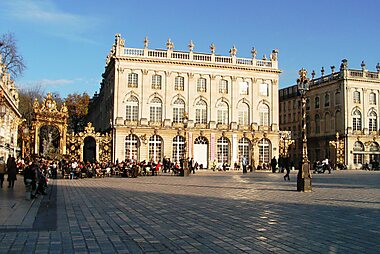
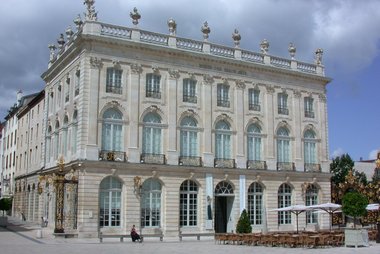
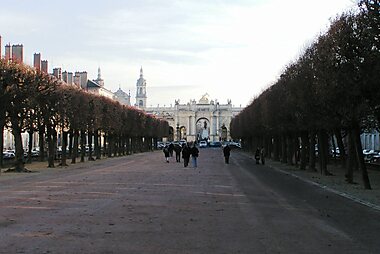
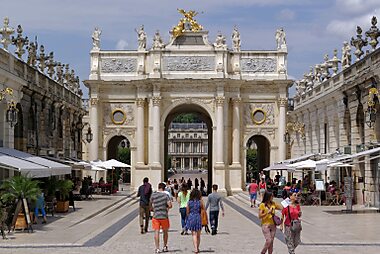
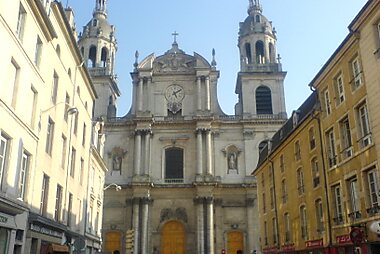
- Place Stanislas is the main square of Nancy. It was built in the 1750s for Stanislas Leszczynski, the last Duke of Lorraine. Gilded iron gates by Jean Lamour and fountains by Barthélemy Guibal decorate the corners. The Arc Héré leads from the square to the next one.
- Place de la Carrière is a long, tree-lined square. It runs from the triumphal arch to the former government palace. It is part of the same UNESCO site as Place Stanislas.
- Musée des Beaux-Arts stands on the west side of Place Stanislas. It has a large collection of European paintings, in an 18th-century building with modern wings.
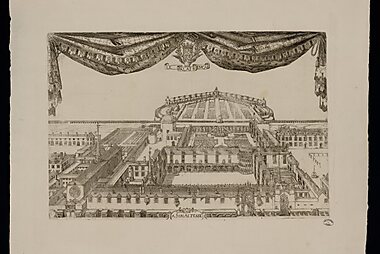
- Palais des ducs de Lorraine was the home of the dukes of Lorraine. It now holds the Musée Lorrain, which shows the history and art of the duchy.
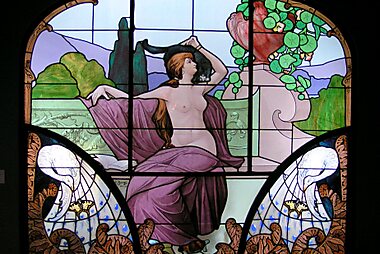
- Musée de l'École de Nancy shows furniture, glass and decorative art from the Art Nouveau movement. It includes work by Émile Gallé, the Daum family and Louis Majorelle.
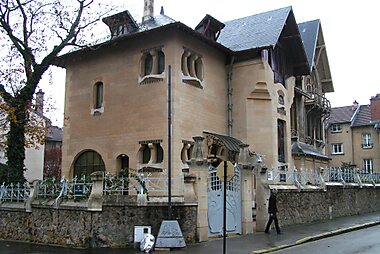
- Villa Majorelle is a house built in 1901-1902 for the furniture maker Louis Majorelle. The architect was Henri Sauvage. It is open to visitors on certain days only, so check before you go.
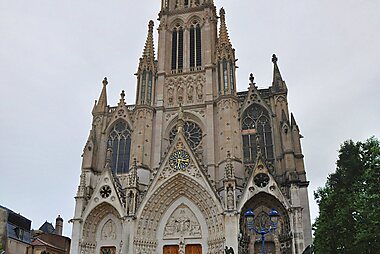
- Basilique Saint-Epvre is a 19th-century church in the Gothic style. It stands in the old town, with one tall tower and spire.
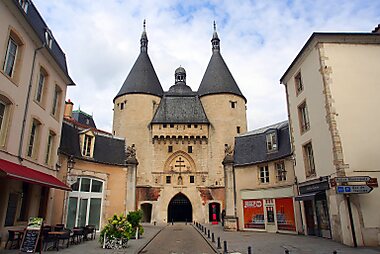
- Porte de la Craffe is a medieval gate from the 14th century. It is one of the oldest parts of the old town defences.
- Cathédrale Notre-Dame-de-l'Annonciation is a baroque cathedral from the 18th century, near the east side of the centre. It has a large organ.
Elenchi in evidenza

Nancy's Essential Treasures
Nancy’s architectural legacy is centered on the 18th-century UNESCO World Heritage ensemble comprising Place Stanislas, Place de la Carrière, and Place d’Alliance. The city showcases a transition from medieval fortifications like the 14th-century Craffe Gate to the ornate Baroque style of the Nancy Cathedral and the Neo-Gothic Saint-Epvre Basilica. Beyond the grand squares, the city is a cradle of Art Nouveau, exemplified by the Brasserie Excelsior, while the expansive Pépinière Park provides a green link between the historic Old Town and the Enlightenment-era New Town.
13 luoghi


Nancy's Sacred Sites
Nancy’s religious architecture reflects the city’s evolution from the medieval capital of the Duchy of Lorraine to an 18th-century urban masterpiece. The collection features the Baroque Nancy Cathedral, the Rayonnant Neo-Gothic Saint-Epvre Basilica, and the historic Cordeliers Church, which serves as the burial place for the Dukes of Lorraine. Visitors can observe a range of styles, including the Neo-Romanesque Saint-Joseph Church and the 18th-century Baroque Saint-Sébastien, alongside Reformed traditions at the Temple Saint-Jean.
10 luoghiCosa provare
- Saint Nicholas festivities: From late November to early January the old town is full of lights and events. The big parade is in early December. The Christmas markets have wooden chalets, mulled wine, gingerbread and a 40 m ice rink.
- Nancy Jazz Pulsations: This jazz festival is held in October, over about two weeks. It has hundreds of concerts in many venues, big and small.
- Park and zoo: Parc de la Pépinière is the main park in the city centre. It is close to Place Stanislas and has a small zoo. It is a good place for a break between sights.
Tour e attività
Nancy — Mappa

 Apri la mappa interattiva
Gite in giornata
Trains make day trips easy. Several good towns are less than an hour away.
- Saint-Nicolas-de-Port: about 15 min by train. A small town with a very large Gothic basilica, which is a pilgrimage church for Saint Nicholas.
- Toul: about 20 min by train. A walled town with a cathedral and 17th-century fortifications.
- Lunéville: about 25 min by train. The town has a large 18th-century château of the dukes of Lorraine, with a park.
- Metz: about 40 min by train. See Metz. It has a big Gothic cathedral and a modern art museum, the Centre Pompidou-Metz.
- Strasbourg: about 1 hour 15 min by train. See Strasbourg. It is the main city of Alsace, with a cathedral and an old town on canals.
- Épinal: about 1 hour by train. A town on the Moselle river in the Vosges, known for its colourful prints, the images d'Épinal.
Cosa esplorare
More places to visit near Nancy:
- Metz is the other big city of Lorraine, about 40 min to the north by train.
- Strasbourg is the main city of Alsace, about 1 hour 15 min to the east by train.
- Colmar is a wine town in southern Alsace with a colourful old centre.
- Grand Est is the wider region, with Lorraine, Alsace and Champagne.
Come arrivare
- By train: Most visitors arrive at Nancy-Ville station, a few minutes from Place Stanislas. TGV trains from Paris take about 1 hour 30 min. Strasbourg is about 1 hour 15 min away, and Luxembourg about 1 hour 30 min. Regional trains link Nancy with Metz and other towns in Lorraine. Book on SNCF Connect.
- By air: Metz–Nancy–Lorraine airport lies between the two cities. It has flights to several French cities and some North African countries. Most international visitors fly to Paris, Strasbourg or Luxembourg and continue by train. Luxembourg airport is about 1 hour 30 min away by car.
Come muoversi
- On foot: The centre is compact. The station, Place Stanislas, the old town and the Pépinière park are all close together.
- Bus and trolleybus: The Stan network has four main Tempo lines, T1 to T4, and many bus lines. Line T1 is an electric trolleybus since April 2025. Tickets are available in the NéMo app. Boarding is free on Saturday and Sunday, except on public holidays. See the Nancy tourist office for details.
- Cycling: The VéloStan'lib bike-hire system has 29 stations. The first 30 minutes are free, and bikes are free at weekends.
Guidare
- Is a car worth it?: Not for the city. The centre is compact and well served by transit. A car is useful for the Vosges mountains and for small villages in Lorraine.
- Parking: Use an underground car park near the centre, for example next to Place Stanislas. Place Stanislas and much of the old town are for pedestrians.
Cibo e bevande
Lorraine has its own food. Try the quiche lorraine, which is made with bacon and cream. The region is famous for mirabelle plums, which are eaten in tarts and drunk as a strong brandy. Nancy is also known for macarons and for bergamot sweets, the bergamotes de Nancy. Many beers are brewed in the region.
For a meal, go to the streets of the old town around Grande Rue, or to the terraces on the main squares. The covered Marché Central sells local food for a picnic. Brasserie Excelsior, near the station, is a famous restaurant with an Art Nouveau interior.
Sicurezza e salute
Nancy is a safe city for visitors. The main risk is petty theft.
- Watch your bags in busy places, such as the station, markets and Christmas markets.
- Keep valuables out of sight when you leave a car parked.
- Tap water is safe to drink.
Storia
Nancy grew as the seat of the Dukes of Lorraine. Their home, the Palais des ducs de Lorraine, still stands in the old town. In 1477 Duke René II won the Battle of Nancy. The Duke of Burgundy, Charles the Bold, was killed there. The medieval Porte de la Craffe is a rare part of the old town walls.
In the 18th century the duchy went to Stanislas Leszczynski, a former king of Poland. He built the new town with its squares, including Place Stanislas. After his death in 1766, Lorraine became part of France.
Around 1900 the city became a centre of Art Nouveau. The artists of the École de Nancy, such as Émile Gallé, made furniture, glass and buildings in a new style. Many of their works are in the Musée de l'École de Nancy.
Informazioni sul paese
Quick practical facts for France at a glance:
- Valuta
- euro EUR € · Pagamenti con carta · Ampiamente accettata
- Numeri di emergenza
- 112
- Elettricità
- 230 V · 50 HzTipo C / Tipo E
- Lingue
- francese
- Acqua del rubinetto
- Potabile
- Senso di marcia
- A destra
- Prefisso telefonico
- +33


Nancy – Pianifica le tue giornate
Trasforma i luoghi di questa guida in un vero itinerario, con percorsi intelligenti, stime dei tempi e tutto il necessario per un viaggio perfetto.


Destinazioni correlate

Data: © OpenStreetMap contributors, Wikidata, Wikipedia, Tripomatic, Official websites. Tours by GetYourGuide. We earn commission from bookings. Travel guide generated with AI.
Pianifica il tuo viaggio con Tripomatic
- Pianificazione con IAOttieni una giornata pronta in un tocco, lascia che l'IA distribuisca la tua lista dei desideri lungo il viaggio o pianifica tutto chattando.
- Avvisi di viaggioAvvisi ufficiali, maltempo, scioperi e calamità naturali per i luoghi di ogni giorno del tuo viaggio.
- Giorni festivi ed eventiScopri giorni festivi, festival e chiusure nei giorni del tuo viaggio e cosa comportano per i tuoi programmi.
- Stima dei costiDettaglio dei costi di viaggio calcolato dall'IA per sapere quanto mettere a budget prima di partire.
- Tour e bigliettiPrenota tour, biglietti prioritari e attività direttamente all'interno del tuo piano.