


Pau
Pau is a city of about 80,000 people in south-west France, at the foot of the Pyrenees. It is known for its long mountain views, its castle and its calm, green center. Henri IV, who became king of France, was born here in 1553. Many English visitors came in the 19th century for the mild climate, and some of that history is still visible today.
The center is compact and easy to see on foot in one or two days. Pau also works well as a base for the Pyrenees, with villages, ski resorts and hiking trails within about an hour or so by car. It suits travelers who want a quiet city stay with easy access to the mountains and the Basque coast.

Pau – Stai pianificando un viaggio?
Costruisci il tuo itinerario giorno per giorno nell'app Tripomatic.


Quando andare
June and September are the best months for a city visit, with warm days and clear mountain views. May and October are also pleasant but can be wet. Summer is warm and often busy with open-air events. Winters are mild and grey, and the nearby ski resorts open in the mountains.
The main yearly event is Hestiv'Òc, a free four-day festival of the music and cultures of southern France. It takes place in the town center in August and includes concerts, dance and street shows.
Periodo migliore per la visita: giugno, luglio, settembre, ottobre
Attrazioni principali
- Château de Pau is the symbol of the city. Henri IV was born in this castle. The rooms now hold the National Museum of the Château de Pau, with tapestries from the 16th to the 19th century.
- The Boulevard des Pyrénées is a long promenade on the edge of the upper town. It looks over the Gave de Pau valley and the mountain range. On clear days you can see the Pic du Midi d'Ossau. It is a good place for a walk in the evening.
- Pau funicular links the train station to the boulevard. It opened in 1908 and is free to use. It is a short, useful ride up the hill.
- Parc Beaumont is a park in English landscape style, built in the late 19th century. It has a lake and shaded paths, and it is a short walk from the center.
- Musée des Beaux-Arts shows European paintings from the 15th to the 20th century. The collection includes works by Degas, Rubens and El Greco. Entry is free.
- Musée Bernadotte is in the house where Jean-Baptiste Bernadotte was born in 1763. He became a marshal of France and later King of Sweden. The small museum is free.
Elenchi in evidenza


Historic Heritage of Pau
Explore the architectural evolution of Pau through its most significant landmarks. The collection features the medieval Château de Pau, the 16th-century birthplace of King Henry IV, alongside grand 19th-century structures like the Hôtel de Gassion. Religious heritage is represented by the Neo-Gothic Saint-Martin and Saint-Jacques churches, and the Anglican Saint-Andrew’s, reflecting the city's historical British influence. The list also includes the Musée Bernadotte, dedicated to the Pau-born soldier who became King of Sweden.
7 luoghiCosa provare
The best experiences here follow the seasons.
- Watch the sun go down over the Pyrenees from the Boulevard des Pyrénées on a clear evening.
- Join the Fête du Roi in early August, a free historical festival in the castle quarter with medieval and Henri IV days.
- Join a summer evening at the open-air cinema or at the L'Été à Pau concerts.
- Watch a match of cesta punta, a fast Basque ball game, during the summer tournaments.
- See a Section Paloise rugby match at the Stade du Hameau during the rugby season.
- Play a round at Pau Golf Club, founded in 1856, which is among the oldest golf clubs in Europe.
Tour e attività
Pau — Mappa

Gite in giornata
Pau is a good base for wine villages, small towns and the mountains. The closest trips are listed first.
- Jurançon: about 10 min by car. The hills south of Pau are known for Jurançon wine, both sweet and dry. Many small producers welcome visitors for tastings.
- Oloron-Sainte-Marie: about 35 min by car or train. This old town sits where two mountain rivers meet. It has a Romanesque cathedral and a historic pilgrim route nearby.
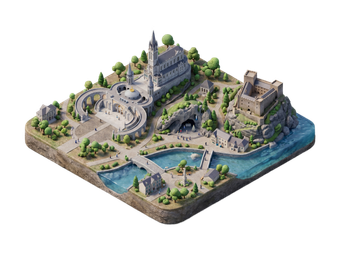
- Lourdes: about 40 min by car or train. It is one of Europe's major Catholic pilgrimage sites. The Sanctuary is the main sight, and the castle and the Pic du Jer funicular are also worth a visit.
- Ossau Valley: about 1 hour to 1 hour 15 min by car. The valley leads to Pic du Midi d'Ossau, a famous twin-peaked mountain that is visible from Pau. In summer, roads and trails lead to mountain lakes. In winter, Gourette is the nearest ski resort, about 1 hour 15 min by car.
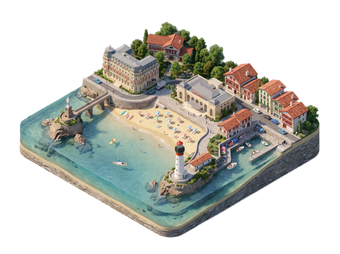
- Bayonne and Biarritz: about 1 hour 15 min to 1 hour 30 min by car. These two towns on the Basque coast offer a mix of old streets and Atlantic beaches.
Cosa esplorare
Come arrivare
- By air: Pau Pyrénées Airport is about 10 km north-west of the center. It has flights to Paris (Orly and Charles de Gaulle) and a few seasonal routes. IDELIS bus line 17 takes about 30 min and costs €1.50, paid to the driver. It does not run on Sundays and public holidays. A taxi costs about €35 in the daytime. Biarritz airport, about 1 hour 30 min away by road, has more routes. Pau Pyrénées Airport
- By train: Direct TGV trains run to Paris, and the trip takes about 4.5 to 5 hours. Intercités trains link Pau with Lourdes, Tarbes, Toulouse, Bayonne and Hendaye. Regional TER trains serve Bordeaux, Dax and Oloron-Sainte-Marie. The station is below the center, and a free funicular goes up to the town. SNCF Connect
- By road: The A64 motorway links Pau with Toulouse to the east and Bayonne to the west. It is a toll road.
Come muoversi
- On foot: The center is compact and mostly flat. The station is about 30 m below the town, so use the funicular or a short climb.
- Public transit: IDELIS runs the city buses. Buy a ticket from the driver on board, at a ticket machine, or in the MODALIS app. A free shuttle called Coxitis also runs in the center. IDELIS
- Taxi: Taxis serve the station. Book ahead on weekends and public holidays.
- Cycling: Cycling is practical in the center and along the river. The upper town has some slopes.
Guidare
- Is a car worth it?: Not for the city center, which is easy on foot. A car is useful for the mountains and villages, where public transport is limited.
- Parking: Paid car parks are in the center, for example near Place de Verdun and Place Clemenceau.
- Restrictions: Parts of the old center are pedestrian-only. Park at the edge and walk in.
Cibo e bevande
Béarn food is hearty and mountain-style. Try garbure, a thick soup of cabbage, beans and meat, and poule au pot, the poached chicken linked to Henri IV. Duck confit is common. Look for Ossau-Iraty, a sheep's milk cheese from the Pyrenees. Jurançon, from the hills just south of the city, is the local wine and comes in sweet and dry styles.
For where to eat, go to the covered market (Les Halles), which has food stalls and local products. The streets around Place Clemenceau and the center have many restaurants and cafés.
Sicurezza e salute
Pau is a safe, calm city. Petty theft is rare, but keep bags closed in crowded places and around the station.
The weather in the nearby mountains can change fast, even in summer. Check the forecast before a hike and carry water and warm clothes. Rain is common in the Pyrenees foothills, so bring a light waterproof jacket.
Storia
Pau grew around a castle on a hill above the Gave de Pau. It became the capital of Béarn, a small mountain state. Henri IV was born in Château de Pau in 1553. He later became King of Navarre and then King of France. The castle became a national museum in 1929.
In the 19th century, English visitors came for the mild climate. They brought golf and fox hunting, and Pau Golf Club dates from 1856. In 1909 the Wright brothers set up a flying school here, and Pau became an early center of aviation.
Jean-Baptiste Bernadotte was born in the city in 1763. His birthplace is now Musée Bernadotte. He became King of Sweden in 1818, and the Swedish royal family descends from him. Pau has also hosted motor racing on its streets since 1933, but the yearly event has been paused in recent years.
Informazioni sul paese
Quick practical facts for France at a glance:
- Valuta
- euro EUR € · Pagamenti con carta · Ampiamente accettata
- Numeri di emergenza
- 112
- Elettricità
- 230 V · 50 HzTipo C / Tipo E
- Lingue
- francese
- Acqua del rubinetto
- Potabile
- Senso di marcia
- A destra
- Prefisso telefonico
- +33


Pau – Pianifica le tue giornate
Trasforma i luoghi di questa guida in un vero itinerario, con percorsi intelligenti, stime dei tempi e tutto il necessario per un viaggio perfetto.


Destinazioni correlate

Data: © OpenStreetMap contributors, Wikidata, Wikipedia, Tripomatic, Official websites. Tours by GetYourGuide. We earn commission from bookings. Travel guide generated with AI.
Pianifica il tuo viaggio con Tripomatic
- Pianificazione con IAOttieni una giornata pronta in un tocco, lascia che l'IA distribuisca la tua lista dei desideri lungo il viaggio o pianifica tutto chattando.
- Avvisi di viaggioAvvisi ufficiali, maltempo, scioperi e calamità naturali per i luoghi di ogni giorno del tuo viaggio.
- Giorni festivi ed eventiScopri giorni festivi, festival e chiusure nei giorni del tuo viaggio e cosa comportano per i tuoi programmi.
- Stima dei costiDettaglio dei costi di viaggio calcolato dall'IA per sapere quanto mettere a budget prima di partire.
- Tour e bigliettiPrenota tour, biglietti prioritari e attività direttamente all'interno del tuo piano.