


Pontevedra
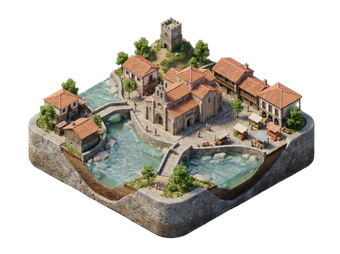
Pontevedra is a small city in Galicia, in northwest Spain, at the head of a ría (estuary). Its old town is one of the largest car-free centers in Spain, and it is a relaxed, pleasant place to walk.
It has old squares, pilgrim churches, good museums and excellent seafood. It suits a day or two, and it is a good base for the Rías Baixas coast and the Camino de Santiago (Portuguese route).

Pontevedra – Stai pianificando un viaggio?
Costruisci il tuo itinerario giorno per giorno nell'app Tripomatic.


Quando andare
Summer is the best time, with the warmest weather and the least rain. Spring and early autumn are mild but can be wet. Winters are mild and very rainy.
The Festas da Peregrina in August are the main festival, with concerts and street events.
Periodo migliore per la visita: maggio, giugno, luglio, agosto, settembre
Attrazioni principali
- The old town is a network of stone streets and squares, such as Praza da Ferrería and Praza da Leña, with arcades and cafés.
- The Pilgrim's Chapel (Capela da Peregrina) is a small scallop-shaped church that is a symbol of the city.
- The Basilica of Santa María a Maior is a Gothic-Renaissance church with a carved façade.
- Ruinas de San Domingos are the ruins of a Gothic convent church, now part of the Pontevedra Museum.
- Igrexa de San Bartolomé is a church in the old town.
- The Pontevedra Museum is spread over several buildings, with art, archaeology and Galician history.
- Illa das Esculturas is a riverside park with sculptures.
Elenchi in evidenza


Religious Sites in Pontevedra
Pontevedra's religious heritage is defined by its architectural diversity, ranging from the 14th-century Gothic Convento de San Francisco to the 16th-century Plateresque Basílica de Santa María a Maior. The city serves as a key stop on the Portuguese Way to Santiago, most notably represented by the scallop-shaped Capela da Virxe Peregrina. These landmarks preserve centuries of history, including the recently opened gardens of the Santa Clara convent and the Baroque Jesuit architecture of St. Bartholomew's Church, reflecting the city's historical importance as a maritime and pilgrimage hub.
5 luoghiCosa provare
- Walk through the old town in the evening and stop in a café on one of the squares.
- Eat seafood and drink Albariño at a restaurant near the center.
- Walk part of the Portuguese Camino de Santiago out of the city.
Tour e attività
Pontevedra — Mappa

Gite in giornata
- Vigo (about 30 km, 30 minutes): Galicia's largest city, with a port and good food.
- Santiago de Compostela (about 60 km, 40 minutes by train): the end of the Camino de Santiago.
- Sanxenxo (about 20 km): a beach resort town.
- Combarro (about 10 km): a fishing village with stone granaries (hórreos) on the shore.
- Cambados (about 25 km): a town in Albariño wine country.
Cosa esplorare
Other places in Galicia:
- Cities: Vigo, Santiago de Compostela and A Coruña.
- Coast: Sanxenxo and Cangas.
Come arrivare
- By air: The closest airports are Vigo (about 30 km) and Santiago (about 60 km).
- By train: Trains connect Pontevedra with Vigo, Santiago, A Coruña and Madrid. The station is a short walk from the old town. Book on Renfe.
- By bus: Coaches serve Vigo, Santiago and the coast.
Come muoversi
- On foot: The center is compact and mostly flat, and cars are banned from the old town, so walking is the best way to get around.
- Cycling: There are bike lanes, and the city is largely flat.
Guidare
- Is a car worth it?: Not for the city. A car helps for the coast and wine villages.
- Parking: Use a car park at the edge of the center.
- Restrictions: Cars are banned from most of the old town.
Cibo e bevande
Pontevedra has excellent seafood, including octopus (pulpo), scallops, and shellfish from the ría. Empanada is a baked pie filled with fish, meat or vegetables.
Albariño wine from the Rías Baixas is the local drink.
Sicurezza e salute
Pontevedra is a very safe city. Rain is common outside summer, so bring a waterproof jacket. Stone streets can be slippery when wet.
Storia
Pontevedra was a Roman port and later a major medieval town, with a fleet and a busy fishing trade. It became a stop on the Portuguese Camino de Santiago.
In the late 20th century the city closed its center to cars, and it became a model for pedestrian-friendly urban planning.
Informazioni sul paese
Quick practical facts for Spain at a glance:
- Valuta
- euro EUR € · Pagamenti con carta · Ampiamente accettata
- Numeri di emergenza
- 112
- Elettricità
- 230 V · 50 HzTipo C / Tipo F
- Lingue
- spagnolo
- Acqua del rubinetto
- Potabile
- Senso di marcia
- A destra
- Prefisso telefonico
- +34


Pontevedra – Pianifica le tue giornate
Trasforma i luoghi di questa guida in un vero itinerario, con percorsi intelligenti, stime dei tempi e tutto il necessario per un viaggio perfetto.


Destinazioni correlate
Data: © OpenStreetMap contributors, Wikidata, Wikipedia, Tripomatic, Official websites. Tours by GetYourGuide. We earn commission from bookings. Travel guide generated with AI.