


Ravello
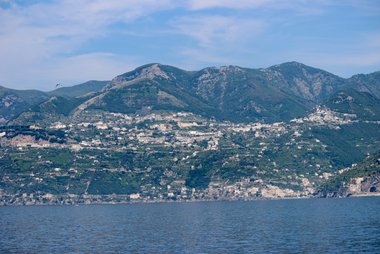
Ravello is a small town on a ridge about 350 m above the Amalfi Coast, 7 km by road from Amalfi. In the Middle Ages it was a rich merchant town of the Amalfi republic, and its old palaces, churches and gardens still stand above the sea. The Amalfi Coast, including Ravello, is a UNESCO World Heritage Site.
Ravello feels quieter than the beach towns below. There is no beach in the town itself; people come for the villa gardens, the wide views over the Gulf of Salerno and summer concerts. The composer Richard Wagner stayed here in 1880, and the writer Gore Vidal lived here for about 30 years. Day visitors fill the centre at midday, so stay overnight if you can: mornings and evenings are calm.

Ravello – Stai pianificando un viaggio?
Costruisci il tuo itinerario giorno per giorno nell'app Tripomatic.


Quando andare
May, June, September and early October are the best months: warm, sunny and good for walking. July and August are hot and humid, and the buses and the coast road are crowded. Ravello is a few degrees cooler than the towns by the sea. Winter is mild but wet, and some hotels and restaurants close from November to March.
The main event is the Ravello Festival, held every summer, mainly in July and August. Its best-known concerts take place on a stage on the belvedere of Villa Rufolo, with the coast behind the orchestra. Book tickets and rooms early for festival evenings.
Periodo migliore per la visita: maggio, giugno, luglio, agosto, settembre, ottobre
Attrazioni principali
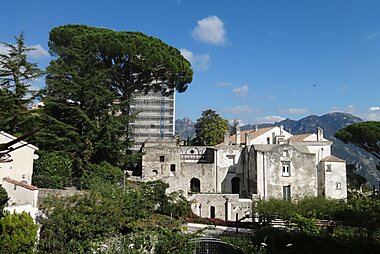

Villa Rufolo is a medieval palace of the Rufolo merchant family, next to the main square. Its terraced gardens and Moorish-style cloister look down over the coast, and its belvedere is the main stage of the Ravello Festival.
Villa Cimbrone sits at the tip of the ridge, a 10–15 minute walk from the square along a quiet lane. An English lord rebuilt the estate in the early 20th century and laid out its large gardens. The villa is now a hotel, but the gardens are open to visitors.
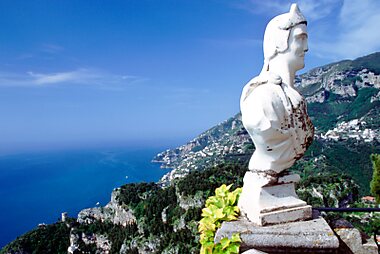
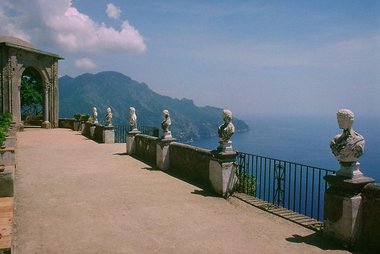
Terrazza dell'Infinito is the belvedere at the far end of the Villa Cimbrone gardens. Marble busts line the railing, and the view drops straight down to the sea and along the coast.
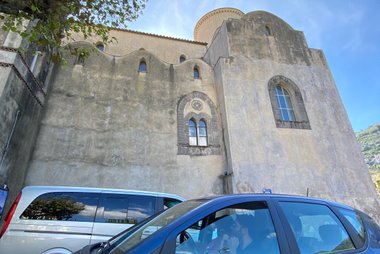
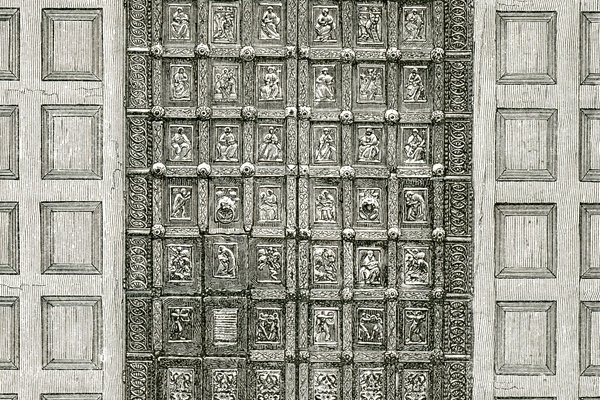
Duomo di Ravello faces the main square, Piazza Duomo. It was founded in 1086 and has 12th-century bronze doors by Barisano da Trani and a mosaic pulpit carried by six lions. A small museum in the crypt shows medieval sculpture and church treasures.
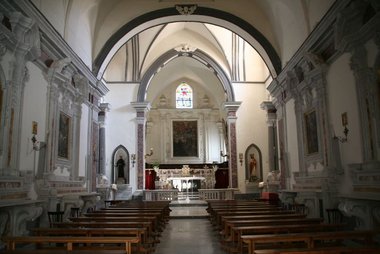
Chiesa di San Giovanni del Toro is a quiet Romanesque church in the upper part of town. It has a mosaic pulpit and a frescoed crypt, and it hosts some festival concerts.
Chiesa di Santa Maria a Gradillo is a small medieval church just off the main square, known for its square bell tower in Arab-Sicilian style.
Auditorium Oscar Niemeyer is a white, wave-shaped concert hall by the Brazilian architect Oscar Niemeyer, on a terrace below the town centre. Its curved white roof stands out against the green hillside and the sea.
Chiesa e Convento di San Francesco lies on the lane to Villa Cimbrone. The Franciscan convent keeps a small medieval cloister; the church was rebuilt in the 18th century.
Elenchi in evidenza


Cosa provare
Ravello is a town for music, gardens and slow walks.
- Concert at dawn: Once each summer, the Ravello Festival holds a concert on the Villa Rufolo belvedere at sunrise, around 5 am. The orchestra plays as the sun rises over the sea. Tickets sell out early.
- Walk down to the sea: Follow the old stepped mule paths from Ravello through lemon terraces to Atrani or Minori. Have a swim or lunch by the sea, then take the bus back up.
- Feast of Saint Pantaleon: On 27 July the town celebrates its patron saint with a procession through the centre and fireworks over the valley.
Tour e attività
Ravello — Mappa

Gite in giornata
Ravello is a good base for the whole Amalfi Coast. Buses and ferries reach most places, so a car is not needed.
- Atrani – about 45 minutes on foot down old stepped paths, or by the bus to Amalfi. A tiny fishing village with a small square and beach, right next to Amalfi.
- Scala – about 30–40 minutes on foot across the valley, or a short bus ride. One of the oldest villages on the coast, with a cathedral and quiet paths. From its hamlet of Pontone, a trail leads into the Valle delle Ferriere nature reserve with its waterfalls.
- Minori and Maiori – about 40 minutes on foot down to Minori, or by bus. Minori has the ruins of a Roman seaside villa; Maiori has a long sandy beach.
- Amalfi – about 25–30 minutes by bus. The main town of the coast, with its cathedral, harbour and ferries to other towns.
- Pompeii – about 45 minutes to 1 hour by car over the mountains. The Roman city buried by Vesuvius in AD 79. By public transport it takes about 2–2.5 hours via Salerno.
- Positano – about 1.5 hours by bus or by bus and ferry via Amalfi. Pastel houses stacked on a steep slope above a beach.
- Capri – the ferry from Amalfi takes over an hour, plus the bus down from Ravello; boats run mostly from spring to autumn. Plan a full day for the island.
- Paestum – about 1.5 hours by car, or by ferry or bus to Salerno and then by train. Three large and well-preserved Greek temples.
Cosa esplorare
Come arrivare
Ravello has no train station. Most visitors arrive through Amalfi or Salerno and finish the trip by bus.
- By air: Naples International Airport is the main gateway, about 60 km away. A private transfer or car takes 1–1.5 hours. By public transport, go to Napoli Centrale and take a train to Salerno, then continue by bus or ferry. Salerno Costa d'Amalfi Airport is closer but has few flights, mostly in summer. Naples Airport
- By train: The nearest station is Salerno. Trains from Naples take about 35–40 minutes by high-speed train or about an hour by regional train, and there are direct trains from Rome. Trenitalia
- By bus: From Salerno, SITA Sud buses run along the coast road to Amalfi in about 1 hour 15 minutes. From Amalfi, a separate bus climbs to Ravello in about 25–30 minutes. SITA Sud
- By boat: Ferries link Salerno, Positano, Sorrento and Capri with Amalfi, mostly from April to October. The trip from Salerno takes about 35 minutes and avoids the coast road traffic. Then take the bus up to Ravello.
Come muoversi
- On foot: The centre is small and car-free around Piazza Duomo. The lanes to Villa Cimbrone and the upper town are steep and have many steps.
- Bus: SITA Sud buses connect Ravello with Amalfi and Scala. Buy tickets before boarding at tobacconists, bars and newsstands, or in the Unico Campania app. A 24-hour Costiera ticket covers the coast towns. In summer, buses are often full, so allow extra time. SITA Sud
- Walking paths: Old stepped paths lead down to Atrani, Amalfi and Minori in 40–60 minutes. Going down is easy, but the climb back up is hard, so most people return by bus.
- Taxi: Taxis are expensive but useful late in the evening, when buses stop running. Book ahead in summer.
- Cycling: Not practical. The roads are narrow, steep and busy.
Guidare
- Is a car worth it?: Not for a stay in Ravello. The coast road is narrow and jammed in summer, and parking is scarce. Buses and ferries are easier, but a car helps for trips inland, such as to Pompeii or Paestum.
- Access: A narrow road climbs about 7 km from the coast road between Atrani and Minori; another crosses the mountains from the north via the Chiunzi pass.
- Parking: There are a few paid car parks at the edge of the centre. They are small, expensive and full on summer days. Many hotels offer parking; ask when you book.
- Restrictions: The centre around Piazza Duomo is closed to cars. On busy days around Easter and in summer, an odd-even number-plate rule limits cars on the coast road between 10:00 and 18:00. Residents are exempt. Hotel guests with a booking may drive only to arrive and leave. Self-drive rental cars are not exempt, so check the dates before you travel.
Cibo e bevande
Ravello follows the kitchen of the Amalfi Coast: fresh fish, scialatielli pasta with seafood, lemons used in pasta, desserts and limoncello, and delizia al limone, a small lemon-cream sponge cake. The hillside also grows grapes, and local white and red wines are sold under the Costa d'Amalfi name with "Ravello" on the label.
Restaurants with terraces cluster around Piazza Duomo and the lanes towards Villa Cimbrone. Prices on the main square are high. The luxury hotels have elegant terrace restaurants for a special dinner. For simpler and cheaper meals, eat in Minori, Maiori or Amalfi by the sea.
Sicurezza e salute
Ravello is very safe, and serious crime is rare. The main risks are practical:
- Steps and heat: Lanes and paths are steep and have many steps, with little shade. Carry water in summer and wear good shoes.
- Walking on the road: The roads to Scala and down to the coast are narrow and have no pavement in places. Use the old stepped paths where you can.
- Crowded buses: Summer buses to and from Amalfi are packed. Keep an eye on bags and phones, and check the time of the last bus.
- Prices: Check menu prices before you sit down at a café on the main square.
Storia
Ravello was founded in the early Middle Ages as a refuge in the hills. It grew rich as part of the sea-trading republic of Amalfi. In 1086 it became the seat of its own bishop, and work began on Duomo di Ravello. Merchant families such as the Rufolo built palaces with gardens and Arab-style courtyards. Villa Rufolo is the best surviving example.
The town declined after Pisa attacked the Amalfi coast in the 12th century and trade moved elsewhere. Many families left for Naples, and Ravello became a quiet farming village.
Travellers rediscovered it in the 19th century. Richard Wagner visited in 1880 and found in the gardens of Villa Rufolo the image of the magic garden for Parsifal. In the early 20th century an English lord rebuilt Villa Cimbrone, and writers, artists and film stars followed. The Ravello Festival began in 1953 in honour of Wagner, and in 1997 the Amalfi Coast became a UNESCO World Heritage Site.
Informazioni sul paese
Quick practical facts for Italy at a glance:
- Valuta
- euro EUR € · Pagamenti con carta · Ampiamente accettata
- Numeri di emergenza
- 112
- Elettricità
- 230 V · 50 HzTipo C / Tipo F / Tipo L
- Lingue
- italiano
- Acqua del rubinetto
- Potabile
- Senso di marcia
- A destra
- Prefisso telefonico
- +39


Ravello – Pianifica le tue giornate
Trasforma i luoghi di questa guida in un vero itinerario, con percorsi intelligenti, stime dei tempi e tutto il necessario per un viaggio perfetto.


Destinazioni correlate





Data: © OpenStreetMap contributors, Wikidata, Wikipedia, Tripomatic, Official websites, geoBoundaries (CC BY 4.0). Tours by GetYourGuide. We earn commission from bookings. Travel guide generated with AI.
Pianifica il tuo viaggio con Tripomatic
- Pianificazione con IAOttieni una giornata pronta in un tocco, lascia che l'IA distribuisca la tua lista dei desideri lungo il viaggio o pianifica tutto chattando.
- Avvisi di viaggioAvvisi ufficiali, maltempo, scioperi e calamità naturali per i luoghi di ogni giorno del tuo viaggio.
- Giorni festivi ed eventiScopri giorni festivi, festival e chiusure nei giorni del tuo viaggio e cosa comportano per i tuoi programmi.
- Stima dei costiDettaglio dei costi di viaggio calcolato dall'IA per sapere quanto mettere a budget prima di partire.
- Tour e bigliettiPrenota tour, biglietti prioritari e attività direttamente all'interno del tuo piano.