



Uganda
Uganda is a landlocked country on the equator, between Lake Victoria and the mountains of the Albertine Rift. Most visitors come for wildlife. Bwindi Impenetrable National Park and Mgahinga Gorilla National Park protect mountain gorillas, Kibale National Park is the main place to track chimpanzees, and Queen Elizabeth and Murchison Falls national parks offer classic savannah game drives and Nile boat trips. The Nile leaves Lake Victoria at Jinja, where you can visit the Source of Nile.
The country suits travelers who want a wildlife-focused trip and accept long road journeys and basic infrastructure. Plan carefully: the US government currently advises its citizens not to travel to Uganda, citing crime, health, terrorism and unrest. The UK government does not advise against travel to Uganda, but warns of a high terrorism threat and of specific risks near the border with the Democratic Republic of the Congo and in the Karamoja region. Read your government's current advice before you book.






Uganda – Stai pianificando un viaggio?
Costruisci il tuo itinerario giorno per giorno nell'app Tripomatic.


Denaro e pagamenti
Uganda is still a largely cash economy. Hotels, safari lodges and larger restaurants in Kampala and Entebbe take cards, but markets, small shops, local transport and most places outside the big towns want cash in shillings. Mobile money (MTN and Airtel) is how most Ugandans pay each other.
- ATMs: common in Kampala, Entebbe and regional towns, rare near national parks. Withdraw enough before you leave for a park.
- US dollars: many safari lodges, tour operators and park fees are priced in US dollars. Bring clean notes printed in 2009 or later. Torn, marked or older notes are refused, and small notes get a worse exchange rate.
- Big costs: gorilla and chimpanzee permits, park entry fees and a vehicle with driver make up most of a trip's budget. Everyday food and local transport are cheap.
Elenchi in evidenza


Tour e attività
Uganda — Mappa

 Apri la mappa interattiva
Mance
Tipping is not traditional in everyday Ugandan life, but it is expected in the safari industry. Safari drivers, park rangers, gorilla and chimpanzee trackers and porters rely on tips, usually given in cash at the end of the activity or the trip. In restaurants, check the bill for a service charge; if there is none, a small tip for good service is appreciated. Round up the fare for taxi and motorbike drivers if you like, but it is not expected.
about 5–10 % if no service charge
small tip for porters and staff
round up if you like
cash tip for drivers, rangers, trackers and porters
Elettricità
Uganda uses British-style three-pin plugs (Type G). Power cuts happen, and some lodges in national parks run on solar power or generators with limited hours, so carry a power bank.
Lingua
English and Swahili are the official languages, and English is the language of government, business and tourism. Most people in towns, hotels and the safari industry speak good English. More than 40 local languages are spoken. Luganda is the most widely spoken one in Kampala and the centre of the country, and a greeting in Luganda is always welcome.
Connettività
- SIM cards: MTN and Airtel are the main networks. Buy a SIM at the operator's own shop, including at Entebbe airport. Registration needs your passport and is strictly enforced.
- Mobile money: once you have a local SIM, you can register for mobile money and pay many small businesses by phone.
- Coverage: data works well in towns but is weak or absent in parts of the national parks.
- Restrictions: the government has shut down or restricted internet access during elections and periods of unrest. Download offline maps and key documents in advance.
Sicurezza ed emergenze
Check official travel advice before you book and again before you leave. The US government currently rates Uganda at its highest level ("Do not travel"), citing crime, health, terrorism and unrest. The UK government does not advise against travel to Uganda but says terrorist attacks are very likely. Both governments flag extra risk in areas near the Democratic Republic of the Congo border, in the far west, and in the Karamoja region in the north-east, where armed cattle raids and robberies happen.
Most visitors travel with a licensed tour operator, and gorilla treks in Bwindi and Mgahinga run with armed ranger escorts. Common problems for tourists are:
- Petty crime: pickpocketing and bag snatching in Kampala, at bus parks and on public transport. Don't walk around after dark.
- Road danger: road accidents are the biggest everyday risk. Avoid driving at night outside Kampala and Entebbe, and avoid overnight buses.
- Motorbike taxis: boda-bodas cause many serious injuries. If you use one, wear a helmet.
- Boats: ferries and small boats on Lake Victoria and Lake Albert are sometimes overloaded. Use established operators only.
- Protests: demonstrations can happen with little warning and security forces respond with force. Stay away from crowds.
Salute
- Yellow fever: you need a yellow fever vaccination certificate to enter Uganda. Carry it with your passport.
- Malaria: malaria is present throughout the country, including Kampala. Ask a travel clinic about antimalarial tablets, and use repellent and a mosquito net.
- Other vaccinations: see a travel clinic at least 8 weeks before the trip to check recommended vaccines.
- Water: tap water is not safe to drink. Drink bottled or boiled water.
- Lakes: bilharzia (schistosomiasis), a parasite, is present in many lakes and rivers, including Lake Victoria. Ask locally before swimming.
- Outbreaks: Uganda has had outbreaks of Ebola and Marburg virus disease. An Ebola outbreak was declared over in August 2026, but check current health notices before you travel.
- Medical care: good private clinics and pharmacies exist in Kampala and Entebbe. Facilities elsewhere are very limited, and serious cases need evacuation, so buy travel insurance that covers medical evacuation.
- Altitude: treks in the Rwenzori Mountains go above 4,000 m. Ascend slowly.
Visti e ingresso
Most visitors, including citizens of the UK, the EU and the US, need a visa. Citizens of East African Community countries and some other, mostly African, countries can enter without one.
- Tourist visa: apply online before you travel on the official Uganda immigration tourist visa page. The single-entry tourist visa costs USD 50. You receive an approval letter to show on arrival.
- East Africa Tourist Visa: a USD 100 visa valid for 90 days and multiple entries in Uganda, Kenya and Rwanda. Enter first through the country that issued it.
- Passport: it must be valid for at least 6 months after your arrival.
- Yellow fever: carry your vaccination certificate. Officials can ask for it on arrival.
Visa and entry requirements change frequently. Verify current requirements with the official immigration authority or your country's embassy before travel.
Norme di comportamento
- Greetings: greet people before asking anything. A handshake and "How are you?" matter, and rushing straight to business seems rude.
- Dress: Ugandans dress neatly. Cover shoulders and knees in towns, villages and places of worship. Shorts are fine on safari.
- Photography: ask before you photograph people. Do not photograph military or police sites, government buildings or the Owen Falls Dam at Jinja.
- Camouflage: wearing military-style or camouflage clothing is illegal.
- LGBT travelers: same-sex relationships are illegal, with very harsh penalties under a 2023 law. Public displays of affection are best avoided by all couples.
- Bargaining: bargain politely at markets, with boda-boda riders and for craft souvenirs. Prices in shops and supermarkets are fixed.
- Wildlife: follow ranger instructions on gorilla and chimpanzee treks, including the distance and time limits. Never buy products made from wild animals.
Festività e orari di apertura
On public holidays, government offices and banks close, while most shops, markets, hotels and safari services stay open. Roads out of Kampala get busy before long weekends and at Christmas. On Martyrs' Day (3 June), very large crowds of pilgrims gather at Uganda Martyrs' Shrine in Namugongo, and roads east of Kampala are congested.
Shops in towns usually open from about 8:00 or 9:00 until 18:00 or later, including Saturdays. Many small shops also open on Sundays, while banks and offices close.
Come muoversi
Distances are long and roads are slow, so plan fewer destinations rather than more. Uganda drives on the left.
- By car with driver: the most common way for visitors to travel. A tour operator or car-hire company provides a 4x4 and a driver-guide. Driving from Kampala to Bwindi or to Kidepo Valley takes a full day.
- By air: small planes fly from Entebbe International Airport to airstrips near the main national parks, including Murchison Falls, Queen Elizabeth, Bwindi and Kidepo Valley. This saves long road days but costs much more.
- By bus: coaches connect Kampala with the main towns, such as Jinja, Mbarara, Fort Portal, Kabale and Gulu. Travel by day only, and choose established companies.
- In Kampala: traffic is heavy. App-based taxis and motorbike rides are available, and a private car hire is the safest option.
- By boat: ferries run from Entebbe and elsewhere to the Ssese Islands on Lake Victoria. Use only the established operators.
Guidare
- Left-hand traffic: Uganda drives on the left.
- Licence: a foreign licence is accepted for the first 3 months. After that you need a Ugandan licence or an International Driving Permit.
- Road conditions: main highways are paved, but potholes, speed bumps, livestock and pedestrians are common. Park roads are dirt and often need a 4x4, especially in the rainy season.
- Night driving: avoid driving after dark outside Kampala and Entebbe.
- Police checks: expect police checkpoints and speed checks. Carry your licence and the vehicle papers.
- Tolls: the Kampala–Entebbe Expressway is tolled. Pay in cash in Uganda shillings or with a prepaid card at the toll booth.
- Parking: in Kampala, use guarded car parks at hotels and shopping centres rather than parking on the street.
- Fuel: stations are attended. Pumps are labelled petrol (PMS) and diesel (AGO). Pay in cash, and fill up in towns before you head to remote parks.
- Electric vehicles: public charging is almost nonexistent, so an EV is not practical for touring.
Cibo e bevande
Ugandan food is filling and simple. Breakfast is often tea with milk and spices, bread or chapati, and sometimes katogo, a dish of green bananas cooked with beans or meat. Lunch is the main meal. A typical plate combines a starch, such as matoke (steamed and mashed green bananas), posho (maize porridge), rice or sweet potatoes, with a sauce of beans, groundnuts, beef or chicken. Luwombo, meat or fish steamed in banana leaves, is a festive Buganda dish. Tilapia and Nile perch from the lakes are common by the water.
The favourite street food is the rolex, an omelette with vegetables rolled in a chapati. You will also find grilled meat skewers, roasted maize and cassava, and, in season, fried grasshoppers (nsenene). Local lagers such as Nile Special are sold everywhere, and waragi is the local gin. Uganda grows excellent coffee, although tea is the more common daily drink.
Locals eat at small roadside restaurants, which serve a buffet of local dishes at lunchtime, and at market stalls. Safari lodges usually serve international food, so ask for a local dish if you want to try one.
Cosa esplorare
Cities and towns
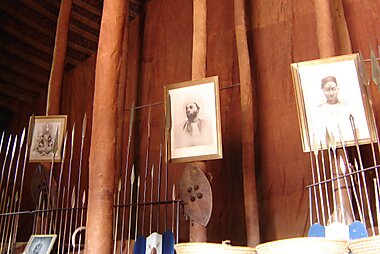
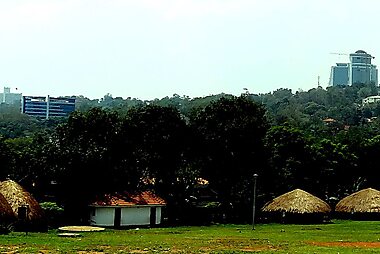
- Kampala: the capital, spread over several hills. Visit the Kasubi Tombs, a UNESCO World Heritage Site where the kings of Buganda are buried, and the Uganda Museum.
- Entebbe: the airport town on Lake Victoria, with botanical gardens and a quieter pace. It is close to Mabamba Swamp, a good place to see the rare shoebill.
- Jinja: the town where the Nile leaves Lake Victoria, known for rafting, kayaking and boat trips.
- Fort Portal: a green town among crater lakes and tea estates, and the base for Kibale National Park.
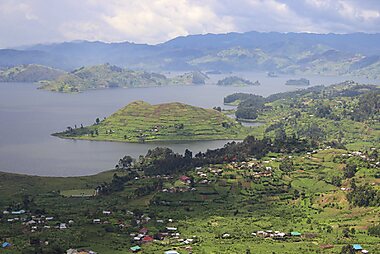
- Kabale and Kisoro: gateway towns for Lake Bunyonyi, Lake Mutanda and gorilla treks in the south-west.
National parks
- Bwindi Impenetrable National Park: dense mountain rainforest, home to almost half of the world's mountain gorillas.
- Queen Elizabeth National Park: savannah, crater lakes and boat trips on the Kazinga Channel, with lions, elephants and hippos.
- Murchison Falls National Park: Uganda's largest national park, where the Nile forces its way through a narrow gorge at Kabarega Falls.
- Kibale National Park: rainforest with habituated chimpanzee groups and many other primates.
- Rwenzori Mountains National Park: glaciated peaks on the DRC border, for serious multi-day treks.
- Kidepo Valley National Park: remote savannah in the far north-east, with few visitors.
Nature beyond the parks
- Sipi Falls: waterfalls on the slopes of Mount Elgon in the east, with hiking and coffee farm visits.
- Ziwa Rhino Sanctuary: on the road to Murchison Falls, where you can track white rhinos on foot.


Uganda – Aggiungi al tuo viaggio
Crea un itinerario di viaggio dettagliato con percorsi intelligenti, stime dei tempi e tutto ciò che serve per un viaggio perfetto.


Data: © OpenStreetMap contributors, Wikidata, Wikipedia, Tripomatic, Official websites, geoBoundaries (CC BY 4.0). Tours by GetYourGuide. We earn commission from bookings. Travel guide generated with AI.