


크라스
Kras, also called the Karst, is a low limestone plateau between Ljubljana and the Adriatic, on the border with Italy. It gave its name to karst landscapes all over the world. Above ground you find stone villages, vineyards, oak woods and dry-stone walls. Below ground there are caves, sinkholes and underground rivers.
The region suits a slow trip of two or three days by car or bike. Most visitors come for the Škocjan Caves and the white Lipizzaner horses of Lipica, then stay for the food and wine. Red Teran wine and air-dried Karst ham are the local pride. The sea and the city of Trieste are only 20 to 30 minutes away, so you can combine the countryside with a coastal day.

크라스 – 여행을 계획 중이신가요?
Tripomatic 앱에서 일자별 일정을 만들어 보세요.


방문 시기
Late spring and early autumn are the best times, with mild days for walking, cycling and village visits. Summers are warm, and the caves stay cool all year. In September and October the vines change colour and wine farms are busy with the harvest. Winters are cool and quiet, and the strong, cold bora wind can blow for days.
The main event of the year is the Teran and Prosciutto Festival in the village of Dutovlje in early August. Local winemakers and ham producers serve their products, with music and stalls over several days.
여행하기 가장 좋은 시기: 6월, 9월
주요 명소
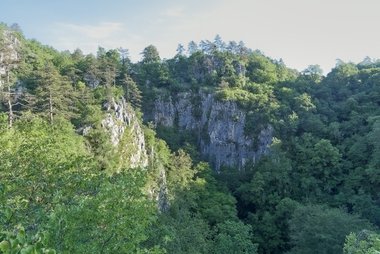

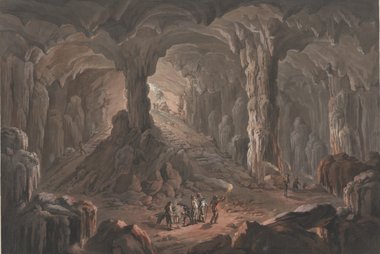
Škocjan Caves are the region's headline sight and a UNESCO World Heritage Site. The Reka river roars through a huge underground canyon, and the guided tour crosses it on a bridge high above the water. It is about 12 °C inside, so bring a warm layer.
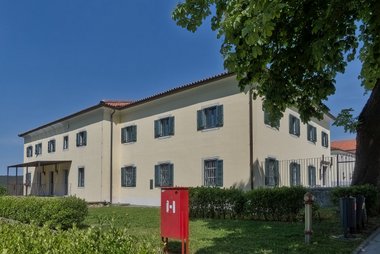
At Lipica Stud Farm, the home of the white Lipizzaner horse since 1580, you can see the horses in the stables and pastures. Lipikum Museum is part of the visit and tells the story of the farm and the breed with interactive displays. On set days the riding school gives a show.
Vilenica Cave near Lokev is one of the oldest show caves in Europe, with tourists recorded here since 1633. It is smaller and calmer than Škocjan, and the tour covers about 450 m of lit passages.
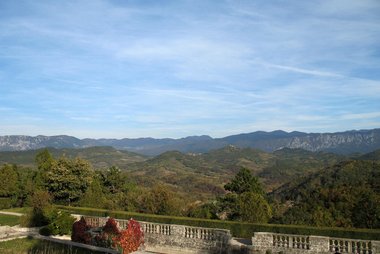
The hilltop village of Štanjel has stone houses, a castle and views over the Vipava valley. Below its walls, Ferrari Garden is a terraced garden with a pool and a small bridge, designed by the architect Max Fabiani between the world wars.
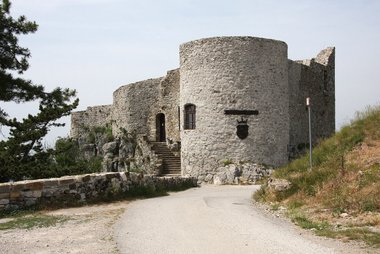
Socerb Castle stands on a cliff at the edge of the plateau, right above Trieste and the sea. The views over the gulf are the main reason to come.
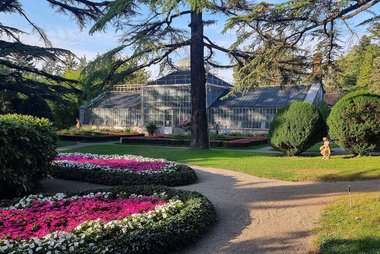
Sežana Botanical Garden grew from the 19th-century summer villa of a Greek merchant family. It has a palm house, a rose collection and a small centre about Karst plants.
추천 리스트

체험해 볼 것들
The best moments here are slow and outdoors, tied to horses, stone and wine country.
- Watch the Lipizzaners perform: the Lipica riding school shows classical dressage with its white horses on set days. You can also watch an official training session or book a carriage ride.
- Cycle between wine villages: quiet roads link villages such as Tomaj and Dutovlje. Many wine farms welcome cyclists for a tasting.
- Hike the edge of the plateau: trails along the Karst edge near Socerb Castle give wide views over the Gulf of Trieste.
- See the Karst turn red: in October the smoke bush, called ruj locally, colours the hillsides bright red. It is the best season for photos and walks.
투어 및 액티비티
크라스 — 지도

 인터랙티브 지도 열기
근교 당일 여행
Kras is small, so the coast, the caves of inner Slovenia and the Vipava wine valley are all close. Times below are one way by car.
- Trieste in Italy (≈20–30 min): the port city has grand squares, coffee houses and the seafront Miramare Castle. On the way, Giant Cave has a single, huge cave hall.
- Hrastovlje (≈30 min): the fortified Holy Trinity Church is famous for its 15th-century frescoes, including a Dance of Death.
- Vipava (≈30 min): the town and the valley below the plateau have many wine farms, known for local white wines.
- Koper (≈30 min): a Venetian-style old town on the Adriatic coast.
- Postojna (≈30–40 min): Postojna Cave, one of the largest show caves in Europe, and Predjama Castle built into a cliff.
- Ljubljana (≈1 h): the capital has a compact old town and a castle above the river.
추천 여행 지역
Kras borders several other destinations in western Slovenia.
- On the plateau: the stone village of Štanjel and the wider Komen area in the north, and Divača, the gateway to the Škocjan Caves, in the east.
- Wine country: Vipava and its valley just north of the plateau, and Nova Gorica further north.
- On the coast: Koper and Piran.
- Inland: Postojna and its caves, the capital Ljubljana, and Trieste across the border in Italy.
가는 방법
- By air: Trieste Airport in Italy is the closest, under an hour by car. Ljubljana Jože Pučnik Airport is a little over an hour away. Venice airports are about 2 hours by car. A rental car is the easiest way to continue.
- By train: trains from Ljubljana stop at Divača and Sežana, the main towns of the Karst. The trip takes about 2 hours to Divača and about 2 hours 15 minutes to Sežana. Slovenian Railways
- By bus: buses run from Ljubljana to Sežana and Divača, and some coastal buses stop at Divača.
- By car: the A1 motorway from Ljubljana to the coast passes Divača. A motorway branch continues past Sežana to the Italian border and Trieste.
교통편 및 이동 방법
- By car: the easiest way to explore. The sights and villages are spread out, but distances are short, often 10 to 20 minutes.
- Public transport: local buses are infrequent and mostly serve school and work times. Trains link Divača and Sežana. A marked footpath of about 4 km (around 50 minutes) leads from Divača station to the Škocjan Caves.
- Cycling: the plateau has quiet roads and gentle hills, and marked cycling routes link the wine villages. Some farms and hotels rent bikes and e-bikes.
- On foot: marked trails lead through villages, woods and along the edge of the plateau. The villages themselves are small and easy to walk.
Visitor information: Visit Kras
운전
- Is a car worth it?: yes. Public transport is thin, and a car lets you combine caves, Lipica and the villages in one day.
- Parking: the main sights have car parks, and parking in villages is easy. In Štanjel, leave the car below the village and walk up.
- Motorway: you need a Slovenian e-vignette for the A1 and the branch to Italy. Buy it online before you drive onto the motorway.
- Bora wind: in winter the bora can blow very hard. On those days, take care with high vehicles, trailers and car doors.
음식 및 음료
Karst food is simple and based on local produce. The stars are Teran, a deep red wine from the red Karst soil, and Karst pršut, a ham air-dried in the cold bora wind. Look also for Karst pancetta, sheep's cheese, jota (a sauerkraut and bean stew) and Vitovska, a local white wine.
The best way to eat here is at an osmica. This is a family farm that opens for a few days to sell its own wine, ham, cheese and salami. An ivy branch by the road shows that one is open. For a sit-down meal, the wine villages of Tomaj, Dutovlje and the area around Štanjel have family inns and wine cellars.
안전 및 건강
Kras is very safe, and crime against visitors is rare. The main risks are practical:
- Caves: paths are damp and slippery, and Škocjan has many steps. Wear good shoes and take a warm layer.
- Bora wind: strong winter gusts can make cycling and driving difficult. Check the forecast before you go out.
- Outdoors: in summer there are ticks in grass and woods. Stay on marked paths, as sinkholes and cave openings can be hidden in the forest.
- Border: the Italian border is open, but carry your passport or ID card.
역사
People have lived on the Karst since prehistoric times. They built hilltop forts of stone, and some caves were used as shelters and places of worship. The water and caves at Škocjan Caves drew settlers for thousands of years.
The plateau also gave a word to science. In the 19th century, scholars studied its caves, sinkholes and vanishing rivers, and "karst" became the international term for this kind of landscape.
In 1580 the Habsburg Archduke Charles II founded the stud farm at Lipica to breed horses for the court. The Lipizzaner breed later became famous through the Spanish Riding School in Vienna.
After World War I the Karst became part of Italy. After World War II most of it joined Yugoslavia, while the strip above Trieste stayed in Italy. The poet Srečko Kosovel grew up in Tomaj and wrote about the Karst landscape. He is buried in the village.
국가 정보
Quick practical facts for Slovenia at a glance:
- 통화
- 유로 EUR · 카드 결제 · 널리 사용 가능
- 긴급 전화번호
- 112
- 전압 및 전원
- 230 V · 50 Hz플러그 타입 C / 플러그 타입 F
- 언어
- 슬로베니아어
- 수돗물 음용
- 음용 가능
- 주행 방향
- 우측통행
- 국가 번호
- +386


크라스 – 일자별 계획 세우기
이 가이드에 소개된 장소들을 스마트 경로 및 소요 시간 예측이 포함된 실질적인 일정으로 바꿔보세요. 완벽한 여행을 위한 모든 것이 준비되어 있습니다.


관련 목적지



Data: © OpenStreetMap contributors, Wikidata, Wikipedia, Tripomatic, Official websites. Tours by GetYourGuide. We earn commission from bookings. Travel guide generated with AI.
Tripomatic과 함께 여행을 계획해 보세요
- AI 기반 일정 계획한 번의 탭으로 완성된 하루 일정을 확인하고, AI가 위시리스트를 여행 일정 전체에 배분하게 하거나, 대화를 통해 모든 것을 계획해 보세요.
- 여행 경보여행 일정의 각 날짜별 방문 장소에 대한 공식 여행 경보, 악천후, 파업 및 자연재해 정보를 확인하세요.
- 공휴일 및 이벤트여행 일정 중의 공휴일, 축제, 휴무일과 이것이 여행 계획에 미치는 영향을 확인하세요.
- 비용 예측출발 전 예산을 가늠해 볼 수 있도록 AI가 여행 비용을 항목별로 분석해 드립니다.
- 투어 및 티켓투어, 줄 서지 않는 패스트트랙 티켓, 다양한 활동을 일정 내에서 바로 예약하세요.