


오슬로
Oslo is Norway's capital and largest city, spread around the head of the Oslofjord and backed by forested hills. The city center is compact and walkable, and public ferries and metro lines reach ski trails, swimming spots, and hiking forests within twenty minutes. Oslo has spent the last two decades rebuilding its harbor, replacing old docks and highways with parks, museums, and public swimming areas.
The playwright Henrik Ibsen and the painter Edvard Munch both lived and worked here. Oslo suits travelers who want big-city museums and architecture without giving up quick access to nature.

오슬로 – 여행을 계획 중이신가요?
Tripomatic 앱에서 일자별 일정을 만들어 보세요.
방문 시기
Summers (June to August) are mild and bright, with long daylight hours that make evening sightseeing comfortable. Spring and early autumn are cooler but good for walking, and winters are cold, dark, and often snowy.
Time a visit around 17 May, Norway's Constitution Day, when Oslo fills with a children's parade, brass bands, and crowds in traditional bunad costume.
여행하기 가장 좋은 시기: 6월
July is the warmest month, with days often in the low twenties and frequent afternoon showers; snow is common from November through March.
주요 명소
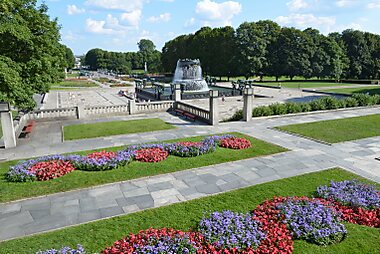


Frogner Park is Norway's single most visited attraction, home to more than 200 bronze, granite, and iron sculptures by Gustav Vigeland, including the well-known Angry Boy statue. Entry is free and the park stays open around the clock.
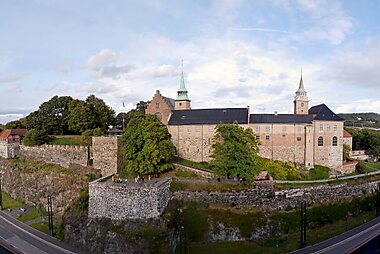
Akershus Castle has guarded Oslo's harbor since around 1300. Walk the ramparts for fjord views, or step inside to see royal halls and a small military museum.
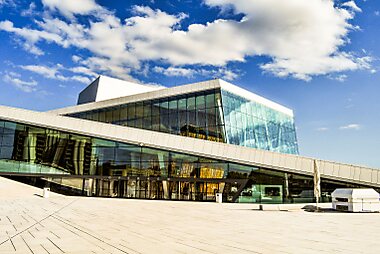
Oslo Opera House, designed by Snøhetta and opened in 2008, lets visitors walk up its sloped marble and granite roof to the waterline — no ticket needed unless you're seeing a performance inside.
National Museum of Norway is Norway's largest art museum, with more than 400,000 works spanning antiquity to today, including Edvard Munch's original version of The Scream.
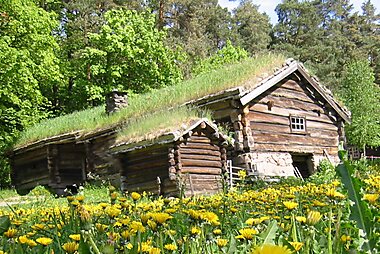
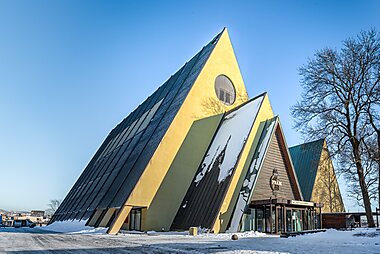
On the Bygdøy peninsula, a cluster of museums covers Norway's seafaring history. Fram Museum displays the polar ship used on Fridtjof Nansen's and Roald Amundsen's expeditions, Kon-Tiki Museum holds Thor Heyerdahl's 1947 balsa-wood raft, and Norwegian Museum of Cultural History is an open-air museum of more than 150 historic buildings moved here from across Norway. The nearby Viking Ship Museum is closed for a major rebuild and is not expected to reopen until around 2027.
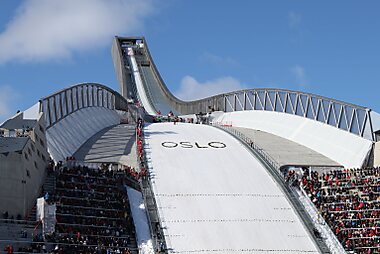
Holmenkollen Ski Jump has hosted ski jumping since 1892 and the 1952 Winter Olympics; a viewing platform at the top gives one of the best panoramas over the city and fjord.
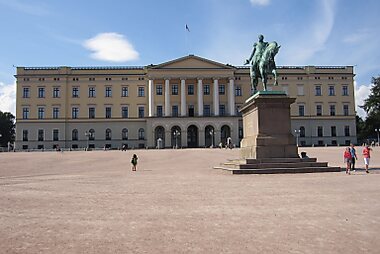
Royal Palace is the working residence of Norway's royal family. Its park is open to the public year-round, and the changing of the guard takes place daily at 13:30.
추천 리스트


Nature and Parks
Oslo’s landscape transitions from formal city parks to rugged forest reserves. Frogner Park features over 200 sculptures by Gustav Vigeland, while the University Botanical Garden, established in 1814, houses over 5,000 plant species. The 22-hectare Royal Palace Park provides central green space, whereas Grefsenkollen and St. Hanshaugen offer elevated viewpoints. Contemporary art is showcased at the Tjuvholmen waterfront, and the Hauktjern nature reserve provides protected wilderness for hiking and rock climbing in the city's eastern forests.
장소 8곳오디오 가이드 – 오슬로
도착할 때마다 음성 해설이 재생되는 셀프 오디오 투어와 함께 걸어서 여행지를 탐색해 보세요.


오슬로의 오디오 투어 듣기
Audio Guides by Tripomatic 앱의 1개 도보 투어


체험해 볼 것들
- Swim in the harbor: Join locals for a dip at the seawater pools near Oslo Opera House, a popular summer ritual right in the city center.
- Ski from the forest into town: In winter, take the metro up to Frognerseteren and cross-country ski back down through the forest — a classic Oslo weekend activity.
- Island-hop the fjord: Take a public ferry from the harbor out to islands like Hovedøya for swimming, picnicking, and exploring old ruins.
- Catch sunset from Ekeberg ridge: Ekebergparken sits on a hillside above the fjord and is one of the best spots in the city to watch the sunset over the water.
- Try a floating sauna: Book a spot in one of the wood-fired saunas moored in the harbor, then cool off with a jump straight into the fjord.
투어 및 액티비티
오슬로 — 지도

 인터랙티브 지도 열기
 근교 당일 여행
Oslo sits close to a few easy day trips, plus flagship destinations worth a longer ride.
- Drøbak — about 45 minutes by bus or car, this small coastal town on the Oslofjord is known for its wooden houses, a year-round Christmas shop, and swimming spots.
- Fredrikstad — around 1 hour by train, home to one of Northern Europe's best-preserved fortress towns, with cobbled streets and ramparts you can walk for free.
- Kongsberg — under an hour by train (about 49 minutes), a former silver-mining town with an underground mine tour and a striking baroque church.
- Lillehammer — around 2 hours by train, the host city of the 1994 Winter Olympics, with ski jumps, an open-air folk museum, and reliable snow in winter.
가는 방법
- By air: Oslo Airport Gardermoen (OSL) is the main gateway, about 45 km north of the city. The Flytoget express train reaches Oslo S (the central station) in about 20 minutes; regular Vy trains take somewhat longer for less than half the price. Airport buses take around 40 minutes or so. A smaller number of budget flights use Sandefjord Airport Torp, roughly 110 km south, with a bus or train transfer of around two hours.
- By train: Oslo S is the hub for domestic lines to Bergen, Trondheim, and Stavanger, and international connections to Stockholm and Gothenburg in Sweden.
- By bus: Long-distance coaches arrive at the Oslo Bus Terminal next to Oslo S, with routes across Norway and into Sweden.
교통편 및 이동 방법
- Public transit: Ruter runs the metro (T-bane), trams, buses, and city ferries on a single ticket system. Buy tickets through the RuterBillett app (it accepts international bank cards), at ticket machines, or from convenience-store kiosks; a reloadable travel card is also available for longer stays. Ruter journey planner
- Taxi / ride-hailing: Regulated taxis are easy to hail or book by app; ride-hailing coverage is more limited than in some cities, so a taxi app or public transit is usually the practical choice.
- On foot / cycling: The center is flat and compact enough to walk everywhere. The Oslo Bysykkel bike-share system makes cycling an easy alternative, though hills increase quickly outside downtown.
운전
- Is a car worth it? No — the center is compact, walkable, and well served by public transit. A car is more useful for the day trips and the wider region than for getting around the city itself.
- Parking: Street parking in the center is metered and expensive; use a signposted car park or a park-and-ride at an outer metro station instead. Pay through the EasyPark app or at machines.
- Restrictions: Oslo charges a toll every time you enter or leave the city on the Oslo toll ring (AutoPASS), collected automatically by camera — no ticket or stop required. Rental cars are billed automatically, usually added to your rental agreement.
음식 및 음료
Oslo's food scene mixes traditional Norwegian dishes with a strong New Nordic fine-dining reputation, and the city is home to several Michelin-starred restaurants.
For casual eating, head to Mathallen Oslo, a food hall in the Vulkan district with stalls for Norwegian and international cooking, or Vippa, a street-food market on the harbor with cheap, varied stalls in a converted warehouse. Fresh shrimp and cured salmon are sold straight off boats at the harbor near Aker Brygge in summer.
안전 및 건강
Oslo is one of the safer capital cities in Europe, with very low rates of violent crime against tourists. The main risk is pickpocketing on crowded trams, the T-bane, and around Oslo S and Karl Johans gate, especially in summer.
Some areas near Oslo S and Grønland see open drug use and can feel uncomfortable late at night; they are not dangerous for a passing visitor but are worth avoiding after dark if you would rather not see it.
Tap water is safe and tastes good everywhere in the city — no need to buy bottled water.
역사
Oslo is traditionally dated to 1048, founded near the eastern shore of the fjord, though a fire destroyed most of the medieval town in 1624. King Christian IV rebuilt the city closer to Akershus Castle and renamed it Christiania after himself; the city did not take back the name Oslo until 1925.
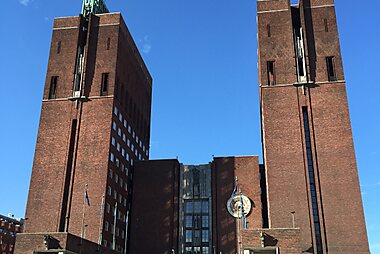
Norway spent centuries under Danish and then Swedish rule before gaining full independence in 1905. Oslo City Hall has hosted the Nobel Peace Prize ceremony every December since 1990, drawing world leaders and Nobel laureates to the city each winter.
During the Second World War, Norway was occupied by Nazi Germany from 1940 to 1945. Akershus Castle was used as a prison and execution site by the German occupying forces, and today its grounds include a memorial to the resistance fighters who died there.
국가 정보
Quick practical facts for Norway at a glance:
- 통화
- 노르웨이 크로네 NOK kr · 카드 결제 · 널리 사용 가능
- 전압 및 전원
- 230 V · 50 Hz플러그 타입 C / 플러그 타입 F
- 언어
- 노르웨이어(보크말), 노르웨이어(니노르스크)
- 수돗물 음용
- 음용 가능
- 주행 방향
- 우측통행
- 국가 번호
- +47


오슬로 – 일자별 계획 세우기
이 가이드에 소개된 장소들을 스마트 경로 및 소요 시간 예측이 포함된 실질적인 일정으로 바꿔보세요. 완벽한 여행을 위한 모든 것이 준비되어 있습니다.




