
Caños de Carmona
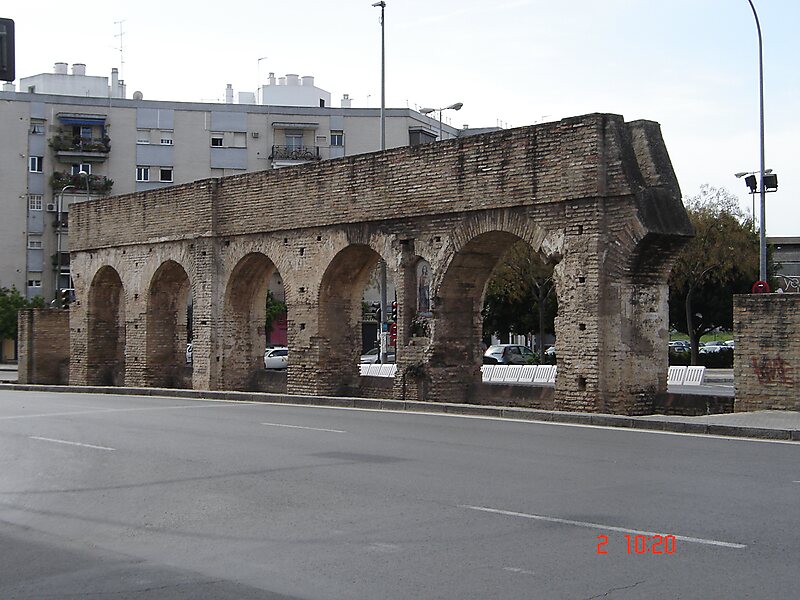
The Caños de Carmona is a Roman aqueduct built during the first century BC to supply water from a spring in the ancient Roman city of… Lees meer…


Caños de Carmona – Aan je reis toevoegen
Maak een gedetailleerde reisroute met slimme routing, tijdsinschattingen en alles wat je nodig hebt voor een perfecte reis.




The Caños de Carmona is a Roman aqueduct built during the first century BC to supply water from a spring in the ancient Roman city of Irippo –current Alcalá de Guadaíra– to the ancient Roman city of Hispalis –current Seville–, both in the ancient Roman province of Hispania Ulterior –current Spain–. It was later renovated and partially re-built in the twelfth century by the Almohads and it was fully operational until its demolition in 1912. Some sections survived the demolition and remain standing today.
The aqueduct was originally 17.5 kilometres long and was primary constructed from bricks. It consisted of underground pipe sections and elevated sections of, approximately in total, 400 arches standing on pillars, with additional upper arcade sections in some places. It is believed to be the only example of this type of Roman construction in Spain.
Source: Wikipedia
Meer informatie en contact
Caños de Carmona – Aan je reis toevoegen
Maak een gedetailleerde reisroute met slimme routing, tijdsinschattingen en alles wat je nodig hebt voor een perfecte reis.

