



Wengen
Wengen sits on a sunny, car-free terrace high above the Lauterbrunnen valley, with Eiger, Mönch, and Jungfrau lined up across the way. There is no road up here — everyone arrives by the cog railway that climbs from Lauterbrunnen below, which keeps the village quiet and easy to walk end to end. It has drawn winter-sports visitors since the late 1800s and is still best known for hosting the Lauberhorn races, one of the biggest weekends on the Alpine Ski World Cup calendar.
The village suits travelers who want classic Alpine scenery and old-fashioned mountain-resort calm rather than nightlife: wooden chalets, a handful of hotels, and views that do most of the work. It works equally well as a winter base for skiing above Wengen and Kleine Scheidegg, or as a summer base for high-altitude hiking, with the rest of the Jungfrau region a short train ride away.

Wengen – planujesz wycieczkę?
Stwórz swój plan podróży dzień po dniu w aplikacji Tripomatic.


Kiedy jechać
Winters are cold and snow-sure from December to March, ideal for skiing; summers (June–September) are mild and the best window for hiking, with long daylight hours. Spring and late autumn are quieter, with more variable weather and some cable cars closed for maintenance.
Plan around the Lauberhorn World Cup weekend in mid-January if you can — the village fills up for downhill, slalom, and combined races on one of the oldest and longest courses in ski racing, with free spectator zones along parts of the track.
Snow is reliable from December through March; July and August bring the warmest, clearest days for the high cable cars and mountain trails.
Główne zabytki

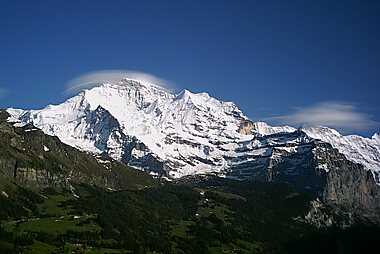
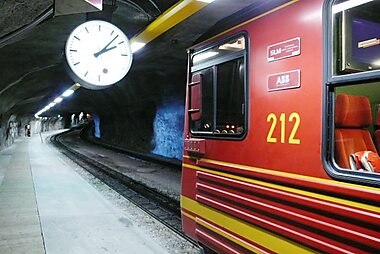


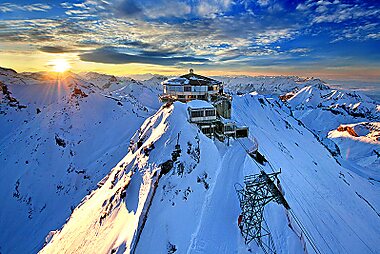
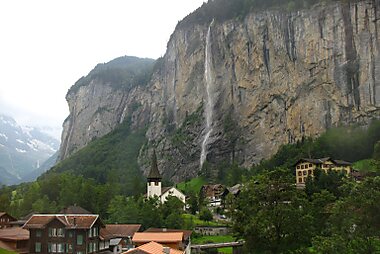

Wengen's sights are really the mountains around it, plus the railways and cable cars that reach them.
- Eiger, Jungfrau, and the Mönch form the trio of peaks facing the village — the view that defines Wengen, best seen at sunrise or sunset from the terrace above the train station.
- Lauberhorn rises directly above the village and hosts the Lauberhorn World Cup downhill each January, one of the longest and fastest courses on the circuit; in summer its lower slopes are laced with hiking trails.
- Männlichen is a cable-car summit reachable from Wengen, with a ridge-top panorama over the Eiger, Mönch, and Jungfrau and a network of themed walking trails.
- Kleine Scheidegg is the mountain pass and railway junction just below the Eiger, where the line from Wengen joins the one from Grindelwald before continuing up to the Jungfraujoch.
- Jungfraujoch Railway Station, nicknamed the "Top of Europe," is the highest railway station in Europe, reached directly from Wengen by cogwheel train through a tunnel bored into the Eiger and Mönch.
Polecane zestawienia

Czego warto doświadczyć
Wengen's best experiences are built around its trains, its slopes, and its views.
- Watch the Lauberhorn downhill live, if your visit lines up with the January World Cup weekend — free spectator zones let you stand right beside racers hitting well over 100 km/h.
- Ride the Wengernalpbahn just for the ride — the cog train climbs slowly enough that the window seat, not the destination, is the point.
- Sledge down from Kleine Scheidegg or Männlichen on one of Switzerland's classic winter toboggan runs, floodlit some evenings for a night descent.
- Walk the high panoramic trail from Männlichen toward Kleine Scheidegg in summer, with Eiger, Mönch, and Jungfrau in view for nearly the whole route.
Wycieczki i aktywności
Wengen — Mapa

Wycieczki jednodniowe
Wengen's own train line and the valley below it cover most of what a single day allows; a couple of flagship towns are also within reach.
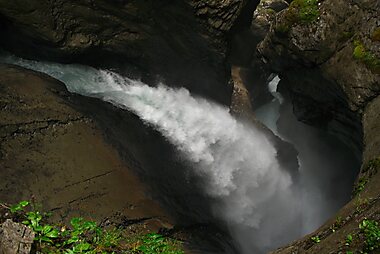
- Lauterbrunnen valley floor — 15–20 minutes down by train. See Staubbach Falls dropping straight off the cliffs above the village, and Trümmelbach Falls, a series of glacier-fed falls carved inside the mountain and lit for viewing.
- Mürren and the Schilthorn — around 1 hour via Lauterbrunnen and a connecting cable car and train. Mürren is another car-free village, on the opposite side of the valley; the Schilthorn cable car above it ends at a revolving restaurant with a 360° view of the Bernese Alps.
- Interlaken — about 40 minutes by train. A lively lakeside town between Lake Thun and Lake Brienz, useful for shopping, watersports, and onward connections.
- Bern — roughly 1.5–2 hours by train. Switzerland's capital has a UNESCO-listed medieval old town of arcaded streets and fountains, worth the longer trip for a change of pace from the mountains.
Gdzie warto się udać
Wengen is one of several resort villages tucked around the Jungfrau massif, all linked by the same rail network.
- Lauterbrunnen is the valley-floor municipality Wengen belongs to, and the only way in or out by road — most visitors pass through its train station en route.
- Mürren is Wengen's car-free counterpart on the other side of the Lauterbrunnen valley, reached via a cable car and mountain railway rather than the Wengernalpbahn.
- Grindelwald sits on the far side of Kleine Scheidegg, connected to Wengen by the same cogwheel line and a good base for the Eiger's north side and the Eiger Express gondola.
Jak dotrzeć
There is no road into Wengen — every visitor arrives by train, and that shapes the whole trip.
- By air: Zurich Airport (ZRH) is the main international gateway, roughly 3 hours away by train with one or two changes. Geneva Airport (GVA) is a further alternative, noticeably longer by train. Bern Airport has only limited seasonal service and is not a practical arrival option.
- By train: take a mainline train to Lauterbrunnen (regular connections from Interlaken, Bern, and Zurich), then change onto the Wengernalpbahn cogwheel railway, which climbs directly into the village — this last leg is the only way up, since no road reaches Wengen at all.
- By bus: long-distance coaches serve Interlaken and Lauterbrunnen, but not Wengen itself; from either, continue by train.
Poruszanie się na miejscu
Wengen is small and entirely car-free, so getting around means walking, the village's own electric taxis and hotel shuttles, and the mountain railways and cable cars that fan out from it.
- On foot: the whole village is walkable in about 15 minutes end to end; hotels are within a short walk or a free shuttle ride of the train station.
- Local transport: small electric taxis and hotel buggies handle luggage and longer hotel transfers, since no private cars are allowed.
- Mountain railways and cable cars: the Wengernalpbahn and the cable car up to Männlichen are the way up into the surrounding hiking and ski terrain; a regional pass covers most of them. Tickets and schedules are available from the Jungfrau Railways and Swiss Federal Railways websites.
Prowadzenie samochodu
- Is a car worth it? No — not for Wengen itself. The village has no road access at all, so a car is only useful for exploring further afield from Lauterbrunnen or Interlaken.
- Parking: leave the car at one of the paid car parks near Lauterbrunnen train station and continue to Wengen by cogwheel train.
- Restrictions: private vehicles cannot enter Wengen under any circumstances; only small electric service vehicles and hotel taxis operate within the village.
Jedzenie i napoje
Expect hearty Alpine Swiss cooking geared toward skiers and hikers: melted-cheese dishes, rösti, and warming soups feature on most menus, alongside the usual hotel half-board fare.
For a good meal, head to the restaurants and hotel dining rooms along Wengen's main street near the train station, where most kitchens serve a similar range of Swiss classics — there is no need to seek out one specific address. Given the resort setting, expect restaurant and bar prices toward the higher end of the country's range.
Bezpieczeństwo i zdrowie
Wengen is a very safe destination with essentially no crime beyond the ordinary caution worth taking with valuables in a busy train station or gondola queue.
The main risks are altitude and weather related. At the Jungfraujoch and other high points, sun and UV exposure are much stronger than at valley level, and mountain weather can change quickly — check conditions before a hike and stick to marked trails. If you plan to ski or hike off-piste, go with a guide or check avalanche and trail conditions locally first.
Historia
Wengen's history is really the history of getting up to it. The village was little more than scattered farms until the railway from Lauterbrunnen opened in the late 19th century, at which point British travelers began arriving for the mountain air and views, building the grand hotels that still line the village today.
Skiing turned Wengen into a resort in its own right in the 1920s and 1930s. The Lauberhorn downhill race was first held in 1930, run by members of the local ski club on the mountain's steep, twisting slopes above the village; it has been a fixture of international ski racing ever since and remains one of the sport's most demanding courses. Kleine Scheidegg, the rail junction below the Eiger, grew alongside it as the gateway to the high-altitude Jungfrau line.
Informacje o kraju
Quick practical facts for Switzerland at a glance:
- Waluta
- frank szwajcarski CHF CHF · Płatności kartą · Powszechnie akceptowane
- Numery alarmowe
- 112
- Elektryczność
- 230 V · 50 HzTyp C / Typ J
- Języki
- niemiecki, francuski, włoski, retoromański
- Woda z kranu
- Zdatna do picia
- Ruch drogowy
- Prawostronny
- Numer kierunkowy
- +41


Wengen – zaplanuj swoje dni
Zmień miejsca z tego przewodnika w prawdziwy plan podróży z inteligentnym wyznaczaniem tras, szacowanym czasem i wszystkim, czego potrzebujesz na udaną wycieczkę.




