


Ajdovščina
Ajdovščina is a small working town at the head of the Vipava Valley, under the steep cliffs of the Trnovo Forest plateau. It was built inside a Roman fort, and long stretches of the Roman walls and towers still stand between the houses. The painter Veno Pilon was born here, and a gallery in the centre shows his work.
The town is a good base for an active trip of two or three nights. In one day you can walk to a karst spring, drive up to plateau villages with wide views, taste local wine in the valley, or fly a tandem paraglider. The valley is also famous for the burja, a cold, gusty wind that shapes the houses and daily life here.

Ajdovščina – A planear uma viagem?
Cria o teu itinerário dia a dia na app Tripomatic.


Quando visitar
Spring and autumn are the best seasons, with mild days for hiking and the most wine events. Summer is hot in the valley, so plan walks on the plateau for the morning. Winter is quiet and cool, and burja days bring strong, cold gusts.
The main wine date is the Zelèn Wine Festival in the castle yard of nearby Vipavski Križ, held in mid-June. It is the easiest way to taste the valley's own grape from many producers in one place. From St Martin's Day in early November until Christmas, wine cellars across the valley also hold tastings and new-wine events.
Melhor altura para visitar: setembro
Principais atrações
The Roman sights and the gallery are in the town centre, a short walk apart. The other highlights are on the plateau above town or in the villages around it, and most need a car.
- Castra Roman fort is the reason the town exists. Parts of the late Roman walls and several restored towers still stand in the centre, and the local museum collection shows finds from the fort. Guided tours start at the tourist information centre on Wednesday and Sunday mornings.
- Pilon Gallery in the town centre shows the work of Veno Pilon, an expressionist painter and photographer born in Ajdovščina.
- Hubelj spring is a powerful karst spring under the plateau cliffs, just north of town. A marked forest path follows the Hubelj River from the sports park to the spring, and the cold water is a good break on hot days.
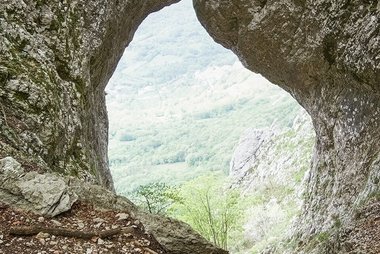
- Otlica Natural Window is a large natural rock arch at the edge of the plateau near the village of Otlica. A short marked walk from the village leads to it, and the meadow nearby has a wide view over the valley.
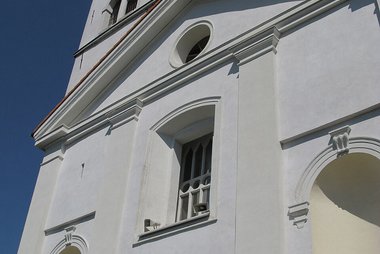
- Capuchin Monastery, Vipavski Križ sits inside a small walled hilltop village west of town. The monastery church dates from the 17th century and holds one of the largest 17th-century paintings in Slovenia.
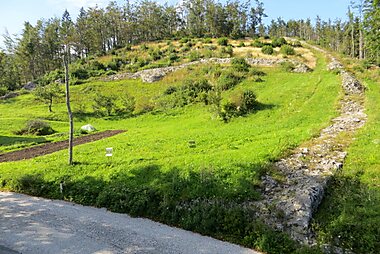
- Ad Pirum Archaeological Park protects the remains of a Roman fort from the 320s on the Hrušica plateau, beyond the village of Col. It guarded the road from Italy to the east, and you can walk around the old walls.
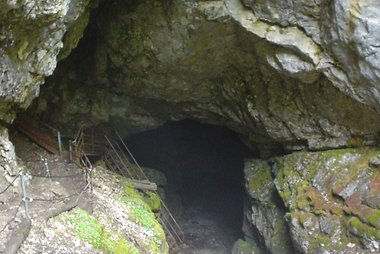
- Paradana Ice Cave is a deep karst cave on the forested plateau where ice stays all year. A short path from the road leads to the entrance.
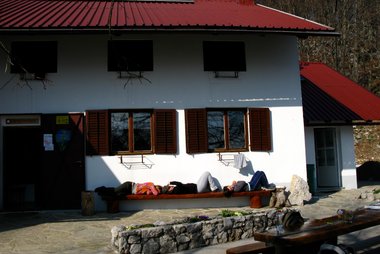
- Anton Bavčer Hut on Čaven is a mountain hut on the edge of the plateau, run by the Ajdovščina mountaineering club. Marked trails lead up from the plateau villages, and the hut is open mainly at weekends. The plateau edge nearby has wide views over the valley.
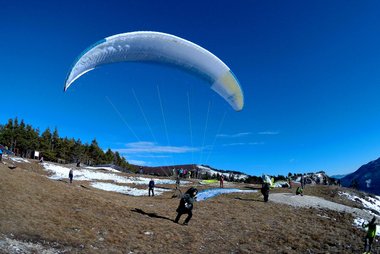
- Kovk is a hill on the plateau edge above the valley. Its take-off is one of the valley's two official paragliding sites.
Listas em destaque

O que experienciar
Life here follows the wind, the wine and the seasons. These are things to do rather than just see.
- Join a Roman fort tour: Guides lead small groups through the remains of Castra, from the walls and towers to building foundations found under today's squares. Book at least two days ahead at the tourist information centre.
- Fly over the valley: The Vipava Valley is one of Slovenia's best areas for paragliding. Local clubs offer tandem flights from Kovk and from Lijak near Nova Gorica, which can be flown even on burja days.
- Taste zelen and pinela: Visit family wine cellars in the villages around town to try the valley's own white grapes, which are rarely found elsewhere. Many cellars ask you to call ahead.
- Eat at an osmica: Farms open short-term pop-up taverns called osmica, serving their own wine with cured meats, cheese and bread. Look for the signs at the roadside.
- Feel the burja: On a clear winter day with burja, look for the stones on the roofs of old houses. They are there to keep the tiles on in the wind.
Excursões e atividades
Ajdovščina — Mapa

Passeios de um dia
Ajdovščina sits in the middle of western Slovenia, so many good trips take under an hour by car. Buses reach the larger towns, but a car makes the smaller places much easier.
- Vipava (about 10 min by car or bus): a small wine town where the Vipava River rises from karst springs, with a ruined castle above.
- Nova Gorica (about 20 min by car or bus): a modern town on the Italian border, next to Gorizia. The Lijak paragliding site is on the way.
- Štanjel (about 25 min by car): a stone hilltop village on the edge of the Karst, with a castle and a terraced garden.
- Karst (30–40 min by car): a limestone plateau known for cured ham, teran wine and stone villages.
- Postojna (about 35 min by car): Postojna Cave, one of Europe's most visited show caves, and nearby Predjama Castle, built into a cliff.
- Idrija (about 45 min by car): an old mining town with a UNESCO-listed mercury mine and famous lace.
- Ljubljana (about 1 hour by car): the capital, with its old town, river and castle.
Onde explorar
Como chegar
- By air: Trieste Airport in Italy is the closest, about 35 minutes by car. Ljubljana Jože Pučnik Airport is about 1 hour 15 minutes away and Venice Marco Polo Airport about 1 hour 35 minutes. There is no direct public transport from the airports to Ajdovščina, so most visitors rent a car or book a shuttle.
- By car: The motorway from Ljubljana to Nova Gorica passes the town and has its own Ajdovščina exit. An e-vignette is required on Slovenian motorways.
- By bus: Regular buses link Ajdovščina with Ljubljana, Nova Gorica and Vipava. Arriva bus timetables
- By train: A branch line runs from Nova Gorica to Ajdovščina, but it has only a few commuter trains a day. The bus is usually more practical. Slovenian Railways
Como se deslocar
- On foot: The centre, the Roman walls and the gallery are all within a 10-minute walk. The Hubelj spring is a pleasant walk from the edge of town.
- By car: The easiest way to reach the plateau villages of Otlica, Predmeja and Col, the wine villages and the trailheads. The road up to the plateau climbs in tight bends.
- Buses: Local buses run along the valley and to some plateau villages, but services are infrequent, especially at weekends.
- By bike: The valley floor is good for cycling between wine villages. The roads up to the plateau are long and steep, so an e-bike helps. Avoid cycling on strong burja days.
- Tourist information: The information centre on Prešernova ulica has maps, trail guides and books the Roman fort tours. Vipava Valley tourism
Conduzir
- Is a car worth it?: Yes. The plateau villages, wine cellars and trailheads are spread out, and buses are infrequent. Plan a designated driver for tasting days.
- Parking: There are several surface car parks around the centre, a short walk from the Roman walls and the gallery.
- Burja: Strong burja gusts can exceed 100 km/h and can overturn vans, caravans and trucks. On those days restrictions for some vehicles are posted on the motorway and main roads, so check the traffic news and drive carefully on exposed stretches.
- Plateau roads: The roads up to Otlica, Predmeja and Col are narrow, steep and winding. In winter, snow and ice are common on the plateau even when the valley is clear.
Comida e bebida
Ajdovščina cooks in the style of the Slovenian Littoral, with influences from nearby Italy. Look for jota (bean and sauerkraut stew), frtalja (an omelette with wild herbs), Karst cured ham and fruit from the valley's orchards. Meals are usually built around a glass of local white wine, especially zelen or pinela.
For a relaxed meal, try the cafés and small restaurants around the central squares. For a more local experience, look for a farm osmica in the valley, or a tourist farm on the plateau around Otlica and Col serving home-made food.
Segurança e saúde
Ajdovščina is very safe, and petty crime is rare. The main risks are natural rather than criminal.
- Burja: On strong burja days, take care on exposed paths and ridges, and secure bikes and anything light. The wind is cold, so carry an extra layer even when it is sunny.
- Plateau hikes: Paths on the plateau are well marked, but the cliff edges are steep and the forest is large. Stay on marked trails, carry water and start early in summer.
- Summer storms: Afternoon thunderstorms are common in summer, so plan hikes and flights for the morning.
História
In the 3rd and 4th centuries, the Romans built a fort here called Castra ad Fluvium Frigidum, or "the fort by the cold river". It was the centre of the Claustra Alpium Iuliarum, a chain of forts and walls that protected Italy from the east. A second fort guarded the pass above Col, today's Ad Pirum Archaeological Park. In 394, the Battle of the Frigidus was fought in this part of the valley. The emperor Theodosius I defeated the usurper Eugenius. Legend says a fierce burja blew the enemy's arrows back at them.
From the Middle Ages, the town grew on the foundations of the fort. In 1636, Capuchin friars founded Capuchin Monastery, Vipavski Križ in nearby Vipavski Križ. After the First World War the valley became part of Italy, and the town was known as Aidussina. It joined Yugoslavia in 1947 and has been part of independent Slovenia since 1991.
Factos sobre o país
Quick practical facts for Slovenia at a glance:
- Moeda
- Euro EUR · Pagamentos com cartão · Amplamente aceite
- Números de emergência
- 112
- Eletricidade
- 230 V · 50 HzTipo C / Tipo F
- Idiomas
- esloveno
- Água da torneira
- Própria para beber
- Sentido de condução
- Direita
- Indicativo telefónico
- +386

Ajdovščina – Planeia os teus dias
Transforma os lugares deste guia num verdadeiro itinerário, com rotas inteligentes, estimativas de tempo e tudo o que precisas para uma viagem perfeita.


Destinos relacionados


Data: © OpenStreetMap contributors, Wikidata, Wikipedia, Tripomatic, Official websites, geoBoundaries (CC BY 4.0). Tours by GetYourGuide. We earn commission from bookings. Travel guide generated with AI.
Planeia a tua viagem com o Tripomatic
- Planeamento com IAObtém um dia pronto com um toque, deixa a IA distribuir a tua lista de desejos pela tua viagem ou planeia tudo através do chat.
- Alertas de viagemAvisos oficiais, condições meteorológicas adversas, greves e perigos naturais para os lugares em cada dia da tua viagem.
- Feriados e eventosVê feriados, festivais e encerramentos nos dias da tua viagem e o impacto que têm nos teus planos.
- Estimativa de custosDiscriminação de custos de viagem com IA para saberes quanto orçamentar antes de ir.
- Excursões e bilhetesReserva excursões, bilhetes sem filas e atividades diretamente no teu plano.