


Fanø
Fanø is a small island in the Wadden Sea, 12 minutes by ferry from Esbjerg. It is about 16 km long, with one wide sandy beach along its whole west coast. Behind the beach lie dunes, heath and low pine forest. On the east side, two old seafaring villages look out over the tidal flats, which are part of the Wadden Sea National Park and a UNESCO World Heritage Site.
The island suits a slow trip of a few nights: beach walks, cycling, seal and bird watching, and quiet evenings in the villages. Nordby is the main village, where the ferry arrives. Sønderho, at the southern tip, has narrow lanes and nearly 300 old thatched houses from the time when Fanø captains sailed the world. Summer is the busy holiday season, while spring and autumn are calm and good for nature.

Fanø – A planear uma viagem?
Cria o teu itinerário dia a dia na app Tripomatic.


Quando visitar
Summer (June to August) is the beach season, with long days and mild temperatures, but it is also when the island is busiest. Spring and autumn bring migrating birds and fewer people, though the weather is wetter and windier. Winter is dark, cold and very quiet, and many places close.
The biggest event is the Fanø International Kite Fliers Meeting in mid-June, when thousands of kite fliers from around the world gather on the beach near Rindby Strand. If you prefer local tradition, come for Sønderhodag on the third Sunday in July, when women and children in traditional Fanø costume walk in a bridal procession through Sønderho.
Principais atrações
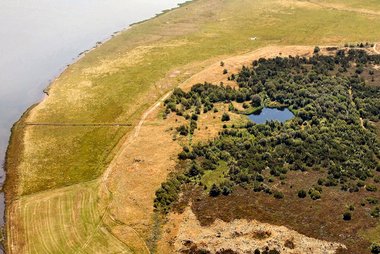
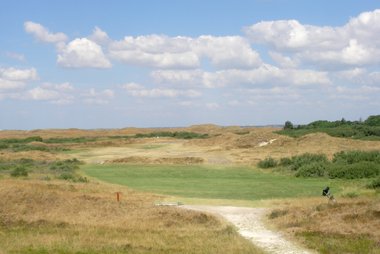


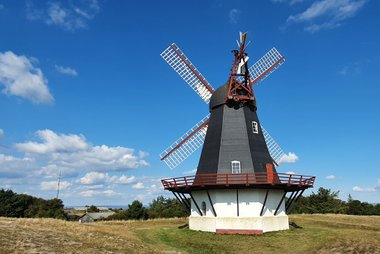

The island's sights are small and spread out, so plan one day for Nordby and one for Sønderho and the beach.
- The west-coast beach runs the whole length of the island. The wide, firm sand between Fanø Bad and Rindby Strand is the best area for swimming, and part of the beach is open to cars.
- Sønderho Kirke is a brick church from 1782. Fifteen votive ship models hang in the nave, most of them made by local seamen and shipbuilders.
- Sønderho Mølle is the old windmill at the edge of Sønderho. It is the end point of the bridal procession on Sønderhodag.
- Fanø Skibsfart & Dragtsamling in Nordby tells the story of the island's sailing ships through paintings and models. It also shows the traditional Fanø costumes worn by island women.
- Sønderho Fuglekøje is a historic duck decoy, a pond-based trap once used to catch wild ducks. It lies in the countryside north of Sønderho, near the eastern tidal flats.
- Sønderho village itself is the main sight in the south. Walk the narrow lanes between the thatched captains' houses, which face east to west to stand against the wind. The small Fanø Kunstmuseum is also in the village.
- Nordby has a compact old centre of low houses and small lanes near the harbour. The local history museum, Fanø Museum, is also here.
Listas em destaque


Top Sights on Fanø
Fanø’s cultural landscape is defined by its maritime history and preserved 18th-century architecture. This selection features the island’s most significant landmarks, from the restored 1895 Sønderho Mølle windmill to the maritime collections at Fanø Skibsfart & Dragtsamling. Visitors can explore traditional sailor homes like Hanne's Hus, view regional art at the Fanø Kunstmuseum, and reach elevated viewpoints at Pælebjerg and Kikkebjerget for panoramic vistas of the Wadden Sea and the North Sea dunes.
10 lugares
O que experienciar
A visit to Fanø is mostly about the tides, the wind and the wide open beach.
- Drive on the beach: Take the car onto the sand (see the driving rules below). Park on the firm sand well above the water line and walk or swim from there.
- Fly a kite: Fanø is famous for kite flying, thanks to its steady wind and wide beach. Kite buggies and surfing are popular too.
- Join Sønderhodag: On the third Sunday in July, follow the fiddlers, the bride and groom and around a hundred women and children in traditional costume to the mill. Afterwards everyone can join the old Sønderho dances.
- See the seals: Up to several hundred seals rest on the sandbank Galgerev southwest of Sønderho. Join a guided seal tour, which keeps a safe distance from the animals.
- Pick oysters: From October to April, guided oyster safaris in the Wadden Sea take you onto the tidal flats at low tide to collect wild oysters.
- Play the links: Fanø Golf Links is Denmark's oldest golf course and a true links among the dunes.
Excursões e atividades
Fanø — Mapa

Passeios de um dia
The ferry puts the mainland 12 minutes away, so day trips are easy. Many are about the Wadden Sea itself.
- Esbjerg (12 min by ferry): a modern port town. Visit Men at Sea, a 9-metre white sculpture of four seated men, and the seals and aquarium at Fisheries and Maritime Museum, both by the sea at Sædding, northwest of the centre.
- Ribe (about 35–40 min by train from Esbjerg): Denmark's oldest town, with a cathedral, cobbled streets and half-timbered houses.
- Mandø (about 1 hour from Fanø by ferry and car to the departure point): a tiny island you reach at low tide, either by a gravel tidal road or on a tractor-pulled bus across the seabed. Tours leave from the Wadden Sea Centre near Vester Vedsted, south of Ribe.
- Black Sun in the marshes (about 1 hour or more by car): in spring and autumn, huge flocks of starlings form dark shapes in the sky at dusk over the marshes near Ribe and Tønder. Guided evening trips are the easiest way to find them.
- Blåvand (about 45 min by car from Esbjerg): Denmark's westernmost point, with a lighthouse, wide beaches and old bunkers.
Onde explorar
Fanø is part of the Wadden Sea coast of southwest Jutland, and its neighbours are easy to combine with a stay on the island.
- On the mainland: Esbjerg is the ferry port and nearest town, and Ribe is the historic town to the south.
- The Wadden Sea: Wadden Sea covers the tidal flats around the island, and Mandø is the tiny tidal island further south.
- Further afield: Blåvand for more North Sea beaches, and Billund for LEGOLAND and the nearest large airport.
Como chegar
- By ferry: Fanølinjen ferries cross from Esbjerg to Nordby in about 12 minutes, with frequent departures through the day and fewer at night and in winter. Fares are return fares. Buy them online or at the machines at the terminal. Children and bicycles travel free, and car space in summer is best booked ahead. See Fanølinjen.
- By train: Trains run to Esbjerg from Copenhagen in about 3 hours. The ferry terminal is a short walk or bus ride from Esbjerg station.
- By air: Billund Airport is the nearest large airport. Buses 144 and 944X run from the airport to Esbjerg. See Sydtrafik airport buses.
- By car: Drive to the ferry terminal in Esbjerg and take the car across.
Como se deslocar
- Bus: A local bus links Nordby, Fanø Bad, Rindby Strand and Sønderho. It runs more often in summer and much less in winter, and it does not meet every ferry, so check the timetable first. The tourist office in Nordby has the current timetable and fares.
- Bicycle: Cycling is the best way to see the island. The land is flat, and bike paths run between the villages and the beach. Bike rental is available in Nordby, Rindby Strand and Sønderho, and you can bring your own bike on the ferry for free.
- On foot: Nordby and Sønderho are each easy to explore on foot. The villages are about 12 km apart, so you need a bike, bus or car between them.
- Car: Useful for a short stay with luggage, for the beach drive and for day trips to the mainland.
Conduzir
- Is a car worth it?: Not necessary. The bus, bikes and short distances cover most needs. A car helps with luggage, with the beach drive and with day trips to the mainland.
- The ferry: The car fare is a return fare, and it covers the car and up to nine people. Book ahead for summer weekends.
- Beach driving: Allowed between Fanø Bad and Sønderho, with a 30 km/h limit. Keep to the firm sand, watch for people and kites, and never leave the car near the water line when the tide is coming in.
- Parking: Parking is easy to find in the villages and at the beach. In Sønderho, park at the edge of the village and walk in, because the lanes are narrow.
Comida e bebida
Food on Fanø is simple and local: fish and shellfish, fresh Wadden Sea oysters in the cold months, and smoked fish. In summer, ice cream shops, waffle bakeries and sweet shops selling boiled sweets are part of every beach day.
For a classic meal, go to Sønderho, where the old inn Sønderho Kro dates from 1722 and is one of Denmark's oldest and best-preserved inns. Otherwise, the small cafés along the main street in Nordby and the cluster of restaurants at Fanø Bad cover most needs. Many places open only in the main season, so check opening times in spring, autumn and winter.
Segurança e saúde
Fanø is very safe, and crime against visitors is rare. The real risks come from nature.
- Tides: Never walk far onto the tidal flats on your own. The tide comes in fast, and fog can hide the way back. Go with a local guide for seal and oyster trips.
- Swimming: Swim at the marked stretch between Fanø Bad and Rindby Strand. Strong winds and currents can make the sea dangerous, so respect the warning flags.
- On the beach: Cars drive on the beach, so keep children close and look before you cross the driving lane.
- Weather: Wind and rain can change fast. Bring a windproof jacket in every season.
História
For centuries the island belonged to the Danish king, until royal ownership ended in 1741. From the mid-1700s to the late 1800s, Fanø was one of Denmark's great seafaring communities. Its sailing ships traded across the world, and the wealth from this time built the captains' houses you see in Nordby and Sønderho today.
The men were often at sea for years, so women ran island life. They wore the traditional Fanø costume every day for more than 200 years, and the last woman to do so died in 1972. You can see the costumes and the ship models at Fanø Skibsfart & Dragtsamling, and the votive ships in Sønderho Kirke.
As the age of sail ended around 1900, tourism took its place. Beach hotels and Denmark's first golf course appeared at Fanø Bad. During the Second World War, the German army made the coast part of the Atlantic Wall. About 300 concrete bunkers still lie in the dunes along the beach.
Factos sobre o país
Quick practical facts for Denmark at a glance:
- Moeda
- Coroa dinamarquesa DKK kr · Pagamentos com cartão · Amplamente aceite
- Números de emergência
- 112
- Eletricidade
- 230 V · 50 HzTipo C / Tipo E / Tipo F / Tipo K
- Idiomas
- dinamarquês
- Água da torneira
- Própria para beber
- Sentido de condução
- Direita
- Indicativo telefónico
- +45


Fanø – Planeia os teus dias
Transforma os lugares deste guia num verdadeiro itinerário, com rotas inteligentes, estimativas de tempo e tudo o que precisas para uma viagem perfeita.


Destinos relacionados


Data: © OpenStreetMap contributors, Wikidata, Wikipedia, Tripomatic, Official websites. Tours by GetYourGuide. We earn commission from bookings. Travel guide generated with AI.