


Nagasaki
Nagasaki is a hilly port city on the west coast of Kyushu. For centuries it was Japan's main window to the outside world. Dutch, Chinese and Western influences still show in its streets, food and churches.
The city is also known for the atomic bombing of 9 August 1945. Today it is a place of remembrance and peace. A trip here suits history lovers and travelers who want a compact city with harbour views, good food and a famous night view.

Nagasaki – A planear uma viagem?
Cria o teu itinerário dia a dia na app Tripomatic.


Quando visitar
October is the best month, with mild weather and the fewest rainy days. May is also pleasant. The rainy season runs from June to mid-July. Summer is hot and humid. Typhoons are most likely from late July to September. Winter is mild with little snow.
The Nagasaki Lantern Festival is the biggest event of the year. It runs for about two weeks around Lunar New Year, in late January or February. More than 15,000 lanterns light the central streets and Chinatown each evening.
Melhor altura para visitar: maio, outubro
Principais atrações
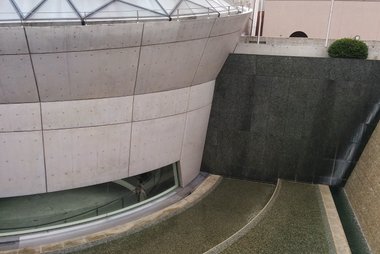
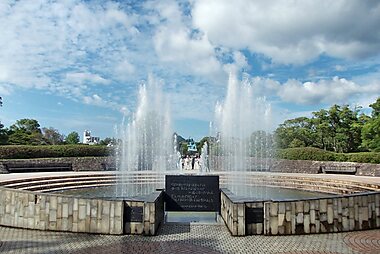
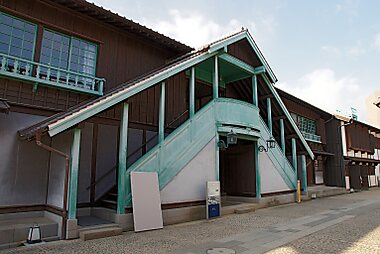
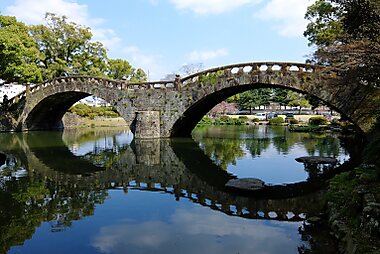
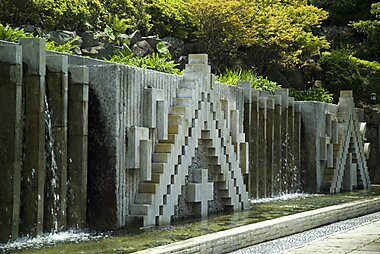
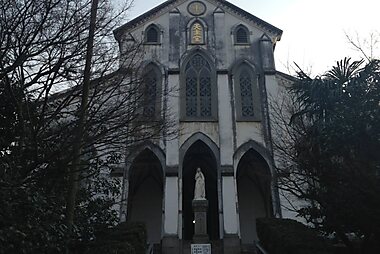
- Nagasaki Peace Park opened in 1955 as a memorial to the atomic bombing. A 10 m peace statue stands at its centre.
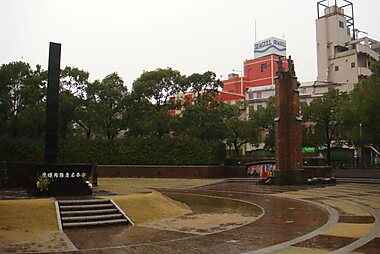
- Hypocenter is marked by a black stone monolith. The bomb exploded about 500 m above this spot at 11:02 on 9 August 1945.
- Nagasaki Atomic Bomb Museum is next to the park. It shows relics and photographs of the bombing, with English captions. Entry is 200 yen for adults.
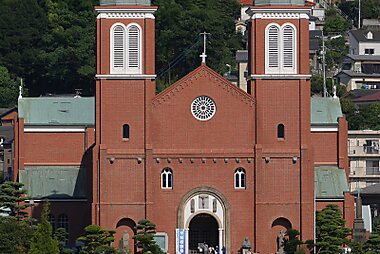
- Urakami Cathedral stands about 500 m from the hypocenter. The brick cathedral from 1925 was destroyed in the bombing. The present building dates from 1959, and a damaged bell is displayed in the grounds.
- Dejima Dutch Trading Post is a small artificial island built in 1634. Dutch traders lived here from 1641, when Japan was largely closed to foreigners. Many of the buildings have been restored.
- Glover Garden is a hillside garden above the harbour. Its Glover House was finished in 1863 and is the oldest Western-style house still standing in Japan.
- Oura Catholic Church was built in 1864 and is close to the garden. In 1865 hidden Christians from Urakami came here to reveal their faith to the priest. It is a National Treasure.
- Megane Bridge is one of the oldest stone arch bridges in Japan. A Chinese monk built it in 1634. The two arches and their reflection look like a pair of glasses.
Listas em destaque


Best Museums in Nagasaki
Nagasaki’s history as Japan's primary gateway for international trade is reflected in its diverse museums. The collection includes the Nagasaki Museum of History and Culture, focused on overseas exchange, and the Siebold Memorial Museum, dedicated to the German physician who introduced Western medicine to Japan. Artistic highlights range from Spanish and Nagasaki-centric works at the Prefectural Art Museum to the specialized Inori no Oka Art Book Museum. Culinary heritage is preserved at the Chanpon Museum, while the Gunkanjima Digital Museum utilizes technology to showcase the industrial history of Hashima Island.
9 lugares

O que experienciar
Plan around these events and views.
- Night view from Mt Inasa: ride the ropeway or the slope car up the 333 m mountain. An observation deck is a short walk from the top stations. The view is ranked among the World's New Three Great Night Views. Arrive before dusk.
- Nagasaki Kunchi: Suwa Shrine holds this autumn festival on 7 to 9 October. Groups perform dragon dances and a whale-blowing act in the streets. Some neighbourhoods open their homes to visitors.
- Peace Ceremony: the city holds a ceremony each year on 9 August in front of the peace statue in Nagasaki Peace Park. The mayor reads a peace declaration.
Excursões e atividades
Nagasaki — Mapa

 Abrir o mapa interativo
Passeios de um dia
These trips go beyond the city. Check boat and bus times before you go.
- Gunkanjima (Hashima Island): the abandoned coal-mining island is a UNESCO World Heritage site. Landing needs a booked tour with a licensed operator from Nagasaki Port. It is not guaranteed, because boats cannot berth in high waves or strong wind.
- Sotome: villages with hidden Christian history on the northwest coast. It is about 50 minutes by car or 80 minutes by bus. Shitsu Church dates from 1882, and visitors should book in advance online.
- Shimabara: about 1.5 to 2 hours in total by train. Take JR to Isahaya, then the Shimabara Railway. The town has a castle and is the transport hub of the Shimabara Peninsula.
- Unzen Onsen: a hot spring resort on a volcano. A direct bus from the bus terminal opposite Nagasaki Station takes about 100 minutes.
Onde explorar
Como chegar
- By air: Nagasaki Airport (NGS) lies in Omura Bay. The airport bus to Nagasaki Station takes 45 to 55 minutes and costs 1,400 yen one way. Nagasaki Airport
- By train: from Hakata Station in Fukuoka the trip takes about 90 minutes. Take the Relay Kamome limited express to Takeo-Onsen, then change to the Nishi Kyushu Shinkansen on the same platform. JR Kyushu
- By bus: highway buses from Fukuoka take about 2.5 hours. They arrive near Nagasaki Station.
Como se deslocar
- Trams: trams are the easiest way to reach most sights. The adult fare is 150 yen flat. Tap an IC card (such as Suica, PASMO, SUGOCA or nimoca) when you board and when you exit. With an IC card, a short ride of up to two segments costs 110 yen. A one-day tram pass costs 600 yen. Cash is paid at the front door when you exit, in coins or 1,000 yen notes. Nagasaki Electric Tramway
- On foot: Dejima, Chinatown and Megane Bridge are close together. Glover Garden and Oura Church are on a steep hill with many steps.
Conduzir
- Is a car worth it?: not for the city. The sights are close, the streets are steep and narrow, and trams are easier. A car helps only for the countryside outside the city.
- Driving side: Japan drives on the left.
- Licence: Japan accepts only an International Driving Permit under the 1949 Geneva Convention. A 1968 Vienna Convention permit is not valid. Licences from Switzerland, Germany, France, Belgium, Monaco and Taiwan need an official Japanese translation, which JAF provides. JAF driving guide
Comida e bebida
Nagasaki food mixes Chinese, Portuguese and Dutch influences. Look for these dishes:
- Champon: noodles with pork, seafood and vegetables in a creamy bone broth. It was first served in 1899 at the Chinese restaurant Shikairō.
- Sara udon: a Nagasaki noodle dish with a seafood and vegetable topping. The noodles are often thin and crispy.
- Castella: a sponge cake that came from Portugal through Nagasaki.
- Toruko rice: rice pilaf served with a pork cutlet and spaghetti.
The best area for champon and sara udon is Shinchi Chinatown, a one-block district in the city centre.
Segurança e saúde
Nagasaki is a safe city for visitors. The main risks are the weather and the terrain.
- July and August are hot and humid. Drink water and rest at midday.
- Typhoons can disrupt boats and transport, especially from late July to September.
- Hillside sights involve many steps. Wear comfortable shoes.
- Memorial sites such as the hypocenter and Peace Park are places of mourning. Keep quiet and be respectful.
História
Nagasaki opened its harbour to foreign trade in 1571. Portuguese traders arrived first. In 1597 twenty-six Christians were executed here.
After 1639 the Portuguese were expelled. The Dutch traded from Dejima Dutch Trading Post from 1641. Chinese traders lived in a walled district nearby. A Chinese monk built Megane Bridge in 1634.
Nagasaki became a treaty port in 1859. Foreign merchants such as Thomas Glover built homes on the hills, including Glover Garden. In 1865 hidden Christians revealed themselves at Oura Catholic Church. Later, about 3,400 Christian villagers from Urakami were exiled, and about 680 died.
On 9 August 1945 an atomic bomb destroyed much of the Urakami valley, including Urakami Cathedral. Hills limited the blast to that valley. About 70,000 people died by the end of 1945.
Factos sobre o país
Here are the essentials for traveling in Japan:
- Moeda
- Iene japonês JPY ¥ · Pagamentos com cartão · Geralmente aceite
- Eletricidade
- 100 VTipo A / Tipo B
- Idiomas
- japonês
- Água da torneira
- Própria para beber
- Sentido de condução
- Esquerda
- Indicativo telefónico
- +81


Nagasaki – Planeia os teus dias
Transforma os lugares deste guia num verdadeiro itinerário, com rotas inteligentes, estimativas de tempo e tudo o que precisas para uma viagem perfeita.


Destinos relacionados


Data: © OpenStreetMap contributors, Wikidata, Wikipedia, Tripomatic, Official websites, geoBoundaries (CC BY 4.0). Tours by GetYourGuide. We earn commission from bookings. Travel guide generated with AI.
Planeia a tua viagem com o Tripomatic
- Planeamento com IAObtém um dia pronto com um toque, deixa a IA distribuir a tua lista de desejos pela tua viagem ou planeia tudo através do chat.
- Alertas de viagemAvisos oficiais, condições meteorológicas adversas, greves e perigos naturais para os lugares em cada dia da tua viagem.
- Feriados e eventosVê feriados, festivais e encerramentos nos dias da tua viagem e o impacto que têm nos teus planos.
- Estimativa de custosDiscriminação de custos de viagem com IA para saberes quanto orçamentar antes de ir.
- Excursões e bilhetesReserva excursões, bilhetes sem filas e atividades diretamente no teu plano.