



Países Baixos
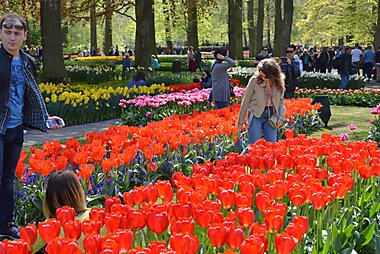
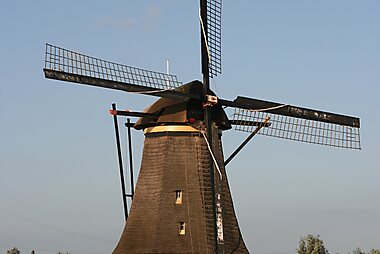
The Netherlands is a small, flat country in northwestern Europe, famous for its canals, cycling culture, and centuries-old windmills. Much of the land sits below sea level, held back by a vast system of dikes and pumping stations that has shaped Dutch life for nearly a thousand years. Amsterdam's canal-ring center draws the most visitors, but cities like The Hague and Utrecht, along with the flower fields and windmills of the countryside, are all within easy reach by train.
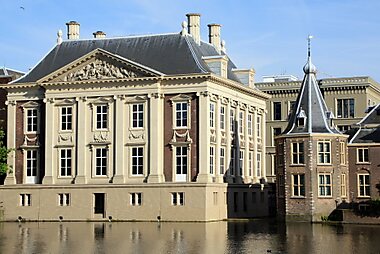
The Netherlands is part of the Schengen Area and the Eurozone, so entry and payment are simple for most European travelers. It suits visitors who enjoy cycling, museums, and compact, walkable cities more than beach holidays or wilderness. The 17th-century Dutch Golden Age, when Amsterdam was one of the world's leading centers of trade and art, still shows in the architecture and major museums found across the country.

Países Baixos – A planear uma viagem?
Cria o teu itinerário dia a dia na app Tripomatic.


Dinheiro e pagamentos
The Netherlands is one of the most cashless countries in Europe. Card and contactless payment work at nearly every shop, restaurant, and ticket machine, including public transit.
A handful of very small vendors, market stalls, and public toilets may only accept a Dutch debit card (Maestro) or coins — carrying a small amount of cash as backup is a good idea. ATMs are common in city centers and at banks.
Listas em destaque


Excursões e atividades
Países Baixos — Mapa

Gorjetas
Tipping in the Netherlands is optional and modest — service charges are already built into prices.
- Restaurants: round up the bill or add 5–10% for good service.
- Bars and cafes: round up to the nearest euro.
- Taxis: round up the fare.
- Hotels: a small tip for housekeeping or porters is appreciated but not expected.
- Tour guides: 5–10% for a private or walking tour is generous, not required.
arredondar ou 5-10%
arredondar
arredondar
1-2 EUR/dia
5-10%
Eletricidade
The Netherlands uses Type C and Type F plugs at 230 V / 50 Hz — the standard European two-pin socket. Most modern phone and laptop chargers work without an adapter; only visitors arriving from outside continental Europe will need one.
Idioma
Dutch (Nederlands) is the official language nationwide, with Frisian holding co-official status in the northern province of Friesland (Fryslân). English is spoken fluently by most of the population, especially in cities and among younger people — menus, signs, and transit announcements are often bilingual. You can travel comfortably with English alone.
Como manter a ligação à rede
Prepaid SIM and eSIM plans are easy to buy at supermarkets, phone shops, and the airport, and — unlike in some other European countries — no ID registration is required. Coverage is excellent nationwide, including on trains. There are no internet restrictions or blocked services to plan around.
Segurança e emergências
The Netherlands is a safe country for tourists, with low rates of violent crime. The most common issue is petty theft and pickpocketing in crowded tourist areas — train stations, trams, and busy shopping streets are the main hotspots. Bicycle theft is common; always lock a rented bike with a solid lock. Be wary of street scams involving fake ticket sellers or games near major sights.
Saúde
Tap water is safe to drink everywhere in the country and is among the highest quality in Europe. Pharmacies (apotheek) are widely available in cities, typically open on weekdays with reduced weekend hours; outside those hours, a rotating on-call dienstapotheek handles urgent needs, usually posted at the door of the nearest pharmacy.
No special vaccinations are required to visit the Netherlands. EU citizens should carry a valid European Health Insurance Card (EHIC); other travelers should carry travel health insurance, since healthcare costs can be high without it.
Vistos e entrada
The Netherlands is part of the Schengen Area. Citizens of the EU/EEA can enter freely with a valid ID card or passport. Citizens of the US, UK, Canada, Australia, and many other countries can enter visa-free for stays of up to 90 days within any 180-day period for tourism.
Travelers who need a visa can apply for a Schengen short-stay visa through the Dutch embassy or consulate in their home country.
Visa and entry requirements change frequently. Verify current requirements with the official immigration authority or your country's embassy before travel.
Etiqueta
The Dutch are known for being direct — blunt honesty is normal here and isn't meant as rudeness. Greetings are informal: a handshake for a first meeting, three cheek kisses among friends. Punctuality matters, especially for appointments and reservations.
- Cycling etiquette: stay off bike lanes when walking, and look both ways before crossing one — bikes move fast and have the right of way in many situations.
- Dress code: casual clothing is fine almost everywhere; only a handful of upscale restaurants expect smart-casual attire.
- Splitting the bill is completely normal, even on a date — the term "going Dutch" originated here.
- Cannabis is tolerated only inside licensed coffeeshops; using it in the street or elsewhere is not accepted and can be fined.
Feriados e horários de funcionamento
Public holidays generally close banks, post offices, and government offices; most shops, restaurants, and museums in major cities stay open, though hours may be reduced. Public transport typically runs on a Sunday schedule.
Shops in city centers are usually open seven days a week, though smaller towns often close early or stay shut on Sunday mornings. Thursday is a common late-shopping evening (koopavond) in larger cities.
Como se deslocar
- By train: the national rail network (NS) connects nearly every city and town, with frequent, fast service between major destinations — Amsterdam to Rotterdam takes about 40 minutes, and to Utrecht about 25 minutes. Buy tickets and check schedules at NS – Dutch Railways.
- By bus and tram: local buses and trams cover what trains don't reach, especially within cities. A single OV-chipkaart or a contactless bank card works across the entire national public transport network — tap in and out at every ride.
- By bike: cycling is often the fastest way to get around Dutch cities, with dedicated, well-signed bike lanes everywhere. Rental bikes are available at every train station.
- By air: domestic flights rarely save time — the country is small enough that trains are faster door-to-door.
Conduzir
- Speed limits: 50 km/h in built-up areas, 80 km/h on rural roads, and 100 km/h on motorways between 06:00 and 19:00 — a handful of motorway stretches now allow up to 130 km/h around the clock.
- Key rules: cyclists are everywhere and often have the right of way — watch for them constantly, especially when turning. Using a handheld phone while the car is in motion is illegal — it's fine to check it while genuinely stationary, such as at a red light.
- Tolls: most motorways are free. The Kiltunnel near Dordrecht and the newer Blankenburgverbinding (A24) near Rotterdam charge a toll for all vehicles; the Westerschelde tunnel is now free for passenger cars.
- Low-emission zones: Amsterdam, Rotterdam, Utrecht, and The Hague restrict older diesel vehicles from city centers — check a rental car's compliance before driving in.
- Parking: paid parking is standard in city centers, usually via a meter or app; illegally parked cars are ticketed or towed quickly.
- Fuel: stations are self-service, paid by card at the pump. Petrol is labeled Euro95 or Euro98; diesel is labeled Diesel.
- Electric vehicles: public charging points are widely available in cities and at most fuel stations, payable by app or contactless card.
Comida e bebida
Dutch meals are simple and unhurried. Breakfast and lunch are usually bread-based — sandwiches with cheese or cold cuts, or hagelslag (chocolate sprinkles), are a real, if playful, breakfast tradition. Dinner is eaten early, often between 6 and 7 pm, and is the main hot meal of the day: think mashed potatoes with vegetables and meat, or a hearty one-pot dish like stamppot.
Street food leans savory: bitterballen (fried meat croquettes) are a bar snack staple, frites (fries) come with mayonnaise rather than ketchup, and herring stalls sell raw Dutch herring (haring) eaten by the tail. Stroopwafels — thin waffles filled with caramel syrup — are the classic sweet souvenir, best bought warm from a market stall.
Coffee culture is strong; a koffie verkeerd (similar to a latte) with a slice of appeltaart (apple cake) is a common afternoon stop. Beer is the everyday drink of choice, with Dutch brands like Heineken and Grolsch alongside a growing craft beer scene; jenever, a juniper spirit, is the traditional stronger drink.
Onde explorar
The Netherlands is compact enough to see several destinations on one trip, all connected by fast trains.
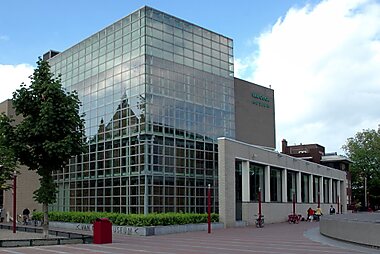
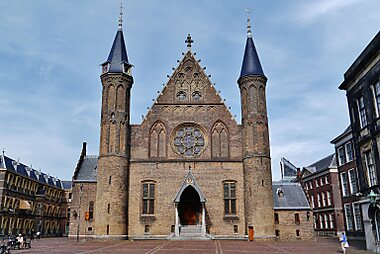
Major cities: Amsterdam is the capital and cultural center, known for its canal-ring historic core and major museums. Rotterdam is the country's modern, rebuilt-after-the-war counterpart, known for bold architecture and its busy port. The Hague is the seat of government and home to international courts, with a quieter, elegant character and a beach at Scheveningen.
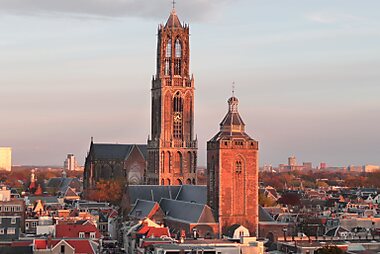
Historic towns near Amsterdam: Utrecht has a compact medieval center and the Dom Tower, the tallest church tower in the country. Haarlem is a smaller, canal-lined market town, and Leiden a historic university town — both an easy day trip from Amsterdam. Delft is known for its blue-and-white pottery and its Vermeer connection. Gouda draws visitors for its weekly cheese market and Gothic town hall. The lakeside town of Edam is known for its own namesake cheese and quiet streets lined with 17th-century houses.
Beyond the west: Maastricht in the far south feels distinctly different, with a hillier landscape and strong Belgian influence. Groningen and Leeuwarden anchor the northern provinces, both lively university towns with their own regional character. Middelburg is the historic capital of the coastal province of Zeeland.
Países Baixos – Planeia a tua viagem
Escolhe os lugares que queres ver e o Tripomatic transforma-os numa rota dia a dia, com rotas inteligentes, estimativas de tempo e tudo o que precisas para uma viagem perfeita.




