


Parque Natural da Ria Formosa
Ria Formosa is a lagoon about 60 km long on the eastern Algarve coast. A chain of sandy barrier islands and two peninsulas shelters it from the Atlantic. Inside are salt marshes, salt pans, mudflats and tidal channels. The lagoon connects to the sea through six inlets and was voted one of Portugal's seven natural wonders in 2010.
It suits a relaxed trip of beaches, boat rides and birdwatching. Faro, Olhão and Tavira are the bases, and each has ferries or water taxis to the islands. Some islands have no cars and only a few small villages. Clams and oysters are farmed in the lagoon and appear on many menus.

Parque Natural da Ria Formosa – A planear uma viagem?
Cria o teu itinerário dia a dia na app Tripomatic.


Quando visitar
Beach and island season runs from June to September. Days are hot and dry, and the islands are most popular in summer. Spring and autumn are mild and good for walking and birdwatching, because many birds stop here on migration. Winter is mild but wetter. Check the last boat out of season.
Melhor altura para visitar: abril, maio, junho, julho, agosto, setembro, outubro, novembro
Principais atrações
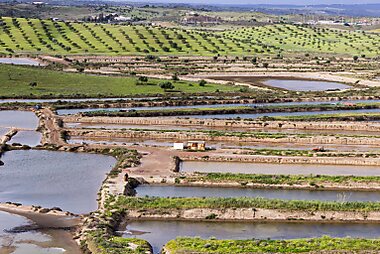
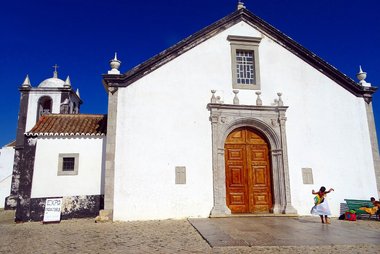

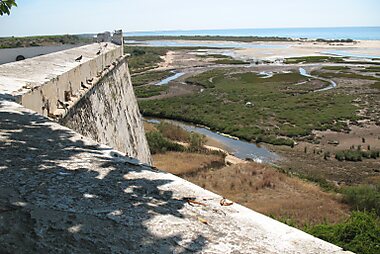
- Ria Formosa is the whole lagoon system. Salt pans, channels and marshes are home to flamingos, herons and spoonbills.
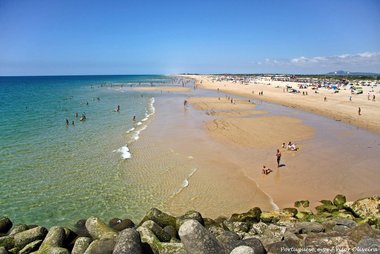
- Praia da Ilha de Faro is the easiest beach to reach. A bridge links it to the mainland near Faro, so no boat is needed.
- Praia da Ilha de Tavira is a long, quiet beach on Tavira Island. Boats leave from Tavira and Santa Luzia.
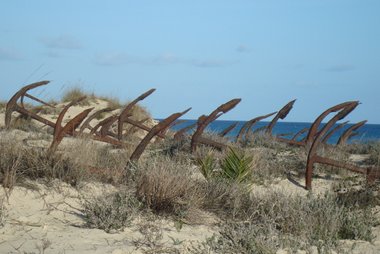
- Praia do Barril is also on Tavira Island. Its field of rusting anchors recalls the old tuna fishing here. A tourist train from Pedras d'el Rei serves the island.
- Cacela Velha is a small fishing village on a hill above the eastern end of the lagoon. It has narrow lanes and wide views.
- Forte de Cacela is the village fortress above the lagoon.
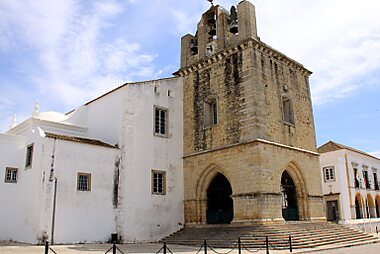
- Sé de Faro stands in the walled old town of Faro, the main mainland gateway to the park.
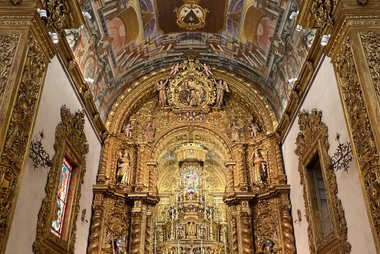
- Igreja do Carmo in Faro has the Capela dos Ossos, a small chapel decorated with human bones.
Listas em destaque

Ria Formosa Nature Park Unmissables
This selection highlights the diverse landmarks within the Ria Formosa Nature Park, ranging from Faro's historic religious sites to the barrier islands of Tavira. Key features include the 18th-century Igreja do Carmo with its bone chapel and the medieval Castle of Tavira. The park's natural landscape is showcased through the sand dunes of Ilha da Barreta and the unique Anchor Cemetery at Praia do Barril, while the architecture of the Gilão River bridges reflects the region's Roman and 17th-century heritage.
11 lugares


O que experienciar
- Island hopping by ferry or boat trip. Many operators visit Culatra, Farol and Ilha Deserta in one day.
- Walk from the village of Culatra to Farol on Culatra Island. The path passes Hangares, a former naval seaplane base.
- Watch flamingos and other waders on the salt pans east of Olhão, best at dawn or dusk.
- Follow the bird-hide trail at Quinta de Marim, near Olhão. A tide mill museum is also there.
- Paddle a kayak or stand-up paddleboard in the sheltered channels. Some channels are closed to boats, so ask the operator.
- Walk the Ludo Trail, a 7 km loop through wetland and salt pans near Faro.
- Stay for sunset drinks at Farol, a popular spot in summer.
Excursões e atividades
Parque Natural da Ria Formosa — Mapa

Passeios de um dia
The park itself is the day trip for most visitors. These places are close and easy to combine with it.
- Olhão: a fishing town and the main ferry port for Culatra and Armona. Allow time for the market and the old lanes.
- Tavira: about 30 km east of Faro. Visit its seven-arched bridge over the Gilão river and the castle.
- Faro: a walled old town beside the lagoon with a cathedral and a museum.
- Cacela Velha: a quiet hilltop village at the eastern end of the park.
- Culatra and Armona: car-free islands with ocean beaches, reached by ferry or water taxi from Olhão.
Onde explorar
Ria Formosa lies between several larger towns.
- West: Faro has the airport, the main station and a walled old town.
- Centre: Olhão is the busiest ferry port for the islands.
- East: Tavira is a historic town with a river, a castle and island beaches nearby.
- Far east: Vila Real de Santo António and Castro Marim lie near the Spanish border.
Como chegar
- By air: Faro Airport is beside the lagoon, a short drive from Faro and Praia de Faro. It is the gateway for the whole park.
- By train: Comboios de Portugal runs trains on the Algarve line. Alfa Pendular and Intercidades trains serve Faro, and regional trains continue to Olhão, Fuseta and Tavira. CP – Comboios de Portugal
- By car: The A22 runs along the Algarve coast and is toll-free. The A2 from Lisbon to the Algarve is still tolled.
Como se deslocar
- Ferries: Ferries to the islands run all year from Faro, Olhão and Tavira. Check the last boat of the day, especially out of season.
- Water taxis: Water taxis serve the islands from Olhão, Fuseta and Cabanas de Tavira. They cost more than ferries and are useful after the last sailing.
- Trains: The Algarve line links Faro, Olhão, Fuseta and Tavira.
- Tourist train: A small train runs from Pedras d'el Rei to Tavira Island.
- On foot: Culatra and Armona have no cars. Walk the boardwalks between beach, village and lighthouse. There is little shade, so bring water and a hat.
- Park information: ICNF, the nature parks authority
Conduzir
- A car is not needed for the islands, which have no cars. It helps for Cacela Velha, Pedras d'el Rei and Quinta de Marim.
- Park in Faro, Olhão or Tavira and take the ferry on foot.
- The A22 is toll-free. The A2 from Lisbon is a toll road.
Comida e bebida
Seafood is the main reason to eat here. Clams and oysters are farmed in the lagoon, and local boats supply fish, prawns and squid.
For a market meal, visit the red-brick market halls in Olhão. They are open in the morning, and local producers set up outside on Saturday. Waterfront streets in Olhão and Tavira have many fish restaurants. Cacela Velha has a few seafood restaurants in the village. On the islands, Farol on Culatra and Ilha Deserta have seafood restaurants.
Segurança e saúde
This is a safe, low-crime area. Most problems are small. Take care of bags on crowded summer beaches and at ferry piers.
- Sun and shade: There is little shade on the islands. Bring water, a hat and sunscreen.
- Boats: Check the last ferry. If you miss it, a water taxi is the only way back.
- Nature: Stay on boardwalks to protect the dunes. Some channels are closed to boats to protect seahorse beds.
História
The lagoon has long supported fishing and salt making. In Cacela Velha, excavations in 2007 showed that the village stood on the site of an Islamic town in the 10th century. The old fortress above the lagoon is Forte de Cacela.
In Tavira, a seven-arched bridge over the Gilão river is often called Roman. Surveys found it was a Moorish bridge from the 12th century. Tuna fishing once shaped life on the coast. The anchors at Praia do Barril are a reminder of it.
In 1808, people in Olhão rose up against the French occupation. The town later added "da Restauração" to its name. The main Faro–Olhão inlet is man-made. Work began in 1927 and finished in 1952, to improve access to the port of Faro.
Factos sobre o país
Quick practical facts for Portugal at a glance:
- Moeda
- Euro EUR € · Pagamentos com cartão · Amplamente aceite
- Números de emergência
- 112
- Eletricidade
- 230 V · 50 HzTipo C / Tipo F
- Idiomas
- português
- Água da torneira
- Própria para beber
- Sentido de condução
- Direita
- Indicativo telefónico
- +351


Parque Natural da Ria Formosa – Planeia os teus dias
Transforma os lugares deste guia num verdadeiro itinerário, com rotas inteligentes, estimativas de tempo e tudo o que precisas para uma viagem perfeita.


Destinos relacionados

Data: © OpenStreetMap contributors, Wikidata, Wikipedia, Tripomatic, Official websites. Tours by GetYourGuide. We earn commission from bookings. Travel guide generated with AI.
Planeia a tua viagem com o Tripomatic
- Planeamento com IAObtém um dia pronto com um toque, deixa a IA distribuir a tua lista de desejos pela tua viagem ou planeia tudo através do chat.
- Alertas de viagemAvisos oficiais, condições meteorológicas adversas, greves e perigos naturais para os lugares em cada dia da tua viagem.
- Feriados e eventosVê feriados, festivais e encerramentos nos dias da tua viagem e o impacto que têm nos teus planos.
- Estimativa de custosDiscriminação de custos de viagem com IA para saberes quanto orçamentar antes de ir.
- Excursões e bilhetesReserva excursões, bilhetes sem filas e atividades diretamente no teu plano.