


Tours
Tours is a university city on the Loire, about 1 hour from Paris by fast train. It has a Gothic cathedral, a compact old town of half-timbered houses, and wide river banks. Many visitors use it as a base for the Loire châteaux, because trains and roads reach most of them easily.
The city has long been a centre of Christian pilgrimage because of Saint Martin. Today it feels like a normal French city more than a museum, with students, markets and busy terraces. It suits 1 to 3 nights, or longer if you plan several day trips.

Tours – A planear uma viagem?
Cria o teu itinerário dia a dia na app Tripomatic.


Quando visitar
May to September is the best time. Days are warm, long and mostly dry, and all the châteaux and gardens are open. Spring and early autumn are quieter. Winter is cool and grey, with short days and shorter opening hours at many sights.
The biggest regular local event is the garlic and basil fair, a market held around 26 July.
Melhor altura para visitar: maio, junho, julho, agosto, setembro
Principais atrações
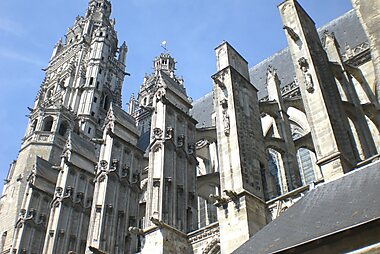
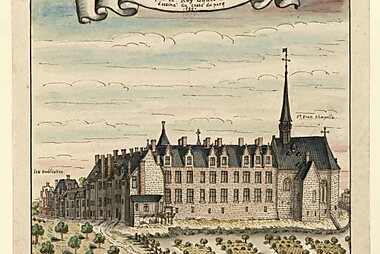
- Cathédrale Saint-Gatien is the city's main landmark. Its Gothic towers have Renaissance tops, and the choir keeps 13th-century stained glass. Inside, a marble tomb holds the children of Charles VIII.
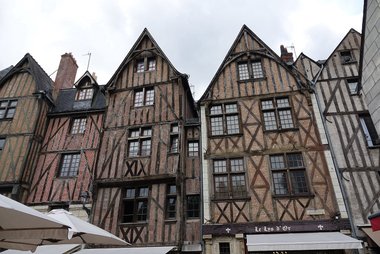
- Place Plumereau is the heart of the old town. Half-timbered houses surround it, and the terraces are busy from late afternoon.
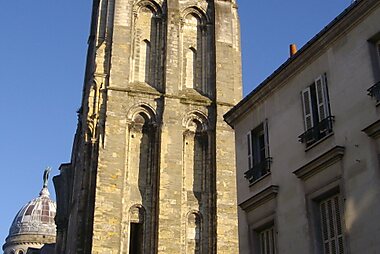
- Basilique Saint-Martin is a large church built between 1886 and 1924 over the tomb of Saint Martin. The old Tour Charlemagne nearby is a remnant of the earlier medieval basilica.
- Musée des Beaux-Arts is next to the cathedral, in the former archbishop's palace. It has Italian paintings, including works by Mantegna, and a pleasant garden.
- Château de Tours stands near the Loire. It is an old royal castle that now holds changing art and photography exhibitions.
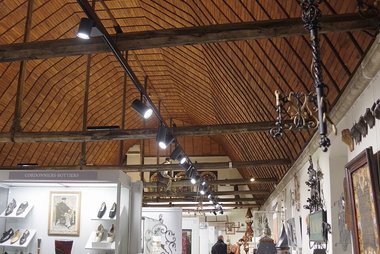
- Musée du Compagnonnage is in a former abbey. It shows masterpieces made by journeymen of the traditional craft guilds.
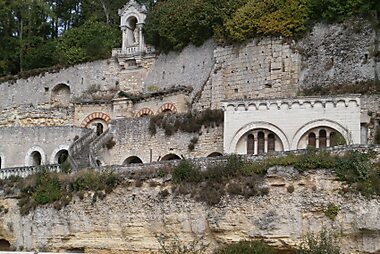
- Abbaye de Marmoutier is the ruined abbey that Saint Martin founded outside the city. It is a quiet place by the river, away from the centre.
Listas em destaque


O que experienciar
- Evening on the square: Sit on a terrace on Place Plumereau when the lights come on. It is the main meeting point for students and locals.
- Cycle the Loire à Vélo: A signed, mostly flat route follows the river. A half-day ride out of the city is easy, and you can go as far as Villandry.
- Garlic and basil fair: Each year around 26 July, stalls fill part of the city with local produce.
- Paris–Tours: This professional cycle race finishes in the city, usually in October.
Excursões e atividades
Tours — Mapa

 Abrir o mapa interativo
Passeios de um dia
Tours is the best base in the region for the Loire châteaux. Times below are one way from Tours.
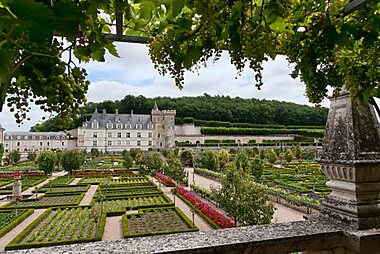
- Château de Villandry: about 25 minutes by car, with no train. It is known for its formal Renaissance-style gardens, including a decorative vegetable garden. You can also cycle there along the Loire à Vélo route.
- Vouvray: about 15 minutes by car. This wine village has cellars cut into the rock, and many offer tastings.
- Amboise: about 20 minutes by train. A royal château overlooks the town, and Leonardo da Vinci lived his last years at Clos Lucé nearby.
- Azay-le-Rideau: about 30 minutes by train or car. A Renaissance château stands on an island in the Indre river.
- Chenonceaux: about 30 minutes by train or 40 minutes by car. The château spans the Cher river and is one of the most visited in France.
- Chinon: about 45 minutes by train or car. A ruined fortress above the old town is linked to Joan of Arc.
- Blois: about 40 minutes by train. Its château shows several centuries of royal building styles.
- Chambord: about 1 hour 15 minutes by car, with limited public transport. The huge Renaissance château sits in a walled forest park.
Onde explorar
Como chegar
- By air: The small Tours Val de Loire airport, about 5 km north of the centre, has a few scheduled flights to European cities, mostly low-cost. Most visitors fly to Paris and continue by train.
- By train: TGV trains from Paris Montparnasse take about 1 hour. Bordeaux is about 1 hour 40 minutes away. Some trains stop at Tours station in the centre. Others stop at Saint-Pierre-des-Corps, a few kilometres east, where a short local train or tram ride takes you into the city. Book at SNCF Connect.
Como se deslocar
- On foot: The old town and most main sights are within a 20-minute walk of each other. The ground is flat.
- Tram and bus: The Fil Bleu network runs one tram line (line A) and many bus routes. Check tickets, passes and disruptions on the Fil Bleu site.
- Cycling: Tours is flat, and the Loire à Vélo route follows the river. Fil Bleu also offers bikes.
Conduzir
- Is a car worth it?: Not for the city itself. It is useful for châteaux that have no train, such as Villandry, and for wine villages.
- Parking: Use underground car parks near the centre, or park-and-ride sites along the tram line and walk or ride in.
- Restrictions: Much of the old town is pedestrian. Follow signs and do not drive into the Place Plumereau area.
Comida e bebida
Touraine food is simple and local. Try rillettes, a potted pork spread, and rillons, pieces of cooked pork belly. Sainte-Maure-de-Touraine is a local goat cheese. Nougat de Tours is a sweet to take home. The local wines are Touraine and Vouvray, mostly white, and many cellars in the nearby villages offer tastings.
Eat around Place Plumereau, where terraces fill up in the evening, or on Rue Colbert. For fresh produce and a quick lunch, visit the Les Halles covered market. Book ahead on Friday and Saturday evenings.
Segurança e saúde
Tours is generally safe for visitors. Pickpocketing is the main risk, especially around the station and in crowded places such as Place Plumereau at night.
The old town can be noisy late in the evening, so check the location of your hotel. The river banks are quiet and dark after dark, so keep to busier streets.
História
Tours began as a Roman town. In the 4th century Saint Martin became its bishop, and the city grew into a major place of pilgrimage. His tomb lies in Basilique Saint-Martin. In 732 Charles Martel stopped an army from the south at the Battle of Tours, and a council held here in 813 told priests to preach in the language people spoke.
From the 15th century the French kings often lived in the area. Louis XI made his home at Château de Plessis-lèz-Tours, and the royal castle, Château de Tours, stood by the river. The building of Cathédrale Saint-Gatien lasted from 1170 to 1547.
In the 20th century Tours twice served briefly as the seat of the French government, in 1870 and in June 1940. Fire and bombing in 1940 and 1944 destroyed parts of the centre, which was rebuilt afterwards.
Factos sobre o país
Quick practical facts for France at a glance:
- Moeda
- Euro EUR € · Pagamentos com cartão · Amplamente aceite
- Números de emergência
- 112
- Eletricidade
- 230 V · 50 HzTipo C / Tipo E
- Idiomas
- francês
- Água da torneira
- Própria para beber
- Sentido de condução
- Direita
- Indicativo telefónico
- +33


Tours – Planeia os teus dias
Transforma os lugares deste guia num verdadeiro itinerário, com rotas inteligentes, estimativas de tempo e tudo o que precisas para uma viagem perfeita.


Destinos relacionados
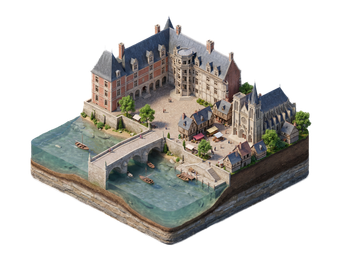
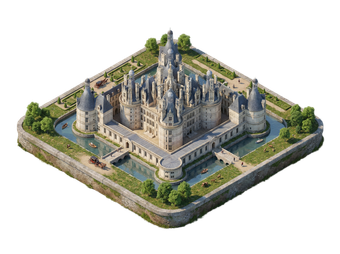
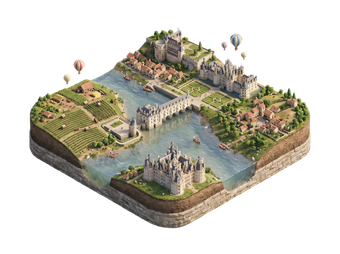


Data: © OpenStreetMap contributors, Wikidata, Wikipedia, Tripomatic, Official websites. Tours by GetYourGuide. We earn commission from bookings. Travel guide generated with AI.
Planeia a tua viagem com o Tripomatic
- Planeamento com IAObtém um dia pronto com um toque, deixa a IA distribuir a tua lista de desejos pela tua viagem ou planeia tudo através do chat.
- Alertas de viagemAvisos oficiais, condições meteorológicas adversas, greves e perigos naturais para os lugares em cada dia da tua viagem.
- Feriados e eventosVê feriados, festivais e encerramentos nos dias da tua viagem e o impacto que têm nos teus planos.
- Estimativa de custosDiscriminação de custos de viagem com IA para saberes quanto orçamentar antes de ir.
- Excursões e bilhetesReserva excursões, bilhetes sem filas e atividades diretamente no teu plano.