



Mérida
Mérida is a city in Extremadura, in western Spain, and the regional capital. Founded by the Romans as Emerita Augusta in 25 BC, it has the best-preserved Roman remains in Spain, and its archaeological ensemble is a UNESCO World Heritage Site.
The theatre, amphitheatre, bridge and aqueduct are all within the city. It suits a full day or an overnight stay, and it is close to Cáceres and Badajoz.

Mérida – Planifici o călătorie?
Creează-ți itinerarul zi de zi în aplicația Tripomatic.


Când să vizitezi
Spring and autumn are the best seasons, with mild, sunny weather. Summers are very hot and dry, with temperatures often above 35°C. Winters are mild, with some rain.
The International Festival of Classical Theatre runs from July to August in the Roman Theatre, with evening performances. The summer evenings are cooler, so it is a good time to visit the sites after dark.
Cea mai bună perioadă de vizitare: aprilie, mai, octombrie
Obiective turistice de top
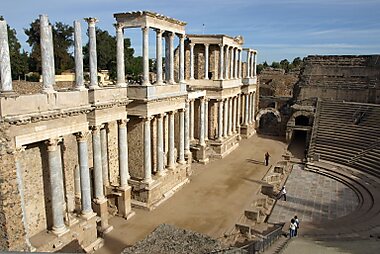
- Teatro Romano is a Roman theatre from around 15 BC with a restored stage, still used for performances.
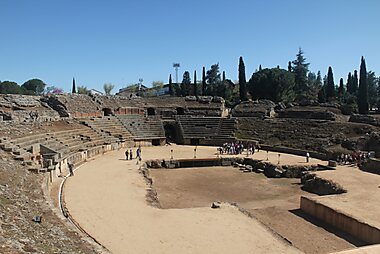
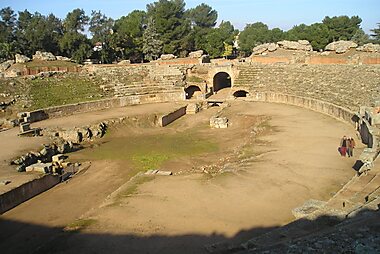
- Anfiteatro Romano is a Roman amphitheatre next to the theatre, where gladiator fights were held.
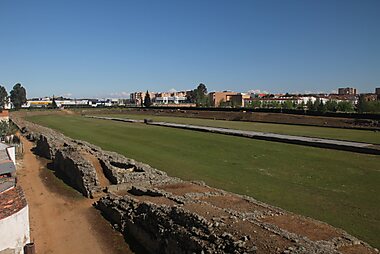
- Circo Romano is a Roman chariot-racing circus, one of the best preserved in the Roman world.
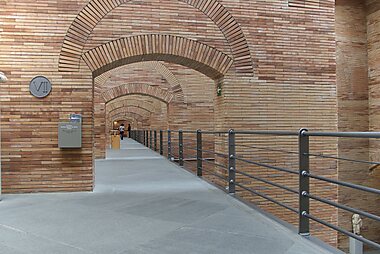
- Museo Nacional de Arte Romano is a museum of Roman art in a brick building designed by the architect Rafael Moneo.
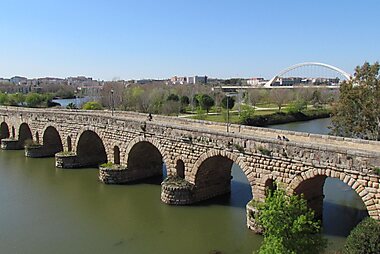
- Puente Romano is a Roman bridge more than 700 meters long, one of the longest to survive.
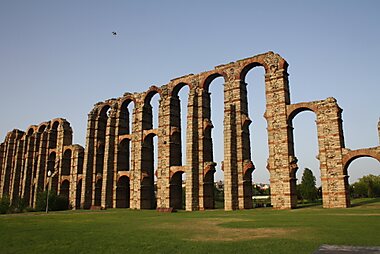
- Acueducto de los Milagros is a Roman aqueduct with brick and granite arches.
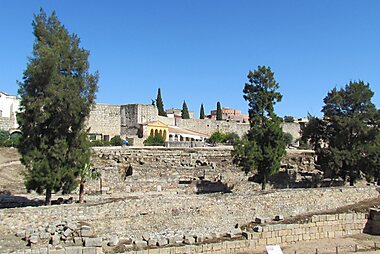
- Alcazaba de Mérida is a Moorish fortress from the 9th century, built with Roman materials.
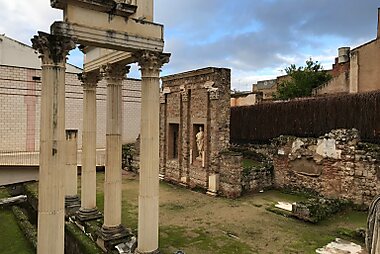
- The Temple of Diana is a Roman temple in the old town, with columns that rise above a later palace.
- The Trajan Arch is a Roman arch at the edge of the old forum.
- Foro Romano and Conjunto Arqueológico de Mérida cover the wider Roman city.
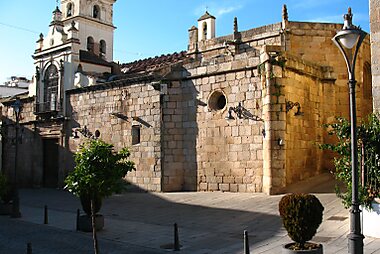
- Concatedral de Santa María la Mayor is the co-cathedral of Mérida.
Ce merită experimentat
- Watch a performance in the Roman Theatre during the summer festival.
- Walk across the Roman Bridge at sunset.
- Buy a combined ticket for several of the sites to save money.
Tururi și activități
Mérida — Hartă

Excursii de o zi
- Badajoz (about 60 km, 45 minutes): a border city with a Moorish fortress.
- Cáceres (about 70 km, 50 minutes by car): a medieval walled town.
- Almendralejo (about 25 km): a wine town in Extremadura.
- Lácara Dolmen (about 15 km): a prehistoric burial chamber.
- Seville (about 200 km, 2 hours by car): the Andalusian capital.
Ce poți explora
Cum ajungi
- By air: Badajoz airport (BJZ) has very few flights. Seville and Lisbon airports are the main alternatives.
- By train: Trains run to Badajoz, Cáceres and Madrid, though the services are slow and infrequent. Book on Renfe.
- By bus: Coaches serve Madrid, Seville, Cáceres and Badajoz.
Cum te deplasezi
- On foot: The Roman sites are close together and mostly flat. The theatre, amphitheatre and museum are within a few minutes of one another.
- Cycling: The city is flat, and a bike is a good way to reach the aqueduct and the circus.
Condusul
- Is a car worth it?: Helpful for day trips, but not for the city.
- Parking: Use a car park near the center.
- Restrictions: Parts of the old town are pedestrian only.
Mâncare și băutură
Mérida's food is typical of Extremadura. Jamón ibérico, migas (fried breadcrumbs with chorizo), torta del Casar cheese and roast lamb are common. Local wines come from the Tierra de Barros area.
Many bars serve generous tapas with each drink.
Siguranță și sănătate
Mérida is a safe city. Summer heat is extreme, so visit the open-air sites in the morning or evening, drink water and wear sun protection. The ruins have uneven ground, so wear sturdy shoes.
Istorie
The Romans founded Emerita Augusta in 25 BC as a home for retired soldiers, and it became the capital of the province of Lusitania. The theatre was built around 15 BC, and the amphitheatre in 8 BC.
The city declined after the fall of Rome, but it remained a major Visigothic town. The Moors built the Alcazaba in 835. Mérida was named capital of the Extremadura region in 1983, and the archaeological ensemble was listed by UNESCO in 1993.
Date despre țară
Quick practical facts for Spain at a glance:
- Monedă
- euro EUR € · Plăți cu cardul · Acceptate pe scară largă
- Numere de urgență
- 112
- Electricitate
- 230 V · 50 HzTip C / Tip F
- Limbi vorbite
- spaniolă
- Apă de la robinet
- Sigură de băut
- Sens de circulație
- Pe dreapta
- Prefix telefonic
- +34


Mérida – Adaugă la călătoria ta
Creează un itinerar detaliat de călătorie cu trasee inteligente, estimări de timp și tot ce ai nevoie pentru o călătorie perfectă.


Destinații înrudite


Data: © OpenStreetMap contributors, Wikidata, Wikipedia, Tripomatic, Official websites, geoBoundaries (CC BY 4.0). Tours by GetYourGuide. We earn commission from bookings. Travel guide generated with AI.
Planifică-ți călătoria cu Tripomatic
- Planificare susținută de AILasă inteligența artificială să-ți construiască itinerarul, să răspundă la întrebări de călătorie și să-ți organizeze documentele de rezervare în călătorie.
- Alerte de călătorieAvertizări oficiale, fenomene meteo severe, greve și pericole naturale pentru locurile din fiecare zi a călătoriei tale.
- Sărbători legale și evenimenteVezi sărbătorile, festivalurile și închiderile din zilele călătoriei tale și ce înseamnă acestea pentru planurile tale.
- Estimarea costurilorDefalcare a costurilor călătoriei susținută de AI, astfel încât să știi ce buget să aloci înainte de plecare.
- Tururi și bileteRezervă tururi, bilete cu acces prioritar și activități direct în planul tău.