


San Juan, Puerto Rico
San Juan is the capital of Puerto Rico and one of the oldest cities founded by Europeans in the Americas. Its walled old town sits on a small island at the mouth of a large bay. Colourful colonial houses, blue stone streets and huge Spanish forts make it one of the best-preserved historic centres in the Caribbean.
The modern city spreads east along the Atlantic coast, with beach districts such as Condado and Ocean Park, and the art and nightlife quarter of Santurce. A short trip can combine history, city beaches and a day in the rainforest. US citizens need no passport, and the US dollar is the currency, so it is an easy first trip to the Caribbean.

San Juan, Puerto Rico – Planifici o călătorie?
Creează-ți itinerarul zi de zi în aplicația Tripomatic.


Când să vizitezi
The best time to visit is from December to April. It is warm all year, but these months are drier, less humid and the busiest for hotels. From May to November it is hotter and wetter, with short, heavy showers. The Atlantic hurricane season runs from June to November, and the highest risk is from August to October.
The biggest annual event is the Fiestas de la Calle San Sebastián in mid-January. For four days, Calle San Sebastián and the old town fill with parades, artisan markets and live music. It marks the end of Puerto Rico's long Christmas season, so the city is very crowded and hotels book up early.
Obiective turistice de top
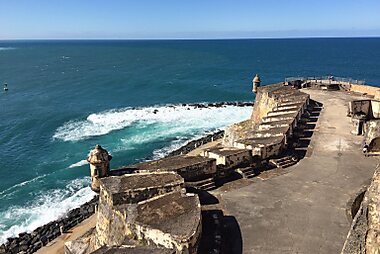
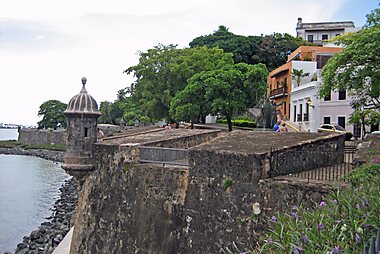
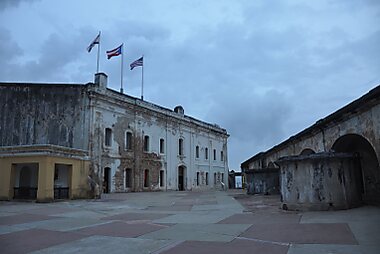
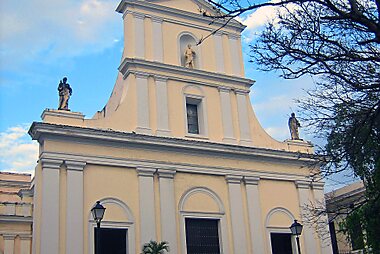


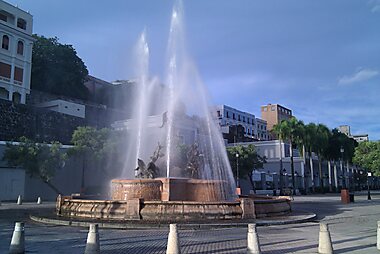


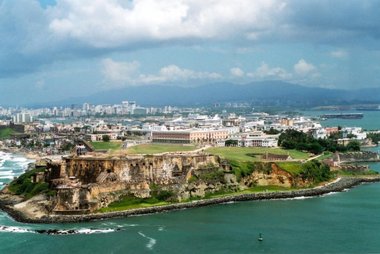
Most sights are in Viejo San Juan, the walled old town. It is small enough to see on foot in one or two days.
- Castillo San Felipe del Morro guards the entrance to the bay from the tip of the island. Its six levels, tunnels and cannon platforms are the city's best-known image.
- Castillo San Cristóbal is the largest fort the Spanish built in the Americas. It protected the city from land attacks. Its tunnels and sentry boxes give wide views over the Atlantic. One ticket covers both forts for 24 hours. Payment is by card only.
- Fortaleza Street is the most photographed street in the old town. It has colourful houses and blue paving stones, and sometimes an art installation overhead, such as rows of umbrellas.
- La Fortaleza is the governor's official residence. It is the oldest executive mansion in continuous use in the Americas. It was built between 1533 and 1540.
- Catedral de San Juan Bautista is one of the oldest cathedrals in the Americas. It holds the tomb of Juan Ponce de León, the first Spanish governor of the island.
- Capilla del Santo Cristo de la Salud is a tiny 18th-century chapel at the bottom of Calle del Cristo. It opens only on some days, but its front is one of the city's best-known views.
- Paseo de la Princesa is a 19th-century promenade below the city walls. It leads to San Juan Gate, the last surviving city gate. From there, Paseo del Morro continues along the water.
- Condado Beach is the main city beach, lined with hotels and a short ride from the old town. El Escambron Beach is a smaller beach between Condado and the old town.
Liste recomandate

San Juan's Unmissable Essentials
San Juan’s historic core features massive 16th-century Spanish fortifications like Castillo San Felipe del Morro and Castillo San Cristóbal, both UNESCO World Heritage sites. The blue-cobbled streets of Old San Juan lead to the Cathedral of San Juan Bautista, the second oldest cathedral in the Americas, and La Fortaleza, the oldest executive mansion in continuous use. Visitors can walk along the 19th-century Paseo de la Princesa, pass through the historic San Juan Gate, and explore the colonial-era Santa María Magdalena de Pazzis Cemetery overlooking the Atlantic.
11 locuri


Historic Sites of Puerto Rico
San Juan's history is preserved through an extensive colonial defense system, featuring the massive masonry walls of Castillo San Felipe del Morro and Castillo San Cristóbal. This collection spans the city's evolution from the 16th-century governor’s residence at La Fortaleza to 19th-century infrastructure like the General Norzagaray Bridge. It includes monuments dedicated to influential Puerto Rican figures like Román Baldorioty de Castro and José Celso Barbosa, alongside military ruins and historical river crossings that once connected the islet to the mainland.
24 de locuri
Ce merită experimentat
A few things that are special to San Juan:
- Fly a kite at El Morro: on breezy afternoons, families fly kites on the large lawn in front of Castillo San Felipe del Morro.
- Spend a night at La Placita: on Thursday to Saturday evenings, La Placita de Santurce (Plaza del Mercado) becomes an outdoor party, with salsa music and crowds in the streets around the old market hall.
- Watch the sunset from the walls: walk Paseo del Morro along the base of the city walls in the late afternoon. The path faces west over the bay.
- See the old town at Christmas: during the holiday season, the plazas are decorated and many evenings have music in the streets.
Tururi și activități
San Juan, Puerto Rico — Hartă

Excursii de o zi
Most day trips are easiest by rental car or on a tour. Times are rough and one way from the city.
- Cataño (a short ferry ride): the ferry from the old town pier crosses the bay. On the other side, Bacardi Rum Factory offers rum tours, with a shuttle from the ferry.
- Piñones (≈20 min by car): a long, wild coast east of the airport, with a seaside boardwalk and wooden kiosks selling fried snacks.
- El Yunque National Forest (≈1 h by car): the only tropical rainforest in the US National Forest System, with waterfalls, viewing towers and short trails. Check current access and parking rules with the US Forest Service before you go.
- Luquillo (≈45 min–1 h by car): a calm, palm-lined public beach, easy to combine with El Yunque.
- Fajardo (≈1 h by car): evening kayak tours enter Laguna Grande, a lagoon where the water glows when you move it. Go on a night with little moonlight.
- Ponce (≈1.5–2 h by car): Puerto Rico's second city, on the south coast. It has a historic centre and the Museo de Arte de Ponce, the largest art museum in the Caribbean.
- Vieques (a drive to Ceiba, then a ferry, or a short flight): an island with quiet beaches and Mosquito Bay, a bright bioluminescent bay. It is better as an overnight trip.
Ce poți explora
San Juan is the gateway to the rest of Puerto Rico. Most visitors fly in here and then head to the east coast and the smaller islands.
- Vieques is a small island off the east coast with empty beaches, wild horses and a bioluminescent bay. Plan at least one night there.
Cum ajungi
- By air: Luis Muñoz Marín International Airport (SJU) is the busiest airport in the Caribbean, with many direct flights from the US mainland. It is in Isla Verde, east of the old town. Tourist taxis wait outside the terminal and charge set fares by zone, so ask the price before you leave. Uber also picks up at the airport. Public buses T5 and 53 run to the bus terminal in the old town, but they are slow.
- By sea: San Juan is one of the main cruise ports in the Caribbean. Ships dock at the piers along the old town, a short walk from the main sights.
- By ferry: ferries to Vieques and Culebra leave from Ceiba on the east coast, on the east coast of the main island. Book ahead with Puerto Rico Ferry.
Cum te deplasezi
- On foot: the old town is compact and best seen on foot. The streets are steep in places and paved with uneven blue stones, so wear good shoes.
- Uber and taxis: Uber is the easiest way to move between the old town, Condado, Santurce and the beaches. Tourist taxis wait at the cruise piers and big hotels.
- Buses: AMA city buses connect the old town terminal with Condado, Santurce and the airport. A ride costs 75 cents; pay on board with exact change in coins, or tap a contactless bank card or phone. Buses can be slow and infrequent, especially at weekends.
- Train: the Tren Urbano metro line does not reach the old town, Condado or the airport, so it is of little use for most visitors.
- Ferry: a short ferry from the old town pier crosses the bay to Cataño. It has good views of the forts and the skyline.
Condusul
- Is a car worth it?: you do not need a car in the city. Walking and Uber are easier. Rent a car only for days out to the rainforest, the east coast or the south.
- Parking: parking in the old town is very limited. Use the large public garages at the edge of the old town, such as Doña Fela on Calle Recinto Sur, rather than looking for a street space.
- Tolls: highways around San Juan use electronic tolls only (AutoExpreso). Ask the rental company how tolls are charged.
- Traffic: rush-hour traffic in the metro area is heavy. Plan airport transfers and day trips outside 7–9 am and 4–6 pm.
Mâncare și băutură
Try mofongo, mashed fried plantain with garlic, often filled with seafood or meat. Fried snacks such as alcapurrias and bacalaítos are sold at beach kiosks, and roast pork (lechón) is a weekend favourite. Puerto Rican rum and the piña colada are local pride, and coffee from the island's mountains is very good.
For good eating in the city, go to the restaurants along Calle de la Fortaleza and around Calle San Sebastián in the old town. The streets around La Placita de Santurce (Plaza del Mercado) have many bars and small kitchens. For cheap fried snacks by the sea, drive to the kiosks of Piñones. Tipping works as on the US mainland: 15–20 % in restaurants, but check whether a service charge is already on the bill.
Siguranță și sănătate
San Juan is generally safe for tourists in the old town, Condado and the beach districts. The main risks are petty crime and theft from cars and beach bags.
- Valuables: do not leave bags on the beach while you swim, and never leave anything visible in a parked car.
- At night: stay on the busy, lit streets. Do not walk into La Perla, the neighbourhood below the old town walls, unless you are with a local guide.
- The sea: currents can be strong on open beaches. Swim where lifeguards are present and follow the warning flags.
- Sun and heat: the sun is very strong all year. Carry water and use sunscreen, especially when walking between the forts.
- Hurricanes: the season runs from June to November. Check the forecast before you travel.
Tap water is safe to drink.
Istorie
Juan Ponce de León founded the first Spanish settlement on the island in 1508. A year later, the settlers moved to the islet at the mouth of the bay, where the old town stands today. The hilltop house Museo Casa Blanca was built for his family in 1521. Today San Juan is the oldest city founded by Europeans under US sovereignty.
Spain made San Juan one of its main military bases in the Caribbean. It built La Fortaleza in the 1530s, then the much larger Castillo San Felipe del Morro, Castillo San Cristóbal and the city walls. The forts held off many attacks. Francis Drake was driven away in 1595, and a British army that besieged the city in 1797 had to withdraw. An English force did hold the city for a few months in 1598, and a Dutch fleet sacked the town in 1625.
Spain lost Puerto Rico to the United States in 1898, after the Spanish–American War. The forts became US military posts and are now run by the National Park Service. In 1983, the forts, the walls and La Fortaleza were listed together as a UNESCO World Heritage Site.
Date despre țară
Quick practical facts for Puerto Rico at a glance:
- Monedă
- dolar american USD $ · Plăți cu cardul · Acceptate pe scară largă
- Numere de urgență
- 911 Poliție · Ambulanță · Pompieri
- Electricitate
- 120 V · 60 HzTip A / Tip B
- Limbi vorbite
- spaniolă, engleză
- Apă de la robinet
- Sigură de băut
- Sens de circulație
- Pe dreapta
- Prefix telefonic
- +1


San Juan, Puerto Rico – Planifică-ți zilele
Transformă locurile din acest ghid într-un itinerar real, cu trasee inteligente, estimări de timp și tot ce ai nevoie pentru o călătorie perfectă.


Destinații înrudite
Alte destinații
Data: © OpenStreetMap contributors, Wikidata, Wikipedia, Tripomatic, Official websites, geoBoundaries (CC BY 4.0). Tours by GetYourGuide. We earn commission from bookings. Travel guide generated with AI.
Planifică-ți călătoria cu Tripomatic
- Planificare susținută de AILasă inteligența artificială să-ți construiască itinerarul, să răspundă la întrebări de călătorie și să-ți organizeze documentele de rezervare în călătorie.
- Alerte de călătorieAvertizări oficiale, fenomene meteo severe, greve și pericole naturale pentru locurile din fiecare zi a călătoriei tale.
- Sărbători legale și evenimenteVezi sărbătorile, festivalurile și închiderile din zilele călătoriei tale și ce înseamnă acestea pentru planurile tale.
- Estimarea costurilorDefalcare a costurilor călătoriei susținută de AI, astfel încât să știi ce buget să aloci înainte de plecare.
- Tururi și bileteRezervă tururi, bilete cu acces prioritar și activități direct în planul tău.