


Parcul natural Sečovlje Salina
Sečovlje Salina Landscape Park covers the salt pans at the mouth of the Dragonja River, in the far south-west corner of Slovenia. Salt has been made here by hand for more than 700 years, and the work still goes on in summer much as it did in the Middle Ages. The flat grid of salt fields, canals and dikes sits right on the Croatian border, a few minutes south of Portorož.
The park has two very different halves. Lera, in the north, is the working salt pan, with a visitor centre and an open-air spa. Fontanigge, in the south, was abandoned in the 1960s and is now a quiet wetland of ruined salt-workers' houses, reeds and birds. Come for a half-day walk or bike ride, a salt-mud treatment, or excellent birdwatching. It is an easy trip from any hotel on the Slovenian coast.

Parcul natural Sečovlje Salina – Planifici o călătorie?
Creează-ți itinerarul zi de zi în aplicația Tripomatic.


Când să vizitezi
Late spring and September are the best times. Days are warm but not hot, and the birds are most varied during the spring and autumn migrations. Summer is the salt-harvest season, when you can watch salt workers in the fields, but there is almost no shade on the dikes. From November to March the museum is closed and the park is grey and quiet, though birdwatchers still come for wintering waterbirds. The salt meadows turn red in late summer and autumn.
The biggest event is the Saltworkers' Festival, held in late summer around the feast of St Bartholomew. It brings a market, workshops and a salt-harvest demonstration to Lera, followed by the blessing of salt at the church in Seča.
Cea mai bună perioadă de vizitare: mai, iunie, iulie, septembrie
Obiective turistice de top
Lera is the northern, working part of the salt pans and the main entrance to the park. A visitor centre has a large model of the salt pans, and a viewing platform looks over the fields. Marked paths along the dikes let you walk or cycle between salt fields where workers rake salt by hand in summer. The Lera shop sells the park's salt and salt products.
Museum of Salt-Making stands in Fontanigge, the abandoned southern part of the salt pans, beside the Giassi canal. Four restored salt-workers' houses show the tools, photos and daily life of the families who lived here, and a restored salt field in front shows how salt was made. The museum won a Europa Nostra award in 2003. It opens from April to October.
Fontanigge itself is the wildest part of the park. Paths lead past ruined stone houses, reed beds, mudflats and salt meadows. This is the best area for birds: black-winged stilts, terns and Kentish plovers nest here, and herons and egrets feed in the canals.
Thalasso Spa Lepa Vida is an open-air day spa in the middle of the Lera salt fields. Treatments use the park's own salt-pan mud and brine, including brine baths and mud wraps. It opens from May to September, weather permitting.
Forma Viva Sculpture Park sits on the Seča peninsula, which is also part of the landscape park. More than 130 stone sculptures stand among olive trees above the salt pans and the sea, and entry is free.
Ce merită experimentat
The salt pans are a working landscape, so the best moments here are about watching and taking part:
- Watching the salt harvest: On summer days at Lera, salt workers rake the crystals by hand from shallow fields. They work on a thin layer of algae and minerals called petola, which keeps the salt clean and white.
- A salt-mud spa session: At Thalasso Spa Lepa Vida, lie in the open air among the salt fields with a wrap of salt-pan mud, then soak in warm brine.
- Early-morning birdwatching: Walk the Fontanigge dikes soon after opening, when birds are most active and the light is soft. Bring binoculars.
- The Saltworkers' Festival: Join the late-summer celebration at Lera, with a salt-harvest demonstration, then the blessing of salt at the church in Seča the next day.
- Taking salt home: Buy hand-harvested salt and fleur de sel, the fine top layer of salt crystals, at the Lera shop.
Tururi și activități
Parcul natural Sečovlje Salina — Hartă

Excursii de o zi
The salt pans sit at the southern tip of the Slovenian coast, so most coastal towns are close by.
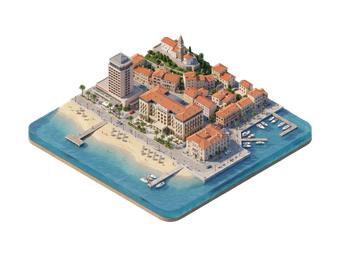
- Portorož — about 5 minutes by car or a short bus ride from Lucija. Slovenia's main seaside resort, with a long promenade, sandy beach and spa hotels.
- Piran — about 15 minutes by car. A Venetian-era town on a peninsula, built largely on wealth from the salt trade.
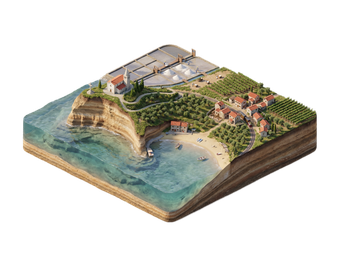
- Strunjan — about 20 minutes by car. A protected coast with cliffs and the country's other working salt pans.
- Izola — about 25 minutes by car. A relaxed fishing town with a small harbour.
- Koper — about 30 minutes by car. The coast's largest town, with a Venetian main square and cathedral.
- Umag — about 20 minutes by car, across the border in Croatian Istria. A seaside town with an old centre on a small peninsula.
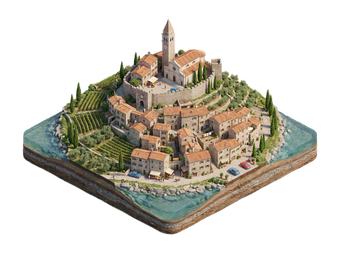
- Motovun — about 1 hour by car in Croatian Istria. A walled hilltop town above vineyards and truffle forests.
Ce poți explora
The park lies in the municipality of Piran, and these neighbours make good bases:
Cum ajungi
- By air: The closest large airports are Trieste Airport in Italy (about 1 hour by car) and Ljubljana Jože Pučnik Airport (about 2 hours by car). Continue by rental car or shuttle transfer to the coast.
- By train: There is no railway on this part of the coast. The nearest station is Koper, with trains from Ljubljana. Continue by bus to Portorož or Lucija. Slovenian Railways
- By bus: Long-distance buses from Ljubljana run to Portorož, about 2 to 2.5 hours. Local buses continue to Lucija, about a 20-minute walk from the Lera entrance.
- By car: Both entrances lie off the main road from Lucija to the Sečovlje border crossing with Croatia. For Lera, turn right at the top of Seča hill. For Fontanigge, continue towards the border and turn onto the dirt road along the Dragonja River, just before the river bridge.
Cum te deplasezi
- Two entrances: Lera and Fontanigge are separate areas with their own entrances. One ticket covers both on the same day, including the museum. Buy it at either entrance. Sečovlje Salina Nature Park
- On foot: The dikes are completely flat, with marked paths and information boards. Allow at least two hours for each area.
- By bike: Cycling is a good way to explore Lera. In Fontanigge, you can cycle to the museum, but most paths are for walkers only.
- Local buses: Arriva line 1 links Piran, Portorož and Lucija, the closest stop for Lera. Tap a contactless bank card on board, or use the Arriva Piran app. Bus transport – Portorož & Piran Tourist Board
- Guided tours: Park guides lead 1.5- to 2-hour tours in several languages, including English. Book ahead, or ask at the entrance if a guide is free.
Condusul
- Is a car worth it?: Useful but not essential. Lera is easy to reach on foot, by bike or by bus from Portorož. A car makes Fontanigge, near the Croatian border, much easier to reach.
- Parking: There is a car park at the Lera entrance. Fontanigge has only a small car park for about 15 cars, so arrive early in summer.
- Border: The road to Fontanigge passes the Sečovlje border crossing. Turn off before the Dragonja bridge; the bridge leads into Croatia.
Mâncare și băutură
The salt pans produce Piran salt, which has EU Protected Designation of Origin status. Local cooks use it in Istrian seafood dishes, such as fish baked in a salt crust, and the shops sell salt chocolate and salt-based cosmetics.
There is a small refreshment point at the Lera entrance. For a full meal, go to the restaurants around Lucija and the Portorož marina, a short walk or drive north. Family-run inns in the village of Sečovlje, on the hills above the park, serve Istrian home cooking.
Siguranță și sănătate
The park is very safe. The main risks come from the weather and the open landscape.
- Sun and heat: There is almost no shade on the dikes. In summer bring a hat, sunscreen and plenty of water, and avoid the middle of the day.
- Mosquitoes: They can be common near the canals in warm months, especially in the evening. Bring insect repellent.
- Stay on the paths: Leaving marked routes is not allowed. It disturbs nesting birds, and the salt fields are fragile.
- Dogs: Dogs are not allowed at Lera. At Fontanigge they must stay on a short leash.
Istorie
Salt pans may have existed at the mouth of the Dragonja in Roman times, and written records show them working by the 13th century. Salt made Piran rich. The town traded it across the Adriatic for centuries, under the control of Venice. Piran's salt workers learned their method from the salt makers of the Croatian island of Pag. Whole families moved into stone houses on the pans each summer to work the fields.
Most of the Slovenian coast once had salt pans, but today only Sečovlje and Strunjan remain. In Fontanigge, salt making stopped in the mid-1960s. The houses fell into ruin, and the wetland that grew in their place became a refuge for birds. The Museum of Salt-Making was set up in restored houses there to keep the memory of that life. At Lera, work never stopped, and salt is still harvested with only small changes to the medieval method.
Today the salt pans are a protected landscape park. They are also listed as a wetland of international importance under the Ramsar Convention.
Date despre țară
Quick practical facts for Slovenia at a glance:
- Monedă
- euro EUR · Plăți cu cardul · Acceptate pe scară largă
- Numere de urgență
- 112
- Electricitate
- 230 V · 50 HzTip C / Tip F
- Limbi vorbite
- slovenă
- Apă de la robinet
- Sigură de băut
- Sens de circulație
- Pe dreapta
- Prefix telefonic
- +386


Parcul natural Sečovlje Salina – Adaugă la călătoria ta
Creează un itinerar detaliat de călătorie cu trasee inteligente, estimări de timp și tot ce ai nevoie pentru o călătorie perfectă.


Destinații înrudite



Data: © OpenStreetMap contributors, Wikidata, Wikipedia, Tripomatic, Official websites. Tours by GetYourGuide. We earn commission from bookings. Travel guide generated with AI.
Planifică-ți călătoria cu Tripomatic
- Planificare susținută de AILasă inteligența artificială să-ți construiască itinerarul, să răspundă la întrebări de călătorie și să-ți organizeze documentele de rezervare în călătorie.
- Alerte de călătorieAvertizări oficiale, fenomene meteo severe, greve și pericole naturale pentru locurile din fiecare zi a călătoriei tale.
- Sărbători legale și evenimenteVezi sărbătorile, festivalurile și închiderile din zilele călătoriei tale și ce înseamnă acestea pentru planurile tale.
- Estimarea costurilorDefalcare a costurilor călătoriei susținută de AI, astfel încât să știi ce buget să aloci înainte de plecare.
- Tururi și bileteRezervă tururi, bilete cu acces prioritar și activități direct în planul tău.