


Cádiz
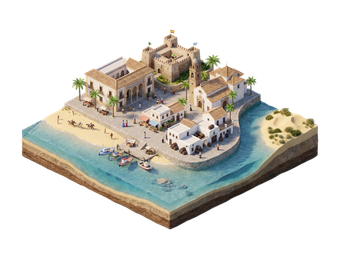
Cádiz sits on a narrow peninsula in the Atlantic, with sea on almost every side. It is often called one of the oldest cities in western Europe. The old town is small and easy to explore on foot, with sea walls, squares and old watchtowers.
The city suits a short break of two or three nights. Visitors come for the beaches, the seafood and the famous February Carnival. About 110,000 people live here.

Cádiz – Plánuješ výlet?
Zostav si itinerár deň po dni v aplikácii Tripomatic.


Kedy navštíviť
Spring and early autumn are the best times for sightseeing. Summer is hot and dry, with sea swimming from June to October. Winters are mild, and rain is most likely from October to March.
Plan around Carnival, one of the best-known in Spain. It lasts more than two weeks in February. It comes before Lent, so the dates change every year. Groups sing satirical songs in the streets, and an official contest takes place at Gran Teatro Falla.
Najlepší čas na návštevu: apríl, máj, jún, júl, september, október, november
Hlavné pamiatky


- Catedral de la Santa Cruz de Cádiz faces the sea. Building began in 1722 and took 116 years.
- Torre Tavira is an 18th-century watchtower. A camera obscura inside shows a 360-degree view of the city and bay.
- Teatro Romano de Cádiz dates from the 1st century BC. It was found in 1980 in the El Pópulo district.
- Oratorio de San Felipe Neri is a baroque chapel. The parliament of Spain met in Cádiz from 1811, and the chapel holds a painting of the Immaculate Conception by Murillo.
- Monumento a la Constitución de 1812 honours the liberal constitution that was proclaimed in the city on 19 March 1812.
- Playa de La Caleta is a small sandy beach in the old town, between two old castles. Castillo de Santa Catalina stands at one end.
- Parque Genovés is a calm park with exotic plants and large old trees.
- Gran Teatro Falla was built between 1884 and 1905. It hosts the main Carnival contest.
Odporúčané zoznamy


Čo zažiť
- Hear Carnival songs: In February, groups called chirigotas, comparsas, coros and cuartetos sing satirical songs in streets and squares. The official contest is held at Gran Teatro Falla. Carnival was banned in 1937 and returned in 1947.
- Watch the camera obscura show: Inside Torre Tavira, a dark room shows a live view of the city for about 15 to 20 minutes. A guide explains the sights.
- Cross the bay by boat: The catamaran to El Puerto de Santa María takes about 30 minutes. It is a simple way to see the city from the water.
Prehliadky a aktivity
Cádiz — Mapa

 Otvoriť interaktívnu mapu
Jednodňové výlety
The bay and the nearby hills have good towns for a day out. Times below are one way and approximate.
- El Puerto de Santa María: about 30 min by catamaran. A sherry town across the bay.
- Jerez de la Frontera: about 40 min by train. The centre of sherry production.
- Vejer de la Frontera: about 40 min by car, or about 1 h 10 min to 1 h 35 min by bus. A hilltop town above the Strait of Gibraltar. Its historic centre is protected as a historic ensemble.
- Arcos de la Frontera: about 45 min by car, or about 1 h 20 min by bus. The old town stands on a ridge above a bend of the Guadalete river.
- Sanlúcar de Barrameda: about 45 min by car. The home of manzanilla, a light sherry that goes well with seafood.
- Seville: about 1 h 35 min to 2 h by train. A full day in Andalusia's capital is possible, but it is a long trip for one day.
Ako sa tam dostať
- By air: The nearest airport is Jerez (XRY), about 45 km away. It has seasonal flights from Germany and the UK, and year-round flights from Madrid and Barcelona. The airport has its own train station with services to Cádiz. Buses also run, but not often. Seville (SVQ) has more flights. From there, go to Seville-Santa Justa station and take the train.
- By train: Trains from Seville take about 1 h 35 min to 2 h. Trains from Jerez de la Frontera take about 40 min. Direct Alvia trains from Madrid run via Seville. Book on Renfe.
- By bus: Buses from Seville take about 1 h 45 min.
- By sea: Cruise ships stop at the port, which is opposite the train station.
Doprava na mieste
- On foot: The old town is small and flat. Walking is the best way to see it.
- Bay trains and tram: Local Cercanías trains and the bay tram connect Cádiz with nearby towns. Pay for a single trip by tapping a contactless Visa or Mastercard, or a phone with one, at the gates and stops. Tap in and out at the start and end of the trip.
- Catamaran and buses: Catamaran, bus and tram services are linked by a regional transport card. Find routes on the Bay of Cádiz transport consortium website.
Šoférovanie
- Is a car worth it?: Not for the city itself. A car is useful for the white hill towns and the coast.
- Parking: The old town is a low-emission zone. Plan to park outside the old walls and walk in.
- Restrictions: Cars from outside Cádiz need an ECO or zero-emission label to enter the old town. C-label cars are allowed for now. Cameras read number plates at the entrances. Ask your hotel about access.
Jedlo a pitie
Seafood is the base of local cooking. Look for freidurías, shops that sell fried fish (pescaíto frito). Common dishes are tortillitas de camarones (shrimp fritters), ortiguillas (fried sea anemones), puntillitas (small squid) and papas aliñás (dressed boiled potatoes).
Tuna caught with the traditional almadraba nets is a regional speciality, often served with onions. Drink fino or manzanilla sherry with seafood. Fino is linked to El Puerto de Santa María and manzanilla to Sanlúcar de Barrameda.
Bezpečnosť a zdravie
Cádiz is generally safe for visitors. The main risk is petty theft.
- Thieves use distraction and often work in teams. Watch your bag in crowds, such as at Carnival.
- Do not keep all your valuables in one place.
- Scammers may pose as police and ask to see your wallet. Real officers ask for ID, not wallets.
- Demonstrations can happen with little warning. Move away if there are signs of disorder.
História
Cádiz was founded by the Phoenicians as Gadir. The traditional date is about 1100 BC. Under Rome it was Gades, and Julius Caesar gave its people Roman citizenship in 49 BC. The Roman past is visible at Teatro Romano de Cádiz.
Christopher Columbus sailed from Cádiz on his second and fourth voyages. In April 1587 Francis Drake raided the harbour and destroyed many ships. In the 18th century, trade with the Americas moved to Cádiz and the city grew rich. Work on the Catedral de la Santa Cruz de Cádiz began in this period.
During the Napoleonic invasion, the Spanish parliament met in Cádiz. It sat in Oratorio de San Felipe Neri from 1811. The liberal constitution was proclaimed on 19 March 1812. Monumento a la Constitución de 1812 commemorates it.
Fakty o krajine
Quick practical facts for Spain at a glance:
- Mena
- euro EUR € · Platby kartou · Široko akceptované
- Tiesňové čísla
- 112
- Elektrina
- 230 V · 50 HzTyp C / Typ F
- Jazyky
- španielčina
- Voda z vodovodu
- Pitná
- Jazdná strana
- Vpravo
- Predvoľba
- +34


Cádiz – Naplánuj si jednotlivé dni
Premeň miesta z tohto sprievodcu na skutočný itinerár s inteligentným plánovaním trás, časovými odhadmi a všetkým potrebným pre dokonalý výlet.


Súvisiace destinácie


Data: © OpenStreetMap contributors, Wikidata, Wikipedia, Tripomatic, Official websites. Tours by GetYourGuide. We earn commission from bookings. Travel guide generated with AI.