



Káthmandu
Kathmandu is Nepal's capital and the usual first stop for any trip to the country. It sits at about 1,400 m in a wide valley ringed by green hills. On clear days you can see the Himalayas from the rooftops. The city is loud, crowded and dusty, but it has a very large number of active temples, shrines and royal palaces.
Hindu and Buddhist traditions mix everywhere. You will see morning offerings at street shrines, prayer flags on stupas and festivals that fill whole squares. A few nights here suit anyone interested in culture, religion and architecture. Kathmandu is also the base for treks, jungle safaris and trips to the rest of the valley.

Káthmandu – Plánuješ výlet?
Zostav si itinerár deň po dni v aplikácii Tripomatic.


Kedy navštíviť
The best time is late October and November, after the monsoon, when the air is clear and the mountains are most visible. Early October can still bring rain. March and April are also pleasant and warm, though haze often hides the peaks. Winter days are sunny and mild, but nights are cold and the air is often polluted. The monsoon runs from June to September, with heavy rain most afternoons. Showers start again in May.
The festival to plan around is Indra Jatra, eight days in September or early October at Kathmandu Durbar Square. Masked dancers perform, and the living goddess Kumari is pulled through the old town on a wooden chariot. Dashain and Tihar usually follow in October and November; many shops close during Dashain.
Najlepší čas na návštevu: január, február, marec, apríl, október, november, december
Hlavné pamiatky
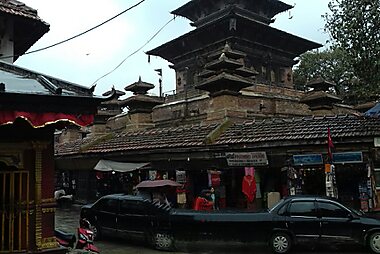
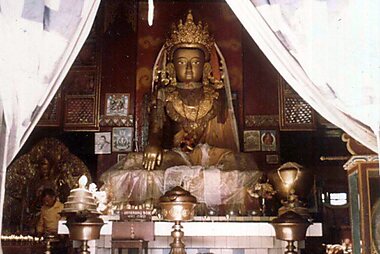

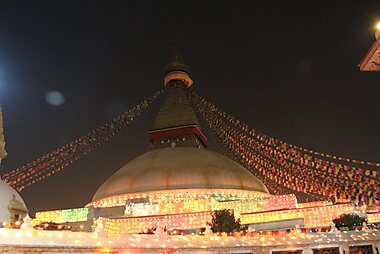


Basantapur Durbar Square is the historic heart of the old city, a square packed with pagoda temples, shrines and former royal buildings. It is a UNESCO World Heritage Site, and foreigners pay an entry fee at the ticket booths.
Inside the square, Hanuman Dhoka is the old royal palace of the Malla and Shah kings, with carved courtyards and a museum. Nearby, Kumari Ghar is the carved 18th-century home of the Kumari, a young girl worshipped as a living goddess.
On a hill west of the centre, Swayambhunath is one of the oldest and most sacred Buddhist sites in Nepal. Its stupa with painted Buddha eyes looks over the whole city. Many people call it the Monkey Temple because of the monkeys that live here.
Boudha Stupa is one of the largest stupas in the world and the centre of Kathmandu's Tibetan community. Monasteries, cafés and shops ring the white dome.
On the Bagmati River, Pashupatinath Temple is Nepal's holiest Hindu temple, dedicated to Shiva. Only Hindus may enter the main temple, but visitors can walk the riverbanks, where open-air cremations take place.
Narayanhiti Palace Museum is the former royal palace, now a museum of the monarchy that ended in 2008. You can see the state rooms and the site of the 2001 royal massacre. It is closed on Tuesdays and Wednesdays.
Garden of Dreams is a restored 1920s garden with pavilions and fountains at the edge of Thamel. It is a quiet place to rest after the busy streets.
Dharahara is a white tower rebuilt after the 2015 earthquake and reopened in 2024. Its viewing deck gives a wide view over the city.
Odporúčané zoznamy


Čo zažiť
Some of Kathmandu's best moments are daily rituals you can join or watch.
- Evening aarti at Pashupatinath Temple: every evening, priests perform a fire ceremony with lamps, bells and chanting on the banks of the Bagmati. Non-Hindus watch from the eastern bank; arrive early for a place.
- Walk the kora at Boudha Stupa: at dawn and dusk, pilgrims circle the stupa clockwise, spinning prayer wheels. Join the flow, then watch from a rooftop café as the butter lamps are lit.
- Morning in the old bazaars: walk from Thamel to Durbar Square through Asan Bazar and Indra Chowk early in the morning, when locals shop for spices and vegetables and make offerings at small street temples.
- Wait for the Kumari: in the courtyard of Kumari Ghar, the living goddess sometimes appears briefly at a carved window. Photographing her is not allowed.
- Tihar lights: during Tihar in October or November, families decorate houses with oil lamps and flower garlands, and groups sing door to door in the evenings.
Prehliadky a aktivity
Káthmandu — Mapa

 Otvoriť interaktívnu mapu
 Jednodňové výlety
The Kathmandu Valley has two more royal cities and several hill viewpoints within easy reach. Hire a taxi for the day or join a tour, as local buses are slow and crowded.
- Lalitpur: the old city of Patan, about 5 km south, across the Bagmati River, 20–30 min by taxi. Its Durbar Square is packed with fine Newar temples, and the palace houses the Patan Museum of religious art.
- Chandragiri: a cable car from Thankot, on the western edge of the valley, climbs in about 10 minutes to Chandragiri Hills. The top has a Shiva temple and wide views of the valley and, on clear days, the Himalayas.
- Bhaktapur: about 13 km east, 30–60 min by taxi depending on traffic. It is the best-preserved of the old royal cities, with brick squares, pottery workshops and the five-storey Nyatapola temple. Foreigners pay a separate entry fee to the old town.
- Dhulikhel: a hill town about 30 km southeast of the city, with mountain views and walking trails. It combines well with Bhaktapur or Nagarkot.
- Nagarkot: a hill village about 32 km east, at around 2,175 m. People come for the sunrise over the Himalayas; on clear mornings you can see Everest. Many visitors stay one night.
Kam sa vybrať
Most visitors stay in Thamel, the busy traveller district just north of the old city. The city itself lies within the wider Kathmandu Valley.
For nature close to town, ShivaPuri Nagarjuna National Park covers the forested hills on the northern edge of the valley, with day hikes and viewpoints.
Farther afield, Pokhara is Nepal's lakeside base for Annapurna treks. Annapurna is the country's most popular trekking region, and Chitwan National Park is the place for jungle safaris with rhinos and elephants.
Ako sa tam dostať
- By air: Tribhuvan International Airport is Nepal's main international airport, about 6 km east of Thamel. A taxi to Thamel takes 30–40 minutes depending on traffic. The prepaid taxi counter in the arrivals hall charges about NPR 1,000.
- Domestic flights: Short flights link Kathmandu with Pokhara (about 30 minutes) and other towns. Delays and cancellations due to weather are common.
- By bus: Tourist buses to Pokhara and Chitwan leave early in the morning from Sorhakhutte, just west of Thamel. The road to Pokhara is often under repair, so allow a full day. Book through your hotel or a travel agent.
- Visitor information: Nepal Tourism Board
Doprava na mieste
- Buses and microbuses: There is no metro or tram. Crowded local buses and microbuses cover the city, and you pay the conductor in cash. The cooperative Sajha Yatayat runs larger, more comfortable buses on some main routes. Sajha Yatayat
- Taxis and ride-hailing: Taxis are the easiest way to get around. Agree the fare before you start, because meters are rarely used. Ride-hailing apps such as Pathao, inDrive and Yango are widely used, often for motorbike rides as well as cars.
- On foot: The old city, Thamel and the Durbar Square area are best explored on foot. Streets are narrow, have few pavements and are busy with motorbikes, so walk with care. Swayambhunath, Boudhanath and Pashupatinath are too far to walk comfortably; take a taxi.
Šoférovanie
- Is a car worth it? No. Traffic is heavy and chaotic and road rules are loosely followed. Most visitors use taxis in the city and hire a car with a driver for trips outside.
- Driving side: Traffic drives on the left.
- Parking: Parking in the old city and Thamel is very limited. Leave the car at your hotel and walk or take a taxi.
Jedlo a pitie
Kathmandu is the home of Newari cooking, the rich food of the valley's original people. Look for the samay baji platter with beaten rice, spiced meat and pickles, and yomari, sweet steamed dumplings. Momos are everywhere, from street stalls to smart restaurants. In Bhaktapur, try juju dhau, a sweet, creamy buffalo-milk yogurt.
For international food and rooftop dining, go to Thamel, which has the widest choice of cafés and restaurants. For Tibetan food, eat around the stupa in Boudha. For street snacks and local tea shops, explore the lanes around Asan Bazar and Indra Chowk. Many tourist restaurants add a service charge and VAT to the bill, so check before you tip.
Bezpečnosť a zdravie
Kathmandu is generally safe for visitors, and violent crime against tourists is rare.
- Petty theft: Pickpockets and bag snatchers work in Thamel, on buses and at the airport. Keep valuables in your hotel safe.
- Traffic: The biggest daily risk. Pavements are few, and motorbikes come from every direction.
- Air quality: Dust and smog are bad in winter and spring. People with asthma or breathing problems should bring a mask.
- Protests: Demonstrations and strikes (bandh) can close roads and shops, and curfews are sometimes imposed. Avoid crowds and follow local news.
- Water: Do not drink tap water. Use bottled, filtered or boiled water, and refill stations where your hotel offers them.
- Earthquakes: Tremors are common across Nepal. Note the emergency exits in your hotel.
História
Kathmandu grew from settlements founded under the Licchavi kings from around 400 AD. Its name comes from Kasthamandap, a large wooden rest house on the old trade route. The name means "wooden pavilion". Archaeologists now think the first building dates from the 7th century.
Under the Malla kings, from the 12th to the 18th century, the valley split into three rival city-states: Kathmandu, Patan and Bhaktapur. Each built its own palace square, which is why the valley has three Durbar Squares. In Kathmandu, King Mahendra Malla built Taleju Temple in 1564, the most prominent temple on the square.
In September 1768, Prithvi Narayan Shah of Gorkha took Kathmandu, and the last Malla king, Jaya Prakash Malla, fled to Patan. The Shah kings made the city the capital of a unified Nepal and ruled from Hanuman Dhoka and later Narayanhiti Palace Museum. The monarchy ended in 2008, and Nepal became a republic.
On 25 April 2015, a major earthquake destroyed many monuments, including Kasthamandap and the old Dharahara tower. Rebuilding took years. Kasthamandap reopened in 2022, and the new Dharahara in 2024. You will still see scaffolding and fresh timber on some temples.
Fakty o krajine
Quick practical facts for Nepal at a glance:
- Mena
- nepálska rupia NPR Rs · Platby kartou · Bežne prijímané
- Elektrina
- 230 V · 50 HzTyp C / Typ D
- Jazyky
- nepálčina
- Voda z vodovodu
- Nie je pitná
- Jazdná strana
- Vľavo
- Predvoľba
- +977


Káthmandu – Naplánuj si jednotlivé dni
Premeň miesta z tohto sprievodcu na skutočný itinerár s inteligentným plánovaním trás, časovými odhadmi a všetkým potrebným pre dokonalý výlet.




