


Nikko
Nikko lies in the mountains of Tochigi Prefecture, about 140 km north of Tokyo. It is famous for the Tokugawa shrines and temples, which form a UNESCO World Heritage Site. The shrines stand among old cedar forest, and the lake and waterfalls of Oku-Nikko lie higher up the road.
The city is very large and stretches from the shrines to hot-spring resorts and mountain lakes. It suits travelers who want Japanese history and nature in one trip. Most people visit for a day from Tokyo, but a night or two lets you see the shrines and the mountains without rushing.

Nikko – Plánuješ výlet?
Zostav si itinerár deň po dni v aplikácii Tripomatic.


Kedy navštíviť
Autumn is the most popular season. Leaves change first around Yumoto Onsen in early October, peak around Lake Chūzenji in mid to late October, and reach the town in the first half of November. October weekends bring heavy bus delays, so go on a weekday. Summer is warmer and rainy in town but cooler in the mountains. Winter is cold with snow, and some mountain trails close.
Oku-Nikko is much higher than the town. Lake Chūzenji is at 1,269 m, so it is colder than the climate figures below, which describe the town.
The biggest event is the Spring Festival at Tōshō-gū on 17 and 18 May. Mounted archery takes place on 17 May. On 18 May, about 1,000 people in samurai dress walk in a grand procession.
Hlavné pamiatky
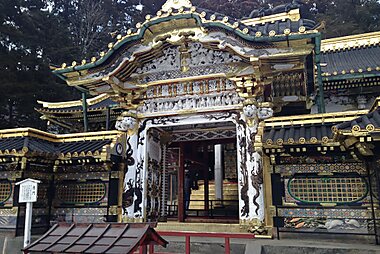
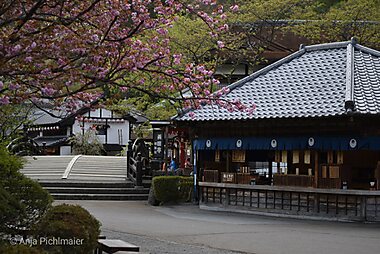
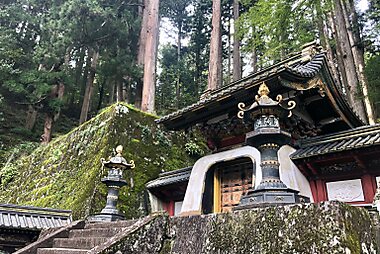
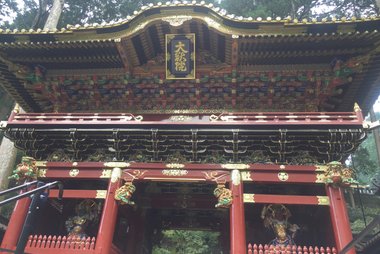
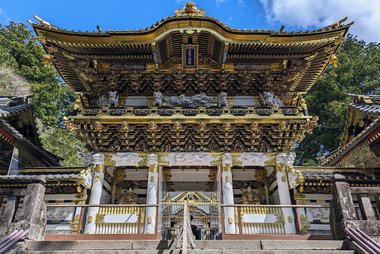
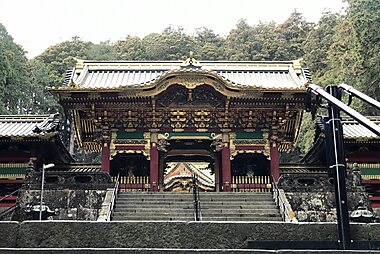
- Tōshō-gū shrine is the shrine of Tokugawa Ieyasu, who founded the shogunate that ruled Japan until 1868. It was completed in 1617 and is known for rich carving, including the Three Monkeys and the Sleeping Cat. It is open from 9:00 to 17:00, or until 16:00 from November to March. Entry is ¥1,600, tickets at the counter are cash only, and the last entry is 30 minutes before closing.
- Rinnō Temple Complex is the large Buddhist temple next to the shrines. It was founded in 766 and is one of the three parts of the World Heritage Site.
- Taiyū-in is the mausoleum of Tokugawa Iemitsu, the grandson of Ieyasu. It lies within the Rinnō-ji grounds and dates from the 1650s.
- Futarasan Shrine is the third part of the World Heritage Site and has 23 listed structures. It is a Shinto shrine, unlike the Buddhist temple next to it.
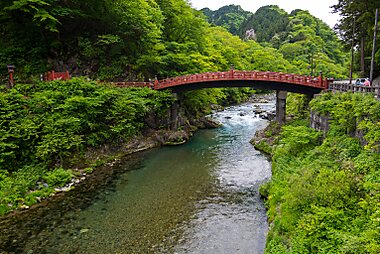
- Shinkyo Bridge is a wooden arched bridge that belongs to Futarasan Shrine. It dates from 1904.
- Kanmangafuchi Abyss is a gorge formed by lava from an eruption of Mount Nantai. A path runs past a long row of stone Jizō statues, some wearing red caps and bibs.
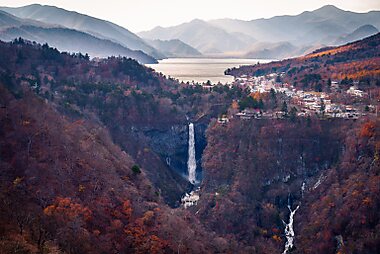
- Kegon Falls falls almost 100 m. The upper platform is free, and a ¥600 elevator takes you to a lower viewing deck. It is a short walk from the Chūzenji Onsen bus terminal.
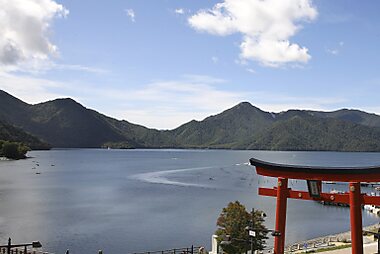
- Lake Chūzenji sits at 1,269 m. Foreign embassies once built summer villas here, and two of them, the Italian and British villas, are open to visitors from spring to autumn.
Odporúčané zoznamy


Shinto Shrines and Buddhist Temples
Nikko’s spiritual landscape is defined by the Shrines and Temples of Nikko, a UNESCO World Heritage site. This collection features the opulent Tōshō-gū, the final resting place of Tokugawa Ieyasu, alongside the ancient Rinnō-ji Temple and Futarasan-jinja. These sites showcase the intricate wood carvings and gold leaf of Edo-period architecture, set against a backdrop of ancient cedar forests. The list includes major pilgrimage destinations and secluded mountain shrines that have served as centers of Shinto and Buddhist worship for over 1,200 years.
25 miest
Čo zažiť
- Take the sightseeing boat on Lake Chūzenji. It runs hourly from mid-April to November, and the full loop takes one hour (¥1,850).
- Hike the Senjōgahara marsh trail between Yumoto Onsen and Ryūzu Falls.
- Ride the bus up the Irohazaka road in autumn. It has 48 turns and climbs more than 400 m to the lake. Colors are best from mid-October to early November.
- Take the Akechidaira ropeway to a viewpoint of Kegon Falls.
- Soak in a hot spring at Yumoto Onsen after a hike. It is at the end of the main bus line.
Prehliadky a aktivity
Nikko — Mapa

 Otvoriť interaktívnu mapu
Jednodňové výlety
Most visitors arrive from Tokyo. These two stops fit the trip in or out of Nikko.
- Utsunomiya, the prefectural capital, is about 45 minutes from Nikko on the JR Nikko Line. It is a good place to change trains to the Shinkansen.
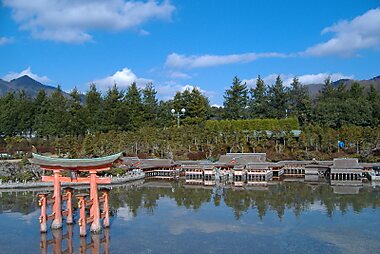
- Kinugawa Onsen is a hot-spring resort on the Tobu Kinugawa Line, reached by changing trains at Shimo-Imaichi. Edo Wonderland Nikko Edomura is a historical theme park, and Tobu World Square shows 1:25 scale models of famous buildings. Both suit families.
Kam sa vybrať
The mountain lake in Oku-Nikko has its own page:
- Lake Chūzenji is the lake, the waterfalls, and the hot springs nearby.
Ako sa tam dostať
- By air: Nikko has no airport. Fly to Tokyo (Narita or Haneda), then take a train. Tokyo is about 140 km away.
- By Tobu train: Limited express trains run from Asakusa in Tokyo to Tōbu-Nikkō in about 2 hours. Expect to pay roughly ¥2,850 to ¥3,540 with the supplement. Some trains change at Shimo-Imaichi. Slower express trains cost about ¥1,400. Tobu Railway Nikko information
- By JR train: One or two direct limited express trains a day run from Shinjuku in about 2 hours, with reserved seats only (about ¥4,140). Otherwise, take the Shinkansen to Utsunomiya and change to the JR Nikko Line. This takes about 100 minutes and costs about ¥5,500. JR East
- Stations: JR Nikko and Tōbu-Nikkō stations are close to each other. Both are a 30 to 40 minute walk from the main shrines, and buses run often.
- Passes: Tobu sells Nikko passes for foreign visitors. They cover a round trip from Asakusa and local buses, but not the limited express supplement. Check which area you need before you buy.
Doprava na mieste
- Tobu buses: These are the main way to get around. A bus from the stations to the shrine area takes about 10 minutes and costs ¥350. The World Heritage loop bus runs every 10 to 20 minutes. Suica and PASMO cards work on Tobu buses in the Nikko area.
- To Oku-Nikko: Buses to Chūzenji Onsen take about 50 minutes (¥1,250). Buses to Yumoto Onsen take more than an hour. A 2-day bus pass is sold at Tōbu-Nikkō Station for Chūzenji (¥2,300) or Yumoto (¥3,500).
- On foot: The shrines and temples are close together and easy to walk. The walk from the stations takes 30 to 40 minutes.
Šoférovanie
- Left side: Japan drives on the left.
- Licence: Japan accepts only an International Driving Permit under the 1949 Geneva Convention, carried with your home licence. A 1968 Vienna Convention permit is not valid. Licences from Switzerland, Germany, France, Belgium, Monaco and Taiwan need an official Japanese translation from JAF instead.
- Is a car worth it? Not for the shrines. Buses cover the town and Oku-Nikko well. A car helps only for places away from the bus lines.
- Leaf season causes traffic jams on Irohazaka, so the bus is often no slower.
Jedlo a pitie
Nikko is known for yuba, the skin that forms on boiled soy milk. Temple monks ate a vegetarian diet, and yuba became a local staple. You will find it in soba bowls, in kaiseki meals at ryokan, and as snacks from street stalls. Soba noodles are the other local favorite.
Local sake comes from breweries in Imaichi. Shaved ice is a popular sweet.
Bezpečnosť a zdravie
Nikko is very safe for tourists. Petty crime is rare.
- Monkeys: Wild monkeys live around the town. Do not feed them, and keep food out of sight.
- Cold: The mountains are much colder than the town, so bring warm layers for Oku-Nikko, even in autumn.
- Crowds: October weekends are very busy. Buses can be late, so allow extra time.
História
The priest Shōdō Shōnin founded Rinnō-ji in 766 and Chūzen-ji in 784, and a village grew around the temples. The place became famous in the 17th century, when the Tokugawa shoguns built their shrines here.
Tōshō-gū was completed in 1617. Ieyasu's grandson Iemitsu rebuilt it, and the main buildings date from 1636. The ornate Yōmeimon gate shows the style of that time. Iemitsu's own mausoleum was built in the 1650s.
In 1999, UNESCO listed the shrines and temples. The site has 103 buildings in three parts: Tōshō-gū, Futarasan Shrine, and Rinnō-ji. In 2006, Nikko merged with nearby towns, including Ashio. Ashio was a copper-mining town, and you can still visit Ashio Copper Mine.
Fakty o krajine
Here are the essentials for traveling in Japan:
- Mena
- japonský jen JPY ¥ · Platby kartou · Bežne prijímané
- Elektrina
- 100 VTyp A / Typ B
- Jazyky
- japončina
- Voda z vodovodu
- Pitná
- Jazdná strana
- Vľavo
- Predvoľba
- +81


Nikko – Naplánuj si jednotlivé dni
Premeň miesta z tohto sprievodcu na skutočný itinerár s inteligentným plánovaním trás, časovými odhadmi a všetkým potrebným pre dokonalý výlet.


Súvisiace destinácie
Data: © OpenStreetMap contributors, Wikidata, Wikipedia, Tripomatic, Official websites, geoBoundaries (CC BY 4.0). Tours by GetYourGuide. We earn commission from bookings. Travel guide generated with AI.
Naplánuj si výlet s Tripomatic
- Plánovanie s pomocou AIZískaj hotový plán na celý deň jedným ťuknutím, nechaj AI rozvrhnúť tvoj zoznam nápadov do celého výletu alebo si všetko naplánuj cez chat.
- Cestovné upozorneniaOficiálne odporúčania, nepriaznivé počasie, štrajky a prírodné hrozby pre miesta na každý deň tvojho výletu.
- Štátne sviatky a udalostiZisti, aké sviatky, festivaly a uzávery pripadajú na dni tvojho výletu a čo znamenajú pre tvoje plány.
- Odhad nákladovAI odhad nákladov na výlet, aby si vopred vedel, s akým rozpočtom počítať.
- Prehliadky a vstupenkyRezervuj si prehliadky, prednostné vstupenky a aktivity priamo vo svojom pláne.