


Postojna
Postojna is a small town in the Slovenian karst, about an hour from Ljubljana. It is famous for what lies under it. Postojna Cave is one of the largest show caves in Europe, and a 15-minute drive away a Renaissance castle sits inside the mouth of a cave in a high cliff.
Most visitors come on a day trip, but staying a night or two pays off. You can see both headline sights without the midday crowds, and add quieter caves, karst valleys and the Nanos plateau. The town itself is modest, so plan your time around the caves and the countryside. Postojna also makes a practical base for the Škocjan Caves, Lake Cerknica and the Vipava wine valley.

Postojna – Planerar du en resa?
Bygg din resplan dag för dag i Tripomatic-appen.


När du ska besöka
Late spring to early autumn is the best time, with warm days and long evenings for walks and drives. Summer brings the biggest crowds at the cave, so book an early tour. Winters are cold and often snowy, but the caves stay at about 10 °C all year, so they work in any season.
The highlight of the year is the Living Nativity in Postojna Cave in late December. More than 100 performers act out the Christmas story in scenes along the cave route. Book well ahead.
Bästa tiden att besöka: juni, juli, september
Främsta sevärdheter
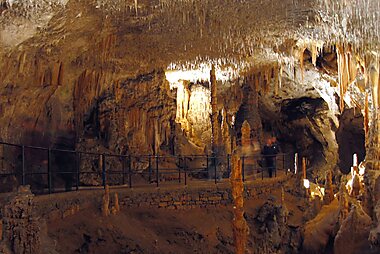

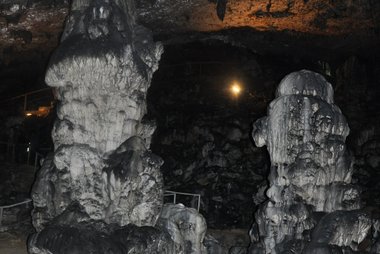
Postojna Cave is the reason most people come. The 24 km cave system is one of the most visited in Europe. The 90-minute tour starts with a ride on an underground train and covers about 5 km of halls, passages and dripstones. Bring a warm layer, because it is 10 °C inside all year.
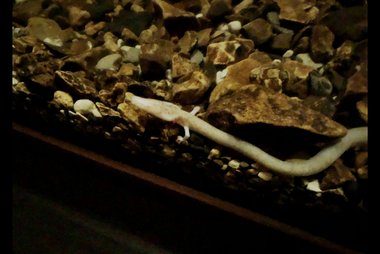
Vivarium Proteus sits at the cave entrance. It explains cave life and shows the olm, a blind, pale amphibian that lives only in the caves of the Dinaric karst.
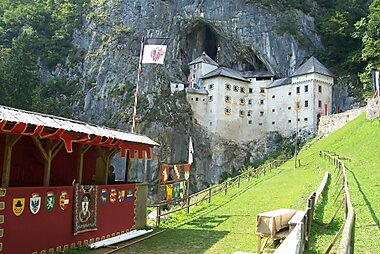
Predjama Castle is built into the mouth of a cave halfway up a vertical cliff, about 9 km from Postojna Cave. The present castle dates from 1570. Behind it, a natural shaft once let the knight Erasmus of Lueg bring in supplies during a long siege. Combined tickets with the cave are available.
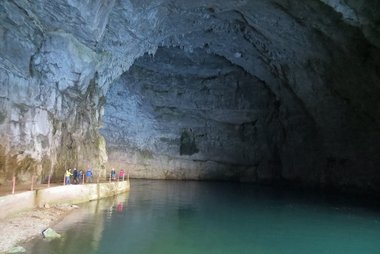
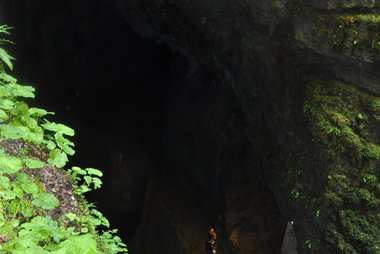
Planina Cave is a wild river cave a short drive north of town, with no train and no concrete paths. Inside, two underground rivers meet. It is one of the largest underground river confluences in Europe. Visits are only with a local guide.
Pivka Cave and Black Cave are quieter caves just north of Postojna Cave, linked to it underground. They are visited on a separate guided tour from May to September, so check the timetable before you go.
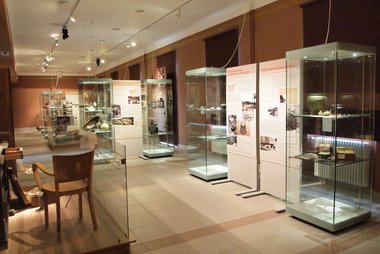
Notranjska Museum Postojna in the town centre gives a clear, modern introduction to the karst and its caves. It is a good rainy-day stop.
Utvalda listor


Castles and Ruins
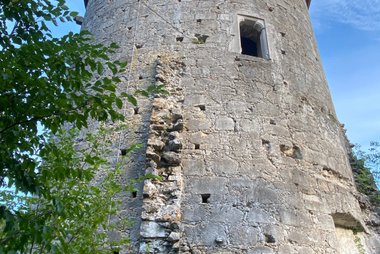
Explore the architectural heritage of the Postojna region, ranging from the world-renowned Predjama Castle built into a 123-meter cliff to the Roman defense systems of Ad Pirum. This collection includes the ruins of the once-grand Baroque Haasberg Mansion, the medieval remains of Adelsberg on Sovič Hill, and the late Gothic Ravbar Tower. These sites reveal the area's strategic history as a crossroads between the Mediterranean and Central Europe, featuring Roman fortifications, Renaissance stables, and traditional water mills.
13 platserUpplevelser att prova
Postojna's best moments happen underground or in the karst landscape around it.
- Watch the Living Nativity: in late December, actors stage the Christmas story in scenes along the Postojna Cave route.
- Join an adventure cave tour: small guided groups put on helmets, lamps and overalls to visit parts of the cave system closed to regular tours.
- Hike up Nanos: the long limestone plateau west of town has marked trails, a mountain hut and wide views over the karst and, on clear days, the sea.
- See Planinsko Polje flood: after heavy autumn or spring rain, this karst field near Ravbar Tower can turn into a temporary lake.
Turer och aktiviteter
Postojna – Karta

Dagsutflykter
Postojna sits in the middle of the karst, so several classic sights are close. Times below are one way.
- Pivka (≈15 min by car or train): the Park of Military History shows tanks, aircraft and a submarine in a former army barracks.
- Cerknica (≈30 min by car): Lake Cerknica is an intermittent lake that fills and drains with the seasons. On the way, the Rakov Škocjan valley has natural stone bridges and easy forest trails.
- Divača (≈30 min by car): Škocjan Caves are a UNESCO World Heritage Site with a huge underground river canyon. Many visitors find them even more dramatic than Postojna Cave.
- Vipava (≈30 min by car): the town and its valley are known for wine farms and local white wines.
- Ljubljana (≈1 hour by train or bus): the capital has a compact old town, a castle above the river and many cafés.
- Piran (≈1 hour by car): a Venetian-style town on the Adriatic coast, good for a sea view and seafood.
Områden att utforska
Postojna works well as a base for the rest of inner Slovenia and the karst.
Resa dit
- By air: the nearest airport is Ljubljana Jože Pučnik Airport, about an hour away by car. Trieste Airport in Italy is a similar distance. Most travellers continue by train or bus via Ljubljana, or rent a car.
- By train: Postojna is on the main line from Ljubljana to the coast, about an hour from Ljubljana. The station is about a 25-minute walk from Postojna Cave. Slovenian Railways
- By bus: buses run from Ljubljana to Postojna about every hour.
- By car: the A1 motorway passes the town. The Postojna exit is about 2 km from the cave.
Ta sig runt
- On foot: the town centre, the railway station and Postojna Cave are all within walking distance. The cave is about 25 minutes from the station.
- Local bus: the free Furman city bus (line 2) runs Monday to Saturday between the railway station, the town centre and the cave.
- To Predjama and Planina: a car or taxi is the easy option. The summer shuttle between the cave and Predjama Castle is currently out of service. The cave ticket office can call a taxi.
- Cycling: quiet country roads and forest tracks make cycling pleasant, but the terrain is hilly.
More visitor information: Postojnsko visitor information
Bilkörning
- Is a car worth it?: yes, if you want to see more than Postojna Cave. Predjama Castle, Planina Cave and most day trips are much easier by car.
- Parking: there is a large paid car park at Postojna Cave. In town, street parking near the centre is easy to find.
- Motorway: you need a Slovenian e-vignette for the A1. Buy it online before you drive onto the motorway.
Mat och dryck
Postojna's cooking is hearty inland food: stews, sausages, game and mushroom dishes. Nearby you can also try the specialities of the Kras plateau, such as air-dried karst ham and red Teran wine, plus white wines from the Vipava valley.
The town has no single food street. The cafés and restaurants around Titov trg in the centre are the easiest choice. There are also restaurants at Postojna Cave, and a traditional inn sits below Predjama Castle.
Säkerhet och hälsa
Postojna is very safe, and crime against visitors is rare. The main risks are practical:
- In the caves: paths can be wet and slippery. Wear shoes with good grip and take a warm layer, as it is 10 °C inside.
- Crowds: in July and August the cave gets very busy. Watch your bags in queues and on the train.
- Hiking: on Nanos and in the karst, weather changes fast and sinkholes can be hidden in forest. Stay on marked trails.
Historia
People have used the caves around Postojna since the Ice Age. At Betal Rock Shelter just outside town, archaeologists found Palaeolithic stone tools and the bones of Ice Age animals.
Predjama Castle has stood in its cliff since the Middle Ages. Its most famous owner was the rebel knight Erasmus of Lueg. In the 1480s he raided Habsburg lands and held out in the castle through a long siege. A popular legend says he was betrayed and killed by a cannonball while he was in the toilet.
Postojna Cave became a tourist attraction after 1818, when a local man, Luka Čeč, found its inner halls. Rails for a tourist train came in 1872, and electric light in 1884, before Ljubljana had it. In April 1944, Slovene partisans entered through a forgotten side passage and set fire to a German fuel store inside. Soot from the fire still marks the cave walls.
After World War I the town belonged to Italy, and only became part of Yugoslavia after 1945. Today it is part of independent Slovenia.
Landsfakta
Quick practical facts for Slovenia at a glance:
- Valuta
- euro EUR · Kortbetalning · Allmänt accepterat
- Nödnummer
- 112
- Elektricitet
- 230 V · 50 HzTyp C / Typ F
- Språk
- slovenska
- Kranvatten
- Drickbart
- Körsida
- Höger
- Landskod
- +386


Postojna – Planera dina dagar
Förvandla platserna från den här guiden till en riktig resplan, med smart ruttplanering, tidsberäkningar och allt du behöver för en perfekt resa.


Relaterade destinationer


Data: © OpenStreetMap contributors, Wikidata, Wikipedia, Tripomatic, Official websites, geoBoundaries (CC BY 4.0). Tours by GetYourGuide. We earn commission from bookings. Travel guide generated with AI.
Planera din resa med Tripomatic
- AI-driven planeringLåt AI bygga din resplan, svara på resefrågor och ordna dina bokningsdokument i resan.
- ResevarningarOfficiella reserekommendationer, extremväder, strejker och naturkatastrofer för platserna under varje dag av din resa.
- Helgdagar och evenemangSe helgdagar, festivaler och stängningar under resans dagar, och hur de påverkar dina planer.
- KostnadsberäkningAI-drivna kostnadssammanställningar för resan så att du vet vad du ska budgetera för innan du åker.
- Turer och biljetterBoka turer, gå-före-i-kön-biljetter och aktiviteter direkt i din resplan.