


Caracas
Caracas is Venezuela's capital and largest city. It fills a long, narrow valley at about 900 m, with the green wall of the Ávila mountain on its northern side and the Caribbean just behind it. The altitude keeps the climate warm but rarely hot, and the mountain is always in view.
The city is the birthplace of Simón Bolívar, and its colonial centre is built around his memory. It is also a showcase of bold 20th-century design, from the UNESCO-listed university campus to public art and a cable car up the Ávila. Caracas is not an easy city to visit: crime is high, services are strained, and the June 2026 earthquakes damaged parts of the city. It suits experienced travellers who plan with a trusted local contact and stay two or three nights.

Caracas – Gezi mi Planlıyorsun?
Tripomatic uygulamasında gün gün güzergahını oluştur.


Ne zaman gidilmeli
January to March are the driest and sunniest months, and April is still fairly dry. Rain builds from May, and June to October are the wettest months, with rain on most days, often as afternoon storms. November and December are a gradual change back to the dry season. The altitude keeps days warm and nights mild all year.
The biggest annual event is the procession of the Nazareno de San Pablo on the Wednesday of Holy Week. Huge crowds follow the 17th-century statue of Christ from Basilica of St. Teresa through the centre for several hours. It is the most important religious day in the city, and it usually falls in the dry season.
Ziyaret etmek için en iyi zaman: Ocak, Şubat, Mart, Nisan, Aralık
Pack a light rain jacket from May to November, and a warm layer for the top of the Ávila in any month.
En popüler turistik yerler


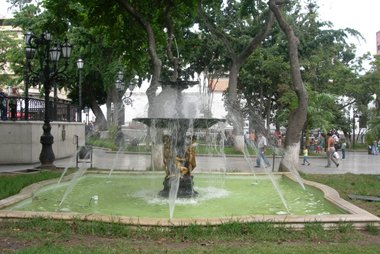


The historic sights cluster around Plaza Bolívar in the old centre. The modern sights sit a few metro stops east, around Plaza Venezuela and Parque Los Caobos. Visit the centre in daytime, ideally with a local guide.
- Bolivar Square is the heart of the old city, laid out in the 16th century. A statue of Simón Bolívar on horseback stands under tall trees in the middle. Just south-west of the square, National Capitol houses the National Assembly, with an oval hall under a golden dome completed in 1877.
- Caracas Cathedral stands on the east side of the square. Inside, a side chapel holds the tomb of Bolívar's parents and his wife.
- Birthplace of Simón Bolívar is the colonial house where Bolívar was born in 1783. It is one of the few colonial houses left in central Caracas, and a museum next door displays his belongings.
- National Pantheon holds Bolívar's bronze sarcophagus in the central nave, under ceiling paintings of his life. Other national heroes rest in the side aisles.
- Caracas University Campus is the university campus designed by Carlos Raúl Villanueva, a UNESCO World Heritage Site since 2000. Look for the Covered Plaza, the murals, and the floating "Clouds" by Alexander Calder in the Aula Magna hall. Botanical Garden is part of the same site.
- Museo de Bellas Artes is the country's main art museum, in two buildings by Villanueva beside Parque Los Caobos. Museum of Contemporary Art, with works by Picasso, Bacon and Venezuelan kinetic artists, is a short walk away.
- Teleférico Warairarepano climbs from Maripérez to about 2,100 m on the Ávila in roughly 15 minutes. On a clear day the top gives views over the whole valley and down to the Caribbean. The cable car has been closed since the June 2026 earthquakes while the summit is rebuilt. Check whether it has reopened before you go.
- Parque del Este is the city's largest park, designed by Roberto Burle Marx, with lakes, tropical gardens and a replica of Francisco de Miranda's ship Leander.
Öne Çıkan Listeler


Neler deneyimlenmeli
A few things make a stay in Caracas different from other capitals.
- Hike on the Ávila: Trails climb from the northern edge of the city into Waraira Repano Park. Since the June 2026 earthquakes, most trails have been closed because of landslides, and Sabas Nieves, the most popular route, reopened first. Check with Inparques, the national parks service, which trails are open before you go. Locals hike early in the morning before the clouds come in. Go in a group or with a guide, and bring water.
- Watch a baseball game: The winter league runs from about October to January. The Leones del Caracas play at the Estadio Monumental Simón Bolívar, and games are loud, family-friendly evenings. Go with a local and take a pre-booked taxi back.
- Spend a Sunday in El Hatillo Town: Caracas families come to this colonial village for lunch, crafts and a slow walk around its small square.
- Take a guided walk through the university's art: At Caracas University Campus, murals and sculptures are set between the buildings and walkways. A guided daytime visit explains how art and architecture were planned together.
Turlar ve Aktiviteler
Caracas — Harita

 Etkileşimli haritayı aç
Günübirlik geziler
The mountains around Caracas hold cool villages and a coral island park. Go with a local driver or an organised tour rather than on your own.
- Galipán — reached by 4x4 jeeps that leave from the Cotiza area in the north of the city. This mountain village grows flowers and has simple restaurants with views of the sea and the valley. Road access has been restricted since the June 2026 earthquakes, so confirm it is open before you go.
- Colonia Tovar — about 65 km west, 1.5–2 hours by car. German settlers from Baden founded the village in 1843, and it still has half-timbered houses, sausages, strudel and local strawberries.
- Los Roques — a short flight by light aircraft from Maiquetía airport, 128 km out to sea. This national park of coral islands and white beaches is best as an overnight trip, and flights depend on airport operations.
Nasıl gidilir
- By air: Simón Bolívar International Airport is at Maiquetía on the coast, about 20 km from the centre. The Caracas–La Guaira highway crosses the mountains to the city in 30–60 minutes, depending on traffic. The airport was damaged in the June 2026 earthquakes and reopened with limited commercial flights in September 2026, so confirm your flight with the airline. Book a transfer through your hotel in advance.
- By bus: Long-distance buses leave from Terminal La Bandera for western and southern routes and from Terminal de Oriente for the east. Travel by day with an established company, since night routes carry more risk.
Ulaşım
- Metro: The metro is the fastest way across the city, and it links the old centre, Plaza Venezuela, Sabana Grande and the east. You pay with a rechargeable SUVE card, bought and topped up with bolívars at station ticket windows. Fares are very low. Avoid the busiest rush hours and keep your phone out of sight.
- Taxi: Use only taxis pre-booked through your hotel or a trusted local ride-hailing app. Do not hail cars on the street.
- On foot / cycling: The historic centre and El Hatillo are pleasant to walk in daytime. Longer walks between districts, and any walking after dark, are not advisable. Cycling in traffic is not practical.
Araç kullanımı
- Is a car worth it?: No. Traffic is heavy, driving is aggressive and the security risk is high. Hire a driver through your hotel instead, for day trips too.
- Parking: If you do drive, use guarded car parks (estacionamientos) and never leave anything visible in the car.
- Fuel: Fuel supply can be irregular, with queues at some stations. Keep the tank above half full and carry cash.
Yeme ve içme
The arepa is the everyday food of Caracas, eaten at any hour from simple areperas with dozens of fillings. The classic Caracas filling is the reina pepiada, chicken and avocado salad. Try a cachapa, a sweet corn pancake with soft cheese, and finish with a strong guayoyo or marrón coffee.
For dinner, most good restaurants cluster in Las Mercedes and the eastern districts. El Hatillo Town has relaxed restaurants and bakeries for a weekend lunch. Many restaurants price in US dollars and expect cash, so check how to pay before you order.
Güvenlik ve sağlık
Caracas has high levels of violent crime, and you need to plan more carefully here than in most capitals. As of September 2026, the UK advises against all but essential travel to Venezuela, including Caracas, and the US advises travellers to reconsider travel. Read your own government's advice before you book.
- Crime: Armed robbery, mugging and car theft happen, sometimes with violence. Do not resist, carry little, and keep phones and jewellery out of sight.
- Airport and taxis: Be especially careful on the airport road, above all at night. Arrange your airport transfer in advance, and do not accept offers of transport in the arrivals hall.
- At night: Stay off the streets after dark, including in the centre, and use pre-booked transport.
- Demonstrations: Avoid political rallies and crowds, which can turn violent.
- Earthquake damage: The June 2026 earthquakes badly damaged parts of Caracas, especially in Chacao around Altamira and Los Palos Grandes. Stay away from damaged buildings and follow local instructions.
- Power and water: Power and water cuts happen. Carry a power bank and a torch, and drink only bottled or filtered water.
Tarihçe
Diego de Losada founded the city on 25 July 1567 as Santiago de León de Caracas, and laid it out around today's Bolivar Square. For two centuries it was a small colonial town of red-tiled roofs under the Ávila.
Caracas led Venezuela's break from Spain. The movement began here on 19 April 1810, and independence was declared on 5 July 1811. Simón Bolívar, born in 1783 at Birthplace of Simón Bolívar, went on to free much of South America. In 1813 he received the title "Liberator" at Saint Francis's Church, and his remains now lie in National Pantheon.
In the 1870s President Antonio Guzmán Blanco rebuilt the centre with National Capitol and other grand buildings. Oil wealth in the 20th century paid for highways, towers, Caracas University Campus and the Ávila cable car, opened in 1955. Earthquakes have shaped the city too, most recently in June 2026, and parts of the east are still rebuilding.
Ülke bilgileri
Quick practical facts for Venezuela at a glance:
- Para birimi
- Venezuela bolivarı VES Bs.S · Kartla ödeme · Nakit tercih ediliyor
- Acil durum numaraları
- 911
- Elektrik
- 120 V · 60 HzTip A / Tip B
- Diller
- İspanyolca
- Musluk suyu
- İçilmez
- Trafik akış yönü
- Sağ
- Ülke kodu
- +58


Caracas – Günlerini Planla
Bu rehberdeki yerleri; akıllı rota oluşturma, tahmini süreler ve kusursuz bir gezi için gereken her şeyle gerçek bir güzergaha dönüştür.


İlgili varış noktaları
Data: © OpenStreetMap contributors, Wikidata, Wikipedia, Tripomatic, Official websites. Tours by GetYourGuide. We earn commission from bookings. Travel guide generated with AI.