



Ukrayna
Ukraine is at war. Russia's full-scale invasion began in February 2022, and missile and drone attacks continue across the whole country. The US, Australian and many other governments advise against all travel to Ukraine. The UK advises against all travel to most of Ukraine, and against all but essential travel to the western regions of Lviv, Zakarpattia, Ivano-Frankivsk, Ternopil and Chernivtsi, and to parts of Volyn, Rivne and Zhytomyr more than 50 km from the Belarus border. Crimea and other areas under Russian occupation remain part of Ukraine under international law, but they are not safe to enter and must not be entered through Russia. Martial law is in force and airspace is closed. Read your government's current advice before any trip, and check that your insurance covers it.
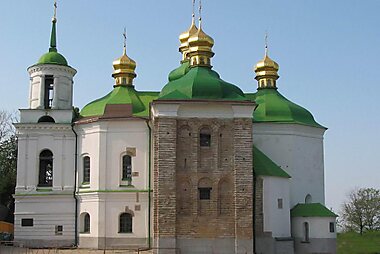
This guide is for essential travellers and for the time when visits are possible again. Ukraine is one of Europe's largest countries, with golden-domed churches, historic city centres and a strong food culture. Kyiv has a thousand years of history on the hills above the Dnipro River. Lviv is a Central European old town of cafés and churches. Odesa is a 19th-century port on the Black Sea, and the Ukrainian Carpathians offer wooden churches, hiking and mountain villages. People are warm and resilient, and daily life goes on in cities far from the front line, but it is shaped by air-raid alerts, curfews and power cuts.



Ukrayna – Gezi mi Planlıyorsun?
Tripomatic uygulamasında gün gün güzergahını oluştur.


Para ve ödemeler
The Ukrainian hryvnia is the only legal currency for payments.
- Cashless habits: Ukrainians pay by card and phone almost everywhere, including small cafés and city transport.
- Carry some cash anyway: attacks on the power grid and cyber attacks can stop card terminals and ATMs for hours. Keep a reserve of hryvnia for food, transport and small purchases.
- Exchange: US dollars and euros in clean, undamaged notes are the easiest to change at banks and exchange offices. You need your passport for large exchanges.
- ATMs: common in towns and cities, but some may run out of cash. Shield the keypad, as card cloning happens.
- Daily budget: prices are low by EU standards. A budget traveller can manage on about 1,500–2,500 UAH a day. A mid-range trip with a good hotel and restaurant meals costs about 4,000–7,000 UAH a day.
Öne Çıkan Listeler


Turlar ve Aktiviteler
Ukrayna — Harita

 Etkileşimli haritayı aç
Bahşiş
Tipping is common in cafés and restaurants in cities, but it is not a strict rule.
about 10 % for good service
round up
round up
small amount for porters
at the end of a tour
- Restaurants and cafés: leave about 10% for good table service. Some places add a service charge to the bill, so check before tipping twice.
- Taxis: rounding up is enough. App taxis do not expect a tip.
- Guides and drivers: a tip at the end of a tour is appreciated.
Elektrik
Ukraine uses standard European Type C/F sockets at 230 V / 50 Hz, but attacks on the power grid cause scheduled and emergency blackouts. Carry a power bank and a torch, and ask your hotel if it has a generator.
Dil
Ukrainian is the official language and the everyday language of public life. Many people also speak Russian, especially in the east and south, but it is polite to start in Ukrainian or English. English is common among younger people in Kyiv and Lviv, and less so in small towns and villages.
Ukrainian uses the Cyrillic alphabet. Signs in city centres, on trains and in the metro usually also show Latin letters. Learning to read a few station names in Cyrillic still helps a lot.
İletişim ve internet
- SIM and eSIM: the main mobile networks are Kyivstar, Vodafone Ukraine and lifecell. Prepaid SIMs and eSIMs are cheap and sold in phone shops and at many kiosks.
- Power cuts: mobile networks and internet can slow down or fail during blackouts. Download offline maps and keep important documents on your phone.
- Alert apps: install an air-raid alert app before you arrive (see the safety section), and allow it to send notifications.
Güvenlik ve acil durumlar
Most governments, including the UK, US and Australia, advise against all travel to Ukraine because of the war. The UK advises against all but essential travel to the western regions, and against all travel everywhere else, including Kyiv and Odesa. There are no safe regions: missiles and drones hit cities far from the front line, including in the west. Travel against official advice can invalidate standard travel insurance, and most policies exclude war zones. If you must travel, get specialist cover and tell your embassy that you are in the country. Embassies can offer very little help in person.
- Air-raid alerts: install the official Air Alert app (Povitryana tryvoha) and keep notifications on. When the siren sounds or the app alerts you, go to a shelter at once. Know where your nearest shelter is before you need it. Hotels usually show theirs, and in Kyiv the metro stations serve as shelters.
- Curfew: a night curfew applies in most regions, usually starting around midnight or 1:00 and ending at 5:00. Hours differ by region and change often, so check them locally. Do not be on the street during curfew.
- Front line and occupied areas: do not travel to Crimea, to other areas under Russian occupation, or to the regions near the front line and the Russian and Belarusian borders. Entering Crimea or occupied areas through Russia is illegal under Ukrainian law.
- Landmines and unexploded ordnance: they remain in many areas that saw fighting, including around Kyiv, Chernihiv, Kharkiv and Kherson. Stay on paved roads and well-used paths, never touch unknown objects, and respect red warning signs. Report anything suspicious on 101.
- Photography: do not photograph or film military sites, checkpoints, soldiers, air defence, or the places where missiles or drones hit. Do not post such images online. Breaking these rules can lead to detention.
- Documents: carry your passport at all times. Police and soldiers can check your documents, especially near checkpoints.
- Dual nationals: Ukrainian men aged 23 to 60, including dual nationals, are generally not allowed to leave the country under martial law.
- Everyday crime: pickpocketing, drink spiking and card cloning happen in big cities. Watch your belongings and your drinks.
Sağlık
- Medical care: state hospitals are often basic and under heavy pressure from the war. Private clinics in big cities offer better care. Travel insurance with medical evacuation cover is essential.
- Pharmacies: look for the green cross or the word Аптека (apteka). They are common in cities, but supplies can be disrupted and some close without warning. Bring enough of your own medicines for the whole trip.
- Water: drink bottled or boiled water. Tap water is treated in cities, but pipes are old and supply can fail during power cuts.
- Winter: when attacks damage power plants, heating can fail in homes and hotels. Temperatures can fall below −20 °C, so pack warm layers.
- Vaccinations: make sure routine vaccinations, including measles, are up to date. Ask a travel clinic about any extra vaccines several weeks before your trip.
Vizeler ve giriş
Citizens of the EU, UK, US, Canada and Australia can enter Ukraine without a visa for up to 90 days in any 180-day period. Many other nationalities need a visa, which is often available online through the Ukraine e-Visa portal.
- No flights: Ukrainian airspace is closed, so there are no civilian flights. Most visitors fly to a neighbouring country and continue overland from Poland, Moldova, Romania, Slovakia or Hungary.
- By train: the easiest way in is a Ukrzaliznytsia train from Poland, for example from Przemyśl or Chełm to Kyiv. Trains also run from Moldova and to western Ukraine from Hungary. Book early, because seats sell out.
- By road: buses and cars cross at the land borders. Queues can last many hours, so bring food, water and warm clothes.
- Insurance: foreign visitors need medical insurance that is valid in Ukraine for the whole stay.
- Occupied areas: entering Ukraine through a crossing not controlled by Ukraine, including via Russia into Crimea, is illegal under Ukrainian law.
Visa and entry requirements change frequently. Verify current requirements with the official immigration authority or your country's embassy before travel.
Görgü kuralları
- Respect for the war: many people have lost family members, homes or friends. Avoid jokes or casual comments about the war, and do not treat damaged buildings as a tourist attraction.
- Minute of silence: at 9:00 each morning, many people stop for a minute of silence to remember those killed in the war. Stand still quietly if it happens around you.
- Language: do not assume people want to speak Russian. Start in Ukrainian or English.
- Churches: dress modestly. Women often cover their heads in Orthodox and Greek Catholic churches, and men remove hats. Ask before photographing services.
- Visiting homes: bring a small gift, such as flowers, sweets or wine, and take off your shoes at the door. Give an odd number of flowers, because even numbers are for funerals.
- Greetings: a firm handshake is usual between men. Use first name and patronymic in formal situations.
Resmi tatiller ve çalışma saatleri
Under martial law, public holidays are normal working days, so most shops, museums and transport run as usual. Holidays are still marked with services, flags and family meals, and large public events are limited for safety.
- Shops: supermarkets and shops in cities usually open every day, often from about 8:00 or 9:00 to 21:00 or 22:00.
- Curfew: bars and restaurants close in time for staff and guests to get home before the local curfew.
- Alerts and blackouts: shops, museums and the metro can pause during air-raid alerts, and some close during power cuts.
Ulaşım
- By train: Ukrzaliznytsia is the backbone of travel in Ukraine and kept running through the war. Night trains and fast Intercity+ trains link Kyiv, Lviv, Odesa and the Carpathians. Buy tickets in the Ukrzaliznytsia app or at stations. Book early, because trains are often full. Trains can be delayed during air-raid alerts.
- By air: there are no domestic flights, because airspace is closed.
- By bus: coaches and minibuses (marshrutky) link cities and reach towns without a railway. They are cheaper than trains but less comfortable.
- In cities: Kyiv, Kharkiv and Dnipro have metro systems. Most cities have buses, trams and trolleybuses. You can often pay by contactless bank card or phone on board or at the gate. Taxi apps work in large cities.
Araç kullanımı
- Documents: carry an International Driving Permit (1968 convention) with your licence, and green card insurance valid for Ukraine.
- Zero alcohol: any alcohol in your blood while driving is an offence.
- Checkpoints: military and police checkpoints are common. Slow down, follow instructions and have your documents ready.
- Curfew and night driving: do not drive during curfew. Avoid driving at night outside cities, as roads can be poor and badly lit.
- Road conditions: some main highways are good, but many roads have potholes, and bridges in war-affected areas may be damaged or closed.
- Fines: police can issue fines on the spot and take payment by card terminal.
- Fuel: stations are usually self-service with card payment. Petrol is sold as А-95 and А-92, and diesel as ДП (dyzelne palyvo). Fuel shortages are rare, but fill up before long drives.
- Electric vehicles: charging stations are common in cities and along main roads, but blackouts can stop them.
Yeme ve içme
Ukrainian food is hearty and seasonal. Breakfast is often syrnyky (fried cottage-cheese pancakes) or eggs. Lunch is the main meal and usually starts with soup. The national soup is borscht, a beetroot soup with vegetables and often meat, served with sour cream and garlic buns called pampushky. UNESCO lists the culture of Ukrainian borscht cooking as heritage in need of urgent safeguarding. Other favourites are varenyky (dumplings with potato, cheese, cabbage or cherries), holubtsi (stuffed cabbage rolls), deruny (potato pancakes) and chicken Kyiv. Salo, cured pork fat eaten on dark rye bread, is a classic snack. In the Carpathians, try banosh, a cornmeal porridge with sheep's cheese and crackling.
People eat in cafés, restaurants and canteen-style buffets, and markets sell fruit, honey, cheese and pickles. Lviv is famous for its coffee houses, chocolate and cakes. Popular drinks include horilka (vodka, often flavoured with honey and pepper), kvas (a fermented bread drink), uzvar (a smoky dried-fruit drink) and wines from the south and Zakarpattia. Some regions limit the hours when shops can sell alcohol.
Nereyi keşfetmeli
Official advice applies to every destination below. It advises against all travel to Kyiv, Odesa and most of the country, and against all but essential travel to the west. The places here are for essential travellers and for when visits are possible again.
The capital
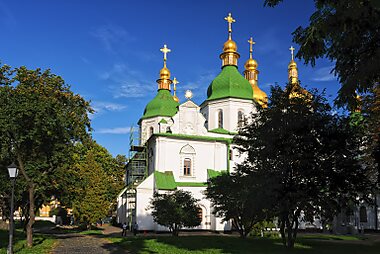
- Kyiv: the capital, with Saint Sophia Cathedral, the cave monasteries of Kyiv Pechersk Lavra, St Michael's Golden-Domed Monastery and the steep street of Andriyivsky Uzviz. Maidan Nezalezhnosti was the centre of the 2004 and 2013–2014 protests.
The west
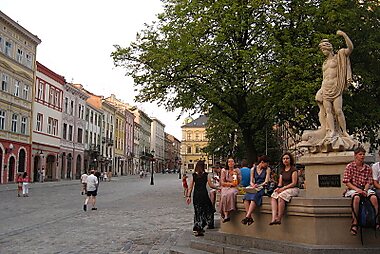
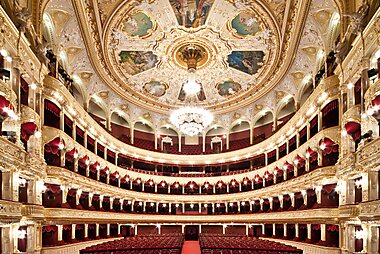
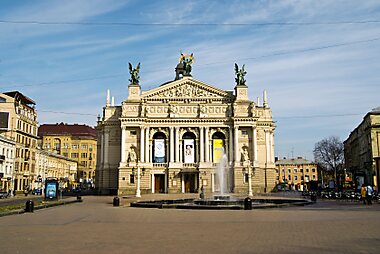
- Lviv: a UNESCO-listed old town around Rynok Square, with churches of many faiths, coffee houses and Lviv Opera House. Lychakiv Cemetery is one of the oldest cemeteries in Central Europe. The Lviv Region around it has castles such as Olesko Castle.
- Chernivtsi: a university city whose former Residence of Bukovinian Metropolitans is a UNESCO World Heritage site. Nearby is Khotyn Fortress on the Dniester River.
- Kamianets-Podilskyi: a medieval town on a rock island in a river loop, guarded by its large medieval fortress.
- Zakarpattia: the region west of the mountains, with Uzhhorod Castle in Uzhhorod, the castle town of Mukachevo and local wine.
- Rivne Oblast: known for Tunnel of Love, a railway line through a green arch of trees. The north of the region, within 50 km of the Belarus border, is under advice against all travel.
The Carpathians
- Ukrainian Carpathians: wooded mountains with hiking, ski resorts and Hutsul villages. Hoverla is the country's highest peak, and the Carpathian Beech Forests are a UNESCO site. St. George's Church in Drohobych is one of the UNESCO-listed wooden churches of the region.
The south
- Odesa: a port city on the Black Sea, known for Odesa National Academic Theatre of Opera and Ballet, Potemkin Stairs and its humour and food. It is attacked often, and the beaches have been closed or restricted because of mines at sea.
Ukrayna – Gezini Planla
Görmek istediğin yerleri seç; Tripomatic akıllı rota oluşturma, tahmini süreler ve kusursuz bir gezi için ihtiyacın olan her şeyle onları gün gün bir rotaya dönüştürsün.




