


布拉奇岛
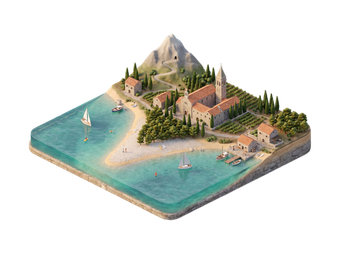
Brač is the largest island in Dalmatia. It is a stone island: white limestone cliffs, dry hills, olive groves and small harbour towns. The island suits beach holidays, easy hiking and quiet days in old villages.
Most visitors stay in Bol on the south coast or in Supetar on the north coast. Bol has the famous pebble beach. Supetar is the main ferry port and the island's largest town. Inland, stone villages and a hermitage in the cliffs reward a day with a car.

布拉奇岛 – 正在规划旅行?
在 Tripomatic 应用中按天构建您的行程。


最佳旅行时节
June to September is the main season. The sea is warm, days are long and the weather is mostly dry. July and August are the busiest and hottest months. Late May and September are good choices for swimming with fewer people.
Spring and autumn suit walking and sightseeing, but the sea is cooler. Winter is quiet. Many restaurants and rooms close, and ferries run less often. Rain and strong wind are common from October to March.
Ferry timetables change by season.
最佳旅行时间: 五月, 六月, 七月, 八月, 九月, 十月
热门景点
- Golden Horn is the island's best-known beach. It is a long pebble spit that points into the sea at Bol. Wind and currents slowly change its shape.
- Vidova gora is the highest peak on the Adriatic islands, at about 780 m. It rises above Bol. Come for the wide view over the sea and the neighbouring islands.
- Blaca Hermitage is a hermitage built into a cliff. Monks lived here for about four centuries until 1963. Today it is a museum with a library and an old telescope collection. You can reach it only on foot, about 40 minutes uphill from the bay. The path is steep and rocky. The museum opens in season. Bring water, as nothing is sold there.
- Zmajeva špilja is a cave above Murvica with a carved dragon, made by a monk in the 15th century. Other reliefs show the moon and human figures.
- Muzej Otoka Brača is in Škrip, the oldest settlement on the island. The museum holds Roman and early medieval stone carvings and a display of local farming and stonemasonry.
- Mausoleum of the Petrinovic Family stands in the cemetery in Supetar. It was designed by the sculptor Toma Rosandić and is protected as heritage.
精选榜单

Brač Unmissables
Brač is home to Vidova gora, the highest peak of the Adriatic islands, offering panoramic views over the surrounding archipelago. The island is famous for Zlatni rat, a shifting pebble beach near Bol, and its long history of olive oil production, preserved in the village of Škrip. Cultural landmarks include the Dragon’s Cave with its 15th-century reliefs. Coastal hubs like Supetar, Milna, and Bol serve as the primary maritime gateways, connecting the island to Split and Hvar.
7 个地点
Croatian Coastline Gems
Explore the diverse shoreline of Brač, ranging from the shifting pebble cape of Zlatni Rat in Bol to the rare sandy shores of Lovrečina Bay, which houses the ruins of a 5th-century early Christian basilica. This selection features secluded naturist coves like Paklina, the gravel beach of Mala Lozna in Postira, and the shores of Martinica situated beside a 15th-century Dominican monastery. The list also includes the Koloč natural stone arch, a unique geological formation located inland near Nerežišća.
9 个地点

Natural Wonders and Viewpoints
Explore the rugged karst landscape of Brač through its highest peaks and unique geological formations. This selection includes Vidova gora, the Adriatic's loftiest summit, and the Dragon’s Cave, known for its 15th-century reliefs carved by Glagolitic monks. Discover natural structures like the Koloč stone arch, deep sinkholes such as Duboki dolac, and various coastal viewpoints and climbing spots that characterize the island's diverse limestone terrain.
10 个地点特色体验
- Windsurf at Bol: the town is known for windsurfing. You can watch the sails from the beach even if you do not sail.
- Take a boat to Blaca bay: boats run from Bol to the bay below the hermitage. The walk uphill from the bay takes about 40 minutes to Blaca Hermitage.
- Drive the inland villages: roads cross the hills past stone houses, olive groves and dry-stone walls. Stop for a drink in a village square.
观光与活动
布拉奇岛 — 地图

一日游
Brač itself fills several days. For a day away from the island, the choices are mainly by boat.
- Split: about 50 minutes by car ferry from Supetar. Good for the old town and the Roman palace, which is built partly of Brač stone.
- Hvar: a fast catamaran links Bol with Hvar in summer. Jelsa and Stari Grad on Hvar have a link from Bol all year.
- Makarska: a car ferry runs from Sumartin on the east end of Brač. Check the timetable and book a car space early.
周边探索
- Općina Bol is the town on the south coast, near the main beach.
- Split is the mainland gateway to Brač, with ferries to Supetar and Bol.
- Hvar is the neighbouring island to the south, linked to Bol by catamaran in summer.
- Makarska is a coastal town with a car ferry to Sumartin on Brač.
如何到达
- By air: Brač Airport near Bol has limited flights in summer. Split Airport (SPU) on the mainland is the main option. From there, travel to the Split ferry port and cross to Brač. Allow extra time for the transfer.
- By ferry from Split to Supetar: a car ferry takes about 50 minutes. It runs every day all year, at least 9 times a day. Foot passengers and cars do not need an advance ticket on this line.
- By ferry from Split to Bol: a fast catamaran runs from Split to Bol, about 1 hour. Times change by season.
- By ferry from Makarska to Sumartin: a car ferry runs daily. Book ahead if you bring a car, as space is limited.
- From the port to your town: Supetar to Bol is about 35 km, around 40 minutes by car. Buses and taxis also run between them.
Check sailing times and book on the Jadrolinija site.
当地交通
- Buses: buses link Supetar, Bol and other towns, with fewer runs outside summer.
- Taxi: taxis are the easy option for a one-way trip, for example from Supetar to Bol. Book ahead in the high season.
- On foot: Bol, Supetar and the other harbour towns are small and easy to walk. Distances between towns are too long to walk.
- Cycling: roads are hilly. Cycling suits fit riders more than casual ones.
Official information for Bol is on the Bol tourist board site.
自驾指南
- Is a car worth it?: yes, if you want to see more than one town. The island is large. If you stay in Bol or Supetar and only want the beach, you can manage without one.
- Ferry: cars travel on the car ferries only. Book the Makarska to Sumartin ferry ahead.
- Parking: space is tight near Bol's beach and harbour in July and August. Arrive early or walk in from the edge of town.
- Road: from Supetar to Bol is about 35 km, around 40 minutes. Inland roads are narrow in places.
美食与饮品
Brač food is simple and local. Look for lamb, local olive oil and fish. Brač olive oil has a protected designation of origin. The island also makes varenik, a sweet syrup from a local grape variety. It is used in desserts.
Good eating clusters along the harbour fronts in Bol and Supetar. For a quieter meal, try a konoba, a family-run tavern, in one of the inland villages. Ask in advance for slow-roasted dishes such as peka.
安全与健康
Brač is safe for visitors. Petty theft is rare. Take normal care with bags on busy ferries and in crowded town centres in summer.
- Sun and heat: summer days are hot and shade is limited on beaches and trails. Bring water and sun protection, especially for Blaca and Vidova gora.
- Sea urchins: rocky shores have sea urchins. Water shoes help.
- Wildfire: dry summers bring a fire risk. Do not light fires outside.
- Ferries: strong wind can cancel sailings. Keep some time spare before a flight.
- Medical help: the island has small clinics. Serious cases go to the mainland. Call 112 in an emergency.
历史
People have lived on Brač since prehistory. In Roman times the island's white stone was cut for buildings. It was used in Diocletian's Palace in Split. You can see old stonework in the Muzej Otoka Brača in Škrip.
In the Middle Ages the island was ruled by several powers, including Venice. The administrative centre moved from Nerežišća to Supetar in 1827.
Monks settled in the cliffs in the 16th century. They built Blaca Hermitage, where they lived until 1963. Many islanders left from the late 19th century, and the population fell from about 24,000 in 1900 to about 14,000 today. Today tourism, stone, olive oil and farming support the island. Pučišća has a stonemason school.
国家概况
Quick practical facts for Croatia at a glance:
- 货币
- 欧元 EUR € · 刷卡支付 · 广泛接受
- 紧急求助电话
- 112
- 用电规格
- 230 V · 50 HzC 型插头 / F 型插头
- 语言
- 克罗地亚语
- 自来水
- 可安全饮用
- 行车方向
- 靠右行驶
- 国际区号
- +385




相关目的地


Data: © OpenStreetMap contributors, Wikidata, Wikipedia, Tripomatic, Official websites. Tours by GetYourGuide. We earn commission from bookings. Travel guide generated with AI.