


白川村
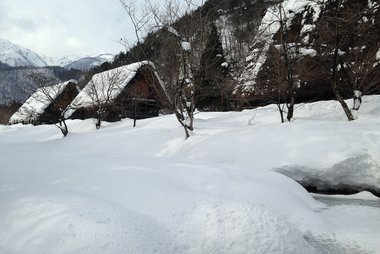
Shirakawa-gō is a mountain village in the Shō river valley in Gifu Prefecture. Its hamlet of Ogimachi has farmhouses with steep, thatched roofs in the gasshō-zukuri style. "Gasshō" means "praying hands", the shape of the roof. The roofs shed the heavy winter snow. Together with Gokayama in Toyama Prefecture, the village has been a UNESCO World Heritage Site since 1995.
People still live and farm in Ogimachi. The residents follow three rules: do not sell, do not rent and do not destroy the houses. The village suits a day trip by bus. A night in a farmhouse inn gives you the quiet streets after the day visitors leave.

白川村 – 正在规划旅行?
在 Tripomatic 应用中按天构建您的行程。


最佳旅行时节
Winter brings the famous snow scenes. Heavy snow falls from December to March, and the village is cold. Cherry trees bloom from mid to late April. Summer is green, but July and August are warm and humid. The leaves in and around the village turn red and yellow from late October to early November. Some mountain roads around Hakusan close in winter.
The biggest event is the winter light-up on four evenings in January. It is open only by advance reservation (see Experiences).
最佳旅行时间: 六月
热门景点
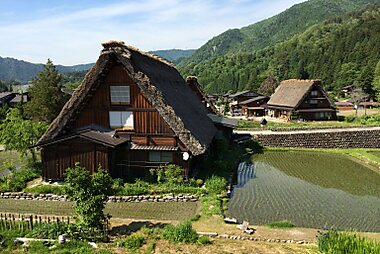
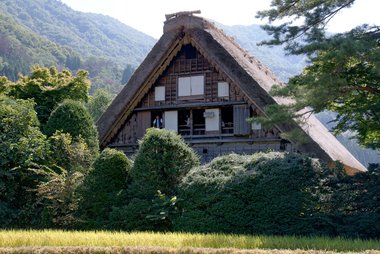
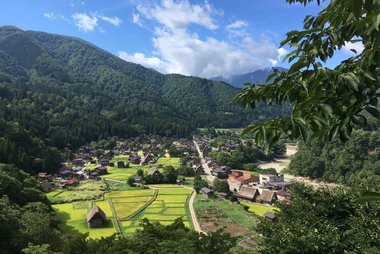
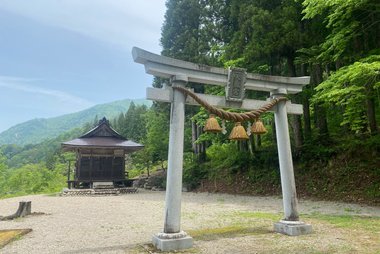
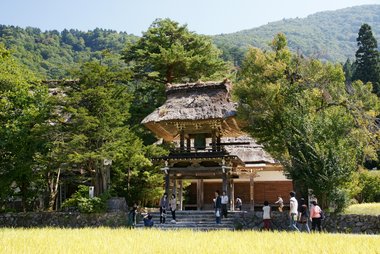
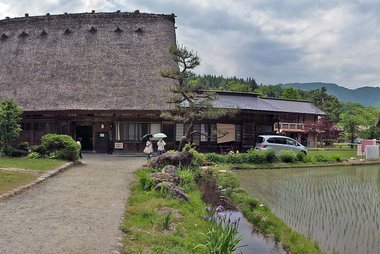
- Shirakawa-gō is the old farming hamlet of Ogimachi. Walk the lanes, rice fields and canals. Cars cannot use the main street. Do not enter private houses or gardens.
- Wada House is the largest gasshō-zukuri house in the village and a national Important Cultural Property. The first and second floors are open. English explanations are on the second floor. Entry is 400 yen for adults and 200 yen for children, open 9:00 to 17:00.
- Kanda House shows the inside structure of a gasshō house. You can also see the place under the floor where gunpowder was made. Entry is 400 yen, open 9:00 to 16:00, closed on Wednesdays. Nearby, Nagase House has five floors and costs 300 yen.
- Gasshozukuri Minkaen Outdoor Museum is an open-air museum of moved gasshō houses beside the main car park. Entry is 600 yen. Opening hours are 8:40 to 17:00 from March to November and 9:00 to 16:00 from December to February. It is closed on Thursdays from December to March.
- Myozenji Temple Main Hall belongs to the largest temple in the village. The main hall, kitchen and clock tower are in gasshō style. The museum costs 300 yen.
- Ogimachi Castle Observation Deck gives the classic view over the village from the castle ruins hill. It is free. Walk 15 to 20 minutes on the path behind Wada House.
精选榜单

特色体验
- Stay overnight in a farmhouse inn. Over 40 inns and guesthouses are in gasshō or traditional buildings. All need a reservation. Day visitors cannot enter the village after dark, so overnight guests have the streets to themselves.
- Winter light-up. The village is lit from 17:30 to 19:30 on four January evenings (11, 17, 24 and 31 January in 2027). Entry is only by advance reservation. Tickets are not sold on the day, and a gate checks tickets from 15:30. Choose one of these ways in: stay overnight (rooms are allocated by lottery in autumn), reserve a space in the event car park (7,000 yen for up to 5 people in the second round, open from 1 December 2026), or join a special tour bus from one of five highway bus companies. The viewing deck is only for overnight guests and some bus tours. Tripods and drones are banned. Event details
- Soak in a hot spring. Shirakawago no Yu is 2 minutes from the bus terminal. It has an open-air bath with a view of the Shō river. Check the current fee at the door.
- Doburoku Festival. From 14 to 19 October, shrines in the village hold festivals with doburoku, a cloudy rice wine. Shirakawa Hachiman Shrine is one of them.
观光与活动
白川村 — 地图

一日游
Closest trips first:
- Gokayama (Toyama Prefecture): two more World Heritage hamlets. Suganuma Village is about 25 minutes by car. Ainokura Village is about 40 minutes by car. Some buses stop at Gokayama Suganuma from April to November.
- Hirase and Hakusan: the Hirase hot spring area is about 15 minutes by car. Mount Hakusan is one of Japan's three sacred mountains. Roads to its high trailheads close in winter.
- Takayama: about 50 minutes by bus. It is the usual base on the Hida side.
- Hida: the town of Hida-Furukawa is about 1 hour by car.
- Kanazawa: about 1 hour 20 minutes by bus. It is the main city on the Hokuriku side.
周边探索
如何到达
Shirakawa-gō has no railway. Long-distance buses are the main way to arrive, and they stop at the Shirakawa-go Bus Terminal, a 1-minute walk from the village.
- By bus from Takayama: about 50 minutes, 16 round trips a day. Fares run from about 2,800 to 2,900 yen one way. Some departures are reservation-only.
- By bus from Kanazawa or Toyama: both about 1 hour 20 minutes. Kanazawa costs about 2,800 to 2,900 yen and Toyama about 2,400 yen. Some departures are reservation-only.
- By bus from Nagoya: about 2 hours 30 minutes from the Meitetsu Bus Center. Seats are reservation-only and fares change by date, about 3,600 to 4,700 yen. Booking opens one month before the trip.
- Delays: buses can run 2 hours or more late because of car queues at the village, heavy snow or expressway closures. Book a later return bus.
- By train and bus: take the JR Hida limited express from Nagoya to Takayama (about 2 hours 20 minutes), or the Hokuriku Shinkansen to Toyama or Kanazawa, then the bus.
- By air: the nearest airports are Toyama and Komatsu. From Komatsu, an airport bus takes about 40 minutes to Kanazawa Station.
- By car: about 1 hour 10 minutes from Kanazawa and about 2 hours 15 minutes from Nagoya on expressways.
Shirakawa-go Tourist Association: access · Nohi Bus: Takayama–Shirakawa-go
当地交通
- On foot: Ogimachi is small, and walking is the only way to see it. Plan 2 to 3 hours. From the bus terminal, Wada House is 3 minutes away, Kanda House 7, Nagase House 8, Myozenji 10 and the open-air museum 12.
- Viewpoint: you can walk up in 15 to 20 minutes on the path behind Wada House. A shuttle bus also serves it, with a stop about 5 minutes on foot from the bus terminal. Ask at the tourist office for the shuttle times.
- From the car park: a suspension bridge leads to the village in about 2 minutes.
- Payment: carry cash. Small houses and museums mostly take cash only.
自驾指南
- Is a car worth it? Not for Ogimachi itself, because buses stop at the village. A car helps for Gokayama, Hirase and a loop with Takayama and Kanazawa. Traffic drives on the left.
- Licence: Japan accepts only an International Driving Permit issued under the 1949 Geneva Convention. A 1968 Vienna Convention permit is not valid. Licences from Switzerland, Germany, France, Belgium, Monaco and Taiwan need an official Japanese translation from JAF instead. The permit or translation is valid for up to one year from entry.
- Parking: use the village car park, Seseragi Park. It costs 2,000 yen per car, open 8:00 to 17:00 with last entry at 16:30. If it is full, staff send you to the Midashima or Terao lots.
- Winter: studless winter tires are required. Chains are also advised. Snow falls from December to March.
- Light-up days: the car park rules change. Evening visits need a reserved parking space. Ordinary cars are moved to the Terao lot by 15:00, so arrive early and check the event rules.
美食与饮品
The village is known for tofu and soy products, including soy milk, fried tofu and "stone tofu". Other local foods are horse chestnut mochi, hoba tea and doburoku-flavoured yokan. Hida beef and hoba miso are common on menus. In the Hirase hot spring area, try suttate nabe, a hot pot with Hida beef.
Most eating places are along the main street of Ogimachi. Choices run from soba and udon shops and cafes to restaurants for Hida beef and local dishes. Farmhouse inns serve dinner to guests.
安全与健康
Shirakawa-gō is very safe. Winter is the main risk. People slip often on snow and ice, even when it is not snowing. Wear boots with good grip, not heels. Roads can close in heavy snow.
Residents live in the village. Do not enter private houses or gardens, and do not fly drones. Bring a flashlight if you walk at night, and expect insects in summer. Bears live in the mountains, so check local notices before you hike.
历史
Mountains and heavy snow kept Shirakawa-gō cut off for long periods. Farming land is scarce, so from the middle of the Edo period people raised silkworms in the large attics of their houses. Wada House belonged to a family that led the village. Its trade in silk and in gunpowder ingredients was an important income.
The villagers made gunpowder material under the floors of their houses. You can see the place in Kanda House. The hill with the viewpoint, Ogimachi Castle Observation Deck, was the site of a medieval mountain castle.
The village area became a preservation district in 1976 and a World Heritage Site in 1995. Villagers keep the roofs by working together, a custom called "yui". Neighbours help to renew the thatch.
国家概况
Here are the essentials for traveling in Japan:




相关目的地
Data: © OpenStreetMap contributors, Wikidata, Wikipedia, Tripomatic, Official websites, geoBoundaries (CC BY 4.0). Tours by GetYourGuide. We earn commission from bookings. Travel guide generated with AI.