


فيبابا
Vipava is a small wine town at the foot of the Nanos plateau, where the Vipava River rises from a group of karst springs right in the centre. Stone bridges cross the young river, a ruined castle stands on the rock above, and Baroque mansions recall the noble families who once owned the valley. The diplomat Sigismund von Herberstein, famous for his early account of Muscovy, was born here in 1486.
The town is the natural base for the upper Vipava Valley, one of Slovenia's best-known wine regions. Expect family wine cellars, local white varieties such as zelen and pinela, stone villages in the hills and easy access to hiking and paragliding. The valley is also famous for the burja, a cold, gusty wind that shapes daily life here. It suits a slow trip of two or three nights built around wine, food, short hikes and day trips to the Karst and the Adriatic hinterland.

فيبابا – هل تخطط لرحلة؟
أنشئ خط سير رحلتك يوماً بيوم في تطبيق Tripomatic.


أفضل وقت للزيارة
Spring and autumn are the best seasons: mild days, green or golden vineyards and the most wine events. Summer is hot in the valley floor, so plan hikes on Nanos for the morning. Winter is quiet and cool, and cold burja days can bring strong gusts and a sharp wind chill.
The biggest wine date is the Zelèn Wine Festival in nearby Vipavski Križ, held in the castle yard in mid-June. It is a good chance to taste the valley's signature grape from many producers in one place. From St Martin's Day in early November until Christmas, wine cellars across the valley also hold tastings and new-wine events.
أفضل وقت للزيارة: سبتمبر
أبرز المعالم

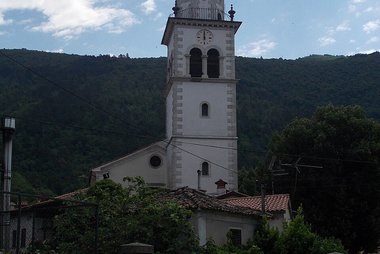
The town's sights are close together and easy to see in half a day. The rest of the list is spread across the upper valley and the hills above it.
- Vipava River Springs are the reason the town exists. Several karst springs flow out at the foot of Nanos, under the castle rock and beside the church, and the water stays cold all year. Entry is free.
- Vipava Castle is a ruined medieval castle on the rock above the springs. An easy footpath climbs from the centre in about 30 minutes, and the walls give a wide view over the valley.
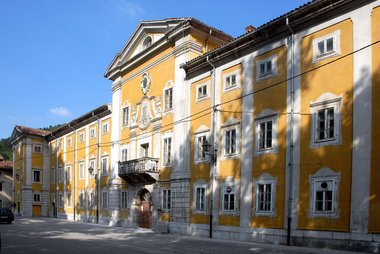
- Lanthieri Mansion is a Baroque mansion of the Lanthieri counts on the main square, built around 1659. Emperors stayed here, and today it houses a school of viticulture and winemaking. You can admire the facade and the park in front.
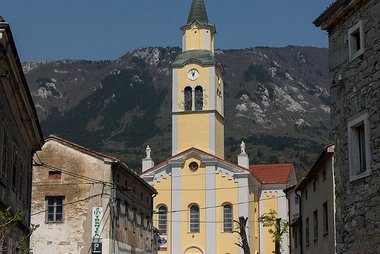
- Church of St Stephen is the parish church of Vipava, a few steps from the springs and the main square.
- Church of Sts Primus and Felician, Vrhpolje in the village of Vrhpolje, 2 km north, has large modern mosaics in the chancel, about 300 m² in total. A stained-glass window recalls the Battle of the Frigidus, fought near here in 394.
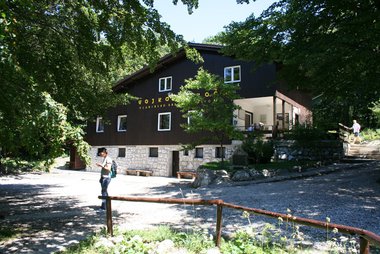
- Vojkova koča na Nanosu is a mountain hut at about 1,240 m on the Nanos plateau, just below the summit of Pleša. The view stretches over the whole Vipava Valley and, on clear days, to the Adriatic.
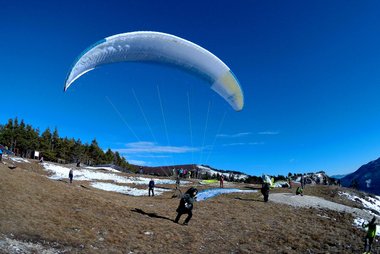
- Kovk is a 961 m hill above the valley on the edge of the Trnovo Forest plateau. Its take-off is one of the valley's paragliding sites, and the summit has a cross and a summit register.
Two more stops are worth the short drive. Zemono Manor, a late-Renaissance summer manor from the 17th century, sits on a vineyard hill just west of town. It houses a restaurant, and the interior can be seen by appointment. Goče, in the hills to the south-west, is a stone village with very narrow lanes, old carved door frames and wine cellars.
قوائم مميزة

تجارب ننصح بها
Life in the Vipava Valley follows wine, wind and the seasons. These are the things to do here rather than just see.
- Taste zelen and pinela: Visit family wine cellars to try the valley's own white varieties, zelen and pinela, which are rarely found outside this area. Many cellars ask you to call ahead.
- Eat at an osmica: Farms open short-term pop-up taverns called osmica, serving their own wine with home-made cured meats, cheese and bread. Look for the signs and leafy branches at the roadside.
- Hike up Nanos: Walk from Podnanos or Razdrto up to Vojkova koča na Nanosu for a meal at the hut and the view over the valley.
- Fly over the valley: The Vipava Valley is one of Slovenia's best areas for paragliding, with take-offs on Kovk and at Lijak near Nova Gorica. Tandem flights with local pilots are available for beginners.
- Feel the burja: On a clear winter day with burja, walk up to Vipava Castle and watch the wind sweep the valley. Notice the stones on the roofs of old houses, placed there to keep the tiles on.
جولات وأنشطة
فيبابا — خريطة

رحلات اليوم الواحد
The upper valley is compact, so most of these trips take well under an hour each way by car. Buses are possible to the larger towns, but a car makes it much easier.
- Vipavski Križ (about 15 min by car): a small fortified hilltop town with a castle and a Capuchin monastery, surrounded by vineyards.
- Ajdovščina (about 15 min by car or bus): the valley's main town, built inside the walls of a Roman fort, with guided tours of the fort remains.
- Postojna (about 30 min by car or bus): Postojna Cave, one of Europe's most visited show caves, and nearby Predjama Castle, built into a cliff.
- Štanjel (about 20 min by car): a stone hilltop village on the edge of the Karst, with a castle and the terraced Ferrari Garden.
- Nova Gorica (about 30 min by car or bus): a modern town on the Italian border, next to Gorizia and the Solkan Bridge.
- Karst (30–40 min by car): a limestone plateau known for cured ham, teran wine and stone villages. The Škocjan Caves, a UNESCO World Heritage Site, are near Divača.
- Brda (about 45 min by car): rolling hills of vineyards and cherry orchards along the Italian border, with the fortified village of Šmartno.
- Ljubljana (about 1 hour by car, 1 h 15 min by bus): the capital, with its old town, river and castle.
أماكن للاستكشاف
Vipava sits between the Karst, the Adriatic hinterland and the Julian Alps, so several other Slovenian destinations are close.
- Rest of the valley and nearby wine country: Ajdovščina, Nova Gorica and Brda.
- Karst and caves: Karst, Štanjel, Postojna and Divača.
- Further afield: Idrija, with its UNESCO-listed mercury mine, and the capital Ljubljana.
الوصول إلى الوجهة
- By air: Trieste Airport in Italy is the closest, about 45 minutes by car. Ljubljana Jože Pučnik Airport is about 1 hour 10 minutes away and Venice Marco Polo Airport about 1 hour 45 minutes. There is no direct public transport from the airports to Vipava, so most visitors rent a car or book a shuttle.
- By car: The motorway from Ljubljana towards Nova Gorica has its own Vipava exit. An e-vignette is required on Slovenian motorways.
- By bus: Regular buses link Vipava with Ljubljana, Ajdovščina and Nova Gorica. Arriva bus timetables
- By train: Vipava has no railway station. The nearest useful stations are in Postojna, on the Ljubljana–Koper line, and in Nova Gorica. Slovenian Railways
التنقل والمواصلات
- On foot: The town centre, the springs, the main square and the castle path are all within a short walk.
- By car: The easiest way to reach wine cellars, villages such as Goče and Vrhpolje, and the trailheads for Nanos.
- Buses: Local buses run along the main valley road to Ajdovščina and Podnanos, but services are infrequent, especially at weekends.
- By bike: The valley floor is good for cycling, and marked routes link wine villages. The side roads into the hills are steep, so an e-bike helps. Strong burja days are not good cycling days.
- Tourist information: The information centre on the main square has maps, trail guides and winery lists. Vipava Valley tourism
القيادة
- Is a car worth it?: Yes. Wine cellars, hill villages and trailheads are spread out, and buses are infrequent. Plan a designated driver for tasting days.
- Parking: There is a large car park at the edge of the town centre, a short walk from the springs and the castle path. Parking at wineries and in villages is usually easy.
- Burja: Strong burja gusts can exceed 100 km/h and can overturn vans, caravans and trucks. Restrictions for some vehicles are then posted on the motorway and main roads, so check the traffic news and drive carefully on exposed stretches.
المأكولات والمشروبات
The Vipava Valley cooks in the style of the Slovenian Littoral, with influences from nearby Italy. Look for frtalja (an omelette with wild herbs), jota (bean and sauerkraut stew), Karst cured ham and seasonal fruit from the valley's orchards. Meals here are usually built around a glass of local white wine, especially zelen or pinela.
For a special meal, Gostilna pri Lojzetu in Zemono Manor is one of Slovenia's best-known restaurants, with one Michelin star and a seasonal menu built on local ingredients. For a simpler experience, eat at a farm osmica or at one of the family inns around the main square in Vipava.
السلامة والصحة
Vipava is very safe, and petty crime is rare. The main risks are natural rather than criminal.
- Burja: On strong burja days, take care on exposed paths and ridges and secure doors, bikes and anything light. The wind is cold, so carry an extra layer even when it is sunny.
- Hiking: Paths on Nanos and Kovk are well marked, but the plateau is open and hot in summer. Carry water and start early.
- Summer heat and storms: Afternoon thunderstorms are common in summer, so plan hikes and flights for the morning.
التاريخ
The area has been settled since prehistoric times, and the Romans built a road and a fort through the valley at what is now Ajdovščina. In 394, the Battle of the Frigidus was fought nearby, close to Vrhpolje. The Roman emperor Theodosius I defeated the usurper Eugenius, and the victory helped make Christianity the dominant religion of the Roman Empire. The stained-glass window in Church of Sts Primus and Felician, Vrhpolje recalls the battle.
In the Middle Ages, Vipava Castle guarded the springs and the road below. Its oldest tower probably dates from around 1100. The town later passed to the Habsburgs and became a centre of the Protestant Reformation in the 16th century. From the 17th century, the Lanthieri counts shaped the town. They built Lanthieri Mansion and the summer manor at Zemono, and they hosted emperors as overnight guests. After the First World War the valley became part of Italy, and in 1947 it became part of Yugoslavia. Since 1991 it has been part of independent Slovenia.
حقائق عن البلد
Quick practical facts for Slovenia at a glance:
- العملة
- يورو EUR · الدفع بالبطاقات · مقبولة على نطاق واسع
- أرقام الطوارئ
- 112
- الكهرباء
- 230 فولت · 50 هرتزالنوع C / النوع F
- اللغات
- السلوفانية
- مياه الصنبور
- صالحة للشرب
- جهة القيادة
- اليمين
- رمز الاتصال الدولي
- +386

فيبابا – خطط لأيامك
حوّل الأماكن المذكورة في هذا الدليل إلى خط سير حقيقي، مع ملاحة ذكية وتقديرات زمنية وكل ما تحتاجه لرحلة مثالية.


وجهات ذات صلة


Data: © OpenStreetMap contributors, Wikidata, Wikipedia, Tripomatic, Official websites, geoBoundaries (CC BY 4.0). Tours by GetYourGuide. We earn commission from bookings. Travel guide generated with AI.
خطط لرحلتك مع Tripomatic
- تخطيط مدعوم بالذكاء الاصطناعيدع الذكاء الاصطناعي يبني خط سير رحلتك، ويجيب عن أسئلة السفر، ويُدرج مستندات حجوزاتك داخل رحلتك.
- تنبيهات السفرإرشادات رسمية، وتحذيرات الطقس القاسي، والإضرابات، والمخاطر الطبيعية للأماكن المجدولة في كل يوم من رحلتك.
- العطلات الرسمية والفعالياتتعرف على العطلات والمهرجانات وأوقات الإغلاق خلال أيام رحلتك، وتأثيرها على خططك.
- تقدير التكاليفتفصيل تكاليف الرحلة مدعوم بالذكاء الاصطناعي لتعرف الميزانية المناسبة قبل انطلاقك.
- جولات وتذاكراحجز الجولات وتذاكر تجاوز طوابير الانتظار والأنشطة مباشرة من داخل خطتك.