


Évora
Évora is the main city of the Alentejo, in southern Portugal. It is a walled town with Roman, medieval and Renaissance buildings in one small area. The Historic Centre of Évora is a UNESCO World Heritage Site, listed in 1986.
It suits a one- or two-night stop. Most sights are within a short walk, and the surrounding countryside has megaliths, hill villages and wineries. Portuguese kings often stayed here in the 15th and 16th centuries.

Évora – Planst du eine Reise?
Erstelle deine Reiseroute Tag für Tag in der Tripomatic-App.


Beste Reisezeit
Spring (April to June) and autumn (September and October) are the best times. Days are warm and sunny, and sightseeing is comfortable. July and August are very hot and dry, so plan sights for the morning and evening. Winter is mild but can be wet.
The biggest annual event is the Feira de São João, a centuries-old fair. It takes place in late June, around the feast of São João on 24 June. Book rooms early for this period.
Beste Reisezeit: April, Mai, Juni, September, Oktober
Top-Sehenswürdigkeiten
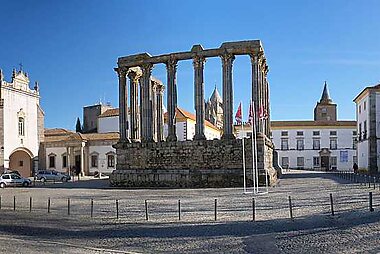
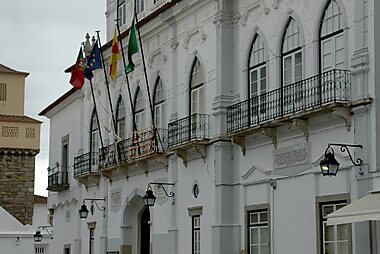
- Templo Romano de Évora is a Roman temple from the 1st century. It is often called the Temple of Diana, but this name comes from a 17th-century legend. Its granite and marble columns stand in the middle of the old town.
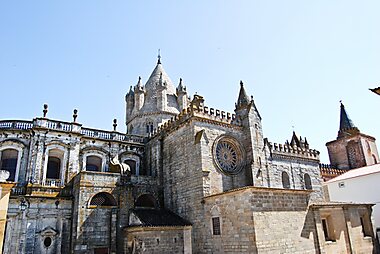
- Cathedral of Our Lady of the Assumption was begun in 1186 and is the largest medieval cathedral in Portugal. Visit the Gothic cloister and the organ from about 1544.
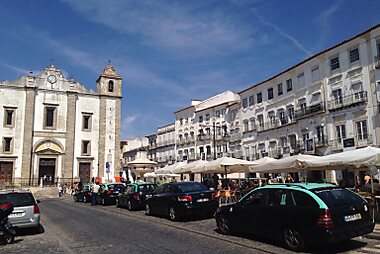
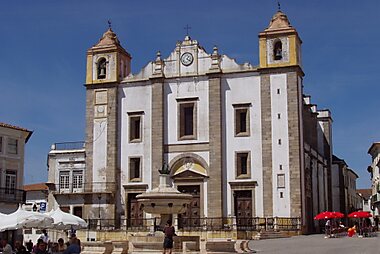
- Praça do Giraldo is the main square and the centre of city life. Cafes surround it. The Inquisition held public sentences here for about 200 years.
- Igreja de São Francisco is a Gothic church from the late 15th to early 16th century, with Manueline details. It has one very large nave and a Manueline entrance.
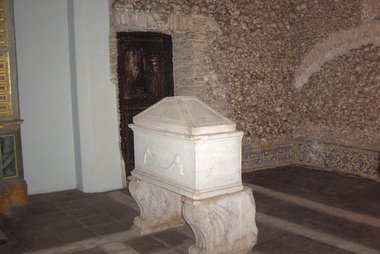
- Capela dos Ossos is a small chapel inside the São Francisco church complex and needs its own ticket. Its walls and pillars are covered with human bones and skulls. The message at the door reads: "We bones that are here await yours."
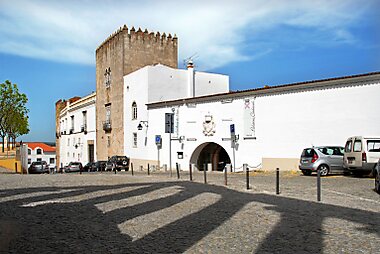
- São João Evangelista Church and Lóios Convent is a convent and church in the centre of the old town. It is part of the UNESCO site.
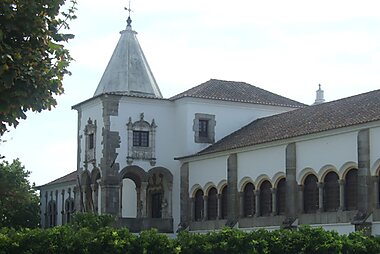
- Palácio de Dom Manuel is what remains of the royal palace of São Francisco. Only a small part of it survives today.
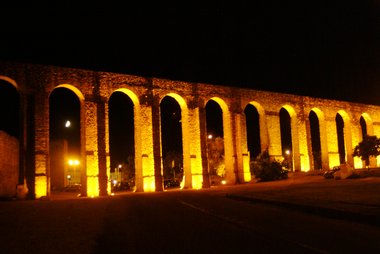
- Aqueduto da Água de Prata is a 16th-century aqueduct that brought water to the city. You can follow its arches on foot, just outside the old town.
Empfohlene Listen


Erlebnisse & Aktivitäten
- Join the Feira de São João in late June. It is a centuries-old fair held around the feast of São João.
Touren & Aktivitäten
Évora — Karte

 Interaktive Karte öffnen
Tagesausflüge
Évora is a good base for the Alentejo. Public transport is thin, so a car makes day trips much easier.
- Almendres Cromlech is about 12 km west of the city, a short drive. It has about 95 standing stones and is the largest group of its kind on the Iberian Peninsula. There is no easy bus, so go by car or on a guided tour.
- Arraiolos is about 20 minutes by car. Public bus links are limited, so check timetables locally. The town is known for its wool carpets.
- Estremoz is about 50 minutes by coach, with several departures a day. It has a hilltop old town and is known for marble.
- Monsaraz is a walled hill village with wide views. By car it takes about 50 minutes. Coaches go only to Reguengos de Monsaraz, so a car is best.
- Vila Viçosa is about 1 hour by coach, with about 3 departures a day. It has a ducal palace.
- Elvas is about 55 minutes by car. It is a fortress town near the Spanish border and is also a UNESCO site. Only one direct coach runs each day.
- Lisbon is about 1.5 hours away by train or coach, and is easy to reach as a day trip.
Orte zum Entdecken
- Nearby towns: Estremoz, Vila Viçosa, Monsaraz and Elvas.
- To the north-west: Lisbon, the usual gateway.
- For beaches and coast: Algarve to the south, and the Sudoeste Alentejano e Costa Vicentina Nature Park to the south-west.
Anreise
- By air: The nearest major airport is Lisbon (LIS), about 130 km away. Évora has no scheduled flights. From the airport, a few coaches run direct to Évora. Otherwise go to Lisbon first. By car it takes about 1 hour 20 minutes.
- By train: Intercidades trains run from Lisbon to Évora in about 1.5 hours. Book on the Comboios de Portugal site.
- By bus: Coaches from Lisbon (Sete Rios) take about 1.5 hours and run frequently. Évora also has coach links to Estremoz, Vila Viçosa and Elvas.
- By car: The A6 motorway passes Évora. Roads from Lisbon use tolled motorways.
Unterwegs vor Ort
- On foot: The historic centre inside the walls is small. Almost all sights are within a 10 to 15 minute walk. Streets are cobbled and some are steep, so wear flat shoes.
- Public transport: Not needed for sightseeing. Municipal information is on the Évora city council site.
- Cycling: Possible, but cobbles and hills make it tiring in the old town. It is better on the roads around the city.
Autofahren
- Is a car worth it?: Not for the old town. A car is useful for the cromlech, Monsaraz and wineries, because buses to these are rare.
- Parking: Paid parking zones apply in the historic centre and space is limited. Park outside the walls and walk in. The city council publishes a parking map.
- Tolls: Motorways from Lisbon (A2, A6) charge tolls. Rental cars usually have a transponder.
Essen & Trinken
Alentejo food is simple and rich. Look for açorda (a soupy bread dish with garlic, coriander and egg) and migas (bread cooked with garlic and olive oil, often served with pork). Also try carne de porco à alentejana, which is pork with clams, and ensopado de borrego, a slow lamb stew. Black Iberian pork is a local favourite.
For sweets, try sericaia, an egg and cinnamon dessert from nearby Elvas. Alentejo red wines are full-bodied, and Pêra-Manca from the Cartuxa winery is the best known.
The streets around Praça do Giraldo have many restaurants.
Sicherheit & Gesundheit
Évora is very safe for visitors. Petty theft is uncommon, but keep an eye on bags in crowded places, such as the main square at fair time.
Summer heat is the main risk. Temperatures can pass 35 °C in July and August. Carry water, use sun protection and avoid midday walks. Cobbled streets can be slippery when wet.
Geschichte
Évora has been a town for more than 2,000 years. The Romans took it in 57 BC and built the Templo Romano de Évora in the 1st century. Arabs held the city from 715 until it was taken in 1165 by Gerald the Fearless.
The city was most important in the 15th and 16th centuries. Portuguese kings of the Avis dynasty stayed here for long periods and left the royal palace of São Francisco. Jesuits founded a university in 1559. It closed in 1759 and reopened in 1973.
The Inquisition held public sentences in Praça do Giraldo. The walls around the old town date from the 17th century.
Länderfakten
Quick practical facts for Portugal at a glance:
- Währung
- Euro EUR € · Kartenzahlung · Weitgehend akzeptiert
- Notrufnummern
- 112
- Stromnetz
- 230 V · 50 HzSteckertyp C / Steckertyp F
- Sprachen
- Portugiesisch
- Leitungswasser
- Trinkbar
- Fahrseite
- Rechtsverkehr
- Telefonvorwahl
- +351


Évora – Plane deine Tage
Verwandle die Orte aus diesem Reiseführer in eine echte Reiseroute mit intelligenter Routenführung, Zeitschätzungen und allem für eine perfekte Reise.


Ähnliche Reiseziele


Data: © OpenStreetMap contributors, Wikidata, Wikipedia, Tripomatic, Official websites. Tours by GetYourGuide. We earn commission from bookings. Travel guide generated with AI.
Plane deine Reise mit Tripomatic
- KI-gestützte PlanungErhalte mit einem Fingertipp einen fertigen Tag, lass die KI deine Merkliste über deine Reise verteilen oder plane alles im Chat.
- ReisewarnungenOffizielle Hinweise, Unwetter, Streiks und Naturgefahren für die Orte an jedem Tag deiner Reise.
- Feiertage & EventsSieh Feiertage, Festivals und Schließungen an den Tagen deiner Reise und erfahre, was sie für deine Pläne bedeuten.
- KostenschätzungKI-gestützte Reisekostenübersichten, damit du dein Budget schon vor der Abreise genau kennst.
- Touren & TicketsBuche geführte Touren, Tickets ohne Anstehen und Aktivitäten direkt in deinem Reiseplan.