


Grand Cayman
Grand Cayman is the largest of the three Cayman Islands, a British Overseas Territory in the western Caribbean. It is flat, green and ringed by coral reefs. The west coast holds a long beach lined with hotels, and the capital, George Town, is a busy centre of offshore finance. The north and east are much quieter, with small villages, mangroves and empty shoreline.
The island suits beach holidays, snorkelling and diving, and easy family trips. The sea is clear and calm on most days, and much of the best reef is close to shore. It is safe, well organised and English-speaking, but it is also one of the most expensive places in the Caribbean.

Grand Cayman – Planst du eine Reise?
Erstelle deine Reiseroute Tag für Tag in der Tripomatic-App.


Beste Reisezeit
It is warm all year. December to April is the driest and sunniest season, and also the busiest and most expensive, so book early. From May to November it is hotter, more humid and wetter, and the Atlantic hurricane season runs from June to November.
The biggest annual event is Pirates Week in November. It opens with a mock pirate landing, followed by several days of parades, fireworks, music and heritage days in each district, with local food and crafts.
Beste Reisezeit: Januar, Februar, März, April
Top-Sehenswürdigkeiten
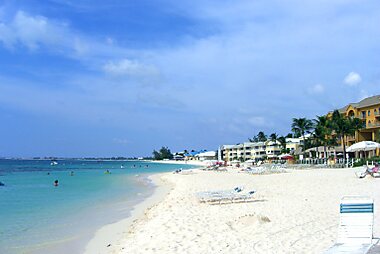
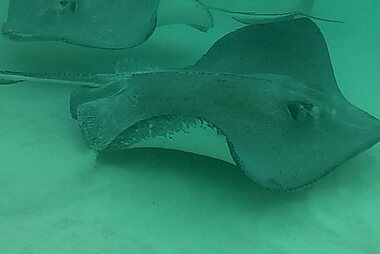


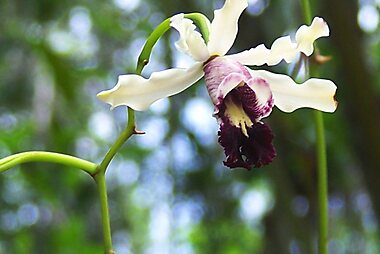
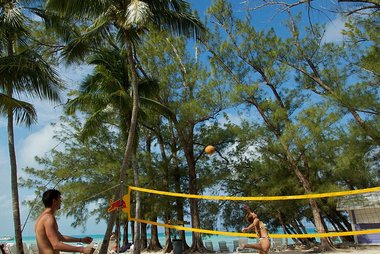

The island's best sights are on and under the water. Plan a full day for the north coast and another for the quieter east.
- Seven Mile Beach runs for about 10 km along the west coast, north of George Town. The sand is public along its whole length, the water is usually calm, and there is good snorkelling on reefs near the shore.
- Stingray City is a shallow sandbar in the North Sound, reached only by boat. You stand in about 1 m of water while dozens of southern stingrays swim around you. Most trips also stop at a reef for snorkelling.
- Rum Point Beach is a relaxed beach on the north coast with calm water, hammocks and a beach bar. It is on the far side of the North Sound, a long drive from Seven Mile Beach. Close by, Starfish Point has very shallow water where red cushion sea stars lie on the sand. Look at them, but do not lift them out of the water.
- Cayman Crystal Caves are limestone caves in the dry forest of North Side, visited on guided walking tours. One cave has a clear blue underground lake.
- Queen Elizabeth II Botanic Park has woodland trails, an orchid garden and a colour garden. It is also one of the best places to see the endangered blue iguana, which lives only on Grand Cayman.
- Pedro St. James is a restored stone great house from 1780 above the south coast. It holds a small museum and a short film about the island's history.
- Cayman Turtle Centre in West Bay breeds green sea turtles. Visitors can see turtles of all sizes, and there is also a lagoon and nature trails. Nearby, Hell is a field of sharp black limestone rock.
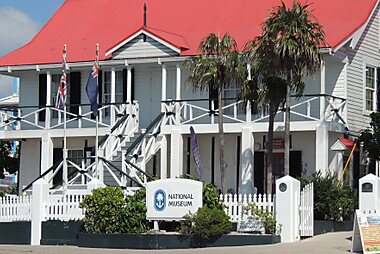
- In George Town, the National Museum tells the story of the islands in the historic Old Courts Building in the town centre.
Empfohlene Listen

Erlebnisse & Aktivitäten
A few things that make a stay on Grand Cayman special:
- Snorkel with sea turtles: early in the morning, swim at Spotts Beach on the south coast, where green turtles often feed on the sea grass close to shore.
- Snorkel from the shore: at Smith Barcadere near George Town, or at Cemetery Beach at the north end of Seven Mile Beach, the reef starts a few steps from the sand.
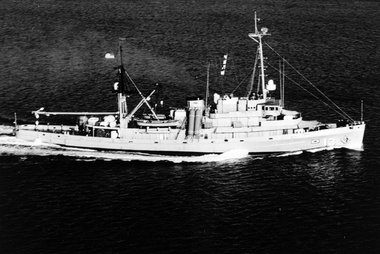
- Dive a wall: the reef around the island drops steeply into deep water close to shore. Many dive shops run boat trips every morning, and beginners can take a first course. A popular dive is the USS Kittiwake Shipwreck, a former US Navy ship sunk off Seven Mile Beach in 2011 as an artificial reef.
- See the glowing water: on a dark night, join a boat or kayak tour from the Rum Point area to a bay where tiny organisms light up blue when the water moves.
- Hike through old forest: the Mastic Trail follows an old footpath through dry forest and wetland in the centre of the island. Go early, wear good shoes and carry water.
- Drive the east end: follow the coast road east past the Blow Holes, where waves shoot water up through the rock, to the Wreck of the Ten Sail memorial at Gun Bay.
- Watch the sunset on Seven Mile Beach: the beach faces west, and many beach bars fill up in the early evening.
Touren & Aktivitäten
Grand Cayman — Karte

Tagesausflüge
There are no ferries between the Cayman Islands, so the sister islands are reached only by small plane. Flights with Cayman Airways Express take well under an hour, and a day trip works if the timetable allows it.
- Little Cayman (short flight): a tiny, very quiet island with few residents. It is famous for the Bloody Bay Wall dive site and has a nature reserve with a large colony of red-footed boobies.
- Cayman Brac (short flight): a long island with a high limestone cliff called the Bluff at its east end. It is good for hiking, caves and wreck diving.
Orte zum Entdecken
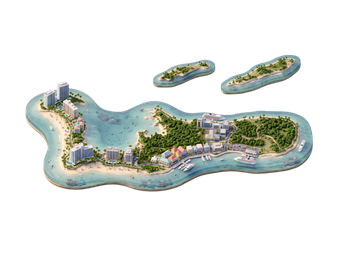
Grand Cayman is part of Cayman Islands. The two sister islands lie more than 100 km to the east-north-east.
- Little Cayman and Cayman Brac are much quieter, with small guesthouses. They suit a slow stay of a few nights.
Two bays on the south coast of Grand Cayman also have their own pages:
- South Sound, just south-east of George Town, has a residential shore with small snorkelling coves.
- Frank Sound is a quiet bay near the botanic park, on the road to the east end.
Anreise
- By air: Owen Roberts International Airport (GCM) is in George Town, a short taxi ride from Seven Mile Beach. There are direct flights from several US cities, including Miami, and from Toronto. British Airways flies from London via Nassau.
- By cruise ship: ships anchor off George Town, and small boats bring passengers to the piers in the town centre. On busy days the town and the popular tours are very crowded.
- Between the islands: there are no passenger ferries. Cayman Airways flies from Grand Cayman to Cayman Brac and Little Cayman.
For official visitor information, see Cayman Islands Department of Tourism.
Unterwegs vor Ort
- Public buses: minibuses with blue number plates run from the bus terminal on Edward Street in George Town to all districts, from early morning. Wave from the roadside to stop one and pay the driver in cash, in Cayman or US dollars. They are useful along Seven Mile Beach, but slow for the east and north. Route maps are on the Cayman Islands Public Transport Unit site.
- Taxis: taxis wait at the airport, the cruise piers and the larger hotels. They have no meters and use fixed fares set by the government, so confirm the price before you leave.
- Rental car or scooter: this is the easiest way to explore beyond Seven Mile Beach. Many rental companies are near the airport.
- On foot and by bike: you can walk along Seven Mile Beach, around Camana Bay and in central George Town. Elsewhere distances are long, the roads are busy and the sun is strong, so cycling suits only short trips.
Autofahren
- Is a car worth it?: yes, if you want to see more than Seven Mile Beach. The north coast, the east end and the caves are far from the bus routes.
- Driving side: traffic drives on the left, and there are many roundabouts.
- Driving permit: you need a temporary visitor's driving permit. The rental company issues it at the counter when you show your home licence.
- Parking: most beaches, attractions and shopping areas have free car parks. Do not leave valuables in the car.
Essen & Trinken
Seafood is the base of local cooking. Look for fresh snapper and mahi-mahi, conch, and fish rundown, a local fish stew with coconut milk. The official national dish is stew turtle, and the national dessert is heavy cake, made from cassava or sweet potato. Jamaican food is also common, especially jerk chicken and pork.
For the widest choice, eat along Seven Mile Beach and in Camana Bay, the planned town centre beside it. For simpler local cooking, try the small family restaurants in the districts away from the west coast. Eating out is expensive because most food is imported, and many restaurants add a service charge to the bill.
Sicherheit & Gesundheit
Grand Cayman is one of the safest destinations in the Caribbean. Crime against visitors is rare, but theft from parked cars and from bags left on the beach does happen.
- The sea: most beaches have no lifeguards. Strong winds from the north-west, mainly in winter, can make the west coast rough for a day or two.
- Marine life: at the stingray sandbar, follow the guide and shuffle your feet on the sand. Never stand on coral, and never touch or feed turtles on the reef.
- Sun: the sun is very strong all year. Use reef-safe sunscreen and cover up when snorkelling.
- Medical care: the main public hospital is in George Town. Care is good but expensive, so travel insurance is important.
- Hurricanes: check the forecast before and during your trip in hurricane season.
Geschichte
Christopher Columbus sighted the Cayman Islands in 1503 and named them Las Tortugas, after the many sea turtles. England took control in 1670 under the Treaty of Madrid. People settled Grand Cayman permanently from 1734, and Bodden Town was the first capital.
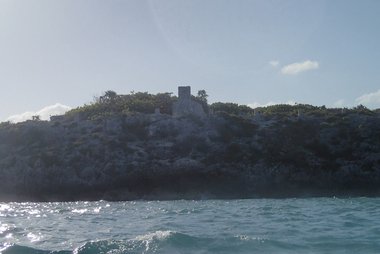
In 1780, a plantation owner built Pedro St. James. In 1831, a meeting there led to the first elected assembly, so it is known as the birthplace of democracy in the islands. The end of slavery was announced at the house in 1835. In 1794, ten merchant ships wrecked on the east-end reef, and local people rescued most of the crews. The Wreck of the Ten Sail memorial marks the spot.
For a long time the islands were governed from Jamaica. They became a separate British territory in 1962, when Jamaica became independent. The first airfield opened in 1953, and new laws in the 1960s brought banking. Finance and tourism made the island rich. In 2004, Hurricane Ivan damaged most of the homes on the island, which recovered quickly.
Länderfakten
Quick practical facts for the Cayman Islands at a glance:
- Währung
- Kaiman-Dollar KYD CI$ · Kartenzahlung · Weitgehend akzeptiert
- Notrufnummern
- 911 Polizei · Rettungsdienst · Feuerwehr
- Stromnetz
- 120 V · 60 HzSteckertyp A / Steckertyp B
- Sprachen
- Englisch
- Leitungswasser
- Trinkbar
- Fahrseite
- Linksverkehr
- Telefonvorwahl
- +1345


Grand Cayman – Plane deine Tage
Verwandle die Orte aus diesem Reiseführer in eine echte Reiseroute mit intelligenter Routenführung, Zeitschätzungen und allem für eine perfekte Reise.


Ähnliche Reiseziele


Data: © OpenStreetMap contributors, Wikidata, Wikipedia, Tripomatic, Official websites. Tours by GetYourGuide. We earn commission from bookings. Travel guide generated with AI.