



Jakarta
Jakarta is Indonesia's capital and its largest city. About 11 million people live in the city itself, and more than 40 million in the wider metropolitan area. For most visitors it is the first stop in the country. Two or three nights are enough to see the main sights.
The city mixes a Dutch colonial old town, national monuments and museums, a large Chinatown and modern districts of towers and malls. It is also one of the best places in Indonesia to try food from every region of the country. Traffic is heavy and the heat is constant, so plan each day around one or two areas. The government plans to move the national capital to Nusantara on Borneo, but Jakarta keeps the title until a presidential decree makes the move official.

Jakarta – Planst du eine Reise?
Erstelle deine Reiseroute Tag für Tag in der Tripomatic-App.


Beste Reisezeit
Jakarta is hot and humid all year. The drier months run from June to September, which is the easiest time for sightseeing and island trips. The wet season lasts from October to May, with the heaviest rain and most flooding usually in January and February. Rain often comes as short, heavy afternoon storms, so plan outdoor sights for the morning.
The biggest annual event is the Jakarta Fair, a huge month-long fair at the Kemayoran expo grounds from mid-June to mid-July. It celebrates the city's anniversary on 22 June, with concerts, food stalls and Betawi snacks such as kerak telor.
Top-Sehenswürdigkeiten

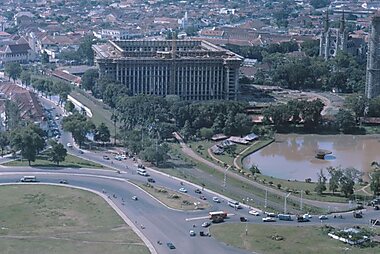



National Monument is the 132 m tower at the centre of Merdeka Square, topped by a gilded flame. Take the lift to the viewing deck, and see the history dioramas in the hall at its base.
Istiqlal Mosque is the largest mosque in Southeast Asia. Non-Muslim visitors are welcome outside prayer times and can join a guided tour; dress modestly.
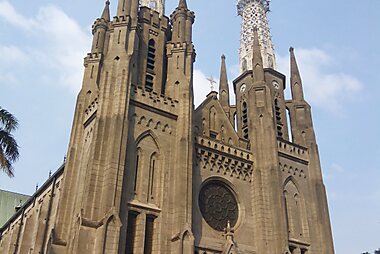
Directly opposite the mosque, Jakarta Cathedral is a neo-Gothic church from 1901 with a small museum on its upper floor.
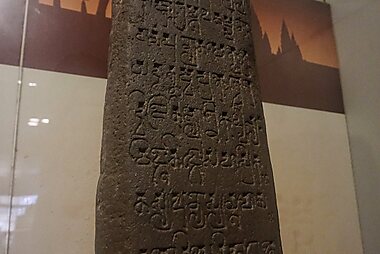
National Museum of Indonesia is the country's most important museum, with Hindu-Buddhist stone statues, ceramics and objects from across the islands. Locals call it the Elephant Museum after the bronze elephant in front, a gift from the King of Siam.
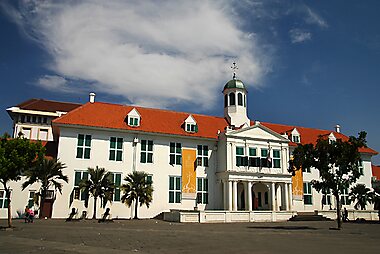
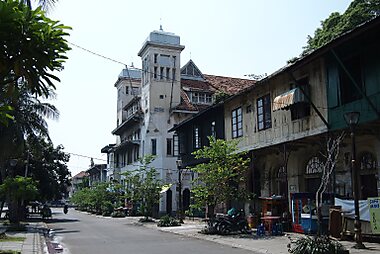
Kota Tua (Jakarta Old Town) is the heart of colonial Batavia. Its main square is lined with museums: a city history museum in the old city hall, a puppet museum and a museum of fine arts and ceramics.
Maritime Museum fills old Dutch East India Company warehouses near the historic harbour of Sunda Kelapa. It tells the story of Indonesia as a seafaring nation.
In Glodok, Jakarta's Chinatown, Dharma Bhakti Temple is the city's oldest Chinese temple, founded in 1650. Incense smoke, red lanterns and busy market lanes surround it.
Museum MACAN in West Jakarta is the country's leading museum of modern and contemporary art, with changing exhibitions of Indonesian and international artists.
Empfohlene Listen


Jakarta Museums & Culture
This collection highlights Jakarta's diverse cultural landmarks including museums that showcase Indonesia's archaeology, history, textiles, and maritime heritage. It features notable monuments like the National Monument and Mahabharata Monument, art institutions such as the National Gallery and Jakarta Art Building, as well as historic sites like the Jakarta History Museum and Taman Prasasti Museum. The list also includes unique venues like the Wayang Museum dedicated to traditional puppetry and the Jakarta Planetarium and Observatory.
15 OrteErlebnisse & Aktivitäten
A few things that make a visit to Jakarta its own:
- Car Free Day: Every Sunday morning, roughly 6:00 to 11:00, the main Sudirman–Thamrin avenue closes to cars. Join thousands of locals jogging, cycling and eating breakfast from street stalls.
- Pastel bicycles on the old square: At Fatahillah Square, rent a colourful vintage bicycle with a matching hat and ride slowly around the colonial buildings.
- Sailing ships at Sunda Kelapa: In the old harbour, large wooden pinisi sailing ships still dock and load cargo. Go early in the morning, when it is cooler and the harbour is busiest.
- Chinese New Year in Glodok: During Chinese New Year and Cap Go Meh, 15 days later, Chinatown's temples fill with incense, lanterns and lion dances.
- Independence Day: On 17 August the city fills with red-and-white flags, and neighbourhoods hold street games and contests.
Touren & Aktivitäten
Jakarta — Karte

 Interaktive Karte öffnen
Tagesausflüge
Jakarta's day trips lead to cooler hills, a historic garden city and the islands in the bay.
- Thousand Islands — about 1–2 hours by boat from Marina Ancol or the Kali Adem pier at Muara Angke. Pari and Tidung islands have simple beaches and snorkelling. The small islands of Onrust, Kelor and Cipir, closer to shore, have ruins of Dutch forts.
- Bogor — about 1.5 hours by commuter train from Jakarta Kota station, less from central stations. The main sight is Bogor Botanical Gardens, founded in 1817 and the oldest botanical garden in Southeast Asia, next to the presidential palace. Bring an umbrella; it rains often here.
- Puncak — the hill road above Bogor passes tea plantations and is noticeably cooler than the city. Start early to avoid the worst traffic.
- Bandung — the Whoosh high-speed train from Halim station takes under an hour to Padalarang. From there, a feeder train reaches Bandung station in about 20 minutes. A regular train takes about 3 hours. Bandung has cool air, Art Deco buildings and volcano trips nearby.
Orte zum Entdecken
Jakarta's own island district sits just off the coast:
- Thousand Islands — more than 300 small islands in the Java Sea, with a marine national park.
Jakarta is also the starting point for travel across Indonesia. Popular next stops by train or a short flight:
- West Java — the mountainous province around the capital, with volcanoes, tea estates and Bandung.
- Yogyakarta — the cultural heart of Java, close to Borobudur and Prambanan.
- Bali — Indonesia's best-known island, about two hours away by plane.
Anreise
- By air: Soekarno–Hatta International Airport (CGK), about 20 km northwest of the centre, handles almost all international flights. The airport train runs every 15 minutes to BNI City station near Sudirman in about 50 minutes, for Rp 70,000. A taxi or ride-hailing car is slower at busy times, because of heavy traffic. Halim Perdanakusuma Airport in East Jakarta has a small number of domestic flights; check which airport your ticket shows.
- By train: Long-distance trains to Bandung, Yogyakarta, Semarang and Surabaya leave from central stations such as Gambir and Pasar Senen. Check which station your ticket shows. The Whoosh high-speed train to Bandung leaves from Halim station. KAI (Indonesian Railways) · Whoosh high-speed train
- By bus: Long-distance buses use large terminals on the edge of the city, such as Pulo Gebang. For most routes on Java, the train is faster and more comfortable.
Unterwegs vor Ort
- MRT: One line runs north–south from Lebak Bulus to Bundaran HI along Sudirman and Thamrin, the main business avenue. Fares are Rp 3,000–14,000. Tap a bank e-money card, pay with a QR code in the app, or tap a contactless Visa or Mastercard at the gate. MRT Jakarta
- Transjakarta buses: The world's longest bus rapid transit network runs on dedicated lanes across the city. A fare of Rp 3,500 (less before 7:00) covers a trip including transfers inside the stations. Tap a bank e-money card such as Flazz, e-Money, Brizzi, TapCash or JakCard, or pay by QR code in the JakLingko app. You cannot pay in cash. Transjakarta
- Commuter trains (KRL): Useful for Kota Tua and for trips to Bogor. Use the same e-money card or a KAI Commuter multi-trip card. KAI Commuter
- Taxi and ride-hailing: Grab and Gojek dominate, including cheap motorbike taxis (ojek) that move faster through traffic. Blue Bird metered taxis are a reliable alternative.
- On foot: Walking works within one area, such as Kota Tua or Merdeka Square, but heat, traffic and uneven sidewalks make longer walks tiring.
Autofahren
- Is a car worth it?: No, not for a city stay. Traffic is very heavy for much of the day, and driving is on the left. For day trips, hire a car with a driver instead of driving yourself.
- Odd–even rule: On many main roads, private cars may drive on weekdays only when the last digit of the plate matches the date (odd or even). It applies 06:00–10:00 and 16:00–21:00; weekends and public holidays are exempt.
- Tolls and parking: City toll roads take only a prepaid e-toll card. Park in hotel or mall car parks, which are secure and cheap.
Essen & Trinken
Jakarta's own cooking comes from the Betawi, the city's original community. Try soto Betawi, a beef soup made with coconut milk, and kerak telor, a spicy rice omelette cooked over charcoal and topped with fried coconut. Because people from every island live here, it is also easy to eat Padang, Javanese, Sundanese or Manadonese food in one city.
For the most atmosphere, go to Glodok. Gang Gloria, a narrow lane in the heart of Chinatown, is famous for its old-style food stalls and iced coffee shops. In the modern districts, big mall food courts are a clean, air-conditioned way to try many dishes at once.
Sicherheit & Gesundheit
Jakarta is generally safe for tourists, and violent crime against visitors is rare. The main risks are pickpockets and bag snatchers in crowded buses, trains and markets, and phone theft by passing motorbikes. Keep your phone away from the kerb side of the street.
- Traffic: Crossing busy roads is the most real danger. Use pedestrian bridges and crossings.
- Taxis: Use ride-hailing apps or a known taxi company such as Blue Bird, not unmarked cars.
- Floods: In the rainy season, heavy storms can flood roads and cut traffic for hours. Check the news before travelling to the airport.
- Air: Air pollution is often high, especially in the dry season. People with breathing problems should check the daily air quality.
Geschichte
Jakarta began as Sunda Kelapa, the pepper port of a Sundanese kingdom. On 22 June 1527, forces led by Fatahillah captured it and renamed it Jayakarta. The city still celebrates its birthday on that date.
In 1619 the Dutch East India Company, led by Jan Pieterszoon Coen, destroyed the town and built Batavia, its Asian headquarters. You can still see this city in Kota Tua (Jakarta Old Town): the old city hall that is now Jakarta History Museum, finished in 1710, and Toko Merah, a merchant house from about 1730. In 1740 thousands of Chinese residents were killed in a massacre, and the survivors were moved outside the walls to what became Glodok.
Disease drove the Dutch south in the late 18th century, and a new centre grew around today's Merdeka Square, where Merdeka Palace was built as a governor's residence. On 17 August 1945, Sukarno read Indonesia's declaration of independence at a house marked today by Proclamation Monument. The new nation then built symbols of its own: National Monument, begun in 1961, and Istiqlal Mosque, opened in 1978.
Länderfakten
Quick practical facts for Indonesia at a glance:
- Währung
- Indonesische Rupiah IDR Rp · Kartenzahlung · Häufig akzeptiert
- Notrufnummern
- 112
- Stromnetz
- 230 V · 50 HzSteckertyp C / Steckertyp F
- Sprachen
- Indonesisch
- Leitungswasser
- Nicht trinkbar
- Fahrseite
- Linksverkehr
- Telefonvorwahl
- +62


Jakarta – Plane deine Tage
Verwandle die Orte aus diesem Reiseführer in eine echte Reiseroute mit intelligenter Routenführung, Zeitschätzungen und allem für eine perfekte Reise.




