


Ponta Delgada
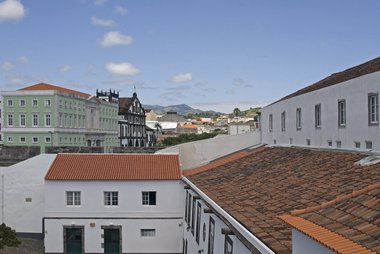
Ponta Delgada is the largest city in the Azores and the main gateway to São Miguel. Most visitors land here and stay a few nights. The old centre is small and easy to walk, with black volcanic stone pavements and white townhouses. Many mansions and gardens date from the 19th century, when orange exports to the United Kingdom made local merchants rich. The poet and philosopher Antero de Quental was born here.
The city suits a relaxed base trip. You can see the main sights in a day, then use the other days for whale watching and for day trips to the lakes, hot springs and green valleys of the island. It also works well for a long weekend before travelling on to other islands.

Ponta Delgada – Planst du eine Reise?
Erstelle deine Reiseroute Tag für Tag in der Tripomatic-App.


Beste Reisezeit
Summer is the warmest and driest season. It is the best time for boat trips, swimming and walking. Spring is good for whale watching, and the weather is more changeable. Winters are mild but wet and windy. Rain and clouds can arrive quickly in any season, so plan viewpoint days with some flexibility.
The biggest event is the Festas do Senhor Santo Cristo dos Milagres. It takes place on the fifth Sunday after Easter, usually in May. On Sunday afternoon the image of Santo Cristo is carried in a procession through the streets of the city. The city is busy at this time, so book a room early.
Beste Reisezeit: Juni, Juli, August
Top-Sehenswürdigkeiten
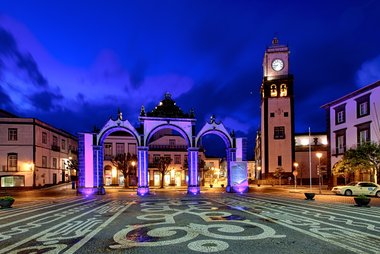


- City Gates are the symbol of Ponta Delgada. They stand on the waterfront in the old centre, and most visitors start their walk here.
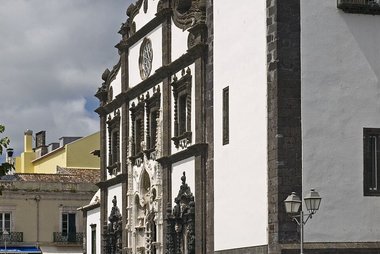
- Saint Sebastian Parish Church is the main church of the city. It mixes Manueline, Gothic and Baroque styles.
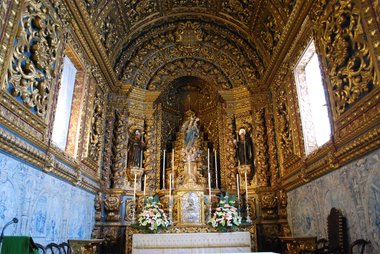
- Convento de Nossa Senhora da Esperança is a 16th-century convent. It keeps the image of Senhor Santo Cristo dos Milagres, the centre of one of the largest religious festivals in the Azores.
- Fort Saint Blaise is a 16th-century fort on the seafront. It now houses a military museum.
- Museu Carlos Machado - Núcleo de Santo André is a branch of the island's main museum, in a former convent. A ticket costs about 2 €, or 5 € for the three city branches. Entry is free on Sundays. All branches are closed on Mondays.
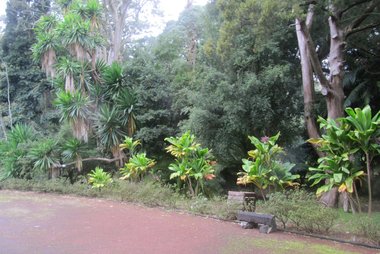
- Jardim José do Canto is a 19th-century botanical garden. It has old trees and plants from many parts of the world.
- Gruta do Carvão is a lava tube on the western edge of the city. Visits are by guided tour only. The short tour lasts 30 to 45 minutes and costs 11 € for adults. Book online, especially in summer. The cave is open daily, with a break at lunchtime.
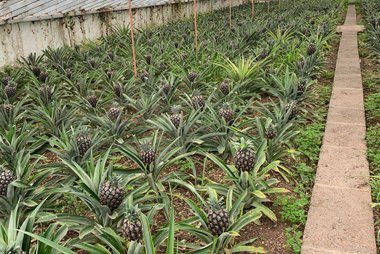
- Augusto Arruda Pineapple Plantation has the oldest pineapple greenhouses in the Azores, from the 19th century. You can see pineapples at different stages of growth. It is open daily in summer and is a short drive from the centre.
Erlebnisse & Aktivitäten
- Whale and dolphin watching: Boat trips leave from the marina all year. Sperm whales and several dolphin species live in the waters around the island all year. Blue, fin and sei whales pass in spring.
- Santo Cristo festival: Join the crowds for the Sunday procession in May. Many people also come to the convent to pray and to thank the saint for help.
- A soak in Furnas: Spend an afternoon in the warm thermal pools of the Furnas valley. It is a popular way to end a day trip.
- Waterfront walk at sunset: Walk along the marina and the harbour front in the evening. The light on the basalt and the Atlantic is at its best then.
Touren & Aktivitäten
Ponta Delgada — Karte

Tagesausflüge
Most day trips on São Miguel are easiest by car. All times are one way from the city centre by car. Buses also run to the main towns and lakes, but they are less frequent.
- Ribeira Grande (about 20 minutes): the main town on the north coast, with old streets and sea views. It is a good first stop on a north-coast loop.
- Vila Franca do Campo (about 25 minutes): a calm coastal town and the former capital of the island. A small volcanic islet just offshore is popular for swimming in summer.
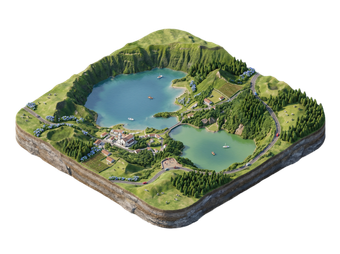
- Sete Cidades (about 35 minutes): twin lakes, one blue and one green, in a large volcanic crater. Go early, because clouds often cover the crater by mid-morning.
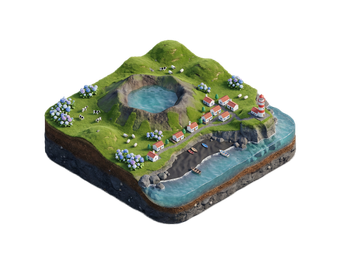
- Lagoa do Fogo (about 30 minutes): a crater lake in a protected nature reserve. The viewpoints are higher up and are often in cloud, so check the weather first.
- Furnas (about 45 minutes): a valley with hot springs, steam vents and the Terra Nostra garden. You can bathe in warm, iron-rich water. Lunch here is often the local stew cooked underground.
Orte zum Entdecken
For a day out, go west to Sete Cidades for the twin lakes, or north to Ribeira Grande for the north coast. For the wider picture of the islands and how to combine them, see the guide to the Azores.
Anreise
- By air: João Paulo II Airport (PDL) is about 2 km west of the centre. It has direct flights from Lisbon and Porto, plus direct flights from North America such as Boston and Toronto. Lisbon is about 2.5 hours away. Other Azores islands are reached by short inter-island flights. A taxi from the terminal to the centre takes about 5 to 10 minutes.
- By sea: Cruise ships call at the sea terminal on the city waterfront. Most visitors arrive by air.
Unterwegs vor Ort
- Public transit: AzoresBus runs the buses in Ponta Delgada and across São Miguel. Pay the driver for a single trip. Passes and prepaid cards are sold at points of sale, and the AzoresBus app shows timetables and live bus positions. Check routes and fares on the AzoresBus site. Lines to Sete Cidades, Furnas, Ribeira Grande and Vila Franca do Campo start in the city.
- Taxis: Taxis wait at ranks in the centre and at the airport. They are a good choice for the short ride to the airport.
- Tickets for sights: The Gruta do Carvão sells tour tickets online. Museums in the city sell tickets at the door. Find opening hours and events on the Visit Ponta Delgada site.
- On foot or by bike: The old centre and the waterfront are flat and compact. Sights outside the city need a car or bus.
Autofahren
- Is a car worth it?: Not for the city centre, which you can walk. Yes for the rest of the island, because buses reach the main sights but are not frequent. Book a rental car early for July and August. Desks are in the arrivals hall at the airport.
- Parking: Use the paid car parks near the Portas do Mar waterfront, the Mercado da Graça and the Teatro Micaelense. Street parking is metered and limited. Streets in the old town are narrow, so a small car is easier.
- Mountain roads: The roads to Sete Cidades and Lagoa do Fogo are often in cloud by mid-morning. Start early and fill the tank before you go inland.
Essen & Trinken
Seafood and beef are the local strengths. Look for limpets (lapas) grilled with garlic and butter, fresh fish, and steak from the island's dairy cattle. Local sweets include queijadas and pineapple desserts. The stew cooked underground at Furnas is a classic for a day trip. Azorean tea and pineapple liqueur make good small gifts.
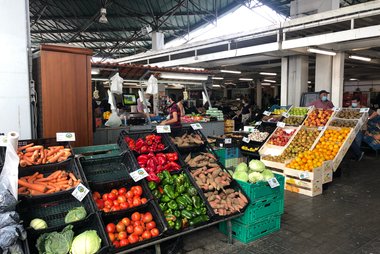
For food, go to the Mercado da Graça, where you can buy fruit, cheese and fish. It is open Monday to Saturday and closed on Sunday. For a meal, walk the streets between the Portas do Mar waterfront and Largo da Matriz. Many restaurants here serve fresh seafood and regional dishes.
Sicherheit & Gesundheit
Ponta Delgada is very safe for visitors. Crime levels are low. Leave nothing visible in a parked car, as you would anywhere.
The main risks come from nature. The Atlantic can be rough, so swim only at supervised beaches and sea pools, and obey flag signs. On mountain roads and trails, fog can come down fast, so carry a jacket and do not leave marked paths. In Furnas, stay behind the fences near steam vents and hot ground. The main hospital of the Azores is in Ponta Delgada.
Geschichte
Around 1450 Pêro de Teive founded a small fishing village here. It became a town in 1507 and a city in 1546. After an earthquake destroyed the old capital at Vila Franca do Campo in 1522, Ponta Delgada became the main centre of the island.
Defence was important. Fort Saint Blaise was built in the 16th century to protect the anchorage from pirates. The harbour also brought trade. In the 19th century, orange exports to the United Kingdom brought wealth, and merchants built mansions and gardens such as Jardim José do Canto. Today the city is the administrative capital of the Azores and the base of the regional government.
Länderfakten
Quick practical facts for Portugal at a glance:
- Währung
- Euro EUR € · Kartenzahlung · Weitgehend akzeptiert
- Notrufnummern
- 112
- Stromnetz
- 230 V · 50 HzSteckertyp C / Steckertyp F
- Sprachen
- Portugiesisch
- Leitungswasser
- Trinkbar
- Fahrseite
- Rechtsverkehr
- Telefonvorwahl
- +351


Ponta Delgada – Zu deiner Reise hinzufügen
Erstelle eine detaillierte Reiseroute mit intelligenter Routenführung, Zeitschätzungen und allem, was du für eine perfekte Reise brauchst.


Ähnliche Reiseziele
Data: © OpenStreetMap contributors, Wikidata, Wikipedia, Tripomatic, Official websites. Tours by GetYourGuide. We earn commission from bookings. Travel guide generated with AI.
Plane deine Reise mit Tripomatic
- KI-gestützte PlanungLass die KI deine Reiseroute erstellen, Reisefragen beantworten und deine Buchungsunterlagen direkt in deiner Reise ablegen.
- ReisewarnungenOffizielle Hinweise, Unwetter, Streiks und Naturgefahren für die Orte an jedem Tag deiner Reise.
- Feiertage & EventsSieh Feiertage, Festivals und Schließungen an den Tagen deiner Reise und erfahre, was sie für deine Pläne bedeuten.
- KostenschätzungKI-gestützte Reisekostenübersichten, damit du dein Budget schon vor der Abreise genau kennst.
- Touren & TicketsBuche geführte Touren, Tickets ohne Anstehen und Aktivitäten direkt in deinem Reiseplan.