


Puerto Plata
Puerto Plata is the main city of the Dominican Republic's north coast, on the Atlantic between green mountains and the sea. Most visitors know it for its resort beaches, but the city itself has a real Dominican town centre. Its old streets hold painted wooden houses from the late 1800s, small museums and a 16th-century fort on the seafront.
It suits a beach holiday with a few easy outings: a morning in the old town, an afternoon on the seafront, and day trips to waterfalls and surf towns along the coast. The city is also a busy cruise stop, so the centre can fill with day visitors when ships are in port. National hero Gregorio Luperón was born here, and his name is on the airport, the seafront avenue and a house museum.

Puerto Plata – Planst du eine Reise?
Erstelle deine Reiseroute Tag für Tag in der Tripomatic-App.


Beste Reisezeit
It is warm all year. February to April is the most comfortable time, with more sun and fewer showers. From November to January, winter cold fronts bring frequent rain showers to this coast. Summer is hotter and more humid, and June to November is the Atlantic hurricane season.
The biggest event is Carnival in February. Costume parades fill the streets and the seafront, led by the Taimáscaros, the city's own devil figures in masks and bright costumes.
Top-Sehenswürdigkeiten


Most sights are in or next to the compact old town, so you can see them in one day.
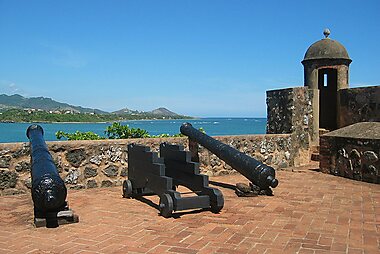
- Fortaleza San Felipe guards the harbour entrance at the western end of the seafront. The Spanish built it between 1564 and 1577, and it is the only 16th-century building left in the city. Inside is a small museum of old weapons, and the walls give good views of the bay.
- Next to the fort, the old town's 1879 cast-iron lighthouse stands in the seaside park of La Puntilla.
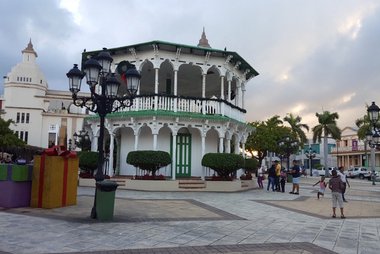
- Catedral de San Felipe Apóstol faces Parque Central, the main square with its white Victorian gazebo. The present building was finished in 1956, after an earlier wooden church burned in 1863.
- Museo del Ámbar Dominicano fills a Victorian mansion near the square. It shows Dominican amber with insects and plants trapped inside, and has a shop on the ground floor.
- Close by, the house museum of Gregorio Luperón shows the life of a leading general of the 1863 war against Spanish rule.
- Calle de las Sombrillas (Umbrella Street) is a short street covered with colourful umbrellas, lined with cafés and souvenir shops.
- Pico Isabel de Torres rises behind the city. Its top has a Christ statue modelled on the one in Rio de Janeiro, a botanical garden and wide views. The cable car has been closed since 2024 and is being replaced with a new cable car, with reopening planned for 2028.
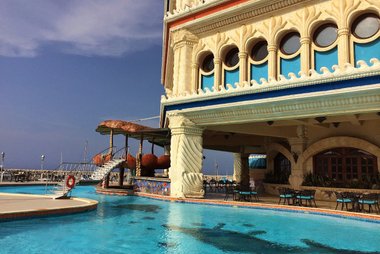
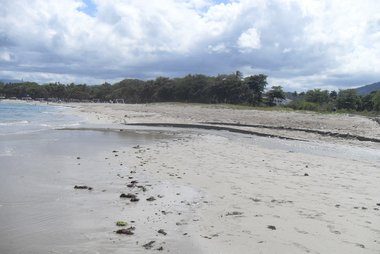
- Playa Dorada is the long golden beach of the resort area east of the city. It has clear, warm water, with hotels and a golf course behind the sand.
- Ocean World Adventure Park is a marine park on the coast west of the city, at Cofresí. It offers dolphin, sea lion and shark encounters, pools and a snorkelling area, and is the main family attraction.
Empfohlene Listen

Erlebnisse & Aktivitäten
A few things give a real taste of the city beyond the beach.
- Sunset on the Malecón: in the evening, families walk the long seafront promenade, and food stands sell drinks and fried snacks. It is busiest on weekends.
- Watching cigars being rolled: small cigar shops in the old town, including one at the start of Calle de las Sombrillas, show how tobacco leaves are rolled by hand.
- Amber and larimar shopping: Dominican amber and the blue larimar stone are sold in jewellery shops around Parque Central. Buy from established shops rather than street stalls.
Touren & Aktivitäten
Puerto Plata — Karte

Tagesausflüge
The north coast has waterfalls, surf towns and quiet beaches within a few hours. Most trips are easiest by car, taxi or organised tour.
- 27 Charcos de Damajagua (≈35 min by car): a chain of waterfalls in a forest canyon south-west of the city. You climb up with a guide, then jump, slide and swim back down. A helmet and life jacket are provided.
- Sosúa (≈30–40 min by car or shared minivan): a town on a sheltered, coral-lined bay with good snorkelling. Jewish refugees settled here from 1940, and a small museum and synagogue tell their story.
- Cabarete (≈45–60 min by car): a beach town known for kitesurfing and windsurfing. Lessons and board rental are easy to find along the beach.
- Santiago de los Caballeros (≈1.5 h by car or bus): the country's second city, with a large hilltop monument and a long cigar-making tradition.
- La Isabela (≈1.5 h by car): the ruins of the settlement Christopher Columbus founded in 1493, the first European town in the Americas.
- Punta Rucia (≈2 h by car): a fishing village with boats to Cayo Arena, a tiny sand island with clear water for snorkelling.
- Río San Juan (≈2 h by car): boat trips through the mangroves of Laguna Gri-Gri, and Playa Grande nearby.
Orte zum Entdecken
Puerto Plata sits in Puerto Plata Province, which covers the coast from the surf towns in the east to the quiet bays and fishing villages in the west.
- Along the north coast: Sosúa and Punta Rucia are the easiest beach escapes, and Samaná further east has whale watching in winter.
- Inland: Santiago de los Caballeros and La Vega lie in the fertile Cibao valley.
- The capital: Santo Domingo has the oldest colonial streets in the Americas.
Anreise
- By air: Gregorio Luperón International Airport (POP) is about 15 km east of the city and close to the Playa Dorada hotels. It has direct flights from North America and Europe. A taxi to the centre takes about 20 minutes. Cibao International Airport in Santiago de los Caballeros is a second option, about 1.5 hours away by road.
- By bus: Caribe Tours and Metro Tours run air-conditioned coaches from Santo Domingo and Santiago. The ride from Santo Domingo takes about 4 hours. Buy tickets at the company's own terminal.
- By cruise ship: ships dock at two ports. Taíno Bay is near the city centre, and Amber Cove is about 15 minutes west, at Maimón.
Unterwegs vor Ort
- Taxis: the most practical choice for visitors. Taxis have no meters, so agree the price before you get in, or ask your hotel to call one. Taxi stands are at Parque Central and outside the large hotels.
- Shared minibuses: guaguas run along the coast road to Playa Dorada, Sosúa and beyond. They are very cheap and you pay the driver's helper in cash, but they are crowded and stop often.
- Motorbike taxis: motoconchos are everywhere, but they are often driven badly and rarely offer helmets. Avoid them.
- On foot: the old town and the seafront are flat and easy to walk. Playa Dorada is about 6 km east, so take a taxi there. Cycling in traffic is not practical.
More travel information: Go Dominican Republic (official tourism site)
Autofahren
- Is a car worth it?: not for the city or a resort stay, where taxis are easier. A car is useful for exploring the coast at your own pace, but local driving is fast and unpredictable, with many motorbikes. Avoid driving after dark, when unlit roads, animals and potholes are hard to see.
- Parking: street parking is possible in the old town, but streets are narrow. Most hotels have their own car parks. Use guarded parking at night.
Essen & Trinken
Puerto Plata eats like the rest of the country, with rice, beans, plantains and stewed meat at lunch. On the coast, fresh fried fish with tostones (fried green plantain) is the classic beach meal. Look also for yaniqueques, crisp fried dough sold at beaches and on the seafront.
For the best choice, go to the cafés and small restaurants around Parque Central and Calle de las Sombrillas, or to the restaurants and food stands along the Malecón. The Playa Dorada hotels are mostly all-inclusive, so the city centre is the place for local food.
Sicherheit & Gesundheit
Puerto Plata is generally calm for visitors, but petty crime is common across the country, so take normal care.
- Bag and phone snatching: thieves on motorbikes sometimes grab bags and phones. Keep your phone out of sight near the road, and leave valuables in the hotel.
- Touts and vendors: beach vendors at Playa Dorada and unofficial guides in the old town can be persistent. A firm "no, gracias" usually works. Book tours through your hotel or a licensed operator.
- At night: take a taxi rather than walking through quiet streets, and do not resist if someone robs you.
- Sea and adventure trips: the Atlantic can have strong waves and currents, and many beaches have no lifeguard. At Damajagua, go only with the official guides and wear the helmet and life jacket.
- Health: dengue occurs here, so use mosquito repellent. The sun is strong all year.
Geschichte
On his first voyage, Christopher Columbus saw the mountain behind the bay covered in silver-looking cloud and named it Monte de Plata. The Spanish founded a town here in the early 1500s. To defend the harbour from pirates, they built Fortaleza San Felipe in the 1560s and 1570s. In 1605, King Philip III ordered the north coast emptied to stop smuggling and pirate raids, and the town stood empty for many years.
The modern city grew in the 1800s as a trading port. During the Restoration War against Spain, it was burned in 1863. It was rebuilt from 1865 in the wooden Victorian style you still see around Parque Central and Catedral de San Felipe Apóstol. Gregorio Luperón, a hero of that war, was born here and later led the country; the cast-iron lighthouse beside the fort dates from his time in power in 1879. Mass tourism arrived in the 1980s with the hotels of Playa Dorada, and two cruise ports have opened since 2015.
Länderfakten
Quick practical facts for the Dominican Republic at a glance:
- Währung
- Dominikanischer Peso DOP · Kartenzahlung · Häufig akzeptiert
- Notrufnummern
- 911
- Stromnetz
- 110 V · 60 HzSteckertyp A / Steckertyp B
- Sprachen
- Spanisch
- Leitungswasser
- Nicht trinkbar
- Fahrseite
- Rechtsverkehr
- Telefonvorwahl
- +1809


Puerto Plata – Plane deine Tage
Verwandle die Orte aus diesem Reiseführer in eine echte Reiseroute mit intelligenter Routenführung, Zeitschätzungen und allem für eine perfekte Reise.


Ähnliche Reiseziele



Data: © OpenStreetMap contributors, Wikidata, Wikipedia, Tripomatic, Official websites. Tours by GetYourGuide. We earn commission from bookings. Travel guide generated with AI.