


Κόπερ
Koper is the largest town on Slovenia's short Adriatic coast and the country's main port. Its old town sits on a former island, now joined to the mainland. Inside it you find narrow stone lanes, Venetian palaces and one of the finest main squares on the coast. Around it are the cranes and container ships of the busy port, which gives the town a working, everyday feel.
Koper is less polished and less crowded than Piran or Portorož, and often cheaper. It is a practical base for the whole coast and the hills of Slovenian Istria, with the best rail and bus links in the region. Signs are in both Slovenian and Italian, because the town has an Italian-speaking community. A day is enough for the old town itself.

Κόπερ – Σχεδιάζεις ταξίδι;
Φτιάξε το δρομολόγιό σου ημέρα με την ημέρα στην εφαρμογή Tripomatic.


Πότε να πας
May, June and September are the best months. Days are warm, the sea is good for swimming from June, and the town is calm. July and August are hot and busier, especially when cruise ships are in port. Winter is mild but often grey and wet, and autumn brings the most rain.
The biggest local event is Sweet Istria (Sladka Istra), a festival of Istrian cakes, sweets and local wine held in the old town in early autumn. In December, the Fantazima Advent programme opens some of the old palaces for evening walks.
Ιδανική εποχή για επίσκεψη: Μαΐου, Ιουνίου, Ιουλίου, Σεπτεμβρίου
Κορυφαία αξιοθέατα
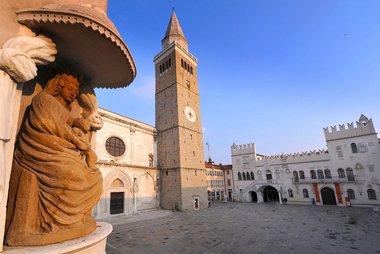


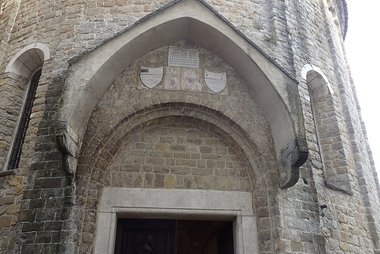
Tito Square is the heart of the old town and one of the most beautiful Venetian squares on the Adriatic. The cathedral, the town hall and several 15th-century palaces stand around it, and it hosts concerts and events in summer.
Praetorian Palace fills the south side of the square with its Gothic arches and battlements. It still houses the town hall, and parts of it, including an old pharmacy collection, are open to visitors for a fee.
Cathedral of the Assumption in Koper mixes a Gothic lower façade with Renaissance upper floors. Next to it, climb the 204 steps of the bell tower for the best view over the roofs, the port and the Gulf of Koper.
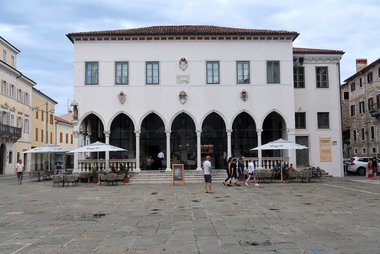
Loggia Palace faces the town hall across the square. It is the only Gothic town hall preserved in Slovenia. A café fills the ground floor, and an art gallery uses the upper floor.
Rotunda of St. John the Baptist is a small round Romanesque baptistery just behind the cathedral. It is one of the oldest buildings in town.
Koper Regional Museum occupies an early 17th-century palace near the square. It covers the archaeology, art and history of the region, and has a copy of the famous Hrastovlje Dance of Death fresco.
The Da Ponte Fountain stands on Prešeren Square at the southern edge of the old town. Built in 1666, it has a small stone bridge over its basin. The Renaissance Muda Gate, the last of the old town gates, is next to it.
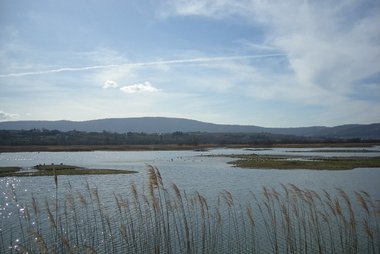
Škocjan Inlet Nature Reserve is a restored lagoon and wetland on the edge of town, about 3 km from the centre. Footpaths and bird hides let you watch herons, waders and many migrating birds, and entry is free.
Holy Trinity Church, Hrastovlje is a small fortified church in a village about 25 minutes inland by car. Its walls are covered with frescoes from 1490, including a famous Dance of Death.
Προτεινόμενες λίστες

Τι να ζήσεις
Koper is best enjoyed slowly, like the locals do:
- Climb the bell tower late in the day: After the 204 steps, watch the soft afternoon light over the old town, the cranes of the port and the gulf towards Trieste.
- Coffee in the Loggia: Sit under the Gothic arches of Loggia Palace, in one of the oldest cafés in Slovenia, and watch life on the main square.
- Birdwatching in the lagoon: Walk the paths of Škocjan Inlet Nature Reserve early in the morning, when herons, egrets and waders feed in the shallow water.
- Cycling the Parenzana: Ride the old railway route from Koper along the sea to Izola, with water on one side and vineyards on the other.
- Wine in the Istrian hills: In the villages above Koper, family wineries pour red Refošk and white Malvazija, often with home-made olive oil and ham.
Περιηγήσεις και δραστηριότητες
Κόπερ — Χάρτης

Ημερήσιες εκδρομές
Koper is central on the coast, so most day trips take under an hour. The Karst plateau and the Italian border are both close.
- Ankaran — about 15 minutes by car or bus. A quiet green peninsula with beaches, pine trees and a long seaside path.
- Izola — about 15 minutes by bus. A small fishing town with a harbour, an old town and seafood restaurants.
- Piran — about 30 to 40 minutes by bus. A Venetian-era town on a narrow peninsula with red roofs and a white stone square.
- Trieste — about 30 to 45 minutes by car or bus. A grand Italian port city with old cafés and a huge square open to the sea.
- Škocjan Caves — about 40 minutes by car, near Divača on the Kras plateau. A UNESCO-listed underground canyon cut by a river.
- Postojna — about 50 minutes by car. Slovenia's best-known cave, toured by a small train, with Predjama Castle nearby.
Μέρη για εξερεύνηση
Koper is a good base for the rest of the coast and the Karst:
- Ankaran — the green peninsula just north of the port, with quiet beaches and a seaside path.
- Piran — the coast's best-preserved old town, at the tip of the next peninsula.
- Portorož — the main beach resort, with large hotels, spas and a sandy beach.
- Kras — the stone plateau inland, known for caves, stone villages, red Teran wine and air-dried ham.
Πώς να πας
- By air: The closest airport is Trieste Airport in Italy, about 1 hour by car. Ljubljana Jože Pučnik Airport is about 1.5 hours by car, and Venice Marco Polo Airport about 2 hours. From Ljubljana airport, shared shuttle transfers run to the coast; otherwise take a bus into Ljubljana and change.
- By train: Koper is the end of the line from Ljubljana. There are only a few direct trains a day, and the trip takes about 2.5 to 3 hours. The station is about 20 minutes on foot from the old town. Slovenian Railways
- By bus: The bus station is next to the railway station. Buses from Ljubljana are usually faster than the train and more frequent. Long-distance coaches also link Koper with Trieste and other cities in Italy and Croatia.
- By car: The A1 motorway connects Koper with Ljubljana, and a short motorway leads to the Italian border near Trieste.
Μετακινήσεις
- On foot: The old town is small and flat, and most of it is closed to cars. You can cross it in about 15 minutes, and the city beach and the market are on its edge.
- City buses: Arriva runs the Koper city lines, including to Žusterna beach and the station. Cash is not accepted on board. Pay by tapping a contactless Visa or Mastercard, or use the rechargeable Koper card. Arriva – Koper city transport
- Regional buses: Frequent buses run along the coast to Izola, Portorož and Piran, and north to Ankaran.
- Cycling: The car-free Parenzana trail, a former railway line, passes through Koper near the station. It runs past the Škocjanski zatok reserve and along the coast towards Izola.
Οδήγηση
- Is a car worth it?: Not for Koper itself; the old town is walkable and buses reach the coast towns. A car is useful for the Istrian villages, Hrastovlje and the Karst caves.
- Parking: The old town is largely closed to visitor traffic. Use the paid car parks around its edge, near the market, the marina and the city beach. Car parks on the coast are busy and more expensive in summer.
- Motorway vignette: Slovenian motorways and expressways, including the A1 to Ljubljana, require an e-vignette. Buy it online before you drive on them.
Φαγητό & ποτό
Koper's food is Istrian and Mediterranean. Look for grilled fish, squid and shellfish, pasta with seafood or truffles, and maneštra, a thick Istrian soup of beans and vegetables. Try local olive oil and the coastal wines: red Refošk and white Malvazija. For dessert, look for small fried fritole and the Istrian twisted pastry hroštole.
For cafés, sit on Tito Square or Carpaccio Square by the old harbour. For lunch and dinner, the lanes of the old town and the seafront along the marina have the most choice. Visit the market at the edge of the old town in the morning for fruit, vegetables, fish and local cheese. In autumn, small farm taverns in the hills behind Koper serve simple home cooking with their own wine.
Ασφάλεια & υγεία
Koper is very safe, including at night. Petty theft is rare, but watch your bags on crowded buses and when cruise ships are in port.
- Sea urchins: They are common on rocky and concrete shores. Wear water shoes when swimming.
- Sun and heat: Summer sun is strong. There is little shade in the wetland reserve and on the beaches, so bring water and a hat.
- Bora wind: In winter, the cold bora wind can blow very hard. It can make the seafront unpleasant and sometimes disrupts traffic on the Karst roads.
Ιστορία
Koper began as a settlement on a small island in the bay. The Romans called it Capris. In the 6th century it was renamed Justinopolis after a Byzantine emperor.
In 1278, the town joined the Republic of Venice. Under Venice it became the capital of Venetian Istria, and grew rich from salt and trade. Most of what you see today dates from this time: Tito Square, Praetorian Palace and Loggia Palace, with the winged Lion of St Mark on many façades. Venetian rule lasted until 1797.
After Austrian rule and World War I, Koper became part of Italy. After World War II, it fell into the Yugoslav zone of the Free Territory of Trieste and joined Yugoslavia in 1954. Most of its Italian-speaking population left. Over the 19th and 20th centuries, the salt pans and marshes around the island were filled in, so the old town is now part of the mainland. The modern port, founded in 1957, was built on this reclaimed land. Since 1991, Koper has been part of independent Slovenia, and it is the country's only commercial port.
Στοιχεία για τη χώρα
Quick practical facts for Slovenia at a glance:
- Νόμισμα
- Ευρώ EUR · Πληρωμές με κάρτα · Ευρέως αποδεκτές
- Τηλέφωνα έκτακτης ανάγκης
- 112
- Ηλεκτρικό ρεύμα
- 230 V · 50 HzΤύπος C / Τύπος F
- Γλώσσες
- Σλοβενικά
- Νερό βρύσης
- Πόσιμο
- Πλευρά οδήγησης
- Δεξιά
- Κωδικός κλήσης
- +386


Κόπερ – Σχεδίασε τις ημέρες σου
Μετάτρεψε τα μέρη από αυτόν τον οδηγό σε ένα πραγματικό δρομολόγιο, με έξυπνη δρομολόγηση, εκτιμήσεις χρόνου και όλα όσα χρειάζεσαι για ένα τέλειο ταξίδι.


Σχετικοί προορισμοί



Data: © OpenStreetMap contributors, Wikidata, Wikipedia, Tripomatic, Official websites. Tours by GetYourGuide. We earn commission from bookings. Travel guide generated with AI.
Σχεδίασε το ταξίδι σου με το Tripomatic
- Σχεδιασμός με AIΆφησε το AI να δημιουργήσει το δρομολόγιό σου, να απαντήσει σε ταξιδιωτικές ερωτήσεις και να αρχειοθετήσει τα έγγραφα των κρατήσεών σου στο ταξίδι σου.
- Ταξιδιωτικές ειδοποιήσειςΕπίσημες ταξιδιωτικές οδηγίες, έντονα καιρικά φαινόμενα, απεργίες και φυσικοί κίνδυνοι για τα μέρη σε κάθε ημέρα του ταξιδιού σου.
- Επίσημες αργίες & ΕκδηλώσειςΔες αργίες, φεστιβάλ και ημέρες μη λειτουργίας κατά τις ημέρες του ταξιδιού σου και πώς επηρεάζουν τα σχέδιά σου.
- Εκτίμηση κόστουςΑνάλυση του κόστους του ταξιδιού με AI, ώστε να γνωρίζεις τον προϋπολογισμό σου πριν ξεκινήσεις.
- Περιηγήσεις & ΕισιτήριαΚλείσε περιηγήσεις, εισιτήρια χωρίς αναμονή στην ουρά και δραστηριότητες απευθείας στο πλάνο σου.