


Πειράν
Piran is a small Venetian-era town on a narrow peninsula at the tip of Slovenia's short Adriatic coast. Red roofs, narrow lanes and church towers fill the point, and the sea surrounds the town on three sides. Most of the old town is closed to cars, so it is easy and pleasant to explore on foot in a day or two.
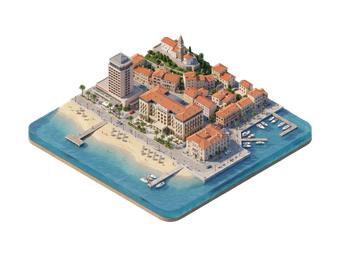
The wider municipality adds the beach resort of Portorož, the cliffs and quiet bays of Strunjan, and the working salt pans of Sečovlje Salina Landscape Park. Stay in Piran for its old streets and evening walks by the sea; base yourself in Portorož for sandy beaches, big hotels and spas. The town is the birthplace of the violinist and composer Giuseppe Tartini, and street signs are in both Slovenian and Italian.

Πειράν – Σχεδιάζεις ταξίδι;
Φτιάξε το δρομολόγιό σου ημέρα με την ημέρα στην εφαρμογή Tripomatic.


Πότε να πας
Late spring to early autumn is the best time. June and September bring warm days and sea water warm enough for swimming, with fewer people than July and August, when the old town is very crowded. Winter is mild but often grey and wet, and some restaurants and museums shorten their hours.
The biggest local event is the Saltworkers' Festival (Solinarski praznik), held around St George's Day in late April. It brings a parade on the main square, salt-pan tours, food made with local salt, and free or discounted entry to several museums.
Ιδανική εποχή για επίσκεψη: Μαΐου, Ιουνίου, Ιουλίου, Σεπτεμβρίου
Κορυφαία αξιοθέατα
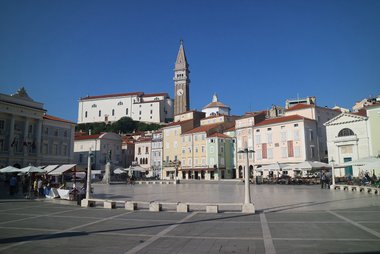


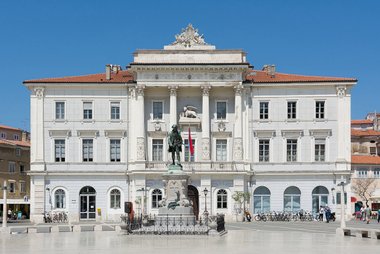


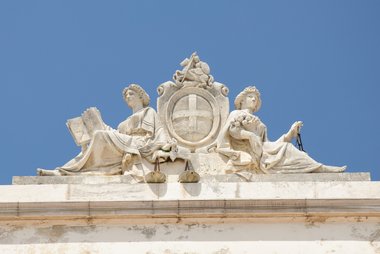
Tartini Square is the heart of Piran: an oval square paved in white stone, laid out in 1894 over a filled-in harbour basin. A bronze statue of Tartini stands in the middle, and the Gothic Venetian House on one corner is the only building that keeps its original medieval façade.
St George's Parish Church sits on the hill above the square. Its free-standing bell tower is a copy of St Mark's Campanile in Venice, and you can climb it for the best view over the roofs to the sea.
Tartini House is the composer's birthplace, on the edge of the main square. A small memorial room shows his violin and his portrait.
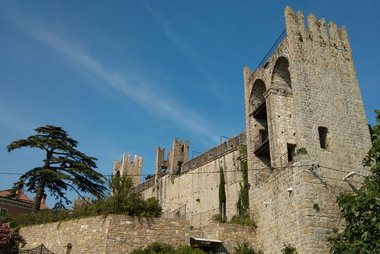
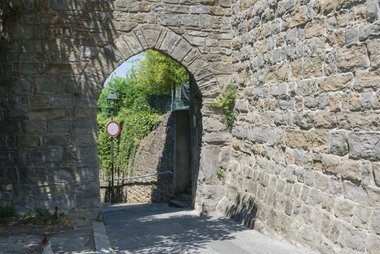
Walls of Piran run along the ridge behind the town. Climb the battlements for the classic view over the roofs of Piran and the bay.
Sergej Mašera Maritime Museum fills the Gabrielli Palace on the harbour. It shows the town's seafaring past through ship models and finds from archaeological sites.
Minorite Monastery of St Francis has a quiet cloister, a short walk from the square. It hosts summer chamber concerts.
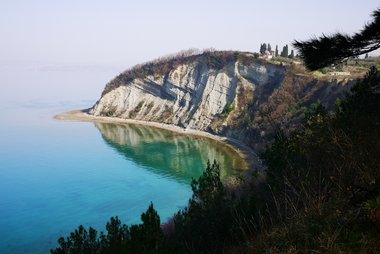
Moon Bay is a wild pebble beach below the cliffs at Strunjan, reached by a steep path. It is one of the most natural stretches of the Slovenian coast.
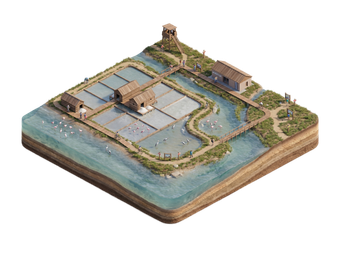
Sečovlje Saltworks lie south of Portorož, near the Croatian border. Salt is still made here by hand, and the flat salt fields and dikes are good for walking and birdwatching.
Aquarium Piran is a small aquarium on the harbour front with fish and other sea life from the Adriatic. It works well with children or on a rainy hour.
Προτεινόμενες λίστες


Historic Churches
Piran’s religious landscape is defined by its Venetian-influenced architecture and coastal positioning. This collection includes the prominent St. George’s Parish Church, known for its bell tower modeled after Venice's Campanile, and the 15th-century ruins of the St. Bernardin monastery. From Neoclassical facades on Tartini Square to rural stone churches in the Istrian hinterland villages of Padna and Sečovlje, these sites offer a cross-section of the region’s Roman Catholic history and maritime heritage.
10 μέρη
Τι να ζήσεις
The best moments in Piran are slow and outdoors:
- Sunset from the town walls: Climb the battlements in the evening and watch the sun drop into the sea behind the town and the Punta lighthouse.
- Swimming from the rocks: Piran has no sandy beach. Locals swim from the stone and concrete platforms along the seafront promenade and around Punta, with ladders straight into deep, clear water.
- Salt pans at harvest time: In summer, watch salt workers rake salt by hand in the old way at Sečovlje Saltworks. The Museum of Salt-Making, in restored salt workers' houses in the southern part of the pans, shows how families once lived there.
- Cycling the Parenzana trail: Ride the old railway route from Portorož through a tunnel to Strunjan and on to Izola, with sea views most of the way.
- Chamber music in a cloister: In July and August, the Piran Musical Evenings bring concerts to the cloister of Minorite Monastery of St Francis.
Περιηγήσεις και δραστηριότητες
Πειράν — Χάρτης

Ημερήσιες εκδρομές
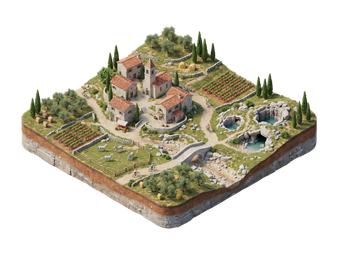
The Slovenian coast is short, so most day trips are under an hour away. The Karst plateau inland has caves and stone villages.
- Izola — about 15 minutes by car or a short bus ride. A relaxed fishing town with a working harbour and a seafront promenade.
- Koper — about 30 minutes by bus. The coast's largest town has a Venetian main square, a cathedral and a busy market.
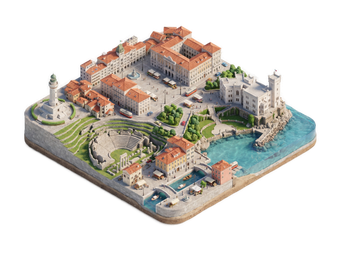
- Trieste — about 1 hour by bus, or by hydrofoil in summer. An elegant Italian port city with grand cafés and a huge seafront square.
- Hrastovlje — about 40 minutes by car. A fortified village church holds a famous 15th-century Dance of Death fresco.
- Škocjan Caves — about 1 hour by car, on the Kras plateau. A UNESCO-listed underground river canyon, one of the largest in Europe.
- Postojna — about 1 hour 15 minutes by car. Home to Slovenia's best-known cave, toured by a small train, with Predjama Castle built into a cliff nearby.
Μέρη για εξερεύνηση
Three parts of the Piran municipality are worth knowing on their own:
- Portorož — the resort next door, with the coast's main sandy beach, large hotels, spas and a casino.
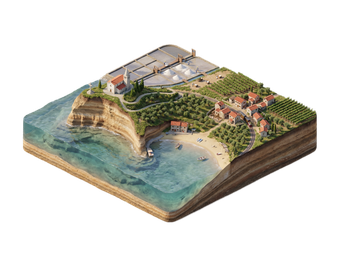
- Strunjan — a protected stretch of coast with high cliffs, small salt pans and quiet pebble bays.
- Sečovlje Salina Landscape Park — the large salt pans near the Croatian border, a nature park and a home for wetland birds.
Just up the coast, Koper is the region's main town and transport hub.
Πώς να πας
- By air: The closest large airports are Trieste Airport in Italy (about 1 hour by car) and Ljubljana Jože Pučnik Airport (about 2 hours by car). Venice Marco Polo Airport is about 2.5 hours away. From Ljubljana airport, take a shared shuttle transfer or a bus into Ljubljana and change for the coast.
- By train: Piran has no railway. The nearest station is in Koper, with trains from Ljubljana; continue by bus to Piran in about 30 minutes. Slovenian Railways
- By bus: Arriva and Nomago run regular buses from Ljubljana, taking about 2 to 2.5 hours. FlixBus serves Portorož from Trieste, Venice, Vienna and other cities.
- By boat: In summer (late June to the end of August), Liberty Lines hydrofoils link Piran with Trieste. Buy tickets at least an hour before departure at the tourist information centre on Tartini Square; bring an ID card or passport.
Μετακινήσεις
- On foot: The old town is small and largely car-free. You can cross it in about 20 minutes, but expect steep lanes and steps up to the church and the town walls.
- Local buses: Arriva runs local lines from Piran to Portorož, Lucija and Strunjan. Cash is not accepted. Tap a contactless bank card on board (€2 per ride), or pay €1 per ride with the Arriva Piran app or the rechargeable Piran city card. Bus transport – Portorož & Piran Tourist Board
- Minibus from the car park: A minibus runs about every 15 minutes between the Fornače car park and Tartini Square, for €1 per ride.
- Cycling: Bikes are useful for Portorož, Strunjan and the salt pans. The car-free Parenzana trail, a former railway line, follows the coast.
Οδήγηση
- Is a car worth it?: Not for Piran itself; buses and walking cover the town, Portorož and Strunjan. A car is useful for the Karst caves and inland villages.
- Parking: Visitors cannot park in the old town. Use the large Fornače garage at the edge of town, then walk about 15 minutes along the sea or take the minibus to Tartini Square. A full day of parking costs about €32.
- Restrictions: The old town is closed to visitor traffic. You may drive in for up to 15 minutes free of charge to drop off luggage; longer stays are charged by the hour.
Φαγητό & ποτό
Piran eats from the sea. Look for grilled fish and squid, fish stews, shellfish and simple pasta with seafood. Local products worth trying are Piran salt and the delicate salt flower (fleur de sel), Istrian olive oil, and the coastal wines: red Refošk and white Malvazija.
For dinner, head to the row of fish restaurants along the harbour and the seafront promenade towards Punta, where tables sit right by the water. Prices are higher on the main square and the harbour front; the lanes behind them are often cheaper.
Ασφάλεια & υγεία
Piran is very safe, including at night. Petty theft is rare, but keep an eye on bags in crowded summer spots.
- Sea urchins: They are common on rocky shores. Wear water shoes when swimming from rocks or pebble beaches.
- Sun and heat: Summer sun is strong, and there is little shade on the salt pans and the promenade.
- Cliffs: At Strunjan, keep away from the base and edge of the cliffs, which are made of soft rock. The path down to Moon Bay is steep and partly stepped.
- Crowds: In July and August, the old town and its car parks fill up by late morning. Arrive early or come by bus.
Ιστορία
Piran grew on its peninsula as a fortified town and came under Venice in 1283. Venetian rule lasted until 1797 and shaped almost everything you see today: the Gothic and Renaissance houses, the winged Lions of St Mark on façades, and the salt trade that made the town rich. The outermost ring of the Walls of Piran, built between 1470 and 1538, protected it against Ottoman raids.
St George's Parish Church was rebuilt between 1592 and 1614, and its tower copies the campanile of St Mark's in Venice. In 1692, Giuseppe Tartini was born in Tartini House. He became one of the best-known violinists of his age. In 1894, the town filled in its inner harbour to create Tartini Square, and his statue was unveiled there two years later.
After Austrian rule and World War I, Piran became part of Italy. After World War II, it passed to Yugoslavia, and most of its Italian-speaking population left. Since 1991, it has been part of independent Slovenia. A local Italian community remains, which is why the town is officially bilingual.
Στοιχεία για τη χώρα
Quick practical facts for Slovenia at a glance:
- Νόμισμα
- Ευρώ EUR · Πληρωμές με κάρτα · Ευρέως αποδεκτές
- Τηλέφωνα έκτακτης ανάγκης
- 112
- Ηλεκτρικό ρεύμα
- 230 V · 50 HzΤύπος C / Τύπος F
- Γλώσσες
- Σλοβενικά
- Νερό βρύσης
- Πόσιμο
- Πλευρά οδήγησης
- Δεξιά
- Κωδικός κλήσης
- +386


Πειράν – Σχεδίασε τις ημέρες σου
Μετάτρεψε τα μέρη από αυτόν τον οδηγό σε ένα πραγματικό δρομολόγιο, με έξυπνη δρομολόγηση, εκτιμήσεις χρόνου και όλα όσα χρειάζεσαι για ένα τέλειο ταξίδι.


Σχετικοί προορισμοί



Data: © OpenStreetMap contributors, Wikidata, Wikipedia, Tripomatic, Official websites, geoBoundaries (CC BY 4.0). Tours by GetYourGuide. We earn commission from bookings. Travel guide generated with AI.
Σχεδίασε το ταξίδι σου με το Tripomatic
- Σχεδιασμός με AIΆφησε το AI να δημιουργήσει το δρομολόγιό σου, να απαντήσει σε ταξιδιωτικές ερωτήσεις και να αρχειοθετήσει τα έγγραφα των κρατήσεών σου στο ταξίδι σου.
- Ταξιδιωτικές ειδοποιήσειςΕπίσημες ταξιδιωτικές οδηγίες, έντονα καιρικά φαινόμενα, απεργίες και φυσικοί κίνδυνοι για τα μέρη σε κάθε ημέρα του ταξιδιού σου.
- Επίσημες αργίες & ΕκδηλώσειςΔες αργίες, φεστιβάλ και ημέρες μη λειτουργίας κατά τις ημέρες του ταξιδιού σου και πώς επηρεάζουν τα σχέδιά σου.
- Εκτίμηση κόστουςΑνάλυση του κόστους του ταξιδιού με AI, ώστε να γνωρίζεις τον προϋπολογισμό σου πριν ξεκινήσεις.
- Περιηγήσεις & ΕισιτήριαΚλείσε περιηγήσεις, εισιτήρια χωρίς αναμονή στην ουρά και δραστηριότητες απευθείας στο πλάνο σου.