


Amsterdam
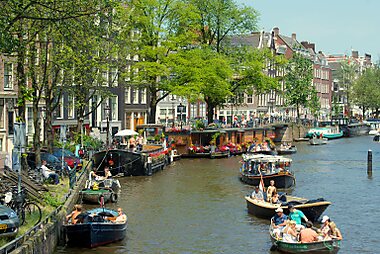
Amsterdam is the capital of the Netherlands, built around a ring of 17th-century canals lined with narrow, gabled houses. The city is compact and mostly flat. Most visitors get around on foot, by bike, or by canal boat rather than by car. It suits a long weekend well, with the historic core, canal ring, and major museums all close together.
The city carries a strong artistic legacy, holding major collections of Rembrandt, Vermeer, and Vincent van Gogh. It also has a famously open, easygoing culture, visible in its cafes, markets, and canalside terraces. Anne Frank hid here with her family during the Second World War. The house where she wrote her diary is now one of the most visited sites in the world.

Amsterdam – Planning a Trip?
Build your day-by-day itinerary in the Tripomatic app.
When to visit
Spring and autumn are mild, summer is warm with long daylight hours, and winter is cold and often wet with a chance of snow.
Plan around King's Day on 27 April, when the whole city turns orange for street parties, live music, and a huge open-air market. It's the biggest annual event, and hotels book up months ahead.
Best time to visit: August
Rain is possible year-round, so pack a waterproof layer regardless of season.
Top sights
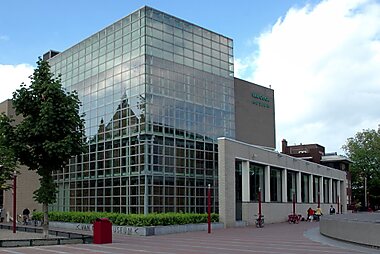

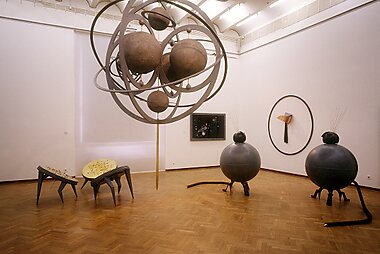
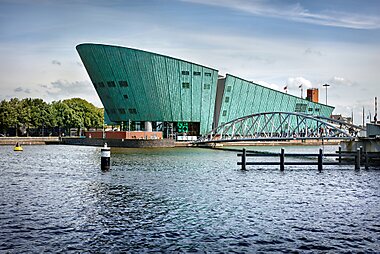
Anne Frank House is the wartime hiding place of the Frank family, preserved with the annex where Anne Frank wrote her diary. Book tickets online weeks ahead — they sell out fast.
Rijksmuseum holds the Netherlands' national art collection, including Rembrandt's The Night Watch and major works by Vermeer, inside a grand 19th-century building.
Van Gogh Museum houses the world's largest collection of the artist's paintings and letters. It traces his life from his early, dark studies to his final, vivid canvases.
Dam Square is the city's historic central square, flanked by the Royal Palace, a former town hall turned royal residence still used for state events.
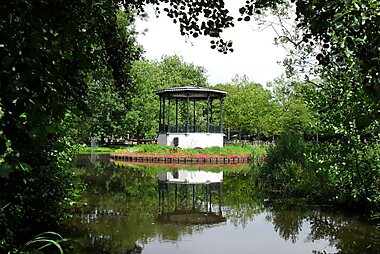
Vondelpark is Amsterdam's largest inner-city park, popular for picnics, open-air concerts, and simply watching the city slow down.
Jordaan District is a former working-class neighborhood, now a maze of narrow streets, boutiques, and small art galleries along quiet canals.
Begijnhof is a quiet, hidden courtyard of historic almshouses just steps from the busiest shopping streets. It holds one of the city's oldest surviving wooden houses.
Featured Lists


Audio Guides – Amsterdam
Explore on foot with a self-guided audio tour that narrates each stop as you reach it.


Hear Amsterdam's audio tours
1 walk in Audio Guides by Tripomatic


What to experience
- Rent a bike and cycle along the canals like a local — it's the way most Amsterdammers actually get around, not just a tourist activity.
- Take an evening canal cruise, when the bridges and canal houses light up.
- Browse the floating flower stalls of the Bloemenmarkt for tulip bulbs and seeds to take home.
- Warm up in a "brown cafe" (bruin café) — a small, wood-panelled Amsterdam pub — over a jenever or a beer.
- Join the street parties on King's Day, when the whole city turns orange and the canals fill with private boats.
Tours & Activities
Amsterdam — Map

 Open the interactive map
 Day trips
A few good day trips lie within easy reach of the city, best reached by train or bus.
- Haarlem — a canal city with its own historic core and a well-regarded Frans Hals museum, about 15 minutes by train. A relaxed alternative for a slower afternoon.
- Zaanse Schans — a cluster of working windmills, wooden houses, and craft workshops on the Zaan river, about 45 minutes by train and bus. Amsterdam's most popular windmill day trip.
- Volendam and Marken — a former fishing port and a small peninsula village, both known for traditional dress and wooden houses, about 30-45 minutes by bus. Easy to combine into one trip.
- Edam — a small, quiet cheese town with canals and a summer Wednesday cheese market, about 35 minutes by bus.
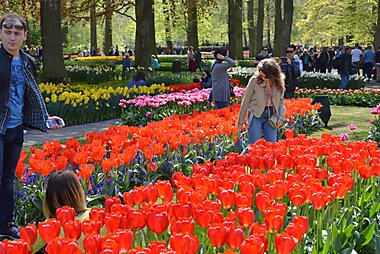
- Keukenhof Gardens — one of the world's largest flower gardens, known for its tulips, open only from mid-March to mid-May, about 45 minutes by bus.
Where to explore
Just outside the city, Haarlem makes an easy extension to an Amsterdam trip, with its own compact old town and canals, reachable by a short train ride.
Getting there
- By air: Amsterdam Airport Schiphol (AMS) is the main gateway, about 15 km southwest of the centre. Direct trains run to Amsterdam Central Station in about 15-20 minutes for around 5-6 €.
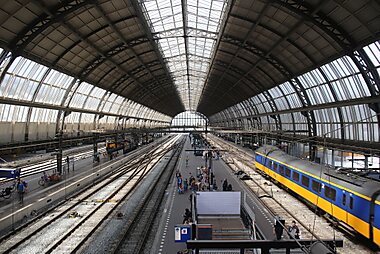
- By train: high-speed and international trains connect directly to Brussels, Paris, London (via Eurostar), and cities across Germany. They arrive at Amsterdam Central Station in the heart of the city.
- By bus: long-distance coach services connect Amsterdam to major European cities, arriving at stations on the edge of the city rather than the centre.
Getting around
- Public transit: trams, buses, a metro, and ferries run by GVB cover the city. Tap a contactless bank card or phone directly on the reader when boarding — no separate ticket purchase needed for short stays. GVB journey planner
- Taxi / ride-hailing: regular taxis and ride-hailing apps operate, but distances in the centre are short enough that they're rarely worth it.
- On foot / cycling: the centre is flat and compact, easily walkable. Cycling is how most locals get around — rental bikes are widely available, though shared cycle lanes take some getting used to.
Driving
- Is a car worth it?: No. The centre is compact, largely pedestrian- and bike-priority, and parking is scarce and expensive. A car only helps if you're heading well outside the city.
- Parking: paid street parking and a handful of car parks ring the centre, paid via app; expect several euros per hour.
- Restrictions: much of the historic centre has narrow streets closed to through traffic, and canal-side parking is tightly restricted.
Food & drink
Amsterdam's food scene ranges from traditional Dutch snacks to a large international dining scene shaped by the country's colonial history, especially Indonesian food.
For a casual bite, head to the food stalls and small kitchens inside Foodhallen, a converted tram depot with dozens of vendors under one roof. Or browse the cheese and herring stands at Albert Cuyp Market in De Pijp. Rijsttafel — an Indonesian-style spread of small dishes — is worth seeking out at one of the city's long-established Indonesian restaurants.
Safety & health
Amsterdam is generally safe for tourists. Pickpocketing is common in crowded spots like Dam Square, Central Station, and on trams — keep bags zipped and valuables out of back pockets. Bike theft is common too; always lock rental bikes with the provided lock. Cannabis is sold legally in licensed coffeeshops, but public drug dealing near the centre, especially in the Red Light District at night, is best avoided.
History
Amsterdam grew from a small fishing village around a dam on the Amstel river. By the 17th-century Dutch Golden Age, it had become one of the world's richest trading cities. The Canal Ring Area of Amsterdam, now a UNESCO World Heritage Site, was laid out in concentric rings during this boom to expand the city outward. Dam Square takes its name from that original dam. The Royal Palace beside it was built as a town hall at the height of the city's wealth, on a scale meant to rival any European palace.
The 20th century brought darker history. During the Second World War, Nazi occupation forced the city's Jewish population into hiding or deportation. That story is told at Anne Frank House, where the Frank family hid for over two years before being discovered in 1944.
Country facts
Quick practical facts for the Netherlands at a glance:
- Currency
- Euro EUR € · Card payments · Widely accepted
- Emergency numbers
- 112
- Electricity
- 230 V · 50 HzType C / Type F
- Languages
- Dutch
- Tap water
- Safe to drink
- Driving side
- Right
- Calling code
- +31


Amsterdam – Plan Your Days
Turn the places from this guide into a real itinerary, with smart routing, time estimates, and everything you need for a perfect trip.




