



Arosa
Arosa sits at the head of the Schanfigg valley, about 1,800 m above sea level, at the end of a narrow-gauge railway and a famously winding mountain road from Chur. What began in the late 19th century as a mountain-air health resort for tuberculosis patients grew into one of the Grisons' best-known ski towns, with two small lakes right in the village and a large connected ski area above it.
Arosa suits travelers who want a proper alpine resort without the crowds of the bigger names nearby: long ski days in winter, hiking and lake swimming in summer, and enough restaurants and hotels to feel like a real destination rather than a stopover.

Arosa – Planning a Trip?
Build your day-by-day itinerary in the Tripomatic app.


When to visit
Winter (December to April) is Arosa's main season, with reliable snow above 1,800 m; summer (June to September) is mild and good for hiking and lake swimming. Spring and late autumn are quiet shoulder seasons, when many lifts and mountain restaurants close.
Two events are worth planning around: the Klassik Festival Arosa in early autumn, when classical concerts fill Bergkirchli and other village venues, and the Arosa Humorfestival in early December, when comedians take over the village's stages just before the ski season gets going.
Top sights


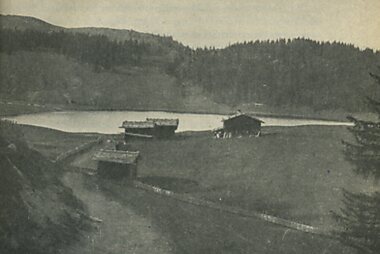


Obersee is the small lake right in the village center, ringed by an easy walking path and a good spot for a picnic.
A short walk further, Untersee has a historic lido and swimming area that fills up on warm summer days.
Bergkirchli, a wooden chapel completed in 1493, is the oldest building in Arosa and still hosts concerts, weddings, and services.
At Arosa Bärenland, rescued bears live out their lives in a mountainside habitat built in 2018 with the animal-welfare organization Vier Pfoten, rather than being trained or put on display for tricks.
A cable car climbs to Weisshorn, a 2,653 m summit with a restaurant and wide views — not to be confused with the much higher peak of the same name on the far side of the country, in the Valais.
For a longer day out, Aroser Rothorn is the highest summit in the Plessur Alps at nearly 3,000 m, reached by chairlift and a marked hiking trail.
Closer to the village, Hörnli is a distinctive rock tooth that anchors one of Arosa's main ski and hiking areas.
On the train ride up from Chur, the Langwieser Viadukt carries the tracks 62 m above the valley floor on a concrete arch completed in 1914, the same year the railway itself opened.
What to experience
- Skate on Obersee, the lake in the middle of the village, when it freezes over most winters.
- Take a lap on the Urdenbahn across to Lenzerheide and back, just for the ride — it is strung as a single span with no support towers in between.
- Catch a concert at the Klassik Festival Arosa in early autumn, when performances fill Bergkirchli and other venues around the village.
- Come for the Arosa Humorfestival in early December, when Swiss and international comedians take over the village's stages.
Tours & Activities
Arosa — Map

Day trips
Arosa sits at the end of a dead-end valley, so most day trips mean retracing the road or rail line partway back down — but a few destinations are worth it.
- Chur, about an hour away by train, is the oldest town in Switzerland, with a walkable old town and a medieval cathedral.
- Lenzerheide, a lakeside resort about an hour away by car (the road loops back down through Chur), shares its ski slopes with Arosa via the Urdenbahn cable car in winter.
- Davos and Klosters, in the next valley, are roughly 1.5–2 hours away by train via Chur — worth it for their larger ski areas and livelier nightlife than Arosa's.
Getting there
- By air: Zürich Airport (ZRH) is the main gateway, roughly 3 hours away with a change in Chur. There is no airport with scheduled passenger service closer to Arosa.
- By train: the Arosa Line, a narrow-gauge Rhaetian Railway route from Chur, takes about 1 hour and climbs through numerous curves and viaducts on its way up the valley.
- By car: the mountain road from Chur is about 30 km and takes roughly 45 minutes in good conditions, with many hairpin bends on the final stretch above Litzirüti. Snow chains or winter tires are often required from November to April.
- By bus: Postbus services run the same route from Chur as an alternative to driving or the train.
Getting around
- Public transit: local buses connect the village, the lift stations, and the lakes; tickets can be bought by tapping a bank card or phone directly on board. A Graubünden regional day pass is worth it if you plan to move around a lot. Arosa Lenzerheide publishes the current bus and lift timetables.
- On foot / cycling: the village center is compact and easily walkable. E-bike rental is available in summer for exploring the wider valley.
Driving
- Is a car worth it?: not for the village itself — it is walkable, and lifts and buses cover the ski area — but useful for day trips to Lenzerheide or beyond. There is no direct road link to the Davos/Prättigau valley; getting there means going back via Chur either way.
- Parking: paid car parks and garages sit at the entrance to the village; the central streets are largely reserved for pedestrians and buses.
- Restrictions: the approach road narrows to hairpin bends for the final stretch from Chur, and snow chains or winter tires can be required from November to April.
Food & drink
Grisons cooking shows up on most Arosa menus: Bündnerfleisch (air-dried beef), Capuns (chard-wrapped dumplings), and Bündner Nusstorte (a caramel-walnut tart) are all worth trying.
In winter, several mountain restaurants scattered across the ski area serve simple, hearty lunches — Rösti, barley soup — and are reachable only on foot or by lift, which is part of the appeal.
Safety & health
Arosa is a low-crime resort town; keeping an eye on bags left on ski lifts or in changing rooms is about the only common-sense precaution. The main practical risk is altitude and weather rather than crime: at around 1,800 m, some visitors feel short of breath for the first day, and conditions on exposed summits like Aroser Rothorn can turn quickly, even in summer, so carry warm layers on any high hike.
History
Bergkirchli, built in 1493, is the oldest trace of settlement at this altitude — for centuries Arosa was little more than scattered mountain farms above the Schanfigg valley.
That changed in the late 19th century, when doctors began sending tuberculosis patients here for the clean mountain air, and hotels and sanatoriums followed. The Walser farming history that came before is documented at Heimatmuseum Schanfigg, in a 16th-century farmhouse in the village.
The narrow-gauge railway from Chur opened in 1914, still crossing the valley on the Langwieser Viadukt, and made the trip practical for ordinary travelers — turning a health resort into a winter sports destination within a generation. Lifts followed through the 20th century, and in 2013 the Urdenbahn linked Arosa's slopes directly to neighboring Lenzerheide, creating one of the larger connected ski areas in the region.
Country facts
Quick practical facts for Switzerland at a glance:
- Currency
- Swiss Franc CHF CHF · Card payments · Widely accepted
- Emergency numbers
- 112
- Electricity
- 230 V · 50 HzType C / Type J
- Languages
- German, French, Italian, Romansh
- Tap water
- Safe to drink
- Driving side
- Right
- Calling code
- +41


Arosa – Add to Your Trip
Create a detailed travel itinerary with smart routing, time estimates, and everything you need for a perfect trip.




