



Davos
Davos sits at about 1,560 meters above sea level in a long alpine valley in eastern Switzerland, and is often called the highest town in the Alps. The town is really two linked settlements, Davos Platz and Davos Dorf, strung along several kilometers of the same valley floor and connected by a single main street.
For most of the 20th century, Davos was known as a health resort: its dry mountain air drew patients to a string of sanatoriums, an era that inspired Thomas Mann's novel "The Magic Mountain". Today it is one of the largest ski areas in Switzerland, ringed by five separate mountains, and a year-round base for hiking and mountain sports. The painter Ernst Ludwig Kirchner lived and worked here for two decades, and each January the town becomes the temporary home of the World Economic Forum's annual meeting.

Davos – Planning a Trip?
Build your day-by-day itinerary in the Tripomatic app.


When to visit
Winter (December to March) is cold and snowy, with reliable snow for skiing well into spring. Summer (June to September) is mild and is the best season for hiking, with warm days and cool nights. Spring and late autumn are quiet shoulder seasons, with many mountain lifts closed for maintenance.
The town's biggest annual event is the World Economic Forum's annual meeting each January, when world leaders and business figures gather in Davos for a week. It is not a public event, but it fills the town's hotels, raises prices sharply, and brings tight security and road closures — worth knowing when planning a January trip, whether to join the buzz or avoid it.
Winters are long and genuinely cold, with sub-zero nights common from November through March.
Top sights



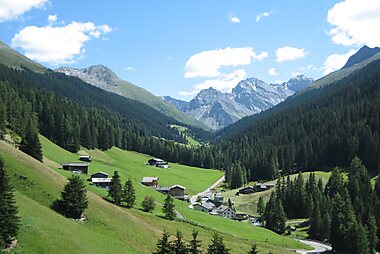
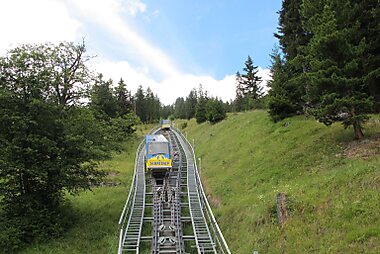
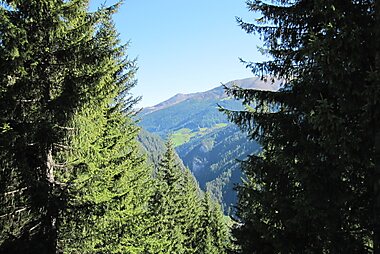
- Jakobshorn is one of Davos's five ski mountains and a year-round destination, reached by cable car from Davos Platz; it draws snowboarders and freestylers in winter and hikers in summer.
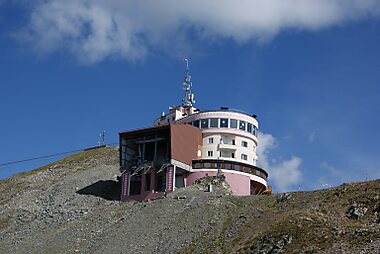
- The Parsennbahn is a historic two-section funicular, running since 1931, that climbs to Weissfluhjoch, the high mountain saddle at the heart of the Parsenn ski and hiking area, with wide views over the Grisons Alps.
- Berghotel Schatzalp is a grand Art Nouveau building from 1900, originally a tuberculosis sanatorium and one of the settings that inspired Thomas Mann's "The Magic Mountain"; it is now a hotel with a botanical alpine garden on its terrace.
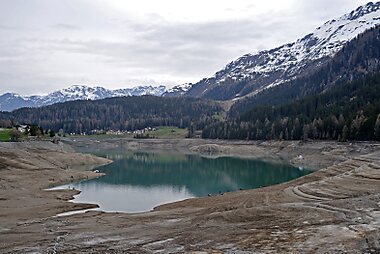
- Davosersee is a small natural lake on the edge of town, popular for a lakeside walk in summer and for skating and cross-country skiing once it freezes over in winter.
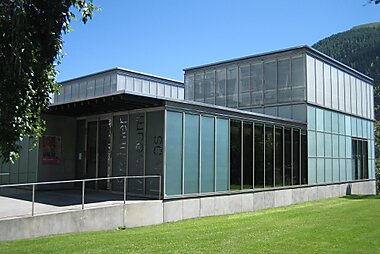
- Kirchner Museum is dedicated to the German Expressionist painter Ernst Ludwig Kirchner, who settled in Davos in 1917 and lived there until his death in 1938, painting many of his best-known works here.
- Wintersport-Museum Davos traces the history of skiing, sledging and bobsledding in the resort, a good stop for understanding why this valley became a winter sports pioneer.
Featured Lists


What to experience
- Skate or cross-country ski on frozen Davosersee in winter — Davos's natural ice rink is often described as one of the largest in Europe, and the valley has an extensive network of groomed cross-country trails.
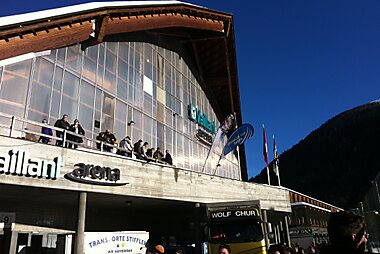
- Watch a game at the Spengler Cup, an international ice hockey tournament held at Vaillant Arena every year between Christmas and New Year — one of the oldest club tournaments of its kind.
- Ride the night toboggan run from Berghotel Schatzalp down to the valley, a floodlit sled run that is a local winter tradition.
- Head for the quieter slopes of Pischa or Rinerhorn for freeride skiing and ski touring away from the busier Parsenn and Jakobshorn lift lines.
- In summer, hike into a side valley such as Sertigtal for alpine meadows and mountain huts well outside the main resort bustle.
Tours & Activities
Davos — Map

 Open the interactive map
 Day trips
Davos sits inside a valley network that makes for easy day trips by train, from a neighboring resort town to a UNESCO World Heritage rail line.
- Klosters — about 10 to 15 minutes by train. Davos's quieter twin resort, sharing the same Parsenn/Gotschna ski and hiking area, with a more traditional village feel.
- Bergün Filisur — under an hour by train. The Rhaetian Railway's Albula line, a UNESCO World Heritage route, runs through here and crosses the dramatic Zügenschlucht en route; the Landwasser Viaduct, one of the line's most photographed structures, is a short walk from Filisur station.
- Chur — just over an hour by train. Switzerland's oldest town and the capital of the Grisons canton, with a compact medieval old town and cathedral.
- Arosa — about 2 hours by train via Chur, or a scenic summer drive over the Strela Pass. Another high-altitude resort, with its own lake and ski area, worth the longer trip for the pass road alone.
Where to explore
Davos shares its valley and its lift network with one neighbor, and sits within easy reach of the Grisons canton's other resort towns.
- Klosters is linked to Davos by the shared Parsenn-Gotschna ski area and the same rail line — many visitors split a stay between the two.
- Chur, the cantonal capital, and Arosa, another high alpine resort, both lie within the same Rhaetian Railway network.
- Bergün Filisur anchors the UNESCO-listed section of the railway on the way toward St. Moritz.
Getting there
- By air: Zurich Airport is the main gateway, about 2.5 hours away by train with one change (usually at Landquart). Basel and Zurich's other regional airports are further and less practical.
- By train: Davos is served directly by the Rhaetian Railway, with regular trains from Landquart (on the Zurich-Chur main line) to Davos Platz and Davos Dorf. A separate line connects from Klosters, useful for travelers arriving via the Vereina car-transport tunnel from the Engadin or Austria.
- By bus: PostBus coaches connect Davos with smaller villages in side valleys not served by rail, including Sertig and Dischma.
Getting around
- Public transit: A local bus network (Davos Bus) links Davos Platz, Davos Dorf and the outlying valleys. Tickets can be bought by contactless card or phone directly on board; guests staying overnight usually receive a guest card that includes free local bus travel. Rhaetian Railway
- Taxi: Taxis are available but not usually needed within town given the bus network.
- On foot / cycling: The valley floor is walkable but stretched out — Davos Platz and Davos Dorf are about a 30-minute walk apart. Cycling is practical on the valley's dedicated paths, less so on the steep side roads.
Driving
- Is a car worth it?: Not needed for a stay centered on Davos itself — trains and local buses cover the town and main lift stations well. A car helps for reaching side valleys like Sertig and Dischma, or for driving the Flüela Pass and Strela Pass roads.
- Parking: Multi-storey car parks serve both Davos Platz and Davos Dorf; street parking in the centre is metered. Guest cards from local accommodation often include parking discounts.
- Restrictions: Some high mountain pass roads, including the Flüela Pass, close completely in winter — check conditions before planning a route over them.
Food & drink
Davos sits in the Grisons canton, and its menus lean on hearty mountain cooking: look for capuns (chard-wrapped dumplings), Bündner Gerstensuppe (barley soup with dried meat), and air-dried Bündnerfleisch.
For eating out, the Promenade and the streets around it in Davos Platz hold the town's main cluster of restaurants and cafés, ranging from casual mountain-hut style fare to more formal dining rooms in the larger hotels.
Safety & health
Davos is a safe destination with very little crime affecting visitors beyond ordinary care with belongings in busy areas like the train station. The main practical concern is altitude: at over 1,500 meters, some visitors feel mild effects such as shortness of breath or poor sleep for the first day or two, especially with strenuous activity on the higher peaks.
Mountain weather changes quickly, so hikers and skiers should check forecasts and avalanche bulletins before heading off marked trails or pistes.
History
Davos grew from a farming settlement into a health resort in the second half of the 19th century, when doctors began sending patients with tuberculosis and other respiratory illnesses to its dry, high-altitude air. Grand sanatoriums went up across the hillside, including Berghotel Schatzalp, and the town's atmosphere during this era became the backdrop for Thomas Mann's 1924 novel "The Magic Mountain".
The painter Ernst Ludwig Kirchner arrived in 1917 to recover his health and stayed until his death in 1938, producing much of his later work in the surrounding mountains; Kirchner Museum now holds the largest collection of his paintings. In 1971, the economist Klaus Schwab founded what became the World Economic Forum, choosing Davos for its annual meeting — a gathering that has met here every January since and given the town a second identity as a meeting place for global leaders.
Country facts
Quick practical facts for Switzerland at a glance:
- Currency
- Swiss Franc CHF CHF · Card payments · Widely accepted
- Emergency numbers
- 112
- Electricity
- 230 V · 50 HzType C / Type J
- Languages
- German, French, Italian, Romansh
- Tap water
- Safe to drink
- Driving side
- Right
- Calling code
- +41


Davos – Plan Your Days
Turn the places from this guide into a real itinerary, with smart routing, time estimates, and everything you need for a perfect trip.




