



Auckland
Auckland, known in Māori as Tāmaki Makaurau, is New Zealand's largest city and the arrival point for most international visitors. It sits on a narrow isthmus between two harbours, with the Pacific-facing Waitematā Harbour to the north and the Tasman Sea's Manukau Harbour to the south. The city is built across roughly 50 extinct volcanic cones, several of which rise right out of the suburbs and give views over the skyline and the water.
Aucklanders call their home the City of Sails, and it has more boats per person than almost anywhere else in the world. A visit here mixes an easy, walkable downtown with beaches, forest-covered ranges, and volcanic islands all within an hour's reach, making it a natural base for exploring the wider North Island.

Auckland – Planning a Trip?
Build your day-by-day itinerary in the Tripomatic app.


When to visit
Auckland has a mild, changeable climate with no real extremes. Summer (December to February) is warm and one of the best times to be on the water; winter (June to August) is cooler and wetter, with more days of rain than sun.
Plan around the Auckland Anniversary Day Regatta in late January, billed as the world's largest one-day yachting regatta and a chance to watch hundreds of boats race across the Waitematā Harbour.
Best time to visit: January, February, March, December
Top sights
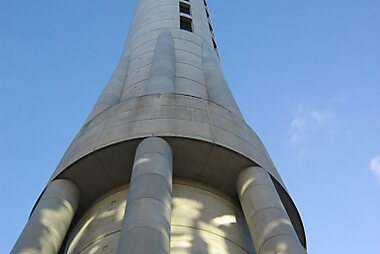



Sky Tower dominates the skyline at 328 metres and is the second-tallest freestanding structure in the Southern Hemisphere, after Jakarta's Autograph Tower; ride the lift up for harbour views, or take the outdoor SkyWalk for a closer thrill.
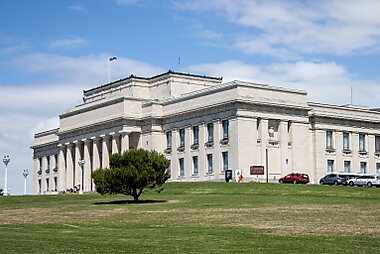
Auckland War Memorial Museum sits on a hilltop crater inside a large central park and holds the country's biggest collection of Māori and Pacific taonga, alongside natural history and war exhibits.
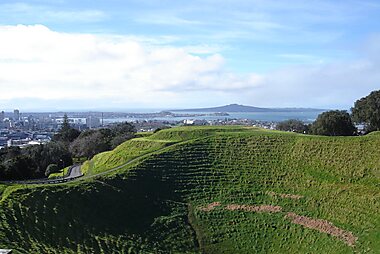
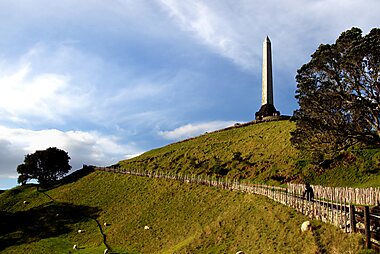
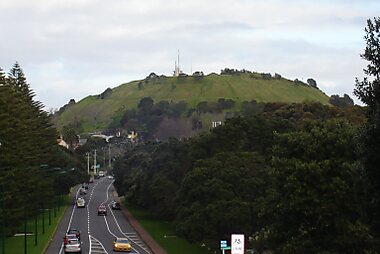
Two of Auckland's volcanic cones make for an easy climb with a view. Maungawhau / Mount Eden, the tallest in the city, has a wide crater you can walk around; One Tree Hill Obelisk, set inside a former farm estate, was an important pā site for Māori and today gives a long view over both harbours.
Down on the water, Auckland Harbour Bridge carries eight lanes of traffic across the Waitematā Harbour and is a landmark in its own right.
On the downtown waterfront, New Zealand Maritime Museum covers the country's seafaring history, from Polynesian and Māori voyaging to the America's Cup, and runs short sailings on heritage vessels around the harbour.
Auckland Art Gallery holds New Zealand's largest collection of national and international art, in a building that mixes an 1887 facade with a striking modern extension.
For families, SEA LIFE Kelly Tarlton's Aquarium puts you in glass tunnels below sharks and rays, with a colony of Antarctic penguins on site.
Across the harbour by ferry, the seaside suburb of Devonport is worth the short trip for Takarunga / Mount Victoria, an old volcanic cone with a former gun emplacement and views back to the city skyline.
Featured Lists

Auckland's Absolute Essentials
Auckland's landscape is defined by its volcanic history, with landmarks like Maungawhau (Mount Eden) and Maungakiekie (One Tree Hill) offering panoramic views over the Hauraki Gulf. The city center features the 328-meter Sky Tower and the historic Edwardian Ferry Terminal, which serves as a gateway to the seaside village of Devonport. Cultural highlights include the neoclassical Auckland War Memorial Museum in the Pukekawa Domain and the Toi o Tāmaki Art Gallery. Along the coast, the urban waterfront spans from the dining precincts of Viaduct Harbour to the sandy shores of Mission Bay.
13 places


Performing Arts & Cinema
Auckland’s performance scene spans from the 1929 atmospheric Civic Theatre to modern waterfront developments. This collection features major venues like the Aotea Centre, which hosts the New Zealand Opera and Royal New Zealand Ballet, alongside boutique independent cinemas like the Lido and the Academy. Many venues are housed in significant heritage buildings, such as the repurposed PumpHouse on Lake Pupuke and the Hollywood Cinema in Avondale, which dates back to 1915 and retains its original Wurlitzer organ.
10 places

Parks & Gardens
Auckland’s landscape is shaped by its volcanic history, featuring prominent scoria cones like Maungawhau (Mount Eden) and the historic coastal fortifications of North Head. This collection highlights the city's diverse greenery, from the Victorian-style Albert Park and its floral clock to the heritage glasshouses of the Domain Wintergardens. Explore the expansive working farm at Cornwall Park, the native bush trails of Le Roys Bush, and the unique garden set within a former quarry at Eden Garden. These spaces offer a mix of panoramic harbor views, botanical collections, and tranquil lakeside walks.
15 places
Volcanic Peaks & Viewpoints
Auckland is built upon a monogenetic volcanic field comprising over 50 dormant cones and craters. These Tūpuna Maunga (ancestral mountains) are sacred sites that often preserve archaeological features of former Māori pā (fortified settlements), such as terracing and storage pits. Visitors can explore prominent scoria cones like Maungawhau and Maungakiekie for panoramic views of the Hauraki Gulf, or visit Pukekawa, the volcanic site housing the Auckland War Memorial Museum.
8 placesWhat to experience
A few things that are distinctly Auckland, beyond sightseeing:
- Sail on a genuine America's Cup-class yacht out on the Waitematā Harbour — several operators run short match-racing trips from the Viaduct, linked to Auckland's history hosting the America's Cup.
- Ride a harbour ferry simply for the crossing. Even the short hop to Devonport gives clear views back over the skyline and Rangitoto's cone.
- Watch the sunset over the water from Wynyard Quarter's Silo Park, a former industrial waterfront now lined with bars and food trucks.
- Browse one of the city's weekly night markets for street food from Auckland's large Pacific and Asian communities.
Tours & Activities
Auckland — Map

 Open the interactive map
 Day trips
Auckland sits close to the Hauraki Gulf's volcanic islands and the wild beaches of the west coast, plus two of the North Island's best-known attractions if you have a full day to spare.
- Rangitoto Island — ≈25 min by ferry from downtown. It is the youngest and largest volcanic cone in the Auckland volcanic field; the walk to the summit takes about an hour and rewards with a view back over the whole city.
- Waiheke Island — ≈40 min by ferry. Vineyards, olive groves, and sandy beaches; many wineries run cellar-door lunches with harbour views.
- South Piha Beach — ≈45 min by car. A black-sand surf beach on the wild west coast, backed by the forest of the Waitākere Ranges.
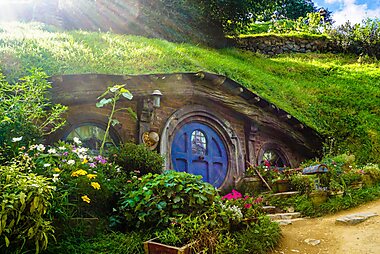
- Hobbiton Movie Set, near Matamata — ≈2 h by car. The film set built for the Lord of the Rings and Hobbit movies, kept as a walk-through attraction with guided tours.
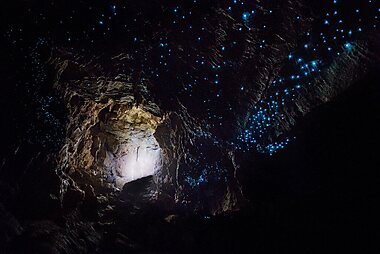
- Waitomo Glowworm Caves — ≈2 h 30 min by car. Limestone caves lit by thousands of native glowworms, explored partly by boat through the dark.
Where to explore
Auckland's harbour opens onto the Hauraki Gulf, dotted with islands worth building a whole day, or more, around.
- Rangitoto Island and Waiheke Island are the easiest to reach and covered in the day trips above.
- Kawau Island is a quieter option to the north, once home to a 19th-century governor's residence and now known for its walking tracks and blue penguins.
- Great Barrier Island is the wildest of the group, an International Dark Sky Sanctuary reached by ferry or light aircraft, best suited to visitors with a few days to spend rather than a single afternoon.
Getting there
- By air: Most international and domestic flights land at Auckland Airport (AKL), New Zealand's main gateway, about 21 km south of the city centre. There is no rail link to the airport; the SkyDrive airport express bus takes roughly 45–60 minutes to downtown, and a taxi or rideshare takes about 30–40 minutes depending on traffic.
- By train: The Northern Explorer scenic train runs a few times a week between Auckland and Wellington, taking around 11 hours; it is a scenic ride rather than a fast way to travel.
- By bus: Long-distance coaches leave from Auckland's central bus terminal for destinations across the North Island, including Hamilton, Rotorua, Tauranga, and Wellington.
Getting around
- Public transit: Auckland Transport runs buses, trains, and ferries across the region. On buses and trains, tap a contactless bank card or phone directly, or use an AT HOP card loaded with credit for the best fares. Ferries are mostly run by private operators with their own tickets, bought online or at the terminal. See Auckland Transport journey planner.
- Taxi / ride-hailing: Uber and local taxi companies operate throughout the city.
- On foot / cycling: The city centre is compact and walkable, though several streets climb steep volcanic slopes. A growing network of protected bike lanes, including the elevated Lightpath, makes short trips by bike practical.
Driving
- Is a car worth it?: Not for the city centre itself — Auckland Transport's buses, trains, and ferries cover downtown and the inner suburbs well. A car becomes useful once you want to reach west coast beaches or explore beyond ferry range.
- Parking: Metered street parking and multi-storey car parks are common downtown, typically NZ$4–7 an hour; park-and-ride lots near train stations are a cheaper option if you are commuting in from further out.
- Restrictions: Watch for bus lanes and transit lanes on main roads during peak hours — they are enforced by camera and carry fines for driving in them outside the permitted vehicle types.
Food & drink
Auckland's food scene leans heavily on the sea and reflects the city's large Pacific and Asian communities. Look for fresh snapper, oysters, and green-lipped mussels on menus, alongside hāngī-style Māori cooking and dishes from Auckland's Chinese, Korean, Indian, and Pacific Island communities.
For a night out, head to Ponsonby Road for upscale bars and restaurants, or Karangahape Road for a more eclectic, low-key mix of cafes and bars. Near the waterfront, the stalls at the Auckland Fish Market are a good spot for a casual seafood lunch.
Safety & health
Auckland is a safe city for visitors; violent crime against tourists is rare. The main risks are petty theft — do not leave bags or valuables visible in a parked car, especially at beach car parks and walking trailheads — and sunburn. New Zealand's UV levels are unusually high, and sunburn happens fast even on a cool or cloudy day, so use sunscreen year-round.
If you swim at west coast beaches such as Piha or Muriwai, stay between the red and yellow flags. Rip currents there are strong and have caused fatalities even among confident swimmers.
History
Long before Europeans arrived, the volcanic cones around Auckland were fortified Māori pā, and the wider isthmus was known as Tāmaki Makaurau — roughly, "desired by many" — because its rich volcanic soil and two harbours made it valuable land, contested by successive iwi for generations. Traces of terracing and storage pits are still visible on Maungawhau / Mount Eden and One Tree Hill Obelisk.
European settlement began in 1840, and Auckland served as New Zealand's capital until 1865, when the government moved south to the more central Wellington. The city kept growing regardless, helped by its harbour and, later, its airport, and remains the country's economic centre today. Auckland War Memorial Museum was built after the First World War as both a museum and a memorial, and its cenotaph and hall of remembrance still anchor the country's Anzac Day commemorations each April.
Country facts
Quick practical facts for New Zealand at a glance:
- Currency
- New Zealand Dollar NZD $ · Card payments · Widely accepted
- Emergency numbers
- 111
- Electricity
- 230 V · 50 HzType I
- Languages
- English, Māori
- Tap water
- Safe to drink
- Driving side
- Left
- Calling code
- +64


Auckland – Plan Your Days
Turn the places from this guide into a real itinerary, with smart routing, time estimates, and everything you need for a perfect trip.


Related destinations


Data: © OpenStreetMap contributors, Wikidata, Wikipedia, Tripomatic, Official websites. Tours by GetYourGuide. We earn commission from bookings. Travel guide generated with AI.