



Baku
Baku is Azerbaijan's capital and largest city, curved around a bay on the Caspian Sea. It pairs a walled medieval old town with a skyline of glass towers and modern landmarks. Oil wealth from two separate booms, a century apart, paid for both the grand 19th-century mansions in the centre and the striking contemporary buildings that followed.
A few days here suits travelers who enjoy a mix of history, architecture, and easy city life more than outdoor activity. Baku also works well as a base for day trips to nearby rock carvings and fire temples. The chess grandmaster Garry Kasparov was born in the city, as was the singer Muslim Magomayev, one of the most celebrated performers of the Soviet era.

Baku – Planning a Trip?
Build your day-by-day itinerary in the Tripomatic app.


When to visit
Baku has a mild, dry climate with a near-constant wind off the Caspian that keeps summer heat from feeling oppressive. Spring and autumn are the most comfortable seasons for walking the Old City and the seafront boulevard; summer is hot, and winter is cool and damp rather than cold.
Baku hosts the Formula 1 Azerbaijan Grand Prix each year, a street race that loops around the Old City walls — the exact date shifts from year to year, so check the calendar if you want to time a visit around it.
Best time to visit: May, June, July, August, September, October
Top sights
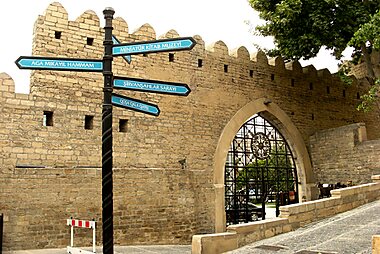

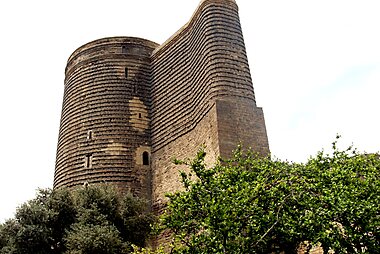
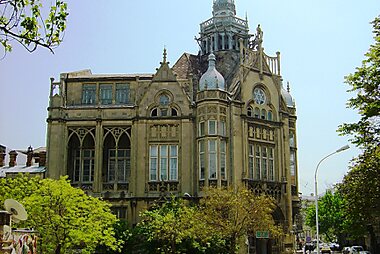
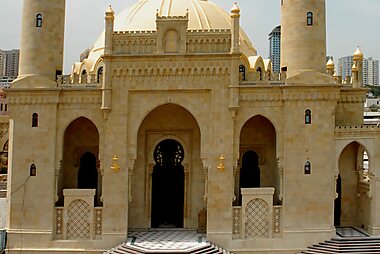

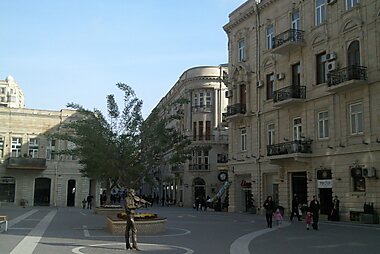
İçəri şəhər is Baku's walled old town, a maze of narrow lanes, caravanserais, and centuries-old houses that forms the historic core of the city and its UNESCO World Heritage Site.
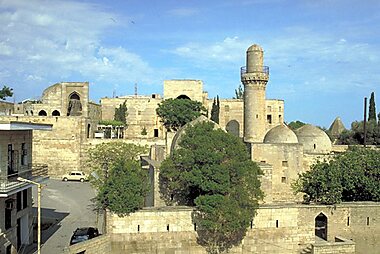
Inside its walls stands Palace of the Shirvanshahs, seat of the Shirvanshah rulers after they moved their capital to Baku in the 15th century, and one of the best-preserved examples of medieval Islamic palace architecture in the region.
Nearby, Maiden Tower rises above the old town's rooftops. Historians still debate its exact age and original purpose, which only adds to its appeal.
Outside the walls, the three glass towers of Flame Towers, completed in the early 2010s, dominate Baku's modern skyline and light up after dark with a moving LED display.
The fluid, wave-like form of Heydar Aliyev Museum, designed by Zaha Hadid and completed in 2012, houses exhibitions on Azerbaijani history and culture inside one of the city's most photographed modern buildings.
Azərbaycan Dövlət Xalça Muzeyi displays centuries of Azerbaijani carpet-weaving traditions inside a building shaped like a rolled-up carpet.
Along the water, Dənizkənarı Milli Park is a landscaped promenade that runs the length of the bay, popular for an evening walk with views back toward the Flame Towers.
Fəvvarələr Meydanı is a lively pedestrian square lined with cafes and shops, one of the main gathering spots in the modern centre.
Featured Lists


What to experience
- Ride the Bakı Funikulyoru up to Highland Park for a sunset view over the bay and the Flame Towers lighting up.
- Catch a performance of mugham, Azerbaijan's traditional sung poetry, at the Maqomayev adına Azərbaycan Dövlət Filarmoniyası.
- Sit down for tea and pastries in a traditional çayxana (tea house) in the Old City, poured from a samovar into small pear-shaped glasses.
- Watch the fountains run and the giant illuminated flag light up after dark at National Flag Square.
Tours & Activities
Baku — Map

 Open the interactive map
 Day trips
A few standout destinations sit within easy reach of Baku, from ancient rock carvings to a former royal capital.
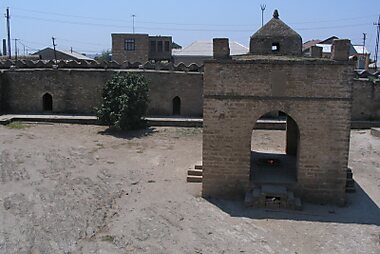
- Absheron — ≈30–45 min by car. The peninsula around Baku holds the eternal natural-gas flame at Yanar Dag and the historic Fire Temple Ateshgah, built over a natural gas vent and used for centuries by Zoroastrian, Hindu, and Sikh fire worshippers.
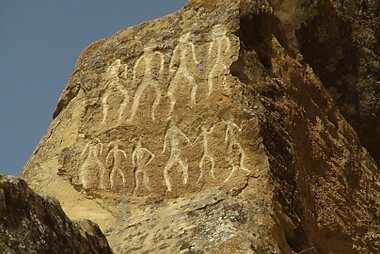
- Gobustan State Historical and Cultural Reserve — ≈1 hour by car or organized tour. A UNESCO-listed reserve of prehistoric rock carvings, plus nearby mud volcanoes that bubble cold grey mud instead of lava.
- Shamakhi District — ≈2 hours by car. Azerbaijan's medieval capital before the Shirvanshahs moved to Baku, with a historic Friday mosque and, nearby, some of the country's oldest wine-growing country.
Where to explore
Two very different destinations sit close to Baku. Gobustan State Historical and Cultural Reserve preserves thousands of prehistoric petroglyphs south of the city, while the Absheron peninsula is dotted with fire temples, sandy beaches, and old oil-town villages.
Getting there
- By air: Heydar Aliyev International Airport (GYD) is Baku's main gateway, about 20 km northeast of the centre. A taxi or transfer takes 30–40 minutes; airport shuttle buses also run into the city centre.
- By train: An overnight sleeper train links Baku with Tbilisi, Georgia, departing nightly. Seats are currently limited to Azerbaijani citizens and travelers from visa-free countries — check current entry rules before booking if you plan to enter on an e-visa.
- By bus: Long-distance coaches connect Baku with towns across Azerbaijan and with Georgia from the international bus terminal.
Getting around
- Public transit: The Baku Metro and city buses cover most of the centre. Tap a contactless bank card, Apple Pay, or Google Pay directly at the gate, or buy a rechargeable BakıKart from machines at metro stations and many bus stops. Baku Metro
- Taxi / ride-hailing: Local ride-hailing apps such as Bolt operate widely and are usually cheaper and more predictable than flagging a taxi on the street.
- On foot: The Old City, the boulevard, and the central shopping streets sit close together and are easy to cover on foot. Cycling is less practical away from the seafront path, where traffic is heavy.
Driving
- Is a car worth it?: Not for the city itself — the centre is compact and walkable, and traffic and parking are unpredictable. A car, driver, or tour is useful for reaching Gobustan, the Absheron peninsula, or Shamakhi in a single day.
- Parking: Street parking in the centre is metered, paid by SMS or kiosk machine; several paid car parks sit around the Old City and the boulevard.
Food & drink
Baku's food centers on grilled meats, fresh herbs, and slow-cooked rice dishes, alongside a tea culture that runs through the whole day.
For a concentrated taste of it, look around the courtyards and lanes inside İçəri şəhər, where small kebab houses and tea houses sit beside souvenir shops, or along Nizami Küçəsi, lined with restaurants and cafes in the modern centre.
Safety & health
Baku is a safe city for tourists, with low rates of violent crime. The most common issues are unmetered taxis overcharging visitors near tourist sites and inflated rates at informal currency exchange points — use a licensed exchange office or a bank ATM instead. Tap water is best avoided for drinking; bottled water is cheap and sold everywhere.
History
Baku's history is tied to fire and oil. Long before the modern petroleum industry, natural gas seeps on the Absheron peninsula drew Zoroastrian, Hindu, and Sikh fire worshippers, and the walled İçəri şəhər grew into a trading post on the Caspian's western shore.
In the 15th century, after an earthquake damaged their previous capital, the Shirvanshah rulers moved their court to Baku and built Palace of the Shirvanshahs at the highest point of the old town.
The 19th and early 20th-century oil boom transformed the city almost overnight, funding the grand stone mansions that still line the streets around the Old City walls and drawing prospectors and workers from across the region.
The 20th century brought Soviet rule and, in January 1990, a violent crackdown on independence protests remembered today at Əbədi Məşəl - Şəhidlər Xiyabanı, where an eternal flame honors the victims.
Country facts
Quick practical facts for Azerbaijan at a glance:
- Currency
- Azerbaijani Manat AZN ₼ · Card payments · Commonly accepted
- Emergency numbers
- 112
- Electricity
- 220 V · 50 HzType C / Type F
- Languages
- Azerbaijani
- Tap water
- Drink with caution
- Driving side
- Right
- Calling code
- +994


Baku – Plan Your Days
Turn the places from this guide into a real itinerary, with smart routing, time estimates, and everything you need for a perfect trip.


Related destinations


Data: © OpenStreetMap contributors, Wikidata, Wikipedia, Tripomatic, Official websites, geoBoundaries (CC BY 4.0). Tours by GetYourGuide. We earn commission from bookings. Travel guide generated with AI.