



Bangkok
Bangkok is a city of striking contrasts: gilded temple spires rise beside glass skyscrapers, and quiet canals run behind roaring six-lane avenues. Known to Thais as Krung Thep, "City of Angels," it has been the country's capital since 1782 and remains its political, commercial, and spiritual heart.
The Chao Phraya River threads through the city, linking the ornate temples and palaces of the Old Town to the modern business districts of Sukhumvit and Silom. Street food stalls, sprawling markets, rooftop bars, and some of Southeast Asia's most revered Buddhist sites all sit within a few kilometers of each other, giving Bangkok an energy that rewards both careful planning and aimless wandering.

Bangkok – Planning a Trip?
Build your day-by-day itinerary in the Tripomatic app.


When to visit
Bangkok is a year-round destination, though the weather shifts the experience considerably. The cool season (November to February) is the most comfortable, with lower humidity and pleasant evenings — it's also the busiest and most expensive time to visit. The hot season (March to May) brings the highest temperatures and humidity of the year, while the rainy season (June to October) delivers dramatic but usually short afternoon downpours, along with lush greenery and thinner crowds.
April's Songkran festival (Thai New Year) turns the whole city into a water fight and is worth experiencing at least once, though it also means many shops and services slow down for the holiday.
Best time to visit: December
Top sights
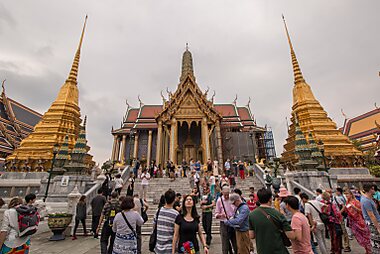
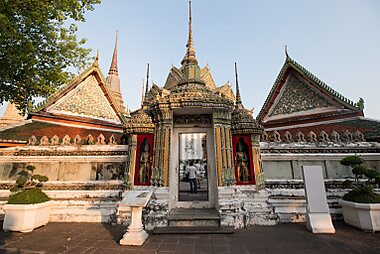
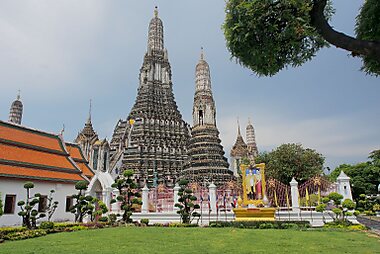
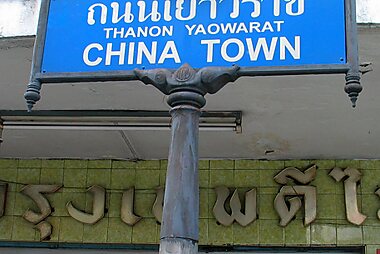
Bangkok's landmarks span nearly two and a half centuries of royal, religious, and commercial history. A few essentials for first-time visitors:
Wat Phra Kaew, within the Grand Palace complex, houses the revered Emerald Buddha and is the spiritual center of Thai Buddhism. Dress modestly — shoulders and knees covered — to enter. Wat Phra Kaew
Wat Pho is home to a 46-meter reclining Buddha covered in gold leaf, and is also the birthplace of traditional Thai massage, still taught and practiced on-site today. Wat Pho
Across the river, Wat Arun, the Temple of Dawn, is famous for its towering central prang decorated with colorful porcelain, best seen at sunset from the water. Wat Arun
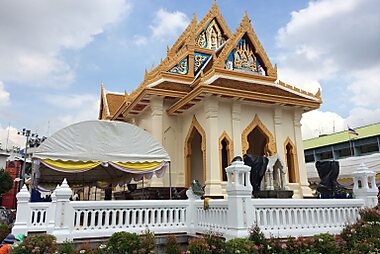
Wat Traimit shelters the world's largest solid-gold Buddha statue, a 5.5-tonne, 700-year-old image rediscovered by accident in the 1950s. Wat Traimit
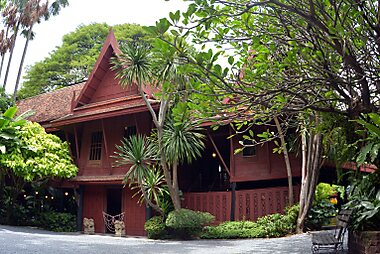
The Jim Thompson House is a beautifully preserved teak house museum showcasing Southeast Asian art, built by the American silk entrepreneur who mysteriously vanished in Malaysia in 1967. Jim Thompson House
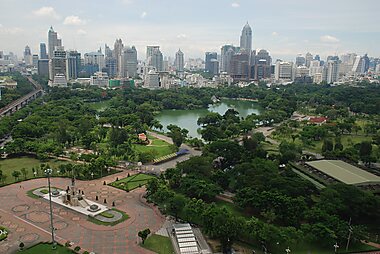
For a break from temples, Lumphini Park offers shaded paths, paddleboats, and (often) monitor lizards sunning by the lake. Lumphini Park
Wander Yaowarat Road, the spine of Bangkok's Chinatown, for gold shops, Chinese shrines, and some of the city's best street food after dark. Yaowarat Road
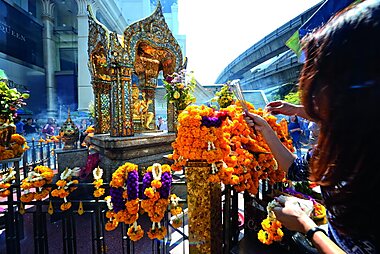
The Erawan Shrine, dedicated to the Hindu god Brahma, draws a steady stream of worshippers and traditional Thai dancers performing devotional offerings, tucked incongruously beside a busy shopping intersection. Erawan Shrine
Featured Lists


Bangkok's Best Markets & Malls
Bangkok's retail landscape spans from the massive Chatuchak Weekend Market, home to over 15,000 stalls, to the world’s 10th largest shopping complex, CentralWorld. Visitors can explore traditional floating markets like Taling Chan and Khlong Lat Mayom for local food, or browse specialized hubs like the Phra Chan Amulet Market. Modern malls like Terminal 21 offer unique airport-themed interiors, while the Emporium caters to high-end luxury. From the backpacker energy of Khaosan Road to the fresh produce at Khlong Toei Market, this selection captures the city's diverse commercial heritage.
20 places
Iconic Temples of Bangkok
Bangkok’s spiritual landscape is defined by its ornate royal temples and historic shrines. This selection features the city's most revered sites, from the Grand Palace complex housing the Emerald Buddha to Wat Pho’s 46-meter reclining statue. Architectural highlights include the porcelain-encrusted spires of Wat Arun, the Italian Carrara marble of Wat Benchamabophit, and the solid gold Buddha at Wat Traimit. Beyond Buddhist landmarks, the list includes significant Hindu sites like the Erawan Shrine and the colorful Sri Mahamariamman Temple, reflecting the city’s diverse religious heritage.
15 places
Bangkok's Best Thai Dining
Bangkok’s culinary landscape spans from the historic street food stalls of Khaosan Road and Banglamphu to the riverside views of Khin Lom Chom Saphan. This selection features iconic institutions like Thip Samai, famous for its Pad Thai, and Somboon Seafood, the birthplace of Thai curry crab. Modern dining is represented through the themed food halls at Terminal 21 and the high-altitude Vertigo Moon Bar. For local traditions, Taling Chan Floating Market provides canal-side eating, while Blue Elephant offers refined flavors in a colonial-style setting.
18 places


What to experience
- Watch the sun set over the river from a rooftop bar in Silom or Charoen Krung, with Wat Arun lit up across the water.
- Take a traditional Thai massage course at Wat Pho, where the practice has been taught for centuries.
- Explore Bangkok's canals by longtail boat, weaving past stilted houses and small riverside temples away from the main tourist routes.
- Eat your way down Yaowarat Road after dark, sampling everything from bird's nest soup to grilled satay from decades-old stalls.
- Catch a live Muay Thai match at one of the city's boxing stadiums for an evening of ritual, music, and genuine sporting drama.
- Pay respects at the Erawan Shrine alongside local devotees, then browse the malls that surround it.
Tours & Activities
Bangkok — Map

 Open the interactive map
 Day trips
Bangkok's location makes it a natural base for exploring central Thailand. Popular day trips include:
- Ayutthaya: The former Siamese capital, about 1–1.5 hours by train or car, is a UNESCO World Heritage Site scattered with the atmospheric ruins of temples and palaces dating back to the 14th–18th centuries.
- Damnoen Saduak Floating Market: Roughly 1.5–2 hours southwest, this classic floating market has vendors selling produce and street food from wooden boats — arrive early to beat both the heat and the tour groups.
- Amphawa: A quieter, more local floating market about 1.5 hours away, especially lively on weekend evenings with riverside seafood and firefly boat tours after dark.
- Kanchanaburi: About 2–2.5 hours west, home to the Bridge on the River Kwai and the sobering Thailand-Burma Railway museums, along with waterfalls and national parks for a longer visit.
Getting there
- By air: Suvarnabhumi Airport (BKK) is the main international gateway, connected to the city center by the Airport Rail Link, taxis, and ride-hailing apps. Don Mueang Airport (DMK) primarily serves low-cost and domestic carriers and is further from downtown.
- By train: Long-distance trains arrive at Bang Sue Grand Station (the newer main terminal) or the historic Hua Lamphong station, with connections across Thailand and to Malaysia and Laos.
- By bus: Long-distance buses arrive at one of three main terminals (Mo Chit for the north/northeast, Ekkamai or Sai Tai Mai for the east/south) depending on origin.
Getting around
- The BTS Skytrain and MRT subway are the fastest way to beat traffic between major districts; buy a rechargeable Rabbit card or pay per trip.
- The Chao Phraya Express Boat and canal (khlong) boats are a scenic and often faster alternative for river-adjacent destinations like the Old Town and Wat Arun.
- Grab (ride-hailing) is widely used and avoids the fare negotiation sometimes needed with street taxis and tuk-tuks; always ask metered taxis to use the meter.
- Traffic congestion is severe at peak times, so plan cross-town journeys around the rail network where possible.
Driving
- Is a car worth it? No. Traffic in central Bangkok is heavy most of the day, and driving yourself adds stress without saving time. Use the BTS, MRT, river boats, or Grab instead. A car with a driver only helps for trips into the wider region or for combining several day-trip stops in one outing.
- Parking: Shopping malls usually give the first 1–2 hours free with a purchase receipt, then charge by the hour. Standalone car parks in the centre cost roughly 40–80 baht an hour or 200–500 baht a day. Apps like ParkMe and Parkopedia show nearby options and current rates.
- Restrictions: No congestion charge or low-emission zone applies to visiting drivers. Heavy trucks face seasonal bans during the worst smog episodes, but this does not affect rental cars.
Food & drink
Bangkok is one of the world's great street food cities, and eating well here rarely requires a reservation. Expect bold, balanced flavors — sour, sweet, salty, and spicy in the same dish — built around rice, noodles, fresh herbs, and chilies. Iconic dishes include pad thai (stir-fried noodles), tom yum goong (hot and sour shrimp soup), and som tam (spicy papaya salad), alongside regional specialties brought to the capital from across Thailand.
Market streets like Yaowarat Road in Chinatown offer some of the most authentic, affordable meals in the city, often better than pricier tourist-oriented restaurants nearby. Rooftop dining and fine-dining Thai restaurants have also flourished in recent years for a more polished take on the same flavors. Tap water isn't recommended for drinking, but bottled and filtered water are cheap and everywhere.
Safety & health
Bangkok is generally safe for visitors, with violent crime against tourists rare. The main risks are scams, traffic, and heat.
- Tuk-tuk and gem scams: Be wary of strangers (often near Wat Phra Kaew) claiming an attraction is "closed today" and offering an alternative tour or a "great deal" on gems — this is almost always a scam.
- Taxi meters: Some taxi drivers refuse the meter for tourists; simply find another cab, or use Grab.
- Traffic: Roads are congested and driving norms differ from many visitors' home countries; take extra care crossing streets and on motorbike taxis.
- Heat and hydration: Year-round heat and humidity make dehydration a real risk — carry water, especially when temple-hopping (which also requires modest dress).
History
Bangkok's history as a capital began in 1782, when King Rama I founded the city on the eastern bank of the Chao Phraya River after the fall of the former capital, Ayutthaya, and a brief interim period across the river in Thonburi. He established the Chakri dynasty, which still reigns today, and built Wat Phra Kaew and the Grand Palace as the new seat of royal and religious power, modeled in part on Ayutthaya's lost splendor.
Over the following century, Bangkok grew from a network of canals — earning it the nickname "Venice of the East" — into a modernizing capital under kings Rama IV and Rama V, who navigated European colonial pressure while reforming the country's infrastructure, legal system, and administration. Much of this era's architecture and city planning, including grand avenues and European-influenced buildings, still shapes the Old Town around Wat Pho and Wat Arun.
The 20th century brought rapid urbanization, political upheaval, and the transformation of Bangkok into a major regional economic hub, while sites like Wat Traimit and the temples of the Old Town continue to anchor the city's identity to its royal and religious origins.
Country facts
Quick practical facts for Thailand at a glance:
- Currency
- Thai Baht THB ฿ · Card payments · Commonly accepted
- Emergency numbers
- 191 Police
- Electricity
- 220 V · 50 HzType A / Type B / Type C / Type O
- Languages
- Thai
- Tap water
- Drink with caution
- Driving side
- Left
- Calling code
- +66


Bangkok – Plan Your Days
Turn the places from this guide into a real itinerary, with smart routing, time estimates, and everything you need for a perfect trip.

