



Thailand
Thailand stretches from the mountainous north near Myanmar and Laos to the tropical islands of the south, with the modern capital Bangkok at its center. Known as the Land of Smiles, it combines golden Buddhist temples, royal history, and some of Southeast Asia's most visited beaches and islands in one country.
Thailand suits almost any kind of trip. Options range from a short city break in Bangkok to a beach holiday in Phuket or Koh Samui, a cultural tour through the ancient capitals of Ayutthaya and Sukhothai, or trekking in the hills around Chiang Mai. Its long tourism infrastructure, affordable prices, and wide range of landscapes make it one of the easiest countries in Asia for a first visit.


Thailand – Planning a Trip?
Build your day-by-day itinerary in the Tripomatic app.


Money & payments
Cards are accepted at hotels, malls, and city restaurants, but street food stalls, local markets, and small guesthouses outside the main tourist areas still expect cash — keep small notes on hand.
ATMs are common in cities and tourist areas. Most charge a flat foreign-card withdrawal fee, roughly 200–350 THB depending on the bank, regardless of the amount taken out — so withdrawing larger sums less often saves money. Budget travelers can get by cheaply on street food and public transport; a mid-range stay with restaurant meals and taxis costs more.
Featured Lists


Top Coastal Beaches
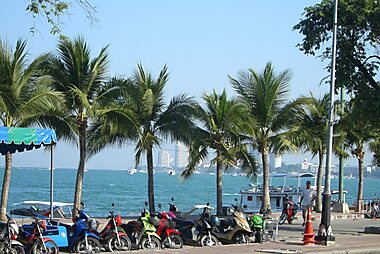
This selection covers Thailand's premier coastal destinations across the Gulf of Thailand and the Andaman Sea. Phuket’s west coast dominates the list with snorkeling hotspots like Kata Noi and family-friendly stretches like Karon. For those seeking vibrant nightlife, Pattaya Beach and Koh Samui’s Chaweng Yai offer extensive bar scenes and evening entertainment. Conversely, secluded escapes like Chai Chet on Koh Chang and the pine-fringed Nai Yang provide a quieter look at the country’s coastline, while Rawai serves as a hub for fresh seafood and traditional long-tail boat trips.
11 places


Tours & Activities
Thailand — Map

Tipping
Tipping in Thailand is appreciated but not obligatory outside a few contexts. Rounding up the bill or leaving small change is common in everyday situations, while a more deliberate tip fits at nicer restaurants and for services like tour guides.
10% at higher-end places; round up elsewhere
round up
round up
20-40 THB/day for housekeeping
100-200 THB/day
Hotel housekeeping is usually left a small amount per day; taxi and songthaew drivers don't expect a tip beyond rounding up the fare.
Electricity
Thailand uses a mix of plug types at 220V/50Hz, so a European or Australian appliance usually just needs a plug adapter, while a North American 110V-only device may need a voltage converter too.
Language
Thai is the official language, written in its own script that shares no letters with the Latin alphabet, so street signs and menus outside tourist areas can be hard to read without a translation app. English is widely understood in Bangkok, at hotels, and around major tourist sites, but much less so in rural areas and local markets.
Staying connected
Prepaid tourist SIMs and eSIMs (AIS, dtac, True) are cheap and sold at the airport and convenience stores; bring your passport, since Thai law requires ID registration for any SIM purchase. Coverage is strong across cities and the main islands, patchier in remote national parks.
Safety & emergencies
Thailand is generally safe for tourists, and violent crime against visitors is rare. The most common problems are scams, road accidents, and petty theft rather than serious danger.
- Common scams include tuk-tuk drivers claiming a sight is "closed" to redirect you elsewhere, inflated gem or tailor deals, and jet-ski rental disputes over alleged damage — agree on terms and photograph any rental vehicle beforehand.
- Road traffic is a leading cause of visitor injury; motorbike accidents are common among tourists who rent scooters without experience or a helmet.
- Keep an eye on your drink at busy nightlife areas.
- Rip currents affect some beaches, especially in the rainy season; heed warning flags.
Health
Tap water isn't safe to drink; stick to bottled or filtered water, including for brushing teeth in more remote areas. Pharmacies are widespread in cities and tourist areas, many open late, and pharmacists can advise on and sell many common medications without a prescription.
Routine travel vaccinations are recommended before visiting, and some travelers also consider hepatitis A and typhoid protection. Dengue fever is present year-round, so using mosquito repellent, especially during the rainy season, is a sensible precaution.
Visas & entry
Many nationalities, including most of the EU, the UK, the US, Australia, and Canada, can enter Thailand visa-free for tourism and stay for a set period without applying in advance. Visitors from some other countries can get a visa on arrival at major airports, while longer stays or other purposes generally require an e-visa or a visa applied for at a Thai embassy before travel.
Visa and entry requirements change frequently. Verify current requirements with the official immigration authority or your country's embassy before travel.
Etiquette
Cover shoulders and knees when visiting temples, and remove your shoes before entering temple buildings and many homes. Feet are considered the lowest part of the body, so avoid pointing them at people, Buddha images, or altars, and don't step over someone sitting on the floor. The head is considered the highest and most respected part of the body — avoid touching anyone's head, even a child's.
Thais deeply respect the monarchy, and Thai law treats insults to the royal family as a serious criminal offense — avoid any joking or critical comment about the king or royal family, including about banknotes and coins, which carry the king's image. The wai (a slight bow with palms pressed together) is the traditional greeting; visitors aren't expected to initiate it but returning one is polite. Bargaining is normal at markets and with tuk-tuk or unmetered taxi fares, but not in shops with fixed price tags.
Holidays & opening hours
Public holidays can affect banks, government offices, and some transport schedules, and alcohol sales are restricted on major Buddhist holidays and election days. Songkran (mid-April) and New Year are the busiest travel periods, with many shops and services slowing down or closing.
Most shops and malls open daily, including Sundays, typically from around 10:00 to 21:00 or 22:00; smaller family-run shops may close for a midday break or take one day off a week, often without a fixed pattern.
Getting around
- By train: The State Railway of Thailand connects Bangkok to Chiang Mai, Ayutthaya, the northeast, and the south, with overnight sleeper trains on longer routes; book popular routes in advance, especially around holidays. State Railway of Thailand
- By air: Domestic flights (AirAsia, Nok Air, Thai Lion Air, Thai Airways) are inexpensive and fast for long hops like Bangkok to Phuket, Chiang Mai, or Koh Samui, and often beat a full day of bus or train travel.
- By bus: An extensive network of intercity buses and minivans reaches almost every town, including overnight VIP buses with reclining seats between Bangkok and the north or south.
Thailand drives on the left.
Driving
- Speed limits and rules: Thailand drives on the left; the widget below has the exact limits. Motorcycle helmets are mandatory for rider and passenger and are enforced in tourist areas. Bring an International Driving Permit alongside your home license to rent a car or motorbike.
- Tolls: Bangkok's elevated expressways charge point-to-point tolls, payable in cash at the booth or via an Easy Pass electronic tag.
- Congestion and low-emission zones: no city charges tourists a congestion fee, and the low-emission rules in place target heavy trucks, not rental cars or motorbikes.
- Parking: shopping malls and hotels are the easiest places to park in cities, often free with a purchase or for a small fee; street parking is common in smaller towns.
- Fuel: stations are staff-attended and take cash or card; check pump labels for your car's correct fuel type — the widget lists the exact local names.
- Electric vehicles: charging is expanding in Bangkok and along major expressways, but is sparse in rural areas and on the islands.
Food & drink
Thai meals are built around rice or noodles, fresh herbs, and a balance of sour, sweet, salty, and spicy flavors, often in the same dish. Breakfast is often a bowl of rice porridge or noodle soup rather than something sweet, lunch is typically quick and inexpensive from a stall or market, and dinner is the main social meal, frequently shared family-style with several dishes and a shared bowl of rice.
Regional cuisines vary widely: the south leans on coconut milk and seafood, the northeast (Isan) favors grilled meats, sticky rice, and intensely spicy salads, and the north has milder curries with Burmese and Chinese influences. Street food and night markets are central to daily eating, not just a tourist activity — locals rely on them for cheap, fast meals, and some of the best food in the country comes from a stall with no English menu.
Drinks range from strong, sweet iced tea and coffee to fresh fruit shakes and, in the evening, Thai lagers or the herbal-spiced local spirit Sangsom. Restaurants range from open-air rice-and-curry canteens to food-court stalls in shopping malls, with formal sit-down dining reserved mostly for special occasions or tourist-oriented venues.
Where to explore
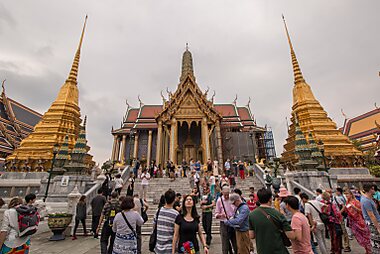
Bangkok is most travelers' starting point: the capital's temples, markets, and river make it worth two or three days before heading further afield.
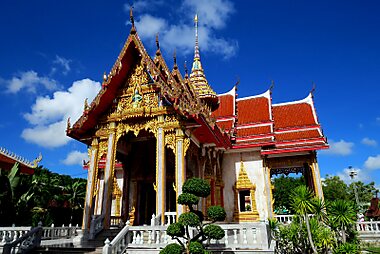
The north centers on Chiang Mai, a laid-back base for temple-hopping, cooking classes, and trekking, and Chiang Rai, known for striking modern temples and the hills toward the Golden Triangle.
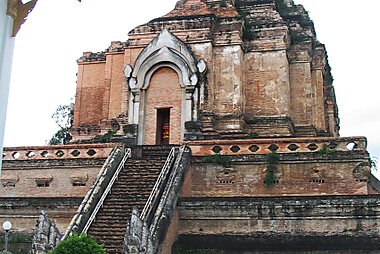
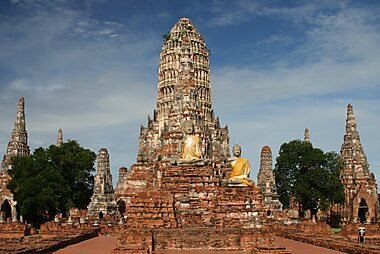
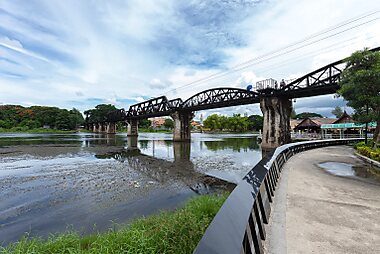
Central Thailand holds the country's historic capitals: Ayutthaya, a UNESCO World Heritage former capital an easy day trip from Bangkok, and Sukhothai, the birthplace of the Thai kingdom with an even quieter historical park. Kanchanaburi, near the Bridge on the River Kwai, combines wartime history with river and jungle scenery.
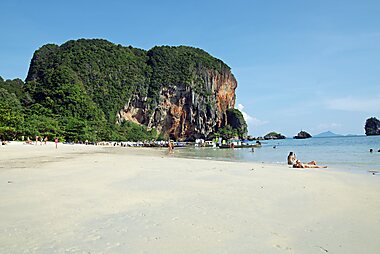
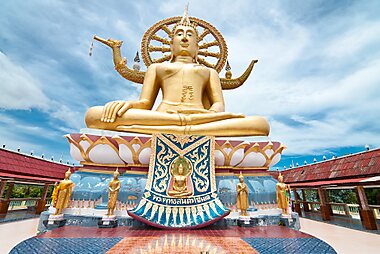
The south and the Gulf coast are Thailand's beach heartland: Phuket and Krabi for limestone cliffs and island-hopping on the Andaman side, Koh Samui for a more resort-style Gulf island, and Pattaya and Hua Hin for beach towns within easy reach of Bangkok.
Thailand – Plan Your Trip
Pick the places you want to see and Tripomatic turns them into a day-by-day route, with smart routing, time estimates, and everything you need for a perfect trip.




