



Bolivia
Bolivia is a landlocked country of extremes: the world's highest seat of government, the largest salt flat on Earth, and Amazon rainforest that spills into three neighboring countries. It packs the glittering white Salar de Uyuni, the pre-Inca ruins of Tiwanaku, and colonial silver-mining towns into an area about the size of France and Spain combined. Distances on the map matter less here than changes in altitude.
Bolivia suits travelers who don't mind a slower pace and a bit of physical challenge — most of the classic route sits above 3,500 meters, and buses often take longer than the map suggests. In return, it offers some of South America's least crowded major sights, a strong Aymara and Quechua culture still very much alive in daily life, and prices that remain a bargain by regional standards.


Bolivia – Planning a Trip?
Build your day-by-day itinerary in the Tripomatic app.


Money & payments
Bolivia's currency is the boliviano (BOB), rarely traded outside the country — exchange money after you arrive rather than beforehand.
ATMs are common in La Paz, Santa Cruz de la Sierra, Cochabamba and Sucre. They become unreliable once you leave the main cities, so withdraw cash before going to Uyuni, Rurrenabaque, or other rural areas. Cash is still needed for markets, local buses, and most small restaurants; card acceptance is largely limited to hotels and larger tourist-facing businesses.
Tours & Activities
Bolivia — Map

 Open the interactive map
 Tipping
Tipping is not part of Bolivian culture the way it is in North America. Upscale restaurants in La Paz and Santa Cruz sometimes add a service charge; where they don't, rounding up or leaving 10% is appreciated but not expected. Tour guides on multi-day trips, such as Salar de Uyuni tours, are the one place a tip is genuinely expected. Taxi drivers and bar staff do not expect tips.
round up or ~10% where no service charge
10-15% on multi-day tours
Electricity
Bolivia uses Type A and C plugs, but voltage is inconsistent — some buildings and older sockets still run 110 V even though the national standard is 230 V, so check the socket label before plugging in sensitive electronics.
Language
Spanish is Bolivia's most widely spoken language, alongside 36 official indigenous languages — Quechua and Aymara are common in daily life, especially on the Altiplano and in rural markets. English is spoken in upscale hotels and by tour guides in the main tourist destinations, but not much elsewhere. A few Spanish phrases make daily interactions much easier.
Staying connected
Prepaid SIM cards from Entel, Tigo or Viva are cheap and widely available at airports and shops in any city, with no real registration hassle for short-term visitors. Coverage is solid in cities and along main highways. It drops out completely on the Salar de Uyuni circuit, remote parts of the Altiplano, and the Amazon lowlands — download offline maps before you go to these areas.
Safety & emergencies
Bolivia is generally safe for tourists, though petty theft and pickpocketing happen in crowded markets, bus terminals, and tourist areas of La Paz. Avoid unmarked taxis late at night; use a radio taxi or a hotel-arranged driver instead. Road travel carries real risk on unpaved mountain routes, especially during the rainy season (November–March) — check conditions before long bus journeys.
Health
Altitude is the biggest health concern in Bolivia. La Paz sits above 3,600 meters, and Uyuni and Lake Titicaca are similarly high, so give yourself a day or two to adjust before strenuous activity, drink plenty of water, and consider coca tea, a traditional remedy for mild altitude symptoms. Tap water is not safe to drink; stick to bottled or purified water, including for brushing teeth in smaller towns.
Pharmacies (farmacias) are widely available in cities and can handle minor ailments; for anything more serious, private clinics in La Paz and Santa Cruz offer better care than public hospitals. Travelers heading into the Amazon lowlands around Rurrenabaque should check yellow fever vaccination requirements and take malaria precautions.
Visas & entry
Bolivia has relaxed its entry rules significantly: citizens of the EU, the UK, Australia, the United States, and Canada can now enter visa-free for tourism, typically for up to 90 days, after Bolivia dropped its visa requirement for US and Canadian travelers in December 2025. Nearly all visitors must complete Bolivia's free SIGEMIG online pre-registration before arrival. Citizens of a smaller number of other countries still need a visa, which can usually be arranged online in advance or on arrival at major border crossings and airports, and typically requires a passport photo, proof of onward travel, and a fee paid in cash.
Visa and entry requirements change frequently. Verify current requirements with the official immigration authority or your country's embassy before travel.
Etiquette
Ask before photographing people, especially indigenous women in traditional dress in markets and rural areas — a small tip is often expected in return. Chewing coca leaves or drinking coca tea is a normal, legal part of Andean life, not a drug reference, so don't be alarmed if it's offered to you. Dress modestly when visiting churches and religious sites, and remove hats when entering. Bargaining is common and expected in markets, but not in shops with fixed price tags.
Holidays & opening hours
Public holidays can close banks, offices, and intercity transport with little notice, especially around Carnival, when many towns hold multi-day celebrations. Most shops keep a long midday break, roughly 12:30–14:30, and close on Sundays outside the main tourist areas.
Getting around
- By air: Domestic flights connect La Paz, Santa Cruz de la Sierra, Cochabamba, Sucre and other main cities in under an hour, and are worth the cost given how long overland routes take through the Andes. Boliviana de Aviación (BoA) is the main domestic carrier.
- By bus: Long-distance coaches ("flotas") link every major town and are the backbone of budget travel. Book a "cama" (sleeper) seat for overnight routes, and expect delays on unpaved sections, especially in the rainy season.
- By train: Limited but scenic. One line connects Oruro, Uyuni, and towns further south; a separate eastern line runs from Santa Cruz de la Sierra toward the Brazilian border.
Rental cars work for the Sucre–Potosí road, but most travelers join an organized tour for the Salar de Uyuni circuit and other remote routes, since the roughest terrain needs a high-clearance vehicle and local knowledge.
Driving
- Speed limits: generally 40–50 km/h in towns and 70–80 km/h on the open road. Bolivia has few dedicated motorways, so the open-road limit typically applies on inter-city highways too — watch for posted signs, which override the default.
- Road conditions: Many rural and mountain roads are unpaved, narrow, and prone to landslides in the rainy season (November–March) — the North Yungas Road outside La Paz is the most famous example, now used mostly by cyclists rather than through traffic. Drive defensively and avoid night driving outside cities.
- Tolls: No nationwide vignette, but many interurban highways have staffed toll booths charging a small cash fee per vehicle.
- Parking: Street parking is common and inexpensive in most cities; paid guarded lots ("playas de estacionamiento") are worth using in La Paz and Santa Cruz.
- Fuel: Stations are staffed, not self-service. Ask for "gasolina especial" for regular petrol or "diésel oíl" for diesel; card payment is not always accepted, so carry cash.
- Electric vehicles: Charging infrastructure is minimal outside a few stations in La Paz and Santa Cruz — not yet practical for a road trip.
Food & drink
Breakfast is light — often just bread and coffee, or a cup of api, a hot, spiced purple-corn drink usually paired with a sugared pastry. The main meal of the day is lunch, typically a fixed-price "almuerzo" with soup, a main course and juice, eaten between noon and 2pm; dinner is smaller and later.
Bolivian food reflects its geography: hearty potato and meat dishes on the cold Altiplano, and lighter, rice- and cassava-based food in the tropical lowlands around Santa Cruz. Street food is everywhere — salteñas, juicy baked pastries, are a mid-morning institution, and market stalls sell everything from grilled skewers to fresh fruit juice. Singani, a grape spirit distilled at high altitude, is the national drink, often mixed with ginger ale into a chuflay.
Where to explore
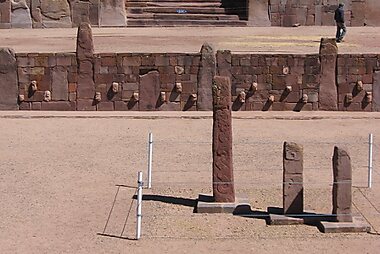
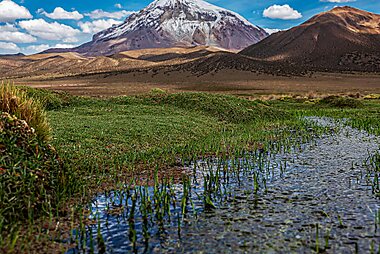
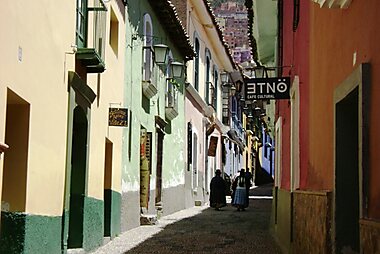
Bolivia's most-visited region is the western Andes, anchored by La Paz, the world's highest seat of government, where the Witches' Market and the colonial Calle Jaén sit a short walk from cable cars climbing to El Alto. The pre-Inca ruins of Tiwanaku lie an easy day trip from the city, and climbers head further out to Nevado Sajama, Bolivia's highest peak, near the Chilean border.
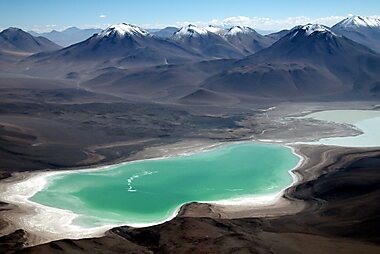
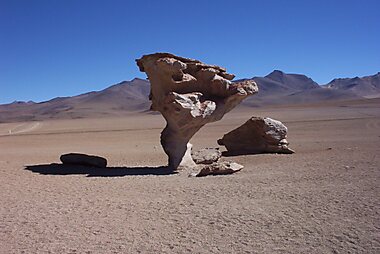
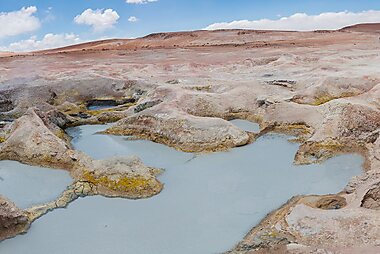
Most travelers continue to Uyuni, gateway to the blinding-white Salar de Uyuni. Multi-day 4x4 tours continue through otherworldly landscapes further south: the wind-carved Árbol de Piedra, the mineral-tinted Laguna Verde, geysers at Sol de Mañana, and the surreal Salvador Dalí Desert. The tours end near the Chilean border. On Lake Titicaca, Copacabana is the jumping-off point for Isla del Sol, the legendary birthplace of the Inca sun myth.
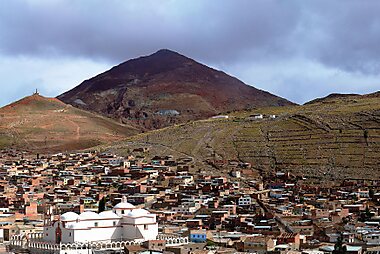
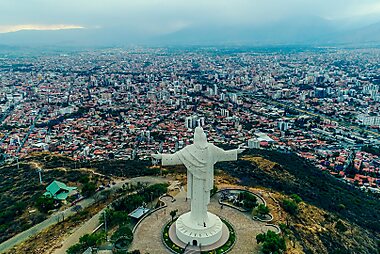
The colonial heartland to the south centers on Sucre, Bolivia's constitutional capital and a UNESCO-listed city of whitewashed colonial buildings, home to the House of Freedom. Nearby Potosí was once the richest silver-mining city in the world, sitting beneath Cerro Rico and its colonial National Mint of Bolivia. Wine country around Tarija rounds out the south. In the central valleys, Cochabamba is known for its mild climate, sprawling market, and the Cristo de la Concordia watching over the city from San Pedro Hill.
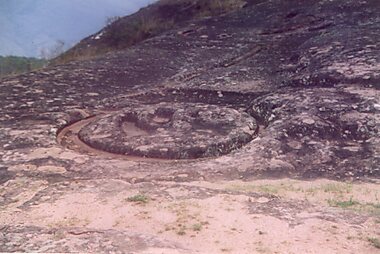
The eastern lowlands center on Santa Cruz de la Sierra, Bolivia's largest and most modern city, within reach of the pre-Columbian fort of Fuerte de Samaipata near Samaipata and the Jesuit Missions of Chiquitos. For the Amazon, most trips start from Rurrenabaque, the gateway to the rainforests and wetlands of Madidi National Park.
Bolivia – Plan Your Trip
Pick the places you want to see and Tripomatic turns them into a day-by-day route, with smart routing, time estimates, and everything you need for a perfect trip.


Related destinations


Data: © OpenStreetMap contributors, Wikidata, Wikipedia, Tripomatic, Official websites, geoBoundaries (CC BY 4.0). Tours by GetYourGuide. We earn commission from bookings. Travel guide generated with AI.