



Bucharest
Bucharest is Romania's capital and largest city. Wide, tree-lined boulevards and grand early-1900s buildings sit beside one of the biggest government buildings in the world, a legacy of decades of very different eras layered on top of each other. Locals once nicknamed it "Little Paris" for its Belle Époque architecture, and much of that character survives in the city centre.
The city rewards travelers who enjoy contrasts: quiet Orthodox churches tucked behind busy streets, parks built around lakes, and a cluster of restaurants and bars in the Old Town. It also makes an easy, affordable base for trips into the Carpathian Mountains. The composer George Enescu, one of Romania's most celebrated musicians, is honored across the city, from a dedicated museum to the philharmonic orchestra that carries his name.

Bucharest – Planning a Trip?
Build your day-by-day itinerary in the Tripomatic app.


When to visit
Spring (April–May) and autumn (September–October) are the most pleasant times to visit, with mild days and thinner crowds. Summers get hot, with July and August afternoons often passing 30°C. Winters are cold and sometimes snowy, but bring a festive mood to the streets.
Time a winter trip around Bucharest's Christmas Market, held from late November into early January around University Square and Piața Constituției — one of the largest in the region.
Best time to visit: May, September, October
Top sights


Palace of the Parliament is one of the largest administrative buildings in the world and the heaviest building on record, built under Nicolae Ceaușescu in the 1980s. Guided tours cover only a fraction of its more than 1,000 rooms, but even a short visit gives a sense of its scale.
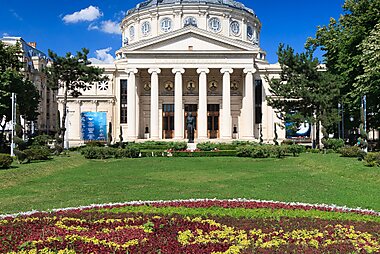
Romanian Athenaeum is Bucharest's main concert hall and home to the George Enescu Philharmonic Orchestra. Its domed, columned facade is one of the city's most photographed buildings.
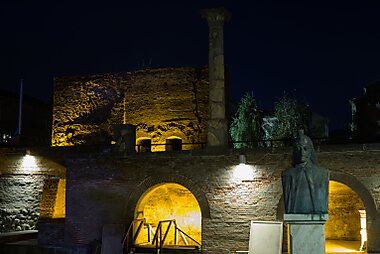
Old Princely Court marks the site of the 15th-century princely court traditionally linked to Vlad the Impaler, whose 1459 document is considered Bucharest's founding record. The ruins sit at the heart of the Old Town, surrounded by cafes and bars.
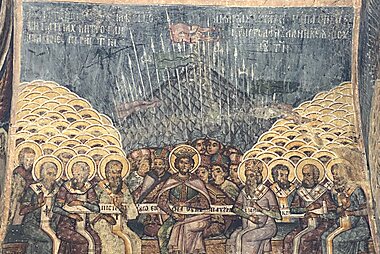
Stavropoleos Monastery is a small Orthodox monastery church tucked behind the Old Town's main streets, known for its detailed stone carving and calm courtyard.
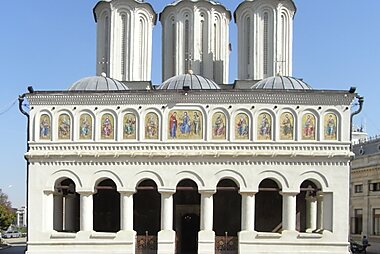
Romanian Patriarchal Cathedral is the seat of the Romanian Orthodox Church, set on a hill above the city center.
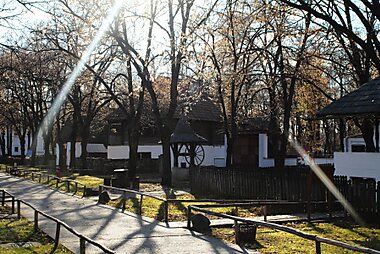
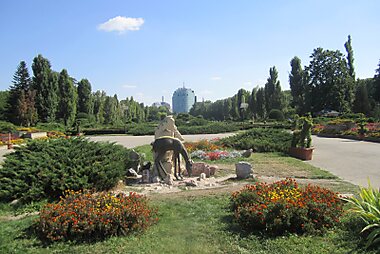
Dimitrie Gusti National Village Museum is an open-air museum with more than 100 traditional houses, churches, and windmills brought from villages across Romania. Set beside Herăstrău Lake, it makes an easy half-day visit.
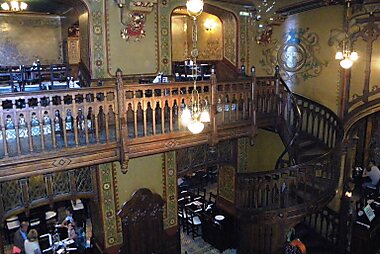
Cărturești Carusel is a bookshop built inside a restored early-1900s bank, with a dramatic spiral staircase and skylight running through several floors. It's one of Bucharest's most photographed interiors.
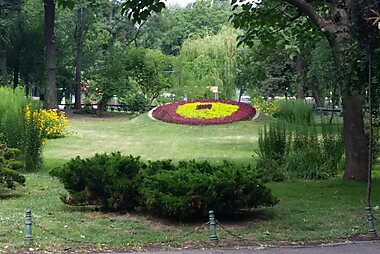
Cismigiu Gardens is a central park built around a small lake, with shaded paths and a bandstand — a good place to slow down after a day of sightseeing.
Featured Lists

Editor's Choice Highlights
This selection highlights Bucharest’s rich cultural and historic heritage through iconic locations such as the centrally located Cișmigiu Gardens, the open-air Dimitrie Gusti National Village Museum showcasing traditional Romanian village life, the solemn Carol Park Mausoleum, and distinctive urban artworks and passages that reflect the city’s architectural and artistic diversity.
5 places


What to experience
A few Bucharest rituals are worth building into a visit beyond the main sights.
- Rent a rowboat or pedal boat on the lake in Herăstrău Park, a popular weekend activity for locals.
- Spend an afternoon at Therme București, one of Europe's largest thermal-spa and water-park complexes, about 30 minutes from the centre.
- Browse the antique shops and art stalls along Strada Hanul cu Tei in the Old Town.
Tours & Activities
Bucharest — Map

 Open the interactive map
 Day trips
Bucharest makes a good base for exploring Wallachia and the Carpathian foothills, whether by train, car, or an organized tour.
- Mogoșoaia — about 30 minutes by car. An 18th-century Brâncovenesc-style palace set beside a lake, with gardens that make an easy half-day trip.
- Snagov — about 45 minutes by car. A forested lake popular for walks and boating, with a small monastery on an island said to hold Vlad the Impaler's grave.
- Sinaia — about 2 hours by train. A mountain town built around Peleș Castle, a lavish 19th-century royal residence in the Carpathian foothills.
- Brașov and Bran — about 2.5–3 hours by train or car. A well-preserved Transylvanian old town sits below Tâmpa Mountain, home to a large hillside sign like the Hollywood sign, and a hilltop castle nearby is marketed as "Dracula's Castle" despite a thin historical connection to the novel.
Getting there
- By air: Henri Coandă International Airport (OTP), Romania's main gateway, is north of the city in Otopeni. A direct train reaches Gara de Nord in about 25 minutes; Express Bus 100 takes 40–50 minutes. Book a taxi at the airport's official yellow terminals, or use Uber or Bolt, for a 30–50 minute ride depending on traffic.
- By train: Gara de Nord is Bucharest's main station, with domestic connections to Brașov, Cluj-Napoca, Sibiu, Iași, and Constanța, and international routes to Budapest, Vienna, Chișinău, and Sofia. CFR Călători
- By bus: Long-distance coaches from other Romanian cities and neighboring countries arrive at terminals near Gara de Nord.
Getting around
- Metro: Metrorex is the fastest way to cross the city and avoids surface traffic. Tap a contactless bank card or phone directly at the turnstiles, or buy a card from the orange vending machines in stations.
- Trams, buses, and trolleybuses: Run by STB and reach areas the metro doesn't. Tap a contactless card directly on board, the same way as the metro. STB
- Taxi / ride-hailing: Uber and Bolt both operate widely and show the price upfront.
- On foot: The centre and Old Town are compact and walkable, though the city spreads out widely beyond them.
Driving
- Car needed? No — traffic is heavy, the one-way system in the centre is confusing, and public transport covers the main sights well. A car is more useful for day trips into the Carpathians.
- Parking: Metered on-street parking operates in much of the centre, usually paid via a parking app or SMS; guarded car parks near major sights cost more but save time.
- Restrictions: No congestion charge, but traffic on the main boulevards gets heavy at rush hour — avoid driving through the centre during morning and evening peaks.
Food & drink
Bucharest's food scene mixes hearty Romanian classics with a growing number of modern restaurants and craft breweries. For something distinctive, Caru' cu Bere is a beer hall with a Neo-Gothic facade and Art Nouveau interior, serving traditional Romanian grill dishes since 1879 — reserve ahead, as it's popular with both visitors and locals.
For a wider spread, head to the Old Town's streets and covered passages, including Pasajele Macca-Villacrosse, where cafes, wine bars, and restaurants cluster together. At lunch, ask for the meniu zilei — a fixed-price daily menu that's common and good value.
Safety & health
Bucharest is generally safe for tourists, with low rates of violent crime. Watch for pickpockets in crowded spots like the metro, Old Town nightlife streets, and popular sights.
The most common tourist scam involves unmarked taxis overcharging at the airport and Gara de Nord. Book a taxi at the airport's official yellow terminals, or use Uber or Bolt, which show the price upfront before you ride.
History
Bucharest's name is said to come from a shepherd called Bucur, though the city's documented history starts with Vlad the Impaler, the Wallachian ruler whose 1459 charter is the earliest surviving mention of the city, issued from the fortress that once stood at Old Princely Court.
By the early 20th century, wide boulevards and Beaux-Arts mansions earned Bucharest the nickname "Little Paris." A major 1977 earthquake and decades of Communist-era demolition later reshaped the old city — under Nicolae Ceaușescu, entire neighborhoods were cleared to build Palace of the Parliament, and crowds later gathered at University Square during the anti-Communist revolts of December 1989 that ended his rule.
Country facts
Quick practical facts for Romania at a glance:
- Currency
- Romanian Leu RON lei · Card payments · Widely accepted
- Emergency numbers
- 112
- Electricity
- 230 V · 50 HzType C / Type F
- Languages
- Romanian
- Tap water
- Safe to drink
- Driving side
- Right
- Calling code
- +40


Bucharest – Plan Your Days
Turn the places from this guide into a real itinerary, with smart routing, time estimates, and everything you need for a perfect trip.

Related destinations


Data: © OpenStreetMap contributors, Wikidata, Wikipedia, Tripomatic, Official websites, geoBoundaries (CC BY 4.0). Tours by GetYourGuide. We earn commission from bookings. Travel guide generated with AI.