



Romania
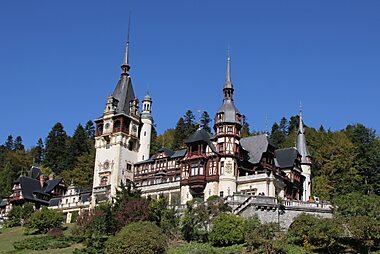
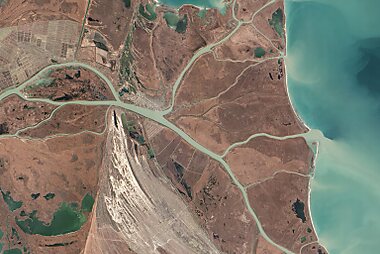
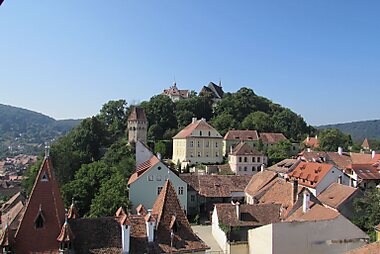
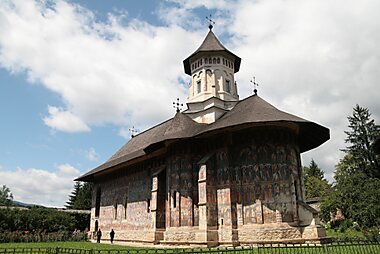
Romania stretches from the Carpathian Mountains' forested peaks to Black Sea beaches and the wetlands of the Danube Delta. Transylvania, in the country's center, holds fortified Saxon towns, Gothic citadels like Sighisoara Citadel, and castles that inspired Bram Stoker's Dracula, including Bran Castle and the royal Peles Castle. Bucharest, the capital, mixes Belle Époque boulevards with the massive Palace of the Parliament, one of the largest administrative buildings in the world. In the north, painted monasteries like Voronet Monastery cover their outer walls in centuries-old frescoes.
Romania suits travelers who want medieval towns, mountain scenery, and low prices without the coach-tour crowds of Western Europe. It is a full Schengen member, so land border crossings from other Schengen countries need no passport check. The country still uses its own currency, the leu, and public transport and museum entry cost a fraction of what they do further west.




Romania – Planning a Trip?
Build your day-by-day itinerary in the Tripomatic app.


Money & payments
Romania's currency is the leu (plural lei); the country has no set date to adopt the euro, so expect to use cash or cards in lei for the foreseeable future.
ATMs are widely available in cities and towns, and cards work in most restaurants, hotels, and shops. Carry cash for small guesthouses, rural markets, and minibuses, where card readers are less common. Romania is one of the least expensive countries in the EU for food, transport, and accommodation.
Featured Lists

Romania Essentials
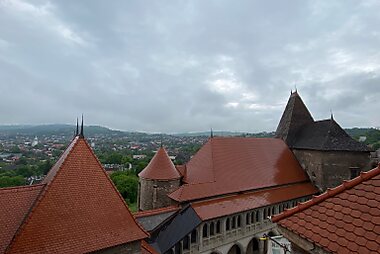
Romania's architectural heritage spans from the world’s second-largest administrative building, the Palace of the Parliament, to the fairytale Neo-Renaissance Peleș Castle and the Gothic Corvin Castle. The list features the legend-shrouded Bran Castle and the underground amusement park within the Turda Salt Mine. In Bucharest, the Romanian Athenaeum showcases neoclassical design, while the Stavropoleos Monastery highlights the intricate Brâncovenesc style. Historic districts like Lipscani and the open-air Dimitrie Gusti National Village Museum provide insights into the country's urban evolution and rural ethnographic traditions.
13 places


Natural Wonders of Romania
Romania's natural landscape features a diverse array of geological and hydrological formations. This collection includes Lake Saint Anne, the country's only volcanic crater lake, and the Scărișoara Glacier Cave, home to one of the largest underground glaciers in the world. The list highlights the 90-meter Cascada Cailor, the saline heliothermal waters of Bear Lake, and the limestone formations of the Bicaz Gorges. It also covers urban green spaces like Bucharest’s 19th-century Cișmigiu Gardens and the glacial landscapes of the Retezat Mountains.
20 placesTours & Activities
Romania — Map

 Open the interactive map
 Tipping
Tipping is customary but modest. In restaurants, 10% is typical for good service, often left in cash even when paying by card. Taxi drivers usually get a round-up rather than a percentage. Hotel staff and tour guides appreciate a few lei or euros for good service; tipping in bars and cafes is optional.
~10%
round up
a few lei or euros for good service
5-10%
Electricity
Romania uses Type C and F plugs at 230 V / 50 Hz — standard European two-pin sockets. Chargers for phones, cameras, and laptops already handle this voltage, so only travelers from outside continental Europe typically need an adapter.
Language
Romanian is the official language, a Romance language that is unusual in a region otherwise dominated by Slavic and Hungarian tongues; travelers with some French, Italian, or Spanish will recognize many words. It is written in the Latin alphabet, unlike several of Romania's neighbors, so signs and menus are easy to read even without knowing the language. English is common in Bucharest, Transylvania's tourist towns, and among younger people; German and Hungarian are also widely spoken in parts of Transylvania.
Staying connected
If you have an EU or EEA mobile plan, it works in Romania at no extra cost under EU roaming rules. Visitors from outside the EU can buy a prepaid SIM from Orange, Vodafone, or Digi at the airport or any phone shop; bring your passport for registration. Coverage is strong even in rural and mountain areas, thanks to widespread 4G and growing 5G networks.
Safety & emergencies
Romania is a safe country for tourists, and violent crime against visitors is rare. The most common issues are pickpocketing on crowded trains and in tourist areas of Bucharest and Brașov, plus unlicensed taxis overcharging at airports and train stations — use a metered or app-based taxi, or agree on a fare first. Stray dogs are common in some cities, including Bucharest; they are usually harmless but best avoided at night. The single emergency number 112 reaches police, ambulance, and fire across the country and is answered in English.
Health
Tap water is generally safe to drink in Bucharest and other major cities, though it can taste heavily chlorinated; bottled water is cheap and widely available if you prefer it, especially in rural areas. Pharmacies, marked "Farmacie," are common in cities and towns, with green cross signs, and pharmacists often speak some English. Larger cities have 24-hour pharmacies on rotation. No special vaccinations are required beyond routine immunizations; hikers in forested areas in spring or summer should check for ticks afterward.
Visas & entry
Romania is a full member of the Schengen area and the European Union. Citizens of EU and EEA countries can enter with a valid ID card or passport and stay indefinitely. Citizens of the United States, United Kingdom, Canada, Australia, and many other countries can enter visa-free for stays of up to 90 days within a 180-day period, the same rule that applies across the rest of the Schengen area. Travelers who need a visa can apply for a Schengen visa through a Romanian embassy or consulate before travel.
Visa and entry requirements change frequently. Verify current requirements with the official immigration authority or your country's embassy before travel.
Etiquette
Greetings are usually a handshake, with cheek kisses common between women and between men and women who know each other well. Dress modestly when visiting Orthodox monasteries and churches: cover shoulders and knees, and women may be asked to cover their hair. Bargaining is not expected in shops or restaurants but is sometimes acceptable at outdoor markets. Giving an odd number of flowers is customary when presenting a bouquet, since even numbers are associated with funerals. Photography is generally welcome, but ask before photographing people directly, especially in villages and at religious sites during services.
Holidays & opening hours
Public holidays can close banks, offices, and many shops, especially around Christmas, New Year, and Easter, which follows the Orthodox calendar and can fall later than in Western Europe. Transport keeps running on most holidays, but with reduced schedules. Shops in cities are generally open daily including Sunday, though smaller towns may see shorter hours or closures on Sunday afternoons.
Getting around
- By train: CFR Călători, the national rail operator, connects major cities, though journeys can be slow on non-modernized lines; book tickets through CFR Călători.
- By bus: Intercity buses and minibuses (maxi-taxi) are often faster than trains and reach towns without rail service, including Sighisoara.
- By air: Domestic flights connect Bucharest with Cluj-Napoca, Iași, Timișoara, and other regional cities, useful for covering Romania's longer distances quickly.
- By car: Renting a car is the easiest way to see Transylvania's castles and villages at your own pace; see the driving section below.
Bucharest has a metro system plus buses and trams; tickets are sold as rechargeable cards or via mobile apps, and must be validated on board buses and trams.
Driving
- Speed limits: 50 km/h in towns, 90 km/h on rural roads, and 130 km/h on motorways. Drivers in their first year of licensing must drive 20 km/h slower than the posted limit outside built-up areas.
- Key rules: Romania has zero tolerance for alcohol — any detectable amount is an offense. Headlights must stay on at all times, even in daylight.
- Tolls and vignettes: A plate-registered electronic vignette (rovinieta) is required on national roads, expressways, and motorways for cars and other four-wheeled vehicles (motorcycles are exempt). Buy it online before you drive at roviniete.ro, at border crossings, or at post offices; a short-stay pass of a few days covers a typical visit.
- Parking: Paid parking zones operate in city centers, usually pay-by-app or by meter; free parking is common outside the centers.
- Fuel: Stations are self-service and take cards; rural stations may be cash-only. Petrol is labeled Benzină and diesel as Motorină.
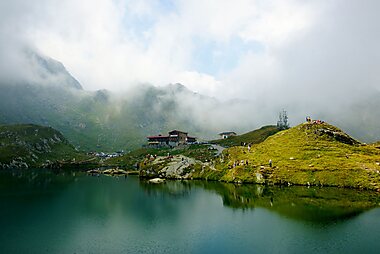
- Mountain driving: The Transfagarasan Panorama and other high mountain roads close in winter and get crowded with sightseers in summer; drive cautiously on hairpin bends shared with cyclists and slow-moving trucks.
Food & drink
Romanian food blends Balkan, Hungarian, and Ottoman influences with hearty, home-style cooking. Breakfast is often bread, cheese, cold cuts, and eggs; lunch is the main meal for many Romanians, typically starting with a soup called ciorbă, a sour broth made with vegetables, meat, or tripe. Sarmale, cabbage or grape leaves stuffed with minced meat and rice, is the closest thing to a national dish, usually served with polenta and sour cream.
Grilled minced-meat rolls called mici are a summer staple, cooked at outdoor grills and street stalls. Papanași, fried dough balls topped with sour cream and jam, is a popular dessert. Țuică, a strong plum brandy, is the traditional drink for toasts and is often homemade in villages; wine is also widely produced, especially in Transylvania and Moldavia.
Locals eat at casual restaurants and traditional taverns for sarmale and grilled meats, and at bakeries and street stalls for quick snacks like covrigi, a chewy pretzel-like bread. Markets are common for cheap, fresh produce and dairy between sightseeing stops.
Where to explore
Romania's most visited destinations run from the capital through Transylvania's medieval towns to the Black Sea coast.
Cities: Bucharest, the capital, mixes Belle Époque architecture, Communist-era monuments, and the bar-filled Old Town district. Cluj-Napoca, Transylvania's largest city, has a historic center and one of Romania's largest student populations. Timisoara, near the Serbian and Hungarian borders, is known for its Habsburg-era architecture and role in the 1989 revolution that ended Communist rule. Iasi, in the northeast, is Moldavia's historic and cultural capital, with grand churches and university buildings.
Transylvanian towns: Brasov, at the foot of the Carpathians, is a base for visiting nearby castles and mountains. Sibiu, a former Saxon stronghold, has a well-preserved old town of pastel houses and fortified towers. Sighisoara is a fortified medieval citadel still lived in today, and the birthplace of Vlad the Impaler.
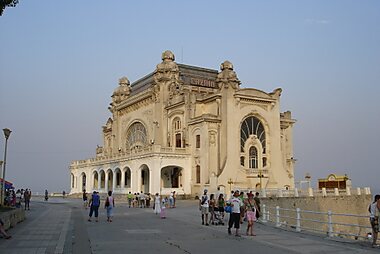
Black Sea coast: Constanta, Romania's main port city, has Roman-era ruins alongside beach resorts stretching south along the coast.
Romania – Plan Your Trip
Pick the places you want to see and Tripomatic turns them into a day-by-day route, with smart routing, time estimates, and everything you need for a perfect trip.


Related destinations


Data: © OpenStreetMap contributors, Wikidata, Wikipedia, Tripomatic, Official websites, geoBoundaries (CC BY 4.0). Tours by GetYourGuide. We earn commission from bookings. Travel guide generated with AI.