



Cairo
Cairo is the modern heart of a region with more than 5,000 years of history, and today it is Africa's largest metropolis, home to more than 20 million people in the greater urban area. The Nile splits the city in two, and the open desert begins right at its western edge. Few cities pack this much history into one visit: thousands of years of pharaonic, Islamic, and modern history sit within a short taxi ride of each other.
A visit here suits travelers who want to see world-famous ancient sites without giving up city life — museums, markets, and Nile-side cafes are as much a part of the experience as the monuments themselves. Cairo is crowded, loud, and always moving; it rewards visitors who stay patient and flexible. The Nobel Prize-winning novelist Naguib Mahfouz spent his life writing about the city's streets and cafes, and many of the neighborhoods he described are still recognizable today.

Cairo – Planning a Trip?
Build your day-by-day itinerary in the Tripomatic app.


When to visit
Cairo has a hot desert climate. Winter (December to February) is mild and pleasant, spring and autumn are warm, and summer (June to September) is extremely hot with little relief after dark. Rain is rare year-round.
Plan around Ramadan if you can. Its dates shift each year with the Islamic lunar calendar, but during the month many restaurants and shops close during the day and reopen after sunset, when the city fills with lantern-lit streets, special foods, and an evening energy unlike the rest of the year. Expect shorter daytime opening hours before iftar.
Best time to visit: January, February, March, April, November, December
Top sights


Great Pyramid of Khufu is the last surviving wonder of the ancient world, and still the main reason most travelers come to Cairo. It sits on the Giza plateau alongside two smaller pyramids and Great Sphinx of Giza, carved from a single block of limestone over 4,500 years ago.
Grand Egyptian Museum sits close to the pyramids and holds the full Tutankhamun collection along with thousands of other pharaonic artifacts, in one of the largest archaeological museums in the world.
Egyptian Museum, in Tahrir Square, is the older of Cairo's two great Egyptology museums, still packed with treasures found long before the newer museum opened.
Khan el-Khalili is Cairo's historic covered market, packed with spice, perfume, and souvenir stalls in alleys that have traded goods since the 14th century.
Salah El Din Citadel, a medieval hilltop fortress, gives the best panoramic view over the old city and holds the 19th-century Mosque of Muhammad Ali inside its walls.
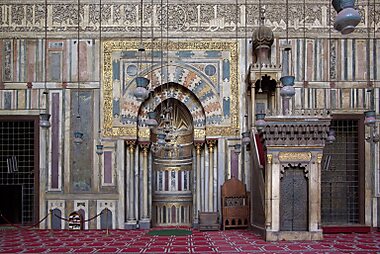
Mosque of Ahmad Ibn Tulun is one of the oldest mosques in Egypt still in its original form, known for its spiral minaret and huge open courtyard.
Hanging Church, built above an old Roman gate, is the centerpiece of Coptic Cairo, a walled quarter of churches and a synagogue tracing Egypt's Christian history back to its earliest centuries.
Featured Lists


What to experience
Cairo is best experienced from the Nile itself and in its old coffeehouses, not only from its monuments.
- Sail the Nile at sunset on a traditional wooden felucca — no engine, just the wind, with the sky turning orange behind the skyline.
- Watch a Tanoura (whirling dervish) performance at Wikala al-Ghuri, a free, high-energy show of spinning dancers held in a restored 16th-century merchants' hall.
- Order tea or coffee and a shisha pipe at a downtown ahwa (coffeehouse), where backgammon games run late into the night.
- Ride the elevator up Cairo Tower at sunset for a 360-degree view over the Nile as the city lights come on.
Tours & Activities
Cairo — Map

 Open the interactive map
 Day trips
Some of Egypt's most important ancient sites sit within a short drive of Cairo, from pyramid fields quieter than Giza to a lush oasis and the Mediterranean coast.
- Saqqara and Dahshur — about 45–60 minutes by car. Home to the Step Pyramid of Djoser, Egypt's oldest stone pyramid, and the smooth-sided Bent and Red Pyramids at Dahshur, earlier experiments that came before Giza's design. Far fewer crowds than Giza.
- Memphis — about 45 minutes by car, usually combined with Saqqara. An open-air museum on the site of ancient Egypt's first capital, with a huge fallen statue of Ramses II.
- Faiyum Oasis — about 1.5–2 hours by car. A lake, palm groves, and waterfalls at Wadi El Rayan, plus the UNESCO-listed Wadi Al-Hitan (Whale Valley), where 40-million-year-old whale skeletons sit exposed in the desert.
- Alexandria — about 2.5–3 hours by train. Egypt's Mediterranean port city, with a breezier, more relaxed feel than Cairo, a modern Bibliotheca Alexandrina, and Greco-Roman ruins from its ancient past.
Where to explore
Giza is technically its own city, but it sits directly across the Nile from central Cairo and functions as part of the same metropolis. It's where the pyramids, the Sphinx, and the Grand Egyptian Museum are located, and most visitors treat it as an extension of a Cairo stay rather than a separate trip.
Getting there
- By air: Cairo International Airport (CAI) is the main gateway, about 15 km northeast of downtown. A taxi or ride-hailing car to the center takes 30–45 minutes depending on traffic and costs roughly 150–300 EGP; there is no direct train link to the airport.
- By train: Ramses Station is Cairo's main rail hub, with connections to Alexandria (about 2.5 hours) and overnight sleeper trains south to Luxor and Aswan. Online booking through Egyptian National Railways is limited for foreign passport holders — buying tickets at the station or through a travel agent is more reliable.
- By bus: Long-distance coaches to Alexandria, the Red Sea coast, and Sinai leave from terminals including Cairo Gateway (Turgoman) and Almaza.
Getting around
- Metro: The Cairo Metro is Africa's oldest and one of its busiest, with three lines covering much of the city. Buy a paper ticket at a station window or vending machine before each ride, or use a rechargeable contactless card for repeat trips; one car per train is reserved for women only.
- Taxi / ride-hailing: Street taxis rarely use their meters, so agree on a price before getting in, or use Uber or Careem, which set the fare upfront and are the practical default for most visitors.
- On foot: Downtown, Islamic Cairo, and Zamalek are walkable in parts, but sidewalks are inconsistent and crossing wide roads takes some nerve — Cairenes cross in gaps between moving cars rather than waiting for a signal.
Driving
- Is a car worth it?: No. Cairo traffic is dense and largely unmarked, stressful even for confident drivers; drivers routinely ignore lane markings and traffic signals. Taxis, ride-hailing, and organized day trips cover the city and nearby sites without the hassle.
- Parking: Hotels generally offer valet parking. Street parking is informal, with attendants who expect a small tip for watching the car.
- Restrictions: No congestion charge or low-emission zone, but central streets around Tahrir Square and the Citadel see heavy security checkpoints and occasional closures.
Food & drink
Cairo's food scene runs from street-side carts to Nile-view fine dining, but the everyday classics are best found at simple, no-frills counters rather than restaurants aimed at tourists.
For a good concentration of options, head to Zamalek or Downtown for the wider restaurant and café scene, or to the alleys around Khan el-Khalili for historic coffeehouses serving tea and shisha. Alcohol is only served in some restaurants, bars, and hotels rather than everywhere, so don't expect it with every meal.
Safety & health
Cairo is generally safe for tourists; violent crime against visitors is rare. The more common issues are petty scams: unsolicited "guides" near the pyramids and Khan el-Khalili who push tours or shops, perfume or papyrus sellers offering a "free gift" that comes with pressure to buy, and camel or horse handlers at Giza who demand a large tip mid-ride before letting you off. Agree on any price out loud, with a witness if possible, before you start.
Traffic is the biggest everyday hazard — pedestrians do not have the right of way, and crossing busy streets means watching gaps in traffic rather than waiting for a signal. Small tips (baksheesh) are commonly expected for minor services, like bathroom attendants or unsolicited "help," even when not asked for.
Women traveling alone may face street harassment, including staring and comments. Dressing modestly and traveling with others in the evening reduces most of it, and the women-only metro car is a reliable option when public transit feels uncomfortable.
History
Cairo as a city dates to 969 CE, when Fatimid conquerors founded al-Qahira ("the victorious") as a new capital north of the older garrison town of Fustat. The area's history goes back far further, though: the pyramids at Giza and the pharaonic capital of Memphis nearby predate the city itself by more than 3,500 years, which is why Cairo is often described as a young city built beside an ancient one.
Successive dynasties left their mark on the skyline. The Fatimids founded Al-Azhar Mosque in 970 CE, one of the world's oldest continuously operating universities, and later Mamluk sultans added grand mosque-madrasas like Sultan Hassan Mosque. Centuries later, the Ottoman-appointed ruler Muhammad Ali Pasha rebuilt Egypt's military and economy and crowned his rule with the mosque that still bears his name atop Salah El Din Citadel.
Country facts
Quick practical facts for Egypt at a glance:
- Currency
- Egyptian Pound EGP LE · Card payments · Cash preferred
- Electricity
- 220 V · 50 HzType C / Type F
- Languages
- Arabic
- Tap water
- Not safe to drink
- Driving side
- Right
- Calling code
- +20


Cairo – Plan Your Days
Turn the places from this guide into a real itinerary, with smart routing, time estimates, and everything you need for a perfect trip.


Related destinations


Data: © OpenStreetMap contributors, Wikidata, Wikipedia, Tripomatic, Official websites. Tours by GetYourGuide. We earn commission from bookings. Travel guide generated with AI.