



Egypt
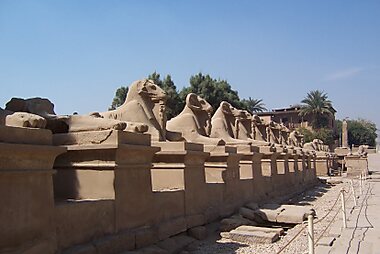
Egypt is built around the Nile River, which cuts a green ribbon through desert for the length of the country. Most travelers come for the ancient monuments: the pyramids and Sphinx at Giza, the temples and tombs around Luxor, and the Nubian sites near Aswan. The Great Pyramid of Giza is the only one of the ancient world's Seven Wonders still standing today. Beyond the monuments, Egypt has two very different coastlines: Red Sea resort towns such as Hurghada and Sharm el-Sheikh draw divers and beachgoers, while the Mediterranean coast around Alexandria has a calmer, more historic feel.
Egypt suits travelers who want to combine history with sunshine. First-timers usually pair a few days in Cairo with a flight or Nile cruise to Luxor and Aswan, then finish with time on the Red Sea coast. Independent travelers looking for quieter scenery can head to Western Desert oases such as Siwa, or to diving towns like Dahab on the Sinai Peninsula.




Egypt – Planning a Trip?
Build your day-by-day itinerary in the Tripomatic app.


Money & payments
ATMs are common in cities and resort towns and dispense Egyptian pounds. Carry cash for taxis, small vendors, and markets — many everyday purchases outside hotels and larger restaurants are cash-only. Keep a stock of small EGP notes on hand, since change is often in short supply and small notes are needed for tips.
Featured Lists


Tours & Activities
Egypt — Map

Tipping
Tipping — known locally as baksheesh — is expected across far more services in Egypt than in most countries.
- Restaurants: around 10% is standard if a service charge isn't already included.
- Taxi and ride-hailing drivers: rounding up is common; a small tip is appreciated for longer trips.
- Hotel staff: a small note for porters, housekeeping, and anyone who helps you directly.
- Tour guides and drivers: tip more generously than you might at home, especially on multi-day trips.
- Felucca captains and boat crews: a tip at the end of a Nile trip is customary.
10%
round up
20-50 EGP per service
100-200 EGP/day
Electricity
Egypt uses Type C and F plugs at 220 V / 50 Hz — standard European-style two-pin sockets.
Language
Arabic is the official language and is written in Arabic script. Road signs and menus outside tourist areas are often Arabic-only, so a translation app is genuinely useful here. English is widely understood in hotels, tour operations, and restaurants in Cairo, Luxor, Aswan, and the Red Sea and Sinai resorts, but far less so elsewhere.
Staying connected
A local SIM or eSIM is easy to buy from Vodafone, Orange, or Etisalat at the airport or any phone shop — bring your passport, since registration is required. Coverage is strong in cities and resort areas, but can drop off in the desert and along quieter stretches of the Nile Valley.
Safety & emergencies
Egypt is generally safe for tourists, and violent crime against visitors is rare. The most common issues are aggressive touts and overcharging around major sights, plus chaotic traffic, which is best avoided on foot after dark on major roads in Cairo. Tourist areas, cruise routes, and the Red Sea coast see a heavy police and tourism-police presence, and a dedicated tourist police line (126) exists to help foreign visitors with scams, lost documents, or disputes.
Health
Tap water isn't safe to drink — stick to bottled or filtered water, including for brushing teeth. Pharmacies are widespread in cities and can handle most minor ailments; look for a green cross sign. Talk to a doctor about recommended vaccinations, such as hepatitis A and typhoid, before traveling, and pack anti-diarrheal medication as a precaution.
Visas & entry
Most nationalities need a visa to enter Egypt, though many can get one on arrival at major airports or apply in advance through the official e-Visa portal, visa2egypt.gov.eg. A handful of nationalities can enter visa-free for a short stay. The standard tourist visa allows a single 30-day stay.
Visa and entry requirements change frequently. Verify current requirements with the official immigration authority or your country's embassy before travel.
Etiquette
Dress modestly, especially at mosques and churches — cover shoulders and knees, and women should carry a scarf for active mosques. Remove shoes before entering a mosque's prayer hall. During Ramadan, avoid eating, drinking, or smoking in public during daylight hours out of respect, even though many restaurants stay open for tourists. Bargaining is expected in bazaars, such as Khan el-Khalili, and with taxi drivers who don't use a meter, but not in shops with marked prices. Ask before photographing people, especially near religious sites or in rural areas.
Holidays & opening hours
Public holidays mostly affect banks and government offices; many shops and restaurants stay open as usual. During Ramadan, hours shift: shops and offices often open later and close earlier in the afternoon, then reopen in the evening after the fast breaks, when streets stay lively late into the night.
Getting around
- By train: Egyptian National Railways connects Cairo, Alexandria, Luxor, and Aswan; overnight sleeper trains run between Cairo and Aswan. Foreigner online booking is limited, so it's often easiest to book through a travel agent or buy tickets at the station. See Egyptian National Railways for schedules.
- By air: domestic flights save significant time between Cairo and Luxor, Aswan, or the Red Sea resorts — worth it if you're short on time.
- By bus: long-distance coaches link most cities and are the practical way to reach Sinai and the Red Sea coast from Cairo.
- By Nile cruise: a multi-day cruise or smaller dahabiya sailing between Luxor and Aswan is a popular way to see temple sites along the river.
Cairo also has a metro system, useful for skipping the city's traffic; buy a paper ticket or rechargeable card at any station.
Driving
- Speed limits: generally 60 km/h in urban areas, 90 km/h on rural roads, and 100–120 km/h on desert highways, though signposted limits vary by road.
- Traffic: driving in Cairo and other big cities is chaotic, with few enforced lane rules — many visitors prefer to hire a driver rather than self-drive in urban areas.
- Tolls: desert highways and bridges, including routes linking Cairo, Alexandria, and the Red Sea coast, charge cash tolls at booths along the way; there's no digital vignette system.
- Parking: informal attendants often direct and watch over street parking for a small tip; paid car parks are common near major sights and hotels.
- Fuel: stations are attended, not self-service. Ask for "Octane 92" or "Octane 95" for petrol and "Solar" for diesel; cash is the safest bet, though some city stations take cards.
- Electric vehicles: charging is very limited outside a handful of stations in Cairo and Red Sea resort towns — not yet practical for a self-drive EV trip.
Food & drink
Breakfast in Egypt is often ful medames (mashed fava beans) or ta'ameya (Egyptian-style falafel made with fava beans instead of chickpeas), scooped up with fresh baladi bread. Lunch is usually the main meal of the day, eaten in the early-to-mid afternoon, while dinner tends to be lighter and later.
Koshari — a filling mix of rice, lentils, macaroni, chickpeas, crispy onions, and spiced tomato sauce — is Egypt's best-known comfort food. Other dishes worth trying include molokhia (a garlicky green soup), stuffed pigeon, and grilled kofta and kebab from street grills. For something sweet, look for konafa and basbousa, plus fresh sugarcane juice and hibiscus tea (karkade), served hot or cold.
Cities have everything from simple street stalls and koshari counters to sit-down restaurants, and sharing food at a casual local spot is often the best way to try a range of dishes. Tea and Arabic coffee are central to daily life and hospitality — expect to be offered a glass whenever you visit someone's home or shop.
Where to explore
Along the Nile: Cairo is the starting point for most trips, with the pyramids of Giza on its edge. Further south, Luxor and Aswan hold the country's greatest concentration of temples and tombs, often linked by a Nile cruise.
The Mediterranean coast: Alexandria has a calmer, more European seaside feel, with Greco-Roman ruins and a long waterfront corniche.
The Red Sea coast: Hurghada, El Gouna, and Marsa Alam are built around diving and beach resorts, with coral reefs just offshore.
Sinai Peninsula: Sharm el-Sheikh is Egypt's best-known resort town, while Dahab has a quieter, backpacker-friendly diving scene.
The Western Desert: Siwa is a remote oasis town known for its palm groves, hot springs, and distinct local culture — a good stop for travelers who want to get off the Nile Valley route.
Egypt – Plan Your Trip
Pick the places you want to see and Tripomatic turns them into a day-by-day route, with smart routing, time estimates, and everything you need for a perfect trip.


Related destinations


Data: © OpenStreetMap contributors, Wikidata, Wikipedia, Tripomatic, Official websites, geoBoundaries (CC BY 4.0). Tours by GetYourGuide. We earn commission from bookings. Travel guide generated with AI.