



Cusco
Cusco was the capital of the Inca empire, and the Spanish who took it in 1533 did not clear the site. They built their churches and mansions directly onto the Inca walls. Both are still standing, often in the same building. That layering is what makes the centre unusual.
The city sits at about 3,400 m, so the altitude shapes the first day or two of any visit. Most people come for the Inca and colonial centre and use the city as the base for Machu Picchu and the valley beyond. Three or four nights suits it well. The chronicler Inca Garcilaso de la Vega, son of a conquistador and an Inca noblewoman, was born here in 1539.

Cusco – Planning a Trip?
Build your day-by-day itinerary in the Tripomatic app.


When to visit
The dry season runs from May to September and is the best time to come. Days are clear, nights are cold, and the trekking routes are open. The wet season from November to April brings rain most afternoons, and the Inca Trail closes every February for maintenance.
The event to plan around is Inti Raymi, the Inca festival of the sun, held on 24 June. It is staged as a large costumed reenactment and fills the city for the surrounding week. Book beds and tickets months ahead if you want to be here for it.
Best time to visit: May, June, July, August, September
Top sights
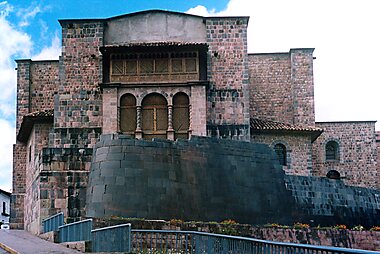

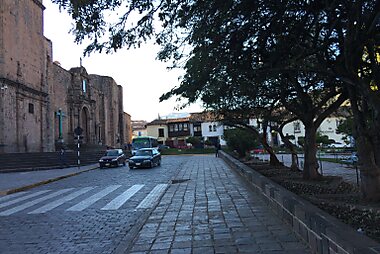
Qurikancha was the richest temple in the empire, and its inner walls were once sheathed in gold. The Spanish raised the Santo Domingo convent straight on top of it, so you see Inca masonry and colonial cloister in one building.
Sacsayhuamán stands on the ridge above town. Its zigzag ramparts are built from blocks weighing more than 100 tonnes, fitted so tightly that no mortar was used.
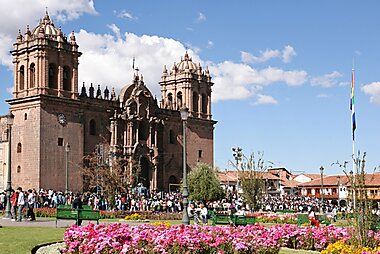
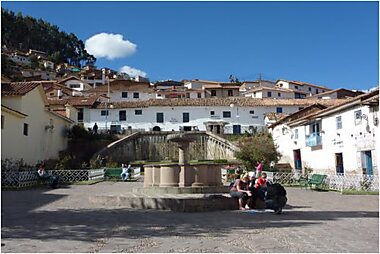
Plaza de Armas is the centre of daily life, framed by stone arcades. It was the Inca ceremonial square before the Spanish rebuilt around its edges.
La Basílica Catedral del Cusco took nearly a century to finish. Inside is a large collection of Cusco School paintings, the colonial style that mixed European religious subjects with Andean detail.
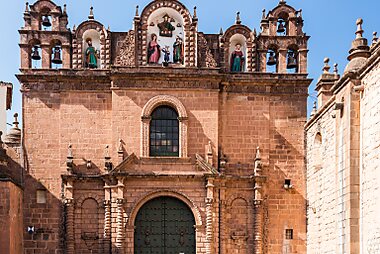
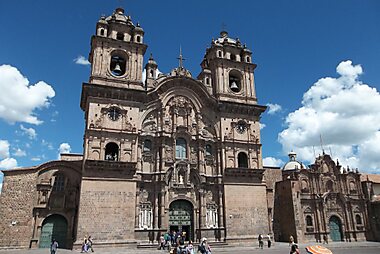
Iglesia de la Compañía de Jesús sits on the same square and has the more elaborate baroque front of the two churches. It was rebuilt after the 1650 earthquake.
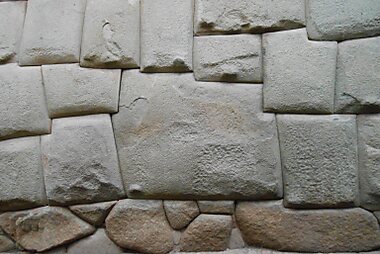
Twelve-angled-stone is set into a wall on Hatunrumiyoc street. Each of its twelve corners locks into the neighbouring blocks without mortar. It is the most photographed piece of Inca stonework in the city.
San Blas District climbs the slope above the centre. It is the artisan quarter, full of workshops, small galleries and steep narrow lanes.
San Pedro Market is the main produce market and still serves locals more than visitors. Come for fruit, juice counters and cheap set lunches.
Featured Lists


What to experience
Things to do and time your visit around, rather than more places to photograph.
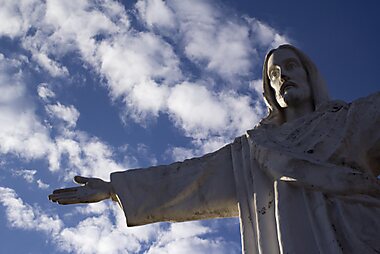
- Climb to Cristo Blanco for sunset. It is about 30 minutes uphill from San Blas, and the whole basin opens up below you.
- Watch the Inti Raymi reenactment on 24 June at Sacsayhuamán, with hundreds of costumed performers filling the terraces.
- Drink mate de coca or chew coca leaves on your arrival day, as locals do. It is ordinary and legal here, and it is the standard local answer to altitude.
- Watch a weaving demonstration and learn to read the patterns. The Centro de Textiles Tradicionales del Cusco runs them with highland weaving communities.
- Join the Señor de los Temblores procession on the Monday of Holy Week, when the city's patron crucifix is carried around the square.
Tours & Activities
Cusco — Map

 Open the interactive map
 Day trips
Cusco is the base for the whole region. These are ordered from closest to farthest.
- Pisac — about 45 min by colectivo. A large craft market in the village, and a ridge of Inca terraces and tombs above it.
- Sacred Valley — 1 to 2 h depending on the stop. The valley holds the Maras salt pans, the circular agricultural terraces at Moray, and Urubamba as a lunch stop.
- Ollantaytambo — about 1 h 45 min by bus. A working town still on its Inca street grid, with a steep terraced fortress above it. It is also the main railhead for Machu Picchu.
- Machupicchu Historical Sanctuary — 1 h 45 min to Ollantaytambo, then about 1 h 30 min by train, plus the shuttle up. Possible in one very long day, but far better with a night in Aguas Calientes.
- Rainbow Mountain — about 3 h each way by road, then a hike topping out above 5,000 m. Worth it only once you are properly acclimatised.
Getting there
- By air: Alejandro Velasco Astete International Airport lies about 5 km southeast of the centre, with a 15 to 20 minute taxi ride into town. Almost all international travellers connect through Lima.
- By train: There is no rail line from Lima or the coast. Trains from the Cusco area run only towards Machu Picchu, leaving from Poroy outside the city or from Ollantaytambo.
- By bus: Long-distance coaches use the Terminal Terrestre south of the centre. Lima takes 21 to 24 h, Arequipa around 10 h, and Puno around 7 h.
Official tourism information for the country is at PROMPERÚ.
Getting around
- On foot: The historic centre is compact and walking is the way to see it. Expect steep cobbled streets, and expect short climbs to feel harder than usual at this altitude.
- Public transit: City buses and shared vans, called combis, serve the outer districts. Pay the fare in cash to the conductor on board. Visitors staying near the centre rarely need them.
- Taxi: Taxis are cheap and everywhere. Agree the fare before getting in, as meters are not used.
- Tourist ticket: The Boleto Turístico del Cusco is a single combined ticket covering Sacsayhuamán, several nearby ruins and a group of city museums. Those sites cannot be entered on a separate ticket, so buy it if you plan to visit more than one.
Driving
- Is a car worth it?: Not for the city. The centre is tight, partly pedestrian and hard to park in, and colectivos or buses reach every major site in the valley.
- Parking: Use the guarded lots, signed as playas de estacionamiento, around Avenida El Sol. Street space in the old centre is very limited.
- Restrictions: Several streets around the main square are closed to private traffic. Roads up to the high-altitude sites are narrow, winding and often unpaved.
Food & drink
Food here is Andean rather than coastal. Look for cuy, roast guinea pig served on festival days. Alpaca steak is lean and appears on most menus. Chiriuchu is a cold plate of many meats, eaten at Corpus Christi. Soups are thickened with quinoa and other highland grains.
Aim for areas rather than chasing individual restaurants. The lanes around San Blas District hold most of the small, interesting kitchens. San Pedro Market is the place for a cheap set lunch and fresh juice. On the main square itself, prices climb and quality tends to drop.
Safety & health
Cusco is generally safe for visitors, and most trouble is opportunistic rather than violent. Petty theft is the main risk: watch bags in crowded markets, on night buses and around the main square after dark. Use a booked or registered taxi late at night rather than flagging one down.
Altitude is the more serious issue. At about 3,400 m, many arrivals get soroche, or altitude sickness, with headache, breathlessness and broken sleep. Take the first day slowly, drink plenty of water, eat lightly and skip alcohol. Do not fly in and start a high trek the next morning.
History
Cusco was the political and religious centre of Tawantinsuyu, the Inca empire, and roads ran from here to all four of its quarters. Qurikancha was the heart of the state religion. Its gold was stripped and melted down as part of the ransom for the captured emperor Atahualpa.
Francisco Pizarro entered the city in 1533. The Spanish did not level the Inca stonework. They built on top of it, so colonial walls across the centre still stand on Inca foundations.
In 1536 Manco Inca laid siege to the city from the heights at Sacsayhuamán and came close to retaking it. Much of the colonial city then fell in the 1650 earthquake. The Inca walls underneath largely held, and most of the churches you see today date from the rebuilding that followed.
Country facts
Quick practical facts for Peru at a glance:
- Currency
- Peruvian Sol PEN · Card payments · Commonly accepted
- Emergency numbers
- 911
- Electricity
- 220 V · 60 HzType A / Type B / Type C
- Languages
- Aymara, Spanish, Quechua
- Tap water
- Not safe to drink
- Driving side
- Right
- Calling code
- +51


Cusco – Plan Your Days
Turn the places from this guide into a real itinerary, with smart routing, time estimates, and everything you need for a perfect trip.




