



Crete
Crete is Greece's largest island. Its 4,000-year-old Minoan ruins, Venetian harbor towns, and some of the Mediterranean's best beaches all sit within easy reach of one another. A rental car opens up mountain villages, gorges, and archaeological sites in the same week as swimming.
The island stretches over 260 km east to west, so most visitors pick one region rather than trying to cover it all in one trip. Chania and Rethymno in the west are known for old towns and beaches. Heraklion, roughly in the middle of the island, holds the main archaeological sites, while Agios Nikolaos and the east coast add resort towns.

Crete – Planning a Trip?
Build your day-by-day itinerary in the Tripomatic app.


When to visit
Spring (April-June) and autumn (September-October) are the best times to visit, with warm days, calm seas, and fewer crowds than summer. July and August are hot and busy, especially around the coastal resorts. Winters are mild but many rural tavernas and hotels close for the season.
Easter is the island's biggest annual event. Greek Orthodox Easter falls in April most years and brings processions, fireworks, and roast-lamb feasts to every town — a good time to see Crete at its most festive.
Best time to visit: May, June, September
Summers bring long stretches without rain and consistently hot afternoons, while spring and autumn stay comfortably warm for hiking and sightseeing.
Top sights
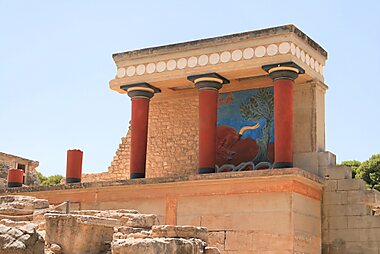
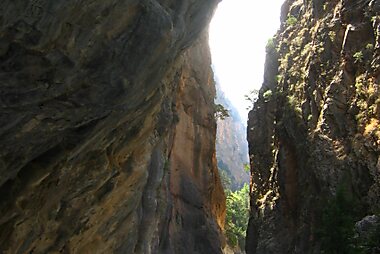
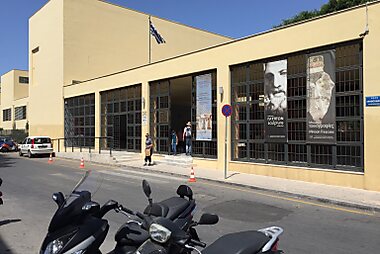
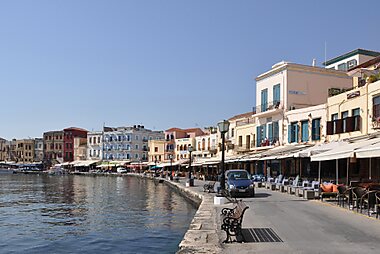


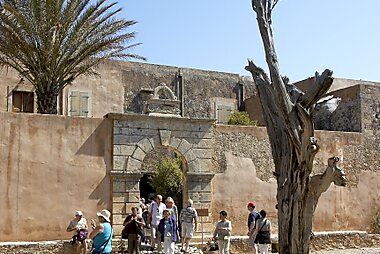
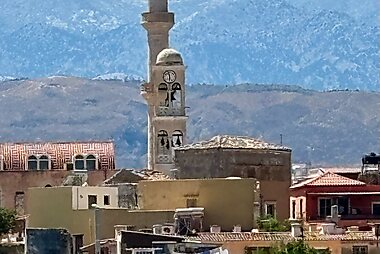
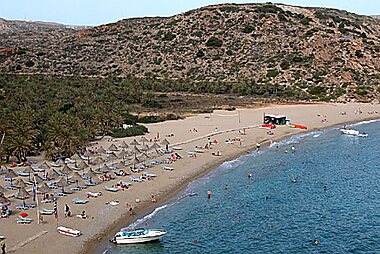
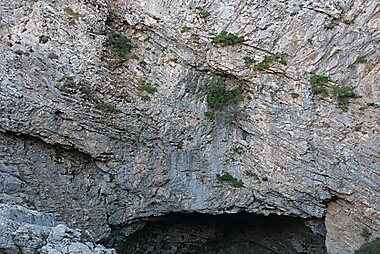
- Knossos Palace is the most important archaeological site on the island, the Bronze Age palace complex that gave rise to the legend of the Minotaur.
- Heraklion Archaeological Museum holds the finds from Knossos and other Minoan sites, including frescoes and gold jewelry that bring the civilization to life.
- Samaria Gorge is one of Europe's longest gorges, a full-day trek through a national park that ends at the Libyan Sea.
- Marina of Chania is Chania's old harbor, lined with Venetian and Ottoman buildings from the 14th century.
- Fortezza Fortress guards Rethymno's old town, a Venetian fortress large enough to walk the full perimeter of its walls.
- Palace of Phaistos was the second-largest Minoan palace, smaller and quieter than Knossos and set on a hilltop with sweeping views.
- Elafonisi Beach is a beach on the island's southwest coast known for shallow, warm water and pink-tinted sand.
- Spinalonga fort is a fortified islet that served as a leper colony until 1957, reached by a short boat trip from the Elounda area.
Featured Lists


Hidden Gems
Explore Crete’s diverse heritage through these lesser-known sites, from the World War II tunnels of the Historic Shelter of Platanias to the geological sinkhole of Voulismeno Aloni at the foot of Mt Stroumboulas. The collection features traditional craftsmanship at the Cretan Olive Oil Farm and the historic leather workshops of Chania’s Stivanadika street. Additionally, the Douloufakis Winery offers insight into local viticulture with tours of their production facilities and cellars.
5 places


Caves & Gorges
Crete’s limestone landscape is home to thousands of caves, many serving as sacred sites for the ancient Minoans. This collection features the legendary Diktaean and Idaean caves, both historically revered as the mythological birthplace of Zeus. Visitors can explore the impressive dripstone formations of Sfendoni and Melidoni, the latter also serving as a poignant memorial to the 1824 Ottoman siege. These subterranean sites offer a unique look at the island's geological evolution and its deep-rooted connection to Greek mythology and revolutionary history.
6 places

Castles & Forts
Crete’s strategic Mediterranean position is reflected in its diverse fortifications, spanning from the sprawling Bronze Age palaces of Knossos and Phaistos to massive Venetian maritime bastions. The 16th-century Fortezza in Rethymno and the iconic Koules fortress in Heraklion represent the height of Venetian military engineering, while the Izzedin Fortress showcases Ottoman-era architecture. These sites, including the isolated island stronghold of Spinalonga and the coastal castle of Frangokastello, offer a chronological journey through the island's defensive evolution and architectural heritage.
12 places
Museums & Galleries
Crete’s museums span from the Minoan civilization at the Heraklion Archaeological Museum to modern literary history at the Nikos Kazantzakis Museum. Chania offers maritime exhibits in a Venetian fortress and the Byzantine Collection in a former church. Unique sites include the historic WWII shelter in Platanias, the Olive Tree Museum of Vouves featuring a 3,000-year-old tree, and the open-air Lychnostatis museum showcasing traditional Cretan crafts and architecture.
16 places
Nature and Viewpoints
Crete's landscape is defined by dramatic geological formations and ancient mythology. This collection features the island's highest peaks, including Psiloritis and Pachnes, alongside the 16-kilometer-long Samaria Gorge. Explore the sacred caves of Psychro and Ideon, traditionally linked to the birth and upbringing of Zeus. The list also highlights historical sites like the Milatos and Melidoni caves, which served as refuges during the Ottoman era, and the diverse endemic flora found within the Botanical Park of Crete.
11 places
Cretan Wineries
Crete's viticultural history spans over 4,000 years, making it one of the world's oldest wine-producing regions. This selection features estates across the Chania and Heraklion regions that focus on indigenous Cretan grape varieties such as Vidiano, Vilana, and Kotsifali. Visitors can explore traditional stone cellars, participate in guided tastings of organic vintages, and learn about the successful revival of rare ancient grapes like Dafni and Plyto. These wineries range from small-scale artisanal producers to established estates with modern production facilities and expansive hillside vineyards.
6 placesWhat to experience
A few things are worth building a day around, beyond sightseeing.
- Hike the full length of Samaria Gorge in a single day, descending from the mountains to the sea at Agia Roumeli.
- Join a panigiri, an open-air village festival with live Cretan lyra and lute music, held throughout summer on saints' feast days.
- Take part in a raki tasting at a mountain village distillery during the autumn grape harvest.
- Swim at a quiet beach at dawn or after sunset to avoid the midday summer crowds.
Tours & Activities
Crete — Map

 Open the interactive map
 Day trips
Crete's size means most worthwhile day trips are boat excursions to smaller islands nearby, rather than trips off the island itself.
- Chrissi Island - about 1 hour by boat from Ierapetra; an uninhabited islet with a cedar forest and white-sand beaches, popular as a full-day trip.
- Gramvousa and Balos lagoon boat trip - about 1 hour by boat from Kissamos; combines a Venetian island fortress with one of Crete's best-known lagoons.
- Santorini day cruise - roughly 2 hours by high-speed ferry from Heraklion; a long day, but the only way to see the caldera without staying overnight.
- Gavdos - about 2 to 3 hours by ferry from Paleochora or Chora Sfakion; Europe's southernmost point, better suited to an overnight stay than a rushed day trip.
Where to explore
Crete's main towns each make a good base for exploring a different part of the island.
- Chania has the prettiest old town on the island and is a good base for the west coast and the Samaria Gorge.
- Rethymno has a smaller Venetian-Ottoman old town midway between Chania and Heraklion.
- Heraklion is the island's capital and largest city, closest to Knossos and the main airport.
- Agios Nikolaos is a resort town built around a small lake-harbor, convenient for Spinalonga and the east coast.
- Hersonissos is the busiest package-holiday resort strip, geared toward nightlife and family beach hotels.
Getting there
- By air: two international airports serve the island. Heraklion International (HER) is the busiest, about 5 km from central Heraklion (taxi about 15 minutes, roughly 15 EUR). Chania International (CHQ) is about 15 km from Chania (taxi about 20 minutes, roughly 25 EUR). Both have direct seasonal flights from many European cities.
- By ferry: overnight ferries connect Heraklion and Chania with Piraeus, the port of Athens, taking around 9 hours — useful for combining Crete with mainland Greece without flying.
- By bus: no long-distance bus reaches Crete from the mainland; flying or the ferry are the only practical options.
Getting around
- Public transit: KTEL regional buses connect the main towns and larger villages; buy tickets at the station or, on some routes, from the driver. Coverage away from the main towns is limited, so a rental car is the practical way to reach beaches and villages off the bus routes.
- Taxi / ride-hailing: taxis are available in every town; ride-hailing apps have limited coverage outside Heraklion and Chania.
- On foot / cycling: town centers are walkable, but distances between sights are large enough that cycling the island isn't practical for most visitors.
Driving
- Is a car worth it?: Yes. Public transit only covers the main towns, so a rental car is the best way to reach mountain villages, remote beaches, and archaeological sites without waiting on a bus schedule.
- Parking: free street parking is common outside town centers; the old towns of Chania, Rethymno, and Heraklion are largely pedestrian, so park at the edge and walk in.
- Restrictions: mountain roads can be narrow and winding, especially in the Lefka Ori (White Mountains) and around the Samaria Gorge; drive cautiously and allow extra time.
Food & drink
Cretan cooking leans on what grows locally: olive oil, wild greens, and mountain herbs, with less reliance on the heavier dishes found elsewhere in Greece. Look for dakos, a barley rusk topped with tomato, feta, and olive oil, and kalitsounia, small cheese or herb pies eaten as a snack.
Tavernas in mountain villages, away from the coastal resorts, tend to serve more traditional home cooking at lower prices. In town, the backstreets around Chania's old harbor and the covered market in Heraklion are good places to find local products like raki, honey, and olive oil to take home.
Safety & health
Crete is very safe for travelers; violent crime against tourists is rare. The main risks are practical: sunburn and dehydration in summer, and rough terrain on hikes like the Samaria Gorge, where sturdy shoes are essential. Watch for strong currents and jellyfish on some beaches, especially after storms.
Tap water on Crete follows the same caution as the rest of Greece — most visitors and locals drink bottled water.
History
Crete was home to Europe's first advanced civilization, the Minoans. Their palace at Knossos Palace was excavated in the early 20th century. It gave rise to the legend of the labyrinth and the Minotaur.
After the Minoans, the island passed through Mycenaean, Roman, Byzantine, Arab, and Venetian rule. The harbor fortifications in Chania and Rethymno date from more than four centuries of Venetian control. The Ottomans took the island in 1669 after a long siege of Heraklion, and ruled until Crete joined Greece in 1913. During the Second World War, German paratroopers captured the island in the Battle of Crete in 1941.
Country facts
Quick practical facts for Greece at a glance:
- Currency
- Euro EUR € · Card payments · Widely accepted
- Emergency numbers
- 112
- Electricity
- 230 V · 50 HzType C / Type F
- Languages
- Greek
- Tap water
- Drink with caution
- Driving side
- Right
- Calling code
- +30
Crete – Plan Your Trip
Pick the places you want to see and Tripomatic turns them into a day-by-day route, with smart routing, time estimates, and everything you need for a perfect trip.




