


Equatorial Guinea
Equatorial Guinea is a small Central African country in two main parts. Bioko is a green volcanic island in the Gulf of Guinea, with the old capital Malabo, cool highlands and wild southern beaches. The mainland, Río Muni, is mostly rainforest, with the largest city Bata on the coast. Far to the south-west lies the tiny island of Annobón. It is the only African country with Spanish as its main official language, a legacy of Spanish rule until independence in 1968.
Few tourists come here. Visas, permits and costs take effort, and tourist services are basic outside the two main cities. The reward is nature with almost no crowds: sea turtles on Bioko's southern beaches, primates in the forests, and the 3,011 m Pico Basilé volcano. The country suits independent, patient travellers and people who come for work and want to see more of it.

Equatorial Guinea – Planning a Trip?
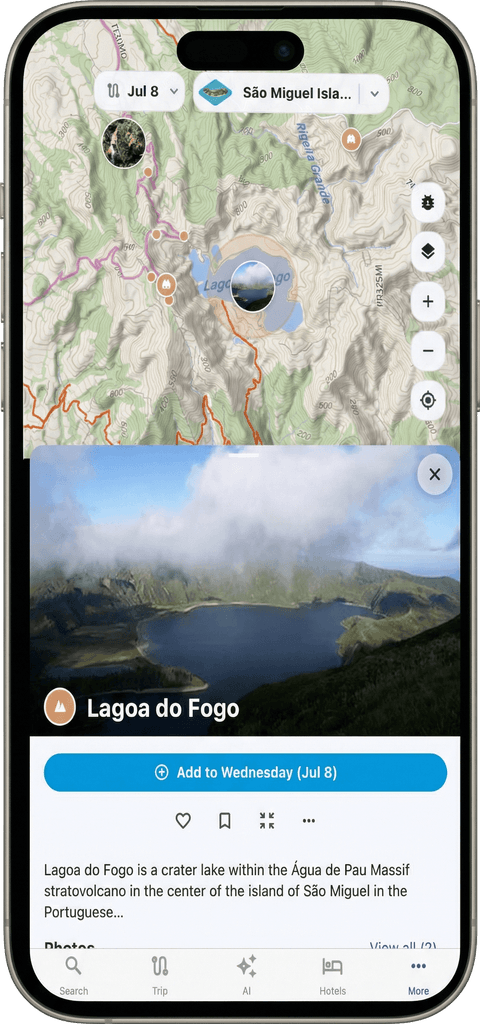
Build your day-by-day itinerary in the Tripomatic app.
Money & payments
The Central African CFA franc has a fixed exchange rate to the euro. It is shared with five other Central African countries, but it is not the same currency as the West African CFA franc.
- Cash first: Equatorial Guinea is a cash economy. Cards are rarely accepted, except at a few international hotels.
- ATMs: you find them in Malabo and Bata, but they are unreliable. Use ATMs inside banks or hotels and bring enough euros or US dollars as a backup.
- Currency limits: you can bring in or take out up to 5,000,000 CFA francs or 10,000 US dollars.
- Costs: Malabo is one of the most expensive cities in Africa for visitors. Hotels, car hire and imported goods cost more than in neighbouring countries. Local eateries and markets are much cheaper.


Tours & Activities
Equatorial Guinea — Map

Tipping
Tipping is not a strong tradition. In everyday local eateries and shared taxis nobody expects a tip. In upmarket restaurants and international hotels, a small tip for good service is welcome. Guides and drivers on nature trips usually expect a tip at the end of the trip.
5–10 % in upmarket restaurants
small tip for porters and housekeeping
at the end of a guided trip
Electricity
Sockets take Type C and E plugs, the same round-pin plugs used in much of continental Europe. Power cuts and voltage surges happen, so a surge-protected power strip is useful for laptops.
Language
Spanish is the main official language and the language of government, schools and the media. French and Portuguese are also official, but few people speak them in daily life. Most people also speak an African language. Fang is the most common on the mainland, Bubi is spoken on Bioko, and people on Annobón speak Fa d'Ambô, a Portuguese-based creole. Pichi, an English-based creole, is common in Malabo.
English is not widely spoken outside international hotels and oil-company circles. Basic Spanish helps a lot with taxis, markets and checkpoints.
Staying connected
- SIM cards: local operators sell prepaid SIM cards in Malabo and Bata.
- Speed and cost: mobile data is slow and expensive by international standards, and coverage is patchy outside the cities and main roads.
- Roaming: roaming from abroad can be very expensive, so check your plan before you travel.
Safety & emergencies
No government advises against travel to any part of Equatorial Guinea. The US rates it Level 2, "exercise increased caution" (7 October 2025). The UK's advice (updated 8 January 2026) has no areas to avoid.
- Photography: photographing government or military buildings, the presidential palace and its surroundings, airports or harbours is illegal. You could be arrested and detained. Other photography or filming may need a special permit. Ask before you photograph people.
- Area permits: you need a security permit to visit Moka, Pico Basilé and Ureca on Bioko. Ask your hotel or tour operator to arrange it before you go.
- Checkpoints and ID: roadblocks are common, especially around Malabo and Bata. Always carry your passport, or a copy, and be ready to explain your trip. Officers sometimes ask for bribes; you can ask for an official ticket instead.
- Detention: some foreigners have been detained without clear reason for weeks. Make sure your passport is stamped correctly on arrival.
- Crime: petty theft is common, and armed robbery happens. Do not walk alone after dark and do not show valuables. Taxis have been used in robberies, so use a taxi arranged by your hotel or a driver you know.
- Protests: security forces act quickly against street protests. Avoid all demonstrations.
- Sea: armed attacks on ships happen in the Gulf of Guinea. Be careful in coastal waters.
Emergency numbers exist, but the response is unreliable, especially outside the cities.
Health
- Yellow fever: you need a vaccination certificate to enter. Get the vaccine at least 10 days before arrival.
- Malaria: malaria is a risk all year in the whole country. Take antimalarial tablets and use insect repellent and a mosquito net. Dengue also occurs.
- Water: do not drink tap water. Drink bottled water and avoid ice from unknown sources.
- Medical care: care is very limited, and there are no adequate trauma or ambulance services. Even a minor problem can require a costly evacuation. Buy travel insurance that covers medical evacuation.
- Pharmacies: you find pharmacies in Malabo and Bata, but supplies can be limited. Bring enough of any medicine you need.
Visas & entry
Almost all visitors need a visa, including citizens of the US, the UK, Canada and the EU. Citizens of the other Central African (CEMAC) countries are the main exception.
- eVisa: apply online and print the approval letter. The visa is then placed in your passport at the border. Processing takes about 72 hours. The official portal is Equatorial Guinea eVisa. You can also apply at an embassy.
- Passport: it must be valid for at least 6 months after arrival, with at least one blank page.
- Stamp check: make sure the border officer places the visa and stamps your passport. Travellers without a proper stamp have been delayed or threatened with detention.
- Yellow fever: you must show a yellow fever vaccination certificate.
- Extra documents: some applicants, including Canadians, must also show a police clearance certificate.
Visa and entry requirements change frequently. Verify current requirements with the official immigration authority or your country's embassy before travel.
Etiquette
- Greetings: greet people before you ask anything. A handshake and "buenos días" or "buenas tardes" are normal. Use titles and polite forms with officials and older people.
- Photography: never photograph government buildings, soldiers, police, airports or harbours. Ask before you photograph people or markets.
- Politics: avoid discussing politics or the government in public.
- Dress: dress neatly in the cities. Cover your shoulders and knees in churches. Beachwear is for the beach.
- Officials: stay calm and polite at checkpoints and with officials, even when things are slow.
- Society: the country is mainly Catholic and socially conservative. Same-sex relationships are legal, but same-sex marriage is not recognised and there is no legal protection from discrimination.
Holidays & opening hours
On public holidays, government offices and banks close, and many shops close or open short hours. Around Independence Day in October, expect official events and some road closures in the cities.
Many shops and offices close for a long break in the middle of the day and reopen in the late afternoon. On Sundays most businesses are closed, except some supermarkets and restaurants.
Getting around
Travel is easiest between the two main cities. Getting to the remote areas takes planning, a local driver or tour operator, and often a permit.
- By air: flights link Malabo and Bata daily. The flight is the quickest way between Bioko and the mainland. Flights to Annobón are infrequent.
- By road on Bioko: a paved road circles much of the island and climbs to Moka. Hire a car with a driver for trips to Luba, Moka and Ureca.
- By road on the mainland: paved roads link Bata with Mongomo, Ebebiyín and Ciudad de la Paz. Shared taxis and minibuses run between towns, but they are crowded and often driven fast.
- Taxis: shared taxis are cheap in Malabo and Bata. For safety, use a taxi arranged by your hotel or a driver you know, and do not take taxis alone at night.
Driving
Most visitors hire a car with a driver instead of driving themselves.
- Licence: carry your national licence and an International Driving Permit.
- Road conditions: main roads on Bioko and between the mainland towns are paved. Rural roads can be in poor condition, especially in the rainy season.
- Night driving: avoid it. Many drivers do not use headlights, and people and animals walk on the roads.
- Remote trips: travel to remote areas with at least two vehicles.
- Checkpoints: police and military checkpoints are frequent. Stop, stay calm and show your passport and vehicle papers.
- Alcohol: drink-driving is a serious offence.
- Fuel: stations are attended, and you usually pay in cash. Fill up in the cities before long trips.
- Electric vehicles: there is no public charging network.
Food & drink
Food here mixes Central African cooking with some Spanish habits. Meals are built around starchy staples such as cassava, plantain, malanga (cocoyam) and rice, served with a sauce of fish, chicken or meat. Fresh fish is the highlight on the coast and on Bioko, often grilled whole and served with fried plantain. Pepper soup, a spicy broth of fish or meat, is a favourite, and peanut (groundnut) sauces are common.
Locals eat in small family eateries and at market stalls, and Malabo and Bata also have Spanish-style cafés and restaurants. Street snacks include grilled fish, skewered meat and fried plantain. Palm wine is the traditional drink, and imported and regional beers are sold everywhere. Bushmeat is sold in some markets; avoid it, as many species are protected.
Where to explore
Bioko
- Bioko is the easiest part of the country to visit, with rainforest, volcanic peaks and black- and white-sand beaches.
- Malabo has Spanish colonial buildings and Catedral de Santa Isabel, a neo-Gothic cathedral with two tall towers.
- Pico Basilé is the country's highest point and needs a permit to visit.
- In the south, the highland village of Moka has crater lakes and a wildlife centre. The beaches near Ureca are a nesting site for sea turtles from November to March.
- Luba is a quiet port town on the west coast.
Río Muni (mainland)
- Bata is the largest city, with a long seafront promenade.
- Monte Alén National Park is the country's largest national park, a rainforest home to gorillas, chimpanzees and forest elephants. Altos de Nsork National Park protects forest in the south-east.
- Mongomo is known for the huge Basilica of the Immaculate Conception, Mongomo. Nearby, Ciudad de la Paz is a planned city in the forest, officially the capital since January 2026 and still under construction. Most ministries and all embassies are still in Malabo.
- Ebebiyín is a busy trading town near the borders with Gabon and Cameroon.
- Mbini sits at the mouth of the Benito River, south of Bata.
Islands
- Corisco and Elobey Grande are small islands off the southern mainland coast, with quiet beaches.
- Annobón is a remote volcanic island far to the south-west, with its own creole language and culture. Flights are rare and access is difficult.
Equatorial Guinea – Plan Your Trip
Pick the places you want to see and Tripomatic turns them into a day-by-day route, with smart routing, time estimates, and everything you need for a perfect trip.