



Ho Chi Minh City
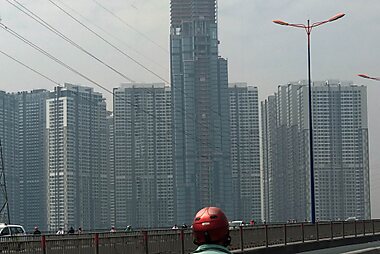
Ho Chi Minh City, still widely called Saigon, is Vietnam's largest city and its commercial engine. The pace is fast: motorbikes fill every street, market stalls spill onto the sidewalks, and French colonial buildings sit next to glass towers like Landmark 81.
Most first-time visitors base themselves in District 1, where the main sights, hotels, and restaurants sit within walking distance of each other. The city gives a compact introduction to Vietnam's history, from French colonial rule to the Vietnam War, and works well as a 2-3 night stop at the start or end of a longer trip.

Ho Chi Minh City – Planning a Trip?
Build your day-by-day itinerary in the Tripomatic app.


When to visit
The city is hot and humid all year, so timing a visit is mostly about rain, not temperature. Roughly December to April is the dry season and the easiest time to visit. May to November is the wet season, with short, heavy afternoon downpours rather than all-day rain.
The city's biggest event is Tet, the Lunar New Year, usually falling in late January or February. Many shops and restaurants close for several days around the holiday, but the flower markets and street decorations in the week before are worth seeing.
August and September bring the heaviest rain, usually a sharp storm in the late afternoon that clears within an hour.
Top sights
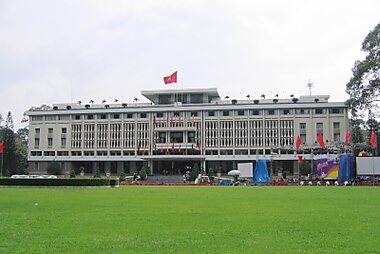

Independence Palace is the best place to start. North Vietnamese tanks crashed through its gates on 30 April 1975, ending the Vietnam War, and the building is preserved almost exactly as it was that day.
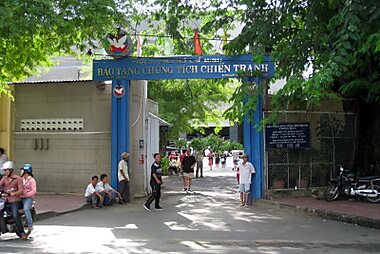
A short walk away, War Remnants Museum covers the war from the Vietnamese side, with military hardware in the courtyard and harder exhibits inside — it is not a light visit, but most travelers count it among the most important stops in the city.
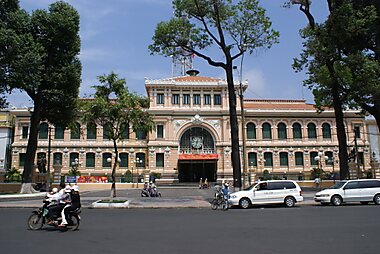
Saigon Notre Dame Cathedral and Saigon Central Post Office sit next to each other and are two of the city's best-known French colonial landmarks, built from imported brick and iron in the late 1800s.
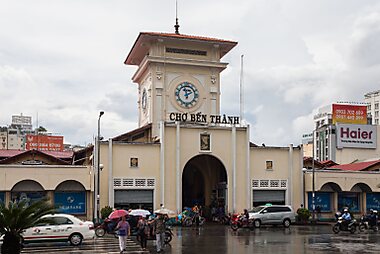
Ben Thanh Market is the city's central market, packed with food stalls, clothing, and souvenirs under one iron-roofed hall.
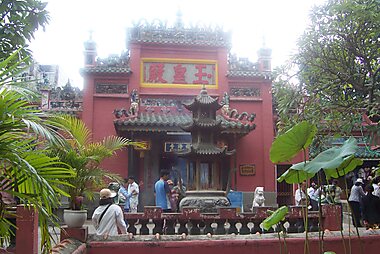
Jade Emperor Pagoda is a small, atmospheric Taoist temple thick with incense smoke, built by the local Cantonese community in the early 1900s.
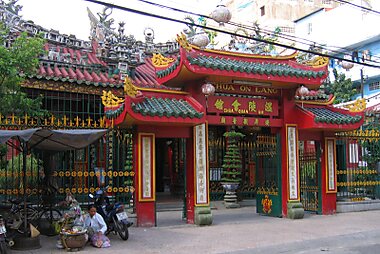
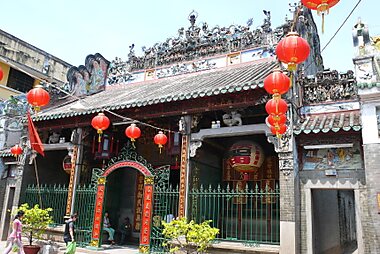
Southwest of downtown, Cholon is the city's historic Chinese quarter, home to Thien Hau Pagoda and dozens of other incense-filled assembly halls founded by Chinese immigrant communities.
For a skyline view, head up Saigon Skydeck - Bitexco Financial Tower, an observation deck near the top of one of the city's tallest buildings.
Featured Lists


What to experience
- Sit on a low plastic stool at a sidewalk cafe and drink cà phê sữa đá, the strong Vietnamese iced coffee with condensed milk that locals drink throughout the day.
- Join the evening crowds at Nguyen Hue Pedestrian Street, where fountains, street performers, and families take over after dark.
- Take a sunset or dinner cruise on the Saigon River, watching the skyline light up from the water.
- Wander through Binh Tay Market in the early morning, when wholesalers and shoppers fill the aisles before the day's heat sets in.
Tours & Activities
Ho Chi Minh City — Map

 Open the interactive map
 Day trips
A few worthwhile destinations sit within a couple of hours of the city, and most are easy to visit on an organized day tour or by hired car.
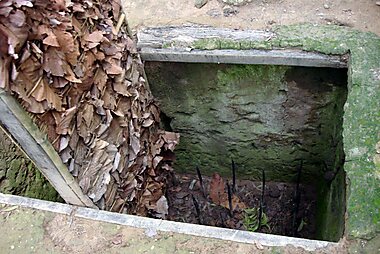
- Củ Chi Tunnels — about 1.5 hours by road. Part of the Củ Chi Tunnels network used during the Vietnam War is open to visitors, including sections widened for tourists to crawl through.
- Mekong Delta — about 1.5-2 hours by road to My Tho or Ben Tre. Boat trips through the canals, floating markets, and orchards give a very different picture of Vietnam from the city.
- The Can Gio Mangrove Biosphere Reserve — about 1.5-2 hours by road. A UNESCO-recognized mangrove forest with a monkey sanctuary and, further on, a quiet beach.
- Vung Tau — about 2-2.5 hours by road, or roughly 1.25 hours by hydrofoil. A seaside town popular with locals for a beach day and seafood.
Getting there
- By air: Tan Son Nhat International Airport is about 7 km from downtown, the main gateway for both international and domestic flights. A taxi or ride-hailing car to District 1 takes 20-30 minutes depending on traffic; airport bus 109 also runs into the center for a fraction of the cost.
- By train: Saigon Railway Station is the southern end of the Reunification Express, the line running the length of the country up to Hanoi. It is more useful for onward travel within Vietnam than for arriving from abroad.
- By bus: Mien Dong and Mien Tay long-distance bus stations connect the city to the rest of southern Vietnam and to Cambodia, including direct buses to Phnom Penh.
Getting around
- Public transit: An extensive bus network covers the city, though routes are not easy to follow without a map app; fares are paid in cash on board. A metro line connecting Ben Thanh Market to the eastern suburbs has also opened, useful for reaching a handful of outer attractions.
- Taxi / ride-hailing: Traditional metered taxis in Ho Chi Minh City have a history of rigged meters. Stick to well-known operators (Mai Linh, Vinasun) or use the Grab app, which shows the fare upfront and is the way most visitors get around.
- On foot: Sidewalks are often blocked by parked motorbikes, and crossing a street means walking steadily into a moving stream of traffic rather than waiting for a gap. It looks alarming at first but is the normal, safe way to cross.
Driving
- Is a car worth it?: No. Self-driving is not practical or advisable for visitors given the volume of motorbike traffic; taxis and ride-hailing apps cover the city well.
- Renting a motorbike: Widely available and popular with backpackers, but Saigon traffic is intense and best left to experienced riders. A valid motorcycle license is technically required to ride legally.
Food & drink
Ho Chi Minh City's food leans sweeter and more herb-heavy than northern Vietnamese cooking. Look for cơm tấm (broken rice with grilled pork), bánh mì with a distinctly southern mix of fillings, and hủ tiếu noodle soup, a dish shaped by the city's Chinese and Cambodian influences.
For eating, follow the crowds rather than a single address: the street-food alleys around District 1 and the stalls inside Ben Thanh Market cover the local classics, while Cholon is the place for Cantonese-influenced Chinese-Vietnamese cooking.
Safety & health
Ho Chi Minh City is generally safe for tourists, with low rates of violent crime. The main risks are petty: bag and phone snatching by passing motorbikes is the most common complaint, so carry bags on the side away from the road and keep phones out of sight while walking near traffic.
Tap water is not safe to drink; stick to bottled or filtered water, which is sold everywhere. Use metered taxis from known operators or the Grab app rather than hailing an unmarked cab, since meter tampering has been a recurring scam.
History
Long before it was Saigon, the area around Cholon was settled by Chinese traders and refugees from the late 1700s, and it grew into a major trading port in its own right, separate from the Vietnamese town nearby.
France took control of the city in 1859 and made it the capital of colonial Cochinchina, building the grand public buildings — including Saigon Notre Dame Cathedral and Saigon Central Post Office — that still define the downtown skyline.
The most defining single moment for modern visitors is 30 April 1975, when North Vietnamese tanks crashed through the gates of Independence Palace, ending the Vietnam War. The city was renamed Ho Chi Minh City the following year, though most residents still call it Saigon in everyday speech.
Country facts
Quick practical facts for Vietnam at a glance:
- Currency
- Vietnamese Dong VND ₫ · Card payments · Commonly accepted
- Electricity
- 220 V · 50 HzType A / Type C / Type F
- Languages
- Vietnamese
- Tap water
- Not safe to drink
- Driving side
- Right
- Calling code
- +84


Ho Chi Minh City – Plan Your Days
Turn the places from this guide into a real itinerary, with smart routing, time estimates, and everything you need for a perfect trip.


Related destinations


Data: © OpenStreetMap contributors, Wikidata, Wikipedia, Tripomatic, Official websites, geoBoundaries (CC BY 4.0). Tours by GetYourGuide. We earn commission from bookings. Travel guide generated with AI.